 Bellingham Exterior
 Why Window Installation in Columbia Is Its Own Job
Columbia is one of Bellingham's older, established neighborhoods, and that history shows up in its windows. A lot of homes here still have original wood-frame windows from decades past, or a round of aluminum-frame replacements from the 1980s or 90s that were never detailed for today's weather. Add in the neighborhood's closeness to Bellingham Bay and you get a specific combination of stressors: salt-laden air that eats at hardware and finishes, driving rain that comes in sideways off the water during winter storms, and a long, damp moss season that keeps north-facing walls and trim wet for months at a stretch. None of that is unique to Columbia, but it hits harder here than it does further inland in Whatcom County, and it changes what "correct installation" actually means.
A window that's installed well in a dry climate can still fail here if the flashing details, sealant choices, and drainage paths aren't built for sustained moisture exposure. That's the core of what we focus on for Columbia jobs — not just swapping glass, but making sure water has nowhere to sit and nowhere to get trapped.
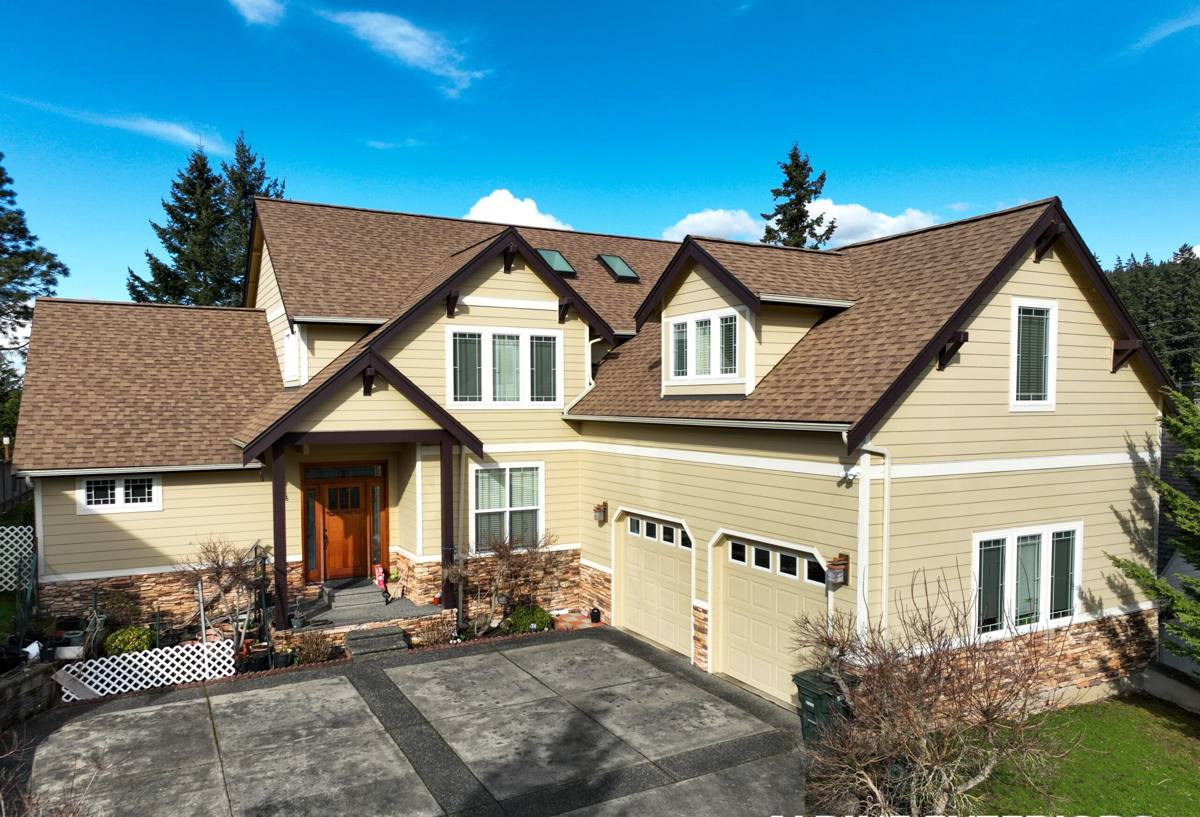
How the Climate Shows Up in Older Columbia Homes
Salt Air and Hardware
Proximity to the bay means airborne salt settles on window hardware, screens, and exposed fasteners over time. On older aluminum windows, this often shows up as pitting, stiff or seized locks, and corrosion streaks below the frame. It's one of the reasons we steer away from bare aluminum hardware on replacement jobs near the water and lean on finishes and metals that hold up better against salt exposure.
Driving Rain and Wind-Driven Moisture
Winter storms in this part of Whatcom County don't just drop rain straight down — wind pushes it sideways into wall assemblies, especially on west- and south-facing exposures. Windows that rely on caulk alone, with no real flashing system behind the trim, are the ones that start leaking during these events. We see this most often on homes where a previous window swap didn't touch the flashing at all.
Moss Season and Trapped Moisture
Bellingham's long wet season keeps shaded and north-facing walls damp for extended periods. Around windows, that moisture works into any gap in the sealant or siding interface and stays there, which is what leads to soft trim, stained drywall, and eventually rot in the framing if it goes unaddressed for a season or two.
Signs a Columbia Home's Windows Need Attention
- Visible condensation or fogging between panes on double-glazed units — a sign the seal has failed
- Drafts you can feel with a hand near the frame on a windy day
- Wood trim that feels soft, spongy, or discolored, especially at the bottom corners
- Windows that are hard to open, close, or lock — often a sign of frame warping or corroded hardware
- Visible daylight or gaps between the sash and frame
- Paint or finish that's bubbling or peeling specifically around the window opening, not the whole wall
- Noticeably higher heating bills without another obvious cause
What a Correct Window Installation Actually Involves
Installation quality matters more than the window brand in almost every case. A mid-range window installed correctly will outperform a premium window installed poorly, especially in a wet climate like this one. Here's what we consider non-negotiable on every job:
- Remove the old unit carefully and inspect the rough opening, sill, and surrounding framing for hidden rot or moisture damage before anything new goes in.
- Repair any compromised wood or sheathing found during that inspection — installing a new window over damaged framing just hides the problem.
- Install a proper flashing system — sill pan flashing, side flashing, and head flashing that integrates with the building's weather-resistive barrier, not just caulk around the perimeter.
- Set the window level, plumb, and square and shim it correctly so the frame isn't under stress, which affects how well it seals and operates for years to come.
- Insulate the gap between the frame and rough opening without overpacking it, which can bow the frame.
- Seal and trim using materials rated for continuous exposure, not standard interior-grade caulk.
- Test operation — open, close, lock — before calling the job done.
Choosing the Right Window Material for This Climate
There's no single "best" window material — it depends on budget, the home's age and style, and how much maintenance you're willing to take on. Here's how the common options stack up for a coastal, wet Whatcom County setting like Columbia:
| Material | How It Handles Salt Air & Moisture | Maintenance | General Cost Position |
|---|---|---|---|
| Vinyl | Good — won't corrode or rot, handles moisture well | Low | Lower |
| Fiberglass | Very good — dimensionally stable, resists warping and corrosion | Low | Mid to higher |
| Wood (unclad) | Weakest without diligent upkeep — needs consistent finish maintenance | High | Mid to higher |
| Wood-clad (aluminum or fiberglass exterior) | Good on the exterior face, but cladding seams need attention | Moderate | Higher |
| Bare aluminum | Weak near the bay — prone to pitting and corrosion over time | Moderate to high | Lower to mid |
For most Columbia homes, we recommend vinyl or fiberglass for straightforward replacements, and wood-clad only when matching an existing architectural look matters more than minimizing upkeep. We don't typically install bare aluminum on new work this close to the water — not because it's a bad product everywhere, but because the corrosion exposure here works against it, and we'd rather steer clients toward something that needs less babying over time.
Our Process for Columbia Window Projects
Assessment and Estimate
We start with an on-site look at the existing windows, the framing behind them where accessible, and the specific exposure of each opening — a window on the rain-facing side of the house gets treated differently than one tucked under an eave.
Product Selection
We walk through material, glazing, and style options based on your budget and the home's age, and we're upfront about trade-offs rather than steering you toward whatever has the best margin.
Installation
Our crews follow the flashing-first approach outlined above on every unit, whether it's one window or a whole-house replacement. We protect landscaping and interior spaces during the work and clean up debris daily.
Final Walkthrough
Every window gets operated and checked before we consider the job finished, and we point out anything else we noticed during the work — like a soft spot in adjacent trim — so nothing gets missed.
Why Local Experience in Columbia Matters
A crew that's worked in Columbia and similar Bellingham neighborhoods already knows what tends to be behind the trim on a home of a given age, what the exposure is like on different sides of the street grid near the water, and how the local building department handles permitting for window replacements. That familiarity cuts down on surprises mid-project. It also means we're not guessing at how a house in this specific microclimate — salt air, wind-driven rain, months of moss and shade — is going to hold up over the next twenty years. We're building for those conditions specifically, not for a generic Pacific Northwest average.
Questions to Ask Before You Hire
- Will you inspect and repair any rot or moisture damage found during removal, and how is that priced?
- What specific flashing system do you use, and does it tie into the existing weather barrier?
- What's the warranty on both the product and your labor, and who do I call if something goes wrong?
- Are you licensed and insured in Washington, and can you provide proof?
- How do you handle disposal of old windows and job-site cleanup?
- What's a realistic timeline for a project this size, given current lead times on materials?
Maintaining New Windows in a Wet Climate
Even a correctly installed window benefits from basic upkeep in this environment. Rinse salt residue off exterior hardware and frames periodically if you're close to the water. Keep an eye on caulk lines and sealant at the trim edges once a year, since UV and moisture cycling will eventually break them down no matter how good the initial installation was. Clear moss and organic debris off nearby siding and trim promptly rather than letting it sit against the window frame through the wet months. None of this is a big time investment, but it noticeably extends the life of the installation.
If you're seeing drafts, fogged glass, or soft trim around your windows in Columbia, or you're just ready to replace aging units before they become a bigger problem, we're glad to take a look. Reach out for a free, no-pressure estimate using the form below — we'll walk the property, answer your questions honestly, and give you a straightforward assessment of what your home actually needs.