 Bellingham Exterior
 Asphalt Shingle Roofing Built for Edgemoor's Coastal Conditions
Edgemoor sits close to the water and under a heavy tree canopy, which gives the neighborhood its character but also puts real stress on a roof. Salt-laden air moves in off Bellingham Bay, driving rain comes in sideways during winter storms, and the shade from mature trees keeps roof surfaces damp long after the rest of the county has dried out. An asphalt shingle roof in this setting isn't just about covering the house — it has to be built to handle moisture that lingers, wind that gets under loose edges, and a moss season that in Whatcom County can run eight months or more.
We install and repair asphalt shingle roofs across Bellingham, and Edgemoor is one of the areas where the difference between a roof installed "by the book" and one installed for the actual local conditions shows up fastest — usually within the first two or three winters.
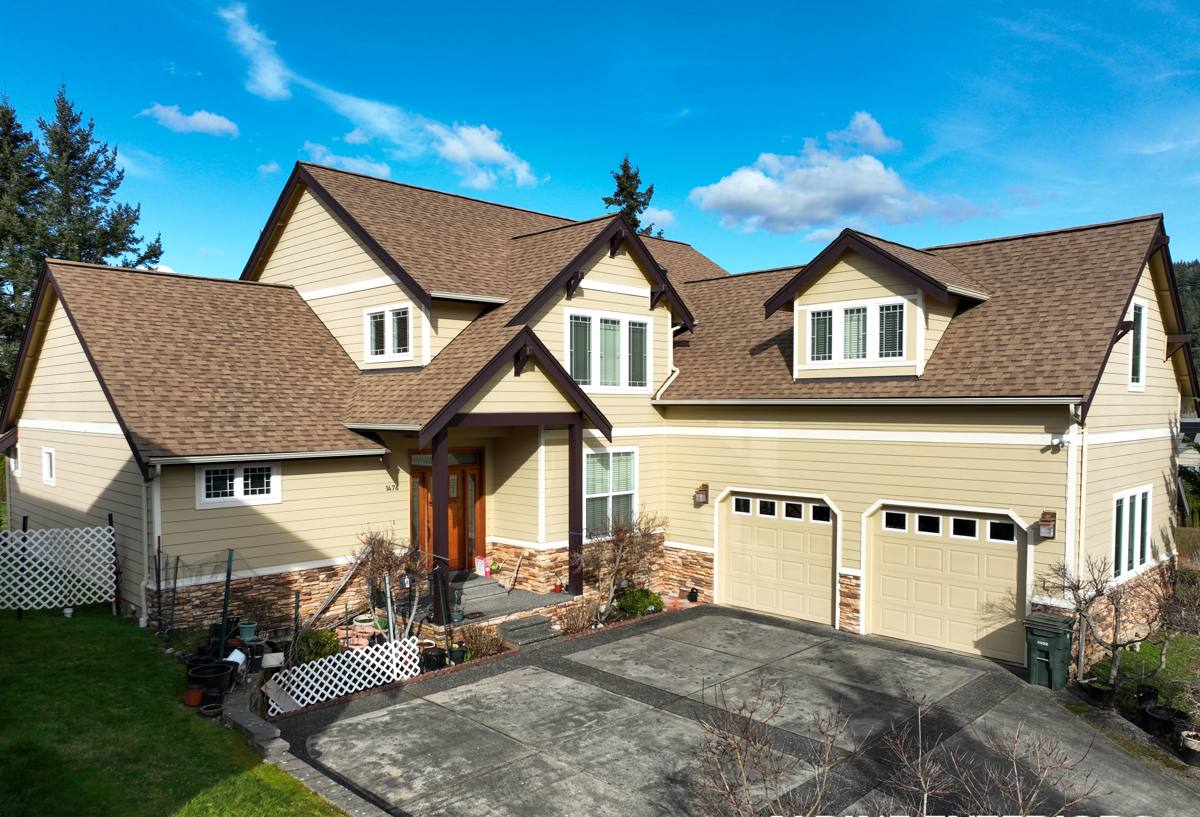
Why This Climate Is Harder on Shingles Than People Expect
Asphalt shingles are a solid, proven roofing material, but they're manufactured to a national standard that assumes average exposure. Edgemoor's exposure isn't average. Three factors compound here:
- Salt air accelerates the breakdown of exposed metal flashing, fasteners, and vent components faster than inland parts of the county.
- Driving rain off the water tests every lap, seam, and penetration on the roof — a marginal install that would hold up in a drier climate can leak here.
- Tree shade and moisture retention mean shingles stay damp longer after rain, which is exactly the condition moss and algae need to take hold.
None of this means asphalt shingles are the wrong choice for Edgemoor — they're not. It means the installation details that get skipped on an easier job can't get skipped here.
What a Correct Installation Actually Includes
Underlayment and Water Protection
On a roof exposed to wind-driven rain, the underlayment matters as much as the shingles themselves. We use synthetic underlayment across the field of the roof and self-adhered ice-and-water membrane at the eaves, valleys, and around every penetration — chimneys, skylights, vent stacks — where wind-driven water is most likely to find a way in.
Ventilation
A shingle roof that can't breathe traps moisture in the attic, which shortens shingle life from underneath and feeds mold growth in the roof deck. We balance intake at the soffits with exhaust at the ridge so the attic actually moves air, not just on paper.
Flashing and Fasteners
Given the salt air, we favor corrosion-resistant flashing and fastener materials rather than the minimum-spec hardware that's fine forty miles inland but corrodes early this close to the bay.
Fastening Pattern
Shingles are only as wind-resistant as their nailing. We follow manufacturer nailing patterns exactly — correct nail count, correct placement in the nailing zone — because a roof facing open water needs every shingle doing its job, not just most of them.
Signs an Edgemoor Roof Needs Attention
Because tree cover keeps parts of these roofs shaded and damp, problems can develop out of sight. Here's what we tell homeowners to watch for between inspections:
- Granules collecting in gutters or at the base of downspouts
- Dark streaking or green-tinted patches, especially on north-facing or shaded slopes
- Moss visible at shingle edges or in valleys
- Curling, cupping, or lifted shingle edges
- Soft spots or sagging when walked (we check this, not homeowners)
- Water stains on interior ceilings or in the attic near penetrations
- Rust streaks below metal flashing or vent boots
Any one of these on its own isn't necessarily an emergency, but on a shaded, coastal-exposed roof they tend to compound quickly if left alone.
Repair or Replace: How We Help You Decide
Not every problem calls for a full roof. We look at the roof's age, the extent of the damage, and how much of the underlying deck and underlayment are still sound before recommending anything.
| Situation | Typical Recommendation | Why |
|---|---|---|
| Isolated leak, roof under 12 years old | Targeted repair | Underlayment and deck are likely still in good shape; the fix is localized |
| Heavy moss coverage, shingles otherwise intact | Moss treatment and cleaning, not replacement | Moss removal alone can restore shingle performance if the mat underneath is sound |
| Widespread granule loss, roof 18+ years old | Full replacement | Shingles are past their protective life; patchwork repairs won't hold |
| Multiple past repairs, recurring leaks | Full replacement | Repeated patching usually signals the underlayment system has failed, not just the shingles |
| Storm damage, wind-lifted or missing shingles | Inspection first, then repair or replace based on scope | Damage extent isn't always visible from the ground |
Dealing With Moss and Algae Long-Term
Given the tree cover common in Edgemoor, moss prevention has to be part of the plan, not an afterthought. We typically recommend:
- Zinc or copper control strips installed at the ridge during a new install or major repair, which release trace metals with rain to inhibit moss and algae growth over time
- Scheduled gentle roof cleaning rather than pressure washing, which can strip granules and shorten shingle life
- Keeping overhanging branches trimmed back where practical, to reduce shade and debris buildup
- Keeping gutters and valleys clear so water doesn't pool against the shingle edges
None of these steps eliminate moss entirely in a climate like this one, but together they slow it down significantly and protect the investment in the roof.
Choosing the Right Shingle for a Wooded, Waterfront Property
Not all asphalt shingles perform the same in shaded, coastal conditions. We walk homeowners through the tradeoffs rather than defaulting to whatever's cheapest or most common.
| Shingle Type | Strengths | Considerations for Edgemoor |
|---|---|---|
| 3-tab shingles | Lower upfront cost, lighter weight | Shorter lifespan and lower wind rating; less margin for this exposure |
| Architectural (dimensional) shingles | Higher wind rating, thicker profile, longer warranty | Better match for driving rain and coastal wind; our default recommendation here |
| Algae-resistant (AR) shingles | Built-in copper or ceramic granules to slow algae/moss growth | Worth the modest upcost on shaded lots — pays for itself in reduced staining and cleaning |
| Impact-resistant shingles | Reinforced mat, better resistance to debris impact | Useful where large trees overhang the roof and drop limbs in storms |
For most Edgemoor homes, we point people toward algae-resistant architectural shingles — the added cost over standard 3-tab is modest relative to the roof's total lifespan, and it directly addresses the moss problem this specific location creates.
Our Process, Start to Finish
- On-site inspection — we look at the existing roof, attic ventilation, and any trouble spots before recommending anything
- Written estimate — clear scope, materials, and pricing, no vague allowances
- Tear-off and deck check — old material removed, deck inspected for soft spots or rot before new material goes down
- Underlayment and flashing — ice-and-water membrane at vulnerable points, synthetic underlayment across the field, corrosion-resistant flashing
- Shingle installation — installed to manufacturer spec for nailing pattern and exposure
- Ventilation check — soffit and ridge ventilation balanced before we call the job done
- Final walkthrough — we review the finished roof with the homeowner and go over warranty paperwork
Why Local Experience in Edgemoor Matters
A roofing crew that mostly works drier, less exposed parts of Whatcom County can still install a technically correct roof — but "correct" changes depending on where the house sits. A crew that regularly works Edgemoor and similar Bellingham waterfront neighborhoods already knows which slopes hold moisture longest, where wind-driven rain tends to find weak points, and which flashing details actually hold up against salt air over years, not just at the final inspection. That local pattern recognition is hard to substitute for.
We also know the practical side of working in this neighborhood — mature trees and tighter lots that call for careful staging and cleanup, and the seasonal timing that gives the best working conditions between Whatcom County's wet stretches.
Maintenance and What to Expect After Installation
A new asphalt shingle roof isn't maintenance-free, especially in a shaded, coastal setting. We recommend a visual check twice a year — after the wet season and again in fall before it ramps up — along with gutter clearing and a look for any early moss or debris buildup. Most manufacturer warranties remain valid as long as basic maintenance is kept up and any repairs are done by a qualified installer, so it's worth keeping simple records of what's been done.
If you're weighing a repair, a full replacement, or just want an honest read on where your Edgemoor roof stands, we're glad to take a look. Fill out the form below for a free, no-pressure estimate.