 Bellingham Exterior
 Siding Installation for Columbia Homes in Bellingham
Columbia is one of Bellingham's established residential neighborhoods, with a mix of home ages and styles that all share the same basic exposure: salt-tinged marine air moving in off Bellingham Bay, rain that arrives sideways as often as it falls straight down, and a moss and mildew season that can run most of the year on shaded walls. When we talk about a "siding installation," we're not just talking about the material that ends up on the wall. We're talking about a full system, house wrap, flashing, fastening, joint treatment, and the siding itself, that either handles that climate or slowly fails against it. We work throughout this part of Whatcom County, including Columbia, and we install one siding system: James Hardie fiber cement, put on according to spec rather than however's fastest.
This page is specifically about installation, whether that's new siding on a home that's never had it re-done, a full re-side after tear-off, or new construction. The considerations are different from a repair job, and getting the install right the first time matters more here than almost anywhere else in the project, because a siding installation is not something you want to redo in five years.
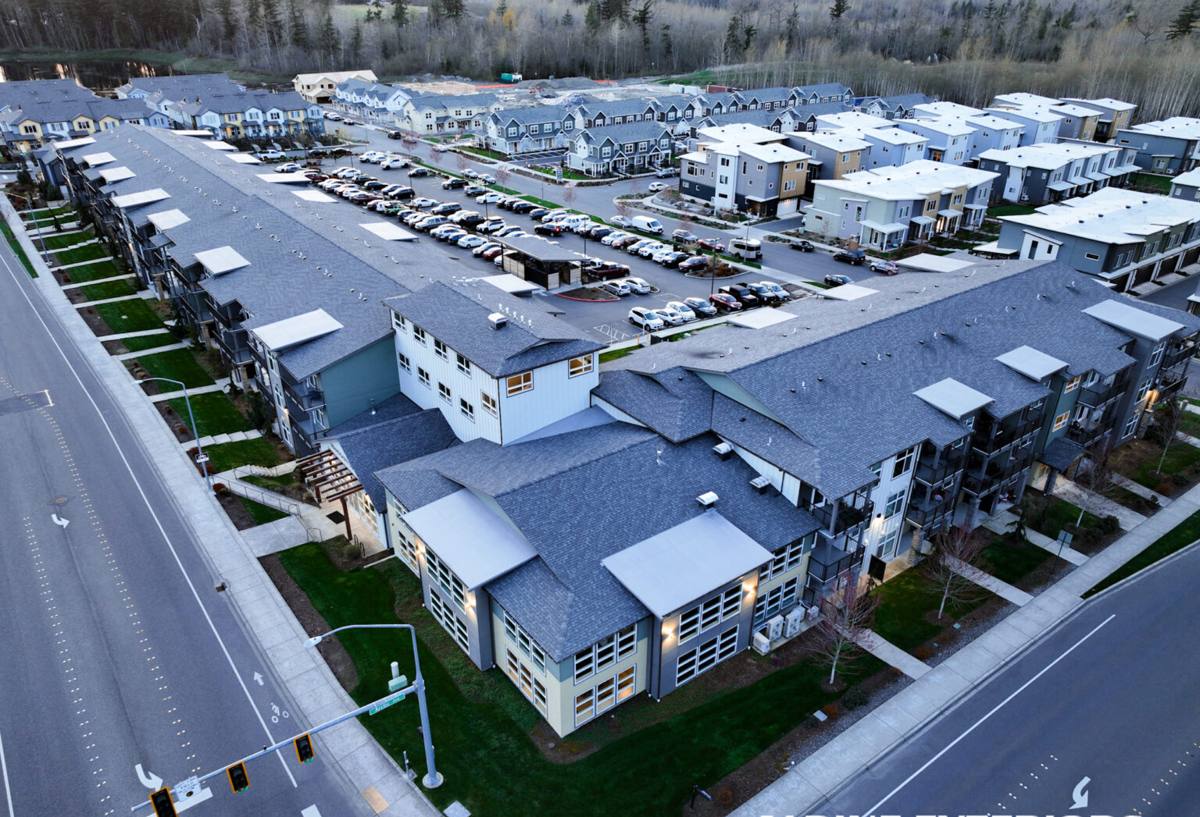
What Columbia's Climate Requires From a New Installation
Marine Air and Sustained Moisture
Columbia sits close enough to Bellingham Bay and the Salish Sea to get a steady drift of moisture-laden, mildly corrosive air as a background condition, not just something that shows up during a storm. That kind of exposure is slow and unglamorous. It works on fasteners, flashing, and lower-grade finishes over years, not days, which means an installation that looks fine on day one can still be set up to fail early if the materials and details underneath weren't chosen for this specific exposure.
Wind-Driven Rain
Rain in this part of Whatcom County gets pushed by wind more often than it falls straight down, and that changes how water actually moves against a wall during a storm. A siding installation has to account for water arriving at an angle, not just from above, which is why lap orientation, joint sealing, and flashing at penetrations matter more here than they would in a calmer, drier climate. An install that would perform fine forty miles inland can still let water in on a Columbia home specifically because of how the wind interacts with lap joints and trim seams.
A Long Moss and Mildew Season
Mild temperatures, consistent dampness, and tree cover common to established Bellingham neighborhoods add up to extended moss and mildew growth, especially on north-facing or shaded walls. Any siding installation that traps moisture against the substrate instead of letting it dry, whether that's from a missing drainage gap or an installation detail that was rushed, gives moss a head start. It typically shows up first in the areas homeowners check least: behind shrubs, under eaves, along the shaded side of the house.
Why We Only Install James Hardie Siding
We don't offer a menu of siding brands and let price make the decision. We install James Hardie fiber cement, and only James Hardie, because of what we've consistently found on tear-offs and repair calls throughout this climate.
- Non-combustible core: Fiber cement doesn't feed a fire the way wood-based siding products can, which matters for household safety and can matter for insurance as well.
- Factory-applied ColorPlus finish: The color coat cures under controlled factory conditions instead of being brushed on at the job site, giving it far more resistance to fading and moisture intrusion over the life of the installation.
- Climate-engineered HZ product lines: Hardie's HZ5 formulation is built for regions with heavy sustained moisture and freeze-thaw cycling, a closer match to coastal Whatcom County than a generic national spec.
- Dimensional stability: Fiber cement doesn't swell, cup, or warp the way engineered wood siding can after repeated wet-season moisture cycles, which keeps joints tight for the life of the installation.
- Strong transferable warranty: Hardie backs its products with one of the more substantial warranty structures in the industry, provided the installation follows manufacturer spec.
We don't install LP SmartSide, vinyl siding, Cemplank, Allura, primed spruce, or cedar. Those are legitimate products, and other contractors install them well. We made a professional decision that on a job as consequential and hard to redo as a full siding installation, standing behind one system we trust completely serves our customers better than offering a cheaper option that shifts maintenance risk onto them a few years down the road.
What the Alternatives Trade Off at Installation
LP SmartSide is an engineered wood product with a resin-treated strand core, and it can perform reasonably in drier climates. In a marine environment with this much sustained humidity, engineered wood is more sensitive to moisture intrusion at cut edges and fastener penetrations from the moment it goes up. Vinyl is affordable and generally low-maintenance, but it can warp in direct sun, crack in a cold snap, and trap moisture behind the panel if house wrap and flashing weren't installed with real care during the original install, an easy thing to get wrong and a hard thing to catch once the wall is closed up. Cedar and primed spruce are attractive natural materials, but they need ongoing painting or sealing starting almost immediately after installation, and in a climate this wet, that maintenance schedule tends to slip, shortening the material's real-world lifespan well below what it's technically capable of.
What a Correct Siding Installation Actually Involves
The material is only part of the job. A James Hardie installation that performs the way it's engineered to depends on a series of details that aren't visible once the wall is finished, but that determine whether it lasts ten years or forty.
Re-Siding an Existing Home
When we're replacing siding on a Columbia home that's already been through one or more siding generations, tear-off is where the real information shows up. Pulling the old siding exposes whatever's been happening behind it, sheathing condition, past moisture damage, whether the house wrap was ever installed correctly the first time. A full tear-off costs more up front than installing over existing siding, but it's the only way to know what you're actually building on, and in a climate this wet, what's hidden behind old siding is often the more important story than what's visible from the street.
New Construction Installation
On new construction, the advantage is a clean substrate and the chance to get every layer right from the start: house wrap lapped correctly, a drainage gap or rainscreen behind the siding, flashing integrated with windows and doors as they're set rather than added afterward. Getting these layers right the first time is easier and cheaper than correcting them later, which is exactly why we treat new construction installs with the same attention to sequencing as a re-side.
The Details That Actually Determine Performance
- House wrap or weather-resistive barrier installed and lapped correctly before any siding goes up
- A drainage gap or rainscreen behind the siding so moisture that gets past the surface can dry out instead of sitting against the wall
- Fasteners at the manufacturer's specified type and spacing, not just "enough to hold it up"
- Proper clearance from grade, roofline, and any horizontal surface like a deck or patio
- Joints and laps sealed and sequenced according to Hardie's published installation requirements
- Flashing at every window, door, and penetration integrated with the house wrap as one continuous water-management system
- Factory-cured ColorPlus finish preserved by cutting boards face-down and priming any field-cut edges
Skip any one of these and the wall can still look right for a year or two. The problems that come from skipping them, staining at seams, soft spots at the base, paint failure at trim, take a few wet seasons to surface, which is exactly why a rushed installation is one of the most common reasons a good siding product ends up with a bad reputation.
Our Installation Process
Walkthrough and Assessment
We start by looking at the actual walls involved: which face the weather directly, which are shaded and slow to dry, and whether there's any sign the existing wall assembly already has moisture issues that need addressing before new siding goes up. Installing over a problem just buries it under new material.
Planning Before Install Day
We work out fastening pattern, flashing sequence, and how the siding will meet windows, trim, corners, and rooflines before crews start cutting material. Deciding these details on paper first, rather than improvising in the field, is one of the simplest ways to avoid the corner-cutting that shows up years later.
Installation to Manufacturer Spec
Every fastener, gap, and flashing lap follows James Hardie's published installation requirements for this climate zone, not a generic national standard. That's what keeps the manufacturer's warranty intact and what determines whether the installation performs for decades rather than years.
Final Walkthrough
We walk the finished job with you, explain what little maintenance James Hardie siding actually needs, and make sure you know what a properly installed wall looks like if you ever want to check it yourself down the road.
Installation Cost Factors in Columbia
| Factor | What It Affects | Why It Matters Here |
|---|---|---|
| Tear-off vs. install over existing siding | Labor scope and substrate access | Tear-off exposes hidden moisture damage that's common under older siding in this climate |
| Substrate condition | Repair costs before new siding goes on | Trapped moisture behind failing siding can rot sheathing before it's ever visible from outside |
| Home size and wall complexity | Total material and labor | More corners, dormers, and roof intersections mean more places wind-driven rain can work its way in |
| Trim and color selection | Material cost and finish longevity | ColorPlus factory finishes outlast field-applied paint against salt air and UV exposure |
| Site access and lot conditions | Labor time and equipment needs | Fencing, mature landscaping, and tight side yards common in established neighborhoods can add staging time |
Real numbers depend on the specific house, which is why we walk the property before quoting instead of pricing off square footage alone.
Signs Your Columbia Home Needs a New Siding Installation
- Moss or dark staining that returns quickly after cleaning, especially on shaded or north-facing walls
- Soft or spongy siding, particularly near the base of the wall or around window and door trim
- Peeling, bubbling, or chalking paint on siding boards or trim
- Cracked, chipped, or missing siding sections after wind events
- Visible gaps at seams, corners, or trim joints where water can track in
- Warping, cupping, or boards that no longer sit flat against the wall
- Rising heating bills that may point to a wall assembly that's no longer sealing properly
Why Hire a Crew That Already Works Columbia
A siding installation is not a job you want to hand to a crew that's still learning how a specific climate behaves. A crew that regularly works this part of Bellingham has already seen how salt air, wind-driven rain, and moss actually play out on real walls over a full year, not just how a product performs on paper. That shows up in practical decisions on install day: where extra flashing attention pays off, which wall orientations stay wet longest, and which details are worth the extra time so a Columbia homeowner isn't dealing with a callback two winters later. That kind of judgment doesn't come from a spec sheet. It comes from having installed and later inspected the same kind of siding, on the same kind of homes, in this same weather, more than once.
If your Columbia home needs a new siding installation, a full re-side, or just an honest assessment of what your current siding is actually doing, we're glad to take a look. Reach out using the form below to schedule a free, no-pressure estimate.