 Bellingham Exterior
 Siding Repair Built Around How Columbia Homes Actually Fail
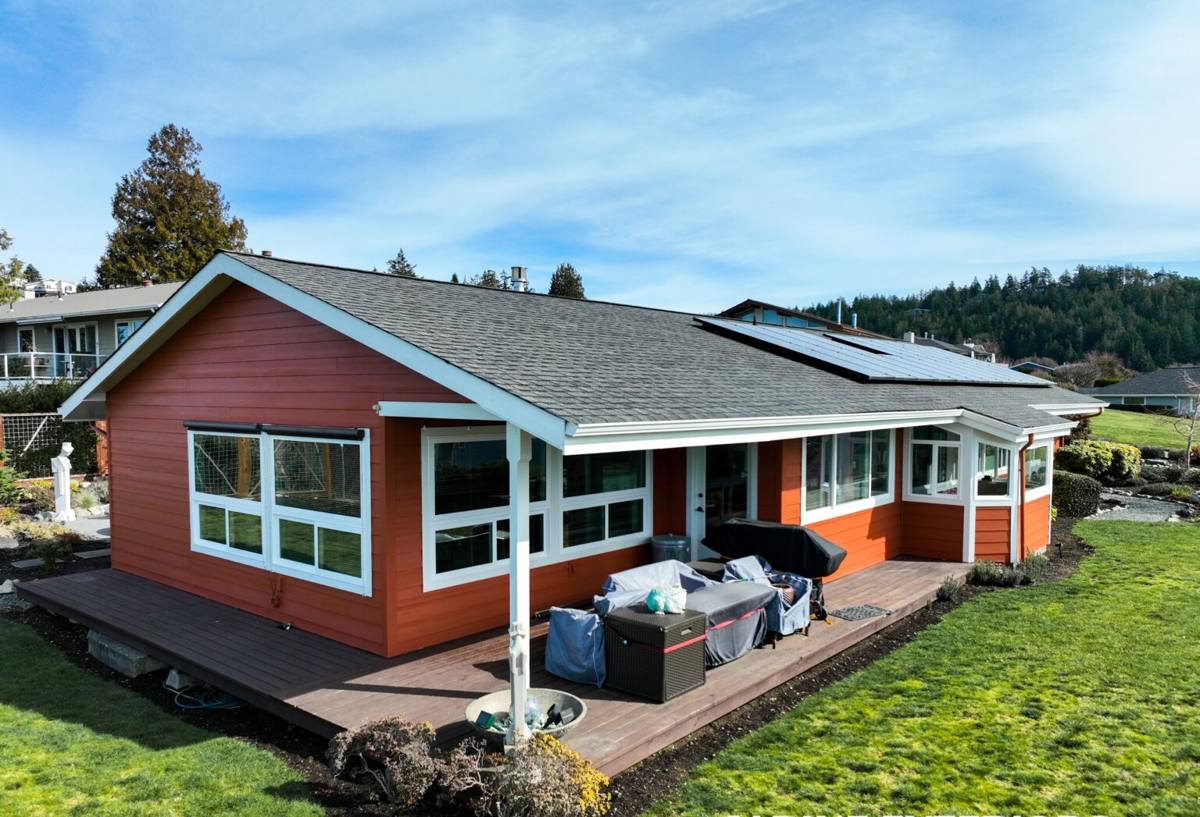
The Columbia neighborhood sits close enough to Bellingham Bay and the surrounding waterways that its houses take on a specific combination of punishment: salt-laden air moving in off the water, wind-driven rain that finds every gap in a building envelope, and a moss season that can stretch for most of the year in Whatcom County's marine climate. None of that damage looks dramatic at first. It shows up as a soft spot near a downspout, a seam that's opened up half an inch, or a patch of siding that stays damp two days after everything else on the house has dried out. By the time it's visible from the sidewalk, moisture has usually been working behind the siding for a while.
We repair siding for homes in and around Columbia on a regular basis, and the pattern is consistent enough that we can usually tell you where the problem started before we ever get a ladder up. That's the advantage of being a crew that works this specific area instead of driving in from out of town for a one-off job.
What Bellingham's Climate Actually Does to Siding
Salt Air and Slow Corrosion
Proximity to salt water doesn't just affect metal railings and hardware — it accelerates the breakdown of fasteners, flashing, and any exposed wood behind the siding. Nails and staples corrode faster than they would inland, and once a fastener loses its grip, the siding panel it's holding starts to move. Movement opens gaps. Gaps let water in.
Driving Rain and Wind Exposure
Bellingham doesn't just get a lot of rain — it gets a lot of rain pushed sideways by wind coming off the water. That matters because most siding systems are designed to shed water moving downward, not water being driven horizontally into laps, seams, and trim joints. Homes with more open exposure to weather take on water in places that a calmer climate would never test.
The Long Moss and Algae Season
Shade, moisture, and mild temperatures are exactly what moss and algae need, and Whatcom County offers all three for most of the year. Moss holds water against the siding surface far longer than open air would, which softens paint, breaks down caulk, and — on wood-based products — accelerates rot. It's rarely the direct cause of a siding failure, but it's almost always present at the scene.
What Correct Siding Repair Actually Involves
There's a real difference between a repair that solves the problem and one that just covers it up. A lot of "repairs" we get called in to fix a second time were done by caulking over a gap or screwing a loose board back down without ever checking what caused it to come loose in the first place. Correct repair work always starts with diagnosis, not patching.
Step One: Find the Water Path, Not Just the Symptom
Rot, staining, or a bulge in the siding is a symptom. The actual problem is almost always upstream — a failed flashing detail, a gap where trim meets siding, a downspout dumping water against the wall, or house wrap that was never lapped correctly during the original install. We trace the path before we touch a panel.
Step Two: Open It Up and Look
You can't fully assess siding damage from the outside. If there's any sign of moisture intrusion, we pull the affected section to look at the sheathing, house wrap, and framing behind it. Surface damage is often the smallest part of the problem — the sheathing underneath tells the real story.
Step Three: Repair the Envelope, Not Just the Skin
Any compromised house wrap, flashing, or sheathing gets corrected before new siding goes back on. Replacing a damaged board over rotten sheathing is a repair that fails again within a year or two — we don't do that kind of work.
Step Four: Match, Fasten, and Finish Correctly
New material gets fastened per manufacturer spec (not "close enough"), joints get properly flashed and sealed, and the finish is matched as closely as the existing siding allows. A repair that's structurally sound but looks like a patchwork quilt isn't a job well done either.
The Repair Points We See Most Often in Columbia
- Bottom courses of siding near grade, where splashback and irrigation keep material wet longer than the rest of the wall
- Corners and butt joints where caulking has failed and never been renewed
- Areas below gutters or downspouts that are undersized, clogged, or misaligned
- Siding around window and door trim where flashing was skipped or installed backward during a prior remodel
- North- and shade-facing walls where moss buildup has held moisture against the surface for extended periods
- Sections patched during a previous repair with mismatched material or inadequate flashing
Older homes in and around Columbia often have a mix of siding generations on the same house — original material on some walls, a past remodel or repair on others. That mix is part of what makes a generic repair approach risky: what worked on one wall's material and detailing may not translate correctly to another.
Repair or Replace? How We Make That Call
Not every problem area needs a full re-side, and not every "small" repair should stay small. We look at scope, not just the size of the visible damage.
| Factor | Leans Toward Repair | Leans Toward Replacement |
|---|---|---|
| Extent of moisture damage | Isolated to one or two sections | Found in multiple areas or spreading behind the wall |
| Sheathing condition | Solid, dry, undamaged behind the affected siding | Soft, delaminating, or rotted over a wide area |
| Age and condition of remaining siding | Sound, well-adhered, good remaining service life | Brittle, failing paint, multiple prior patches |
| Material match availability | Existing product or a close match is available | Discontinued product with no reasonable match |
| Root cause | A fixable, localized issue (flashing, caulk, fastener) | A systemic issue affecting the whole envelope |
When a home is a genuine repair candidate, we'll say so — there's no reason to sell a full re-side to a homeowner whose siding just needs the water source addressed and a section replaced. When the damage is more widespread than it looks from the ground, we'll show you what we found and explain why, rather than just quoting a bigger number.
Why We Repair Toward James Hardie Standards
We install exclusively James Hardie fiber cement siding on full projects, and that standard shapes how we approach repairs too. Hardie's ColorPlus factory finish, HZ climate-engineered formulations, and non-combustible composition are built to hold up to exactly the conditions Columbia deals with — driving rain, salt-influenced air, and prolonged damp exposure — better than wood, vinyl, or many composite alternatives.
When we're repairing a home that already has Hardie siding, that's usually the most straightforward call: sections can be replaced in kind, fastened to spec, and finished to match, because the product is engineered and warrantied for this. When we're repairing a home with a different siding material, we'll do the repair honestly and correctly with material appropriate to that system — but if the underlying siding is reaching the end of its useful life or has recurring problems, we'll be direct that a future full replacement in Hardie is where we'd steer you, and why.
Why We Don't Chase Every Product Type
Vinyl, LP SmartSide, primed wood, and some fiber cement alternatives each have their own repair quirks, expansion characteristics, and failure patterns. We could stock parts and learn detailing for all of them, but we've chosen to build deep expertise around one system rather than spread thin across several. That's a business decision we're upfront about, not a claim that other products can't be repaired well by someone else.
Our Process for a Columbia Siding Repair Call
- Assessment: We walk the exterior, identify visible damage, and check the usual moisture entry points for the neighborhood — grade lines, trim joints, flashing, and gutter runoff paths.
- Diagnosis: If there's any indication of water intrusion, we open the affected area to inspect sheathing and house wrap condition before quoting a scope.
- Written scope: You get a clear explanation of what's damaged, what caused it, and what repair (or, if warranted, replacement) actually requires — no guessing after the fact.
- Repair work: Compromised sheathing and moisture barrier are corrected, new siding and flashing are installed to spec, and finish is matched as closely as possible.
- Root-cause fix: Whatever originally let water in — a gutter issue, a flashing gap, failed caulking — gets addressed, not just the siding sitting on top of it.
- Walkthrough: We show you what was found and what was done, including anything we'd recommend keeping an eye on going forward.
Living With Bellingham's Moss Season After a Repair
A good repair doesn't mean maintenance stops. In a climate where shaded, damp surfaces stay wet for months at a time, some ongoing upkeep protects the work:
- Keep gutters and downspouts clear so runoff doesn't sheet directly down the siding face
- Trim back vegetation and tree cover that keeps specific wall sections shaded and slow to dry
- Rinse moss and algae buildup off siding surfaces before it thickens, rather than letting it sit through another wet season
- Re-check and renew caulking at trim and joints on a normal maintenance cycle — caulk is a wear item, not a permanent seal
- Watch bottom courses near grade and below downspouts first — that's where problems tend to start again if they're going to
Hardie's factory finish and moisture-resistant composition reduce how much of this maintenance falls on the homeowner compared to painted wood, but no siding product eliminates the need to manage water and vegetation around a home in this climate.
Why a Local Crew Matters More Than It Sounds Like
Siding repair is detail work, and details are shaped by geography. A crew that already works Columbia and the surrounding Bellingham neighborhoods knows what the housing stock generally looks like, what weather exposure does to different wall orientations, and what kind of moisture patterns to expect before ever pulling a board. That's not a substitute for a proper on-site assessment of your specific home, but it does mean less guesswork and fewer surprises once the work starts. It also means we're a known, reachable local business if a question comes up after the job is done — not a crew that's moved on to the next county.
Signs It's Time to Call About a Repair
- Soft or spongy siding when pressed, especially near the bottom of the wall or below windows
- Visible gaps, warping, or buckling in a siding panel or board
- Paint that's peeling, bubbling, or discoloring in one concentrated area rather than evenly across the house
- Persistent moss or algae growth that keeps returning to the same section
- Staining or streaking below trim, corners, or fastener heads
- A musty smell near an exterior wall from the inside of the home
- Visible daylight or drafts around siding penetrations for vents, pipes, or fixtures
If you're seeing any of this on a home in Columbia or elsewhere in Bellingham, it's worth a look before the next wet season adds to it. We're happy to come out, take an honest look, and give you a straightforward assessment of what's going on and what it would take to fix it right. There's no cost and no pressure to a free estimate — just a clear picture of where things stand.