 Bellingham Exterior
 Building Decks for Fairhaven's Particular Climate
Fairhaven sits close to Bellingham Bay, and that proximity to salt water shapes what a deck in this neighborhood has to survive. It isn't just rain — Whatcom County gets plenty of that everywhere — it's the combination of salt-laden air off the water, long stretches of driving rain through fall and winter, and a moss season that can run from October well into spring under the tree canopy common to older Fairhaven lots. A deck built the same way you'd build one in a dry inland climate will show problems here faster: corroded fasteners, soft framing, slick surfaces, and finishes that fail years before they should.
This page is about what a correctly built deck in Fairhaven actually requires — the materials, the framing details, the drainage, and the maintenance rhythm — not a generic overview of decks in general.
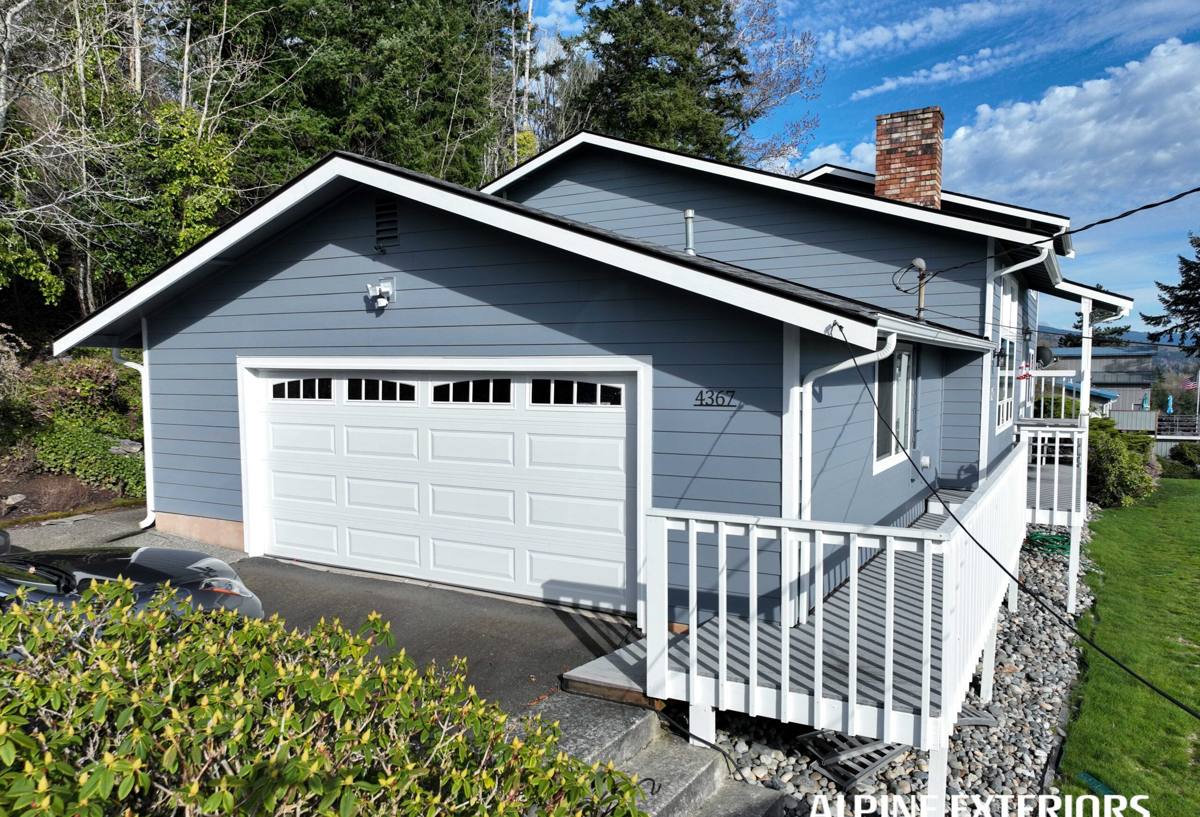
What Salt Air, Rain, and Moss Actually Do to a Deck
Salt Air and Hardware
Homes within a mile or two of Bellingham Bay get airborne salt in the wind, especially with a southwest exposure. Salt accelerates corrosion in metal fasteners, joist hangers, and post bases. A deck built with standard electro-galvanized hardware in a salt-air zone can start showing rust bleed and pitting well before a deck built the same way further inland. Once corrosion starts on a structural fastener, it's not cosmetic — it's a slow reduction in the connection's holding strength.
Driving Rain
Bellingham's rain doesn't just fall straight down; wind off the water drives it sideways into ledger boards, fascia, and any exposed end grain. Water that gets behind a ledger board without proper flashing is one of the most common causes of hidden rot in Pacific Northwest decks — the damage happens where you can't see it, against the house, until the deck starts to feel spongy or pull away from the wall.
Moss and Shade
Many Fairhaven lots have mature trees and are built into sloped, partially shaded terrain. Shade plus moisture is exactly what moss and algae need. On wood decking, moss holds moisture against the board and speeds rot. On any decking material, moss buildup on stair treads and walking surfaces creates a real slip hazard, especially on the steeper lots that are common in this part of Bellingham.
What a Correctly Built Deck Requires Here
None of the conditions above are unusual for this region — they're just more concentrated in a waterfront-adjacent neighborhood like Fairhaven. A deck built to handle them correctly needs attention in a few specific places:
- Ledger flashing: Properly integrated flashing where the deck ties into the house, not just caulk or a wrap-around membrane alone, so wind-driven rain can't track behind the board.
- Fastener grade: Stainless steel or high-grade coated hardware rated for coastal/corrosive exposure, matched to whatever decking material is used, since dissimilar metals can accelerate corrosion in each other.
- Joist protection: Joist tape or an equivalent barrier over the top of framing lumber so screw holes and cut ends aren't left exposed to standing moisture.
- Airflow underneath: Enough clearance and ventilation below the deck that framing can dry out between rain events instead of staying damp for weeks at a time.
- Post bases off the ground: Structural posts set on bases that keep the wood end grain off wet soil or concrete, which is one of the fastest paths to rot in a ground-contact post.
- Slip-resistant surface choices: Decking and stair tread profiles that shed water and resist the slickness that moss and algae film create, particularly on shaded stairs.
Decking Material Options — Trade-Offs for a Fairhaven Lot
There's no single "best" decking material for every home — it depends on how much shade the deck gets, how close it is to the water, and how much maintenance the homeowner wants to take on. Here's how the common options actually compare under these specific conditions:
| Material | How It Handles Moss/Shade | How It Handles Salt Air | Maintenance Load |
|---|---|---|---|
| Pressure-treated wood | Needs regular cleaning; moss takes hold quickly in shaded areas | Fine with stainless/coated fasteners | High — annual cleaning, periodic sealing |
| Cedar | Natural rot resistance, but still needs cleaning where shaded | Fine with correct fasteners | Moderate to high — sealing to hold color and protect surface |
| Composite decking | Doesn't rot, but algae/moss film can still form on the surface | Good — no wood decay risk, but check fastener/clip hardware | Low — periodic washing, no sealing |
| PVC/capped decking | Fully moisture-sealed surface, easiest to keep clean of film | Very good | Low — occasional washing |
Composite and PVC products cost more up front than wood, but in a shaded, moisture-heavy environment like a wooded Fairhaven lot, the reduced maintenance and lack of rot risk often make up the difference over the life of the deck. That said, a well-built and well-maintained cedar or treated-wood deck is a perfectly sound choice for homeowners who prefer the look and don't mind the upkeep — it's a trade-off, not a right-or-wrong answer.
Foundation and Site Considerations for Fairhaven's Terrain
A lot of Fairhaven's streets climb away from the water, and many home lots have real slope and grade change from the house to the yard. That affects deck design in a few practical ways:
- Footing depth and post height often vary more across a single deck than they would on a flat lot, which changes the engineering and bracing needed for stability.
- Taller decks on sloped ground typically need guardrails and stair configurations that meet current code, and multi-level decks are common where the yard drops away sharply from the house.
- Drainage has to be planned so water shed off the deck doesn't just run downhill into a crawlspace or foundation wall — grading and gutter tie-ins matter more here than on a level lot.
Older homes in this part of Bellingham also sometimes have decks that were added or modified over the years without matching permits, which can complicate a rebuild. Part of doing this correctly is checking what's actually there before assuming the existing footings or ledger connection are sound enough to build on.
Cost Factors Worth Understanding Up Front
| Factor | Why It Moves the Price |
|---|---|
| Height and slope of the lot | Taller decks need more structural framing, bracing, and code-required guardrail work |
| Decking material | Composite and PVC cost more per square foot than wood, but reduce long-term maintenance |
| Ledger and flashing complexity | Tying into an older home's siding or trim correctly sometimes takes more time than a simple new-construction ledger |
| Stairs and railings | Multi-level decks on sloped lots often need more linear footage of railing and more than one stair run |
| Permit and inspection scope | Whatcom County and City of Bellingham permitting requirements vary by deck height and attachment method |
How Our Process Works
We keep the process straightforward and try not to surprise homeowners partway through:
- Site visit: We look at the slope, existing structure (if there is one), shade exposure, and how close the deck sits to the water or tree line, since that drives material and framing decisions.
- Design and material discussion: We walk through decking options, railing style, and layout, and give an honest read on maintenance expectations for whatever material is chosen.
- Permitting: We handle the permit application and coordinate inspections through the applicable local jurisdiction so the finished deck is properly documented, not an unpermitted addition that becomes a problem at resale.
- Demolition (if replacing an old deck): Old decking, and any framing that doesn't meet current standards, comes out — we don't build a new deck surface on top of framing we haven't verified.
- Framing and flashing: This is where the coastal-specific details go in — ledger flashing, joist protection, correct fastener grade, and footings sized for the actual soil and slope conditions.
- Decking, stairs, and railings: Installed to the manufacturer's spacing and fastening specs, with attention to how water will shed off the surface and stair treads.
- Final walkthrough: We go over the finished deck together, including what maintenance it needs and roughly how often, so there are no surprises the first wet winter.
Maintaining a Deck Through Bellingham's Wet, Shaded Months
Even a well-built deck needs a maintenance rhythm suited to this climate. What that looks like depends on the material, but the general pattern for a Fairhaven property holds across most of them:
- Clear leaves and debris off the deck surface and out of gaps between boards before fall rains set in — trapped organic matter is what feeds moss and algae growth.
- Wash the surface at least once a year (more often in heavily shaded spots) to break up moss and algae film before it gets a foothold, especially on stairs.
- Check and re-seal wood decking on the schedule the product calls for — typically every one to two years for cedar or treated lumber exposed to this much rain.
- Inspect fasteners and hardware periodically for rust bleed or corrosion, particularly if the deck is within view of the water or gets direct salt-air exposure.
- Keep gutters and downspouts near the deck clear so runoff isn't dumping extra water onto or under the structure.
- Trim back overhanging branches where practical to cut down on shade and debris load, which reduces how much moss pressure the deck faces overall.
Why a Crew That Already Works in Fairhaven Matters
Deck building isn't the same job everywhere in Whatcom County. A crew that mostly works flatter, drier, inland lots may not default to stainless hardware, proper joist tape, or the flashing details that a waterfront-adjacent, tree-covered Fairhaven lot actually needs — not because they're careless, but because it hasn't been forced on them by the conditions. Working this neighborhood regularly means we've already priced out and specified the fastener grades, drainage details, and slope-appropriate framing this area calls for, and we know what local permitting expects for decks on sloped Bellingham lots. That translates into fewer surprises during the build and a deck that's still solid well past the point a corner-cutting build would start showing problems.
Get a Straight Answer on Your Deck Project
If you're planning a new deck or need to replace one that's showing its age, we're glad to come take a look, walk the site with you, and give you an honest read on what it needs. There's no cost and no pressure to move forward — just a clear picture of the options and what they'll actually take to do right on your property. Use the form below to request a free estimate.