 Bellingham Exterior
 Energy-Efficient Windows in Fairhaven: A Different Math for an Older, Exposed Neighborhood
Fairhaven sits right at the edge of Bellingham Bay, and that location shapes how the neighborhood's homes lose and hold onto heat. It's one of the older, more established parts of Bellingham, with a housing stock that ranges from early-century construction to newer infill tucked into the same hillside terrain. A lot of that older stock still carries original single-pane windows, or early-generation double-pane units installed decades ago, and both categories tend to be quietly leaking energy long before a homeowner notices anything beyond "this room is always cold."
We work siding, roofing, windows, and decks throughout Whatcom County, and energy-efficient window work in Fairhaven specifically has to account for a combination most inland Bellingham neighborhoods don't deal with in the same way: salt-tinged marine air coming straight off the bay, rain that gets driven sideways by wind rather than falling straight down, and a moss and mildew season that can run most of the year on shaded, tree-covered lots. None of that shows up on a window's energy label, but all of it affects how long a window actually performs the way that label says it will.
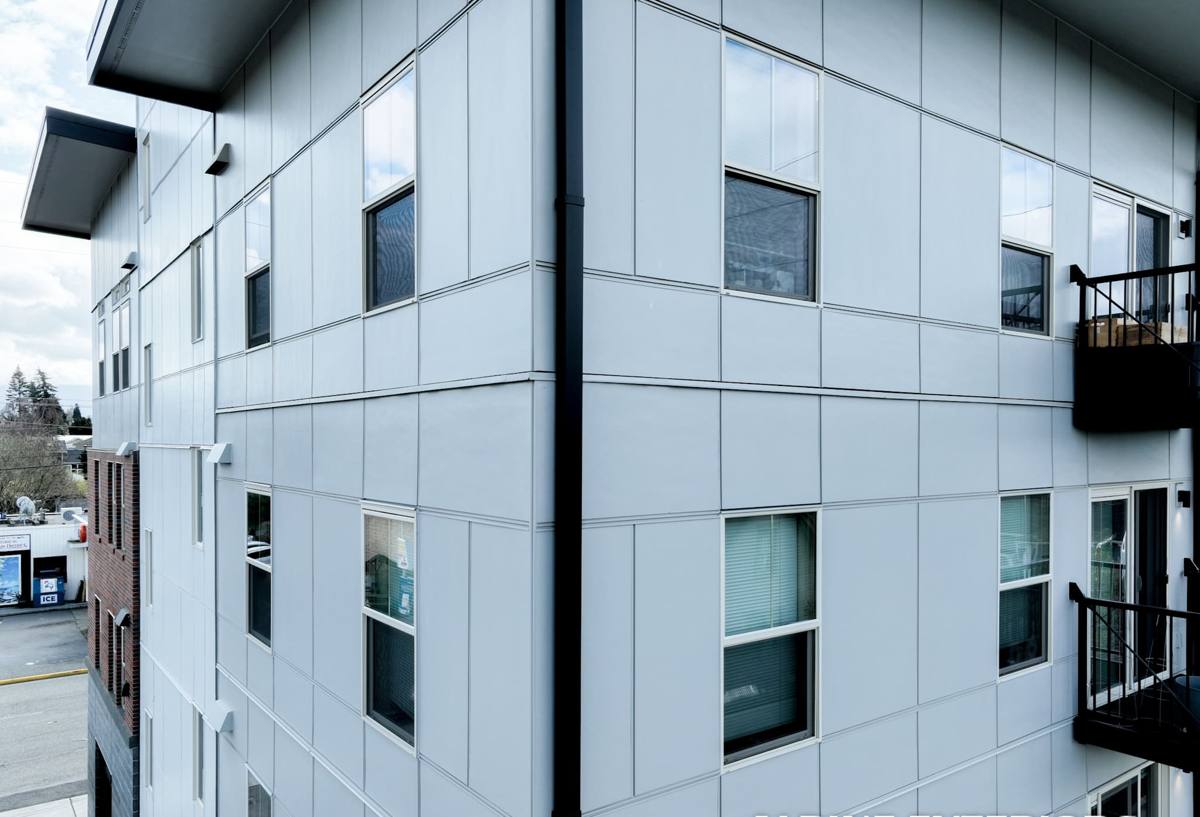
What "Energy-Efficient" Actually Means for a Window
Homeowners hear "energy-efficient windows" as a marketing phrase, but it's really a set of measurable ratings, and understanding them helps separate a genuine upgrade from a sales pitch.
U-Factor
U-factor measures how well a window prevents heat from escaping through it. Lower numbers mean less heat loss. This is the single biggest factor in how much a window replacement actually lowers a heating bill, and it's driven mostly by the glazing package and frame material working together, not either one alone.
Solar Heat Gain Coefficient (SHGC)
SHGC measures how much solar heat passes through the glass. In a climate like Bellingham's, where winter heating dominates the energy picture far more than summer cooling does, a moderate SHGC that still lets in some free solar warmth on clear days is usually a better fit than the very low SHGC glass built for hot, sunny climates.
Air Leakage Rating
This measures how much outside air infiltrates around the sash and frame, not through the glass. A window can have excellent glass and still perform poorly if the frame and sash don't seal tightly, which is one reason two windows with similar-sounding glazing packages can perform very differently in real-world use.
How Fairhaven's Climate Adds to the Energy Equation
Wind Exposure Raises the Real-World Cost of a Weak Window
Fairhaven's proximity to open water means more sustained wind exposure than a sheltered inland lot gets, and wind dramatically increases the rate of heat loss through a poorly sealed window. A window that tests fine in a lab under still air can still perform noticeably worse on a windy hillside lot than the same window would on a calm, tree-sheltered property further inland. This is part of why air leakage rating matters as much as U-factor for a property like this — the wind is what turns a marginal seal into a real, felt draft.
Condensation From Marine Humidity
Mild, damp winters and the steady temperature difference between heated interiors and cold, humid exteriors create real condensation pressure on window glass. Older single-pane windows and early double-pane units with degraded seals show this constantly — fogging between panes, moisture pooling on sills, or a persistent damp feeling near the glass. That's usually a sign the seal or gas fill has failed, not just a cosmetic nuisance, and a failed seal also means the window has quietly lost most of its original energy performance.
Salt Air and Long-Term Hardware Performance
Salt-tinged air off the bay accelerates corrosion on lower-grade window hardware, weatherstripping, and fasteners over time. A window that seals tightly on install day can develop gaps years earlier in a coastal-influenced neighborhood like Fairhaven if the hardware and weatherstripping aren't rated for that exposure, which means the energy performance you paid for on day one doesn't necessarily hold for the life of the window.
Signs a Fairhaven Home Is Losing Energy Through Its Windows
- Rooms near windows that feel noticeably colder than the rest of the house in winter
- A draft you can feel with a hand near the frame even when the window is fully closed and locked
- Fogging or visible moisture trapped between the panes of a double-pane window
- Condensation forming on the interior glass or sill during cold, damp stretches
- Heating bills that feel high relative to the size of the home, especially on older single-pane windows
- Visible daylight or gaps where the frame meets the siding or trim
- Paint or finish on window trim that's peeling, bubbling, or discoloring faster than the rest of the exterior
Glazing and Frame Options We Evaluate
We don't push one brand as the only right answer. What matters for a Fairhaven property is matching the glazing package and frame material to the home's actual exposure and the homeowner's budget and priorities, then making sure the installation delivers the performance the numbers promise.
| Option | Where It Fits | Trade-Off to Know |
|---|---|---|
| Double-pane, low-E, argon-filled | Most Fairhaven homes; strong energy gain over single-pane at a moderate cost | Slightly less efficient than triple-pane, but a lower upfront cost |
| Triple-pane, low-E | North-facing rooms, homes with high heating costs, or owners prioritizing maximum efficiency | Higher upfront cost and added weight, which can matter on older frames |
| Vinyl frame | Most budgets; resists rot and doesn't need repainting | Fewer color options than fiberglass |
| Fiberglass frame | Homes wanting a specific paint color or maximum dimensional stability | Higher material cost than vinyl |
| Corrosion-resistant hardware upgrade | Any window in a bay-adjacent property like Fairhaven | Small added cost, meaningful difference in long-term seal life |
Flashing and Installation: Why the Install Matters as Much as the Glass
A high-efficiency window installed with sloppy flashing or a loose rough-opening fit will underperform its own rating, sometimes badly. Air leakage isn't only a function of the window unit — it's also a function of how tightly and correctly that unit is set, shimmed, and sealed into the wall. On a Fairhaven property, where wind exposure already puts extra pressure on any gap in the seal, installation quality is often the difference between a window that actually delivers its rated performance and one that never quite does.
Proper installation means the flashing laps correctly with the surrounding weather-resistive barrier and siding, insulation is fitted into the gap between the window frame and rough opening without gaps or excessive compression, and every seam is sealed with materials rated for sustained moisture exposure. This is standard practice on every window we install, not an upgrade a homeowner has to ask for. Caulk alone is never treated as a substitute for proper flashing and air sealing — it's a supplement to it, and it breaks down over time if it's asked to do a flashing detail's job on its own.
Replacement vs. Repair: How We Make the Call
Not every underperforming window on a Fairhaven property needs full replacement. A window with a failed seal but a sound frame and functional hardware can sometimes be reglazed or have its seal replaced, recovering much of its energy performance at a fraction of replacement cost. A window with a warped sash, rotted framing, or hardware that's been failing for years usually isn't a good repair candidate — at that point the ongoing energy loss and the labor to keep patching it typically costs more over time than a proper replacement would.
A Practical Checklist for Deciding
- Confirm whether fogging or condensation is coming from a failed seal (repair candidate) or a compromised frame (replacement candidate)
- Check whether drafts persist even after weatherstripping is fresh and hardware is fully engaged
- Have the flashing and rough-opening fit inspected, not just the window unit itself
- Weigh the cost of a repair against how many years of service life the window realistically has left
- Ask for an honest read on each window individually rather than a blanket recommendation for the whole house
Our Process for Energy-Efficient Window Projects in Fairhaven
We start with an on-site walk-through of the existing windows, checking frame condition, seal integrity, hardware function, and how the current flashing ties into the siding around each opening. We'll point out which windows are realistic repair candidates and which make more sense to replace, and we'll talk through glazing and frame options in plain terms based on the home's actual exposure to wind, water, and salt air rather than a one-size-fits-all recommendation. From there you get a written scope before any work begins, with flashing and air-sealing detail handled as standard practice, not an optional upgrade. Because we also handle siding, roofing, and decks, we look at each window as part of the whole building envelope rather than as an isolated product swap.
Why a Local Crew Matters for Window Work in Fairhaven
A contractor who works this stretch of Bellingham regularly already understands how wind off the bay, marine humidity, and salt air behave differently here than they do on a sheltered inland lot. That shows up in the specific decisions that determine whether an energy-efficient window actually performs like its rating promises: how much lap a flashing detail gets, whether corrosion-resistant hardware is specified as standard rather than an upsell, and how carefully the rough opening is sealed against a hillside wind that a calmer property never has to deal with. Fairhaven's older housing stock and bay-adjacent exposure aren't identical to conditions elsewhere in Whatcom County, and a crew with real experience in the neighborhood accounts for that instead of applying a generic checklist.
If your Fairhaven home has drafty, foggy, or high-maintenance windows, or you're simply not sure whether repair or replacement makes more sense for your energy bills, we're glad to take a look. Reach out using the form below for a free, no-pressure estimate.