 Bellingham Exterior
 Fairhaven's Coastal Exposure Asks More of Board & Batten Siding
Board and batten siding has a clean, vertical-line look that suits the older bungalows, craftsman-style homes, and newer infill construction found throughout Fairhaven. But that look only holds up over time if the material and the installation account for where this neighborhood actually sits. Fairhaven's proximity to Bellingham Bay means homes here take on salt-laden air, wind-driven rain off the water, and long stretches of damp, low-light weather that keep siding wet longer than it would be a few miles inland. Add Whatcom County's extended moss and algae season, and you have a climate that's genuinely tougher on exterior materials than most homeowners realize until they've dealt with a siding failure firsthand.
None of that makes board and batten a bad choice for Fairhaven. It makes the material and the details around it — flashing, fastening, batten spacing, finish — the whole ballgame.
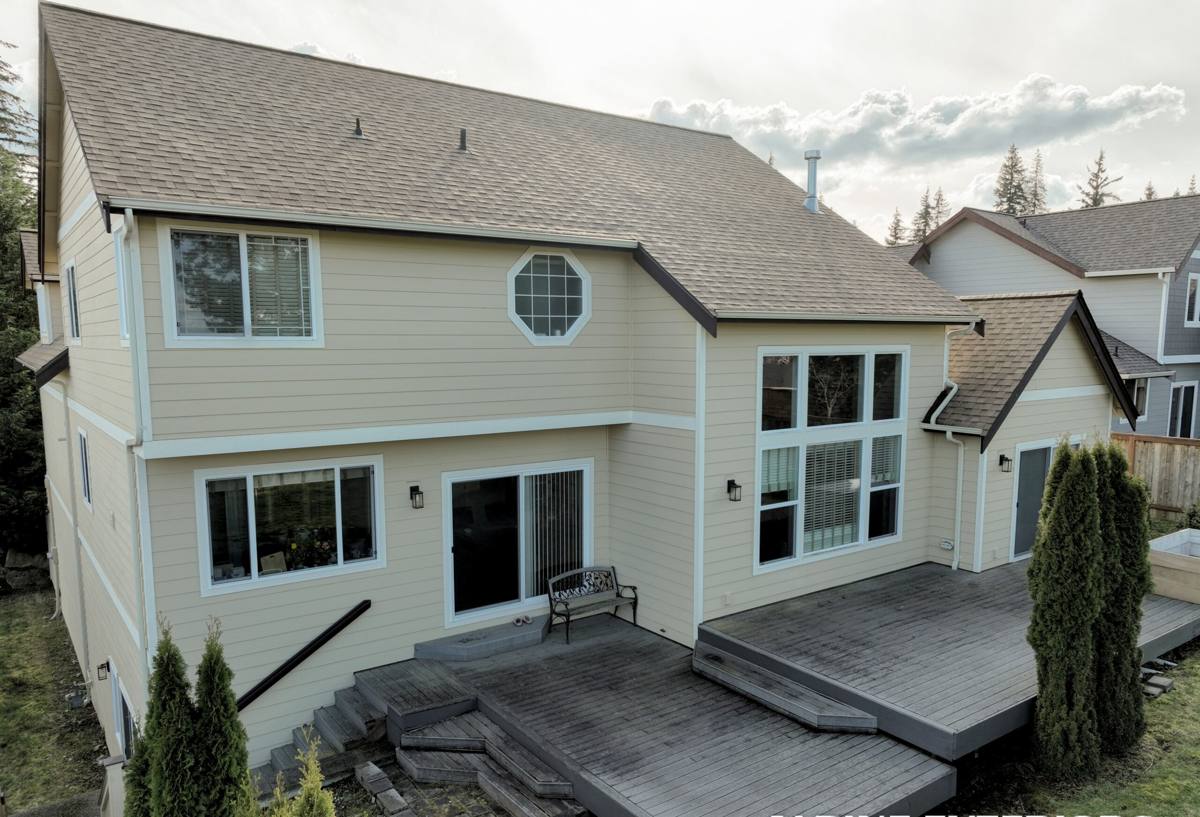
What "Correct" Looks Like on a Fairhaven Home
Board and batten is really a pattern, not a single product — wide vertical boards with narrower battens covering the seams. That pattern can be built out of several different materials, and the material choice determines how the assembly behaves when it's soaked, salted, and shaded for months at a stretch, which is the normal condition on this part of the Bellingham waterfront corridor.
The details that matter most here
- Rainscreen or drainage gap behind the siding, so wind-driven rain that gets past the face has somewhere to drain and dry instead of sitting against the sheathing
- Correct fastener placement and spacing on both boards and battens — over-driven or misplaced fasteners are one of the most common causes of early failure on board and batten jobs
- Properly flashed and caulked butt joints, window and door transitions, and bottom terminations, since water intrusion at these points is what actually rots a wall, not the field of the siding itself
- A factory-cured finish rather than a job-site painted finish, since site-applied paint on raw material is the first thing to fail in a marine climate
Why We Install Board & Batten in James Hardie Fiber Cement — and Nothing Else
We install James Hardie fiber cement exclusively, including for board and batten profiles. We don't install vinyl board and batten, LP SmartSide, Cemplank, Allura, or raw wood boards, and we want homeowners to understand why rather than just take our word for it.
Vinyl board and batten is inexpensive and low-maintenance in a dry climate, but it's a poor match for Bellingham's exposure: it expands and contracts more than fiber cement with temperature swings, and in a salt-air environment it tends to chalk and fade faster than homeowners expect. Wood board and batten — cedar in particular — is a legitimate, attractive traditional choice, but it demands a maintenance commitment (regular refinishing, vigilant caulk and flashing checks) that most homeowners underestimate until moss and moisture have already gotten a foothold. Engineered wood products like LP SmartSide perform reasonably in drier regions but are more sensitive to sustained moisture exposure at cut edges and joints, which is exactly the condition Fairhaven's rain and salt air create.
James Hardie fiber cement is non-combustible, doesn't support the kind of moisture-driven expansion that causes joint failure, and comes with a factory-applied ColorPlus finish engineered to hold color and resist fading in coastal, high-UV-cycling conditions. Hardie's HZ5 product line is formulated specifically for climates with prolonged moisture exposure, which describes Whatcom County's weather for a good part of the year. For board and batten specifically, we typically use HardiePanel vertical siding with HardieTrim battens, or Hardie's Artisan Board & Batten collection where a homeowner wants a more refined, tighter-reveal look. Both give you the same vertical pattern homeowners want, built out of a material that's actually engineered for this climate rather than tolerating it.
Board & Batten Material Comparison
| Material | Moisture Behavior in Coastal Climate | Finish Durability | Typical Maintenance |
|---|---|---|---|
| James Hardie fiber cement | Engineered for sustained moisture exposure; does not rot | Factory ColorPlus finish, long fade resistance | Periodic wash-down, minor caulk checks |
| Cedar board and batten | Absorbs moisture; prone to cupping and rot without diligent upkeep | Job-site or shop finish; fades and weathers faster | Refinishing every few years, ongoing caulk/flashing vigilance |
| Vinyl board and batten | Doesn't rot, but expands/contracts more with temperature swings | Can chalk and fade in salt air over time | Low, but limited repair options if damaged |
| Engineered wood (e.g. LP SmartSide) | More sensitive at cut edges and joints under sustained moisture | Factory finish, moderate durability | Moderate; edge sealing and joint monitoring |
How We Approach a Fairhaven Board & Batten Project
The process is straightforward, but the sequence matters as much as the finish material.
- On-site assessment — we look at the existing wall assembly, current siding condition, moisture staining, moss buildup, and any areas where past water intrusion has already caused damage that needs to be addressed before new siding goes up.
- Weather barrier and drainage plane — we install or verify a proper weather-resistive barrier and drainage gap behind the siding. This is the step that's easy to skip and impossible to inspect once the job is finished, so we don't cut corners here.
- Flashing at every penetration — windows, doors, hose bibs, vents, and any other wall penetration get flashed and sealed before board installation, not patched afterward.
- Board and batten installation — boards and battens are installed to Hardie's fastening and spacing specifications, which is what keeps the manufacturer's warranty intact and prevents the board movement that causes cracking or fastener pop-through.
- Final detailing and walkthrough — trim, caulking, and touch-up are completed, and we walk the finished job with the homeowner before calling it done.
Cost Factors for Fairhaven Board & Batten Projects
Every home is different, but the line items that actually move the price on a board and batten job are consistent. We don't publish flat per-square-foot numbers because wall complexity, current siding condition, and access all vary too much house to house, but here's what to expect to discuss in an estimate.
| Cost Factor | Why It Matters |
|---|---|
| Existing siding removal and disposal | Tear-off complexity varies with layers and condition of the current siding |
| Sheathing or moisture damage repair | Any rot or water damage found underneath must be repaired before new siding goes on |
| Wall height and trim complexity | Multi-story walls, dormers, and detailed trim add labor time |
| Batten spacing and board width chosen | Tighter reveals and custom spacing take more layout and cutting time |
| Color selection | Factory ColorPlus finishes come in a set palette; custom field-painted finishes add cost and reduce warranty coverage |
Living with Board & Batten Through a Whatcom County Moss Season
Fairhaven's tree cover and shaded lots mean moss and algae growth is a near-annual concern, and board and batten's vertical joints and battens can collect organic growth if the assembly isn't detailed correctly. A few things keep this manageable over the long run:
- Proper drainage behind the siding so moisture doesn't linger against the wall assembly
- Adequate roof overhangs and gutter maintenance so runoff isn't sheeting directly down the siding face
- An occasional gentle wash-down, which Hardie's factory finish tolerates well without stripping color
- Prompt attention to any caulk or trim gaps that open up over time, since that's where moisture actually gets behind the assembly
What to Ask Before Hiring a Board & Batten Contractor in Fairhaven
Board and batten looks simple, but it's less forgiving of installation shortcuts than lap siding — bad batten spacing or missed flashing is highly visible and hard to fix without redoing sections of the wall. Before you hire anyone for this work, it's worth asking:
- Do they install to the manufacturer's written fastening and spacing specifications, and will that be documented for warranty purposes?
- Do they install a drainage gap or rainscreen behind the siding, or just nail directly over the existing wall?
- How do they handle flashing at windows, doors, and other penetrations — before or after the siding goes up?
- Can they show you which Hardie product line and profile they're proposing, and why it fits a coastal Whatcom County property?
- Are they familiar with Bellingham's permitting requirements for exterior siding replacement?
Why a Crew That Already Works Fairhaven Is Worth Choosing
A contractor who works Bellingham and Whatcom County regularly has already seen how local wall assemblies age — where moisture tends to get in, which orientations take the worst weather off the bay, and what a wall looks like after a decade of driving rain and moss exposure. That experience shows up in the small decisions on a board and batten job: where extra flashing gets added even though the spec doesn't strictly require it, how battens get spaced around trim, and which details get extra attention on the water-facing side of a house. It's the difference between a crew installing a product and a crew installing a product for this specific climate.
If you're considering board and batten siding for a home in Fairhaven, we're happy to take a look and talk through what your specific house needs. Request a free, no-pressure estimate using the form below.