 Bellingham Exterior
 Roof Repair Built for Fairhaven's Conditions
Fairhaven sits close enough to Bellingham Bay that salt-laden air, wind-driven rain, and heavy tree cover all show up on local roofs in ways that inland neighborhoods don't experience the same way. A roof repair here has to account for more than a missing shingle or a leak stain on the ceiling. It has to account for what put that shingle or leak there in the first place, and what will happen to the repair over the next wet season if that root cause isn't addressed.
We work on roofs throughout Bellingham and Whatcom County, and Fairhaven's older housing stock, mature tree canopy, and proximity to the water make it its own case. This page walks through what we actually look for, how we approach repairs, and what a homeowner in this part of town should expect from a job done right.
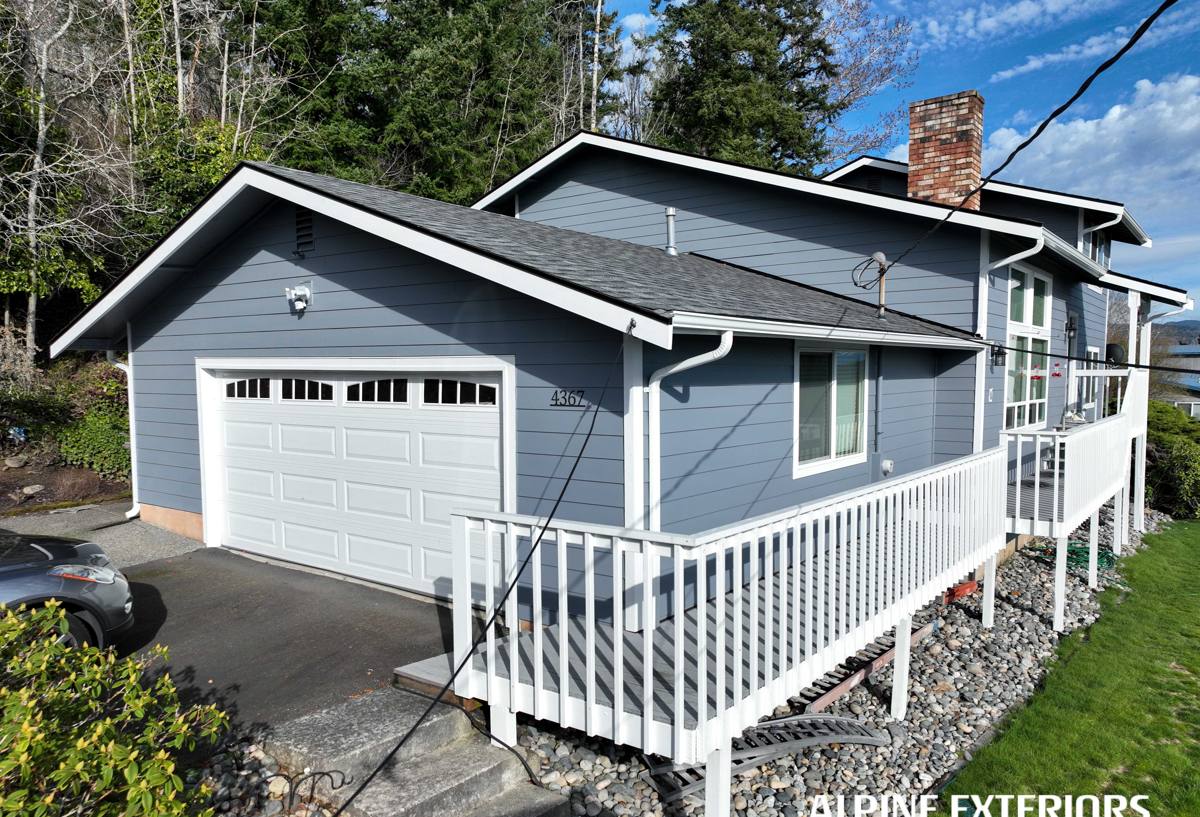
What Fairhaven's Climate Does to a Roof
Salt Air and Metal Fatigue
Being close to the bay means airborne salt settles on roofing metal — flashing, fasteners, gutter hardware, and any exposed screws — and accelerates corrosion compared to roofs further inland. Galvanized fasteners and bare steel flashing that would hold up fine in a dry inland climate can start showing rust streaks and pitting years earlier here. Once a fastener corrodes, it loses its grip and the shingle or panel around it starts to work loose.
Driving Rain and Wind Direction
Storms coming off the water often bring rain sideways, not straight down. That matters because a roof system designed only to shed water downhill can still let wind-driven rain find its way under shingle laps, around vents, and through poorly sealed step flashing at wall intersections. A leak that only shows up during a windy southwesterly storm, and never during a calm rain, is almost always a driving-rain intrusion point rather than a simple worn-out shingle.
Moss, Shade, and a Long Wet Season
Fairhaven's tree cover keeps a lot of roof surfaces shaded and damp for long stretches of the year, which is exactly what moss and algae need to take hold. Moss does more than look bad — it holds moisture against the roofing material, lifts shingle edges as it grows, and works its way under laps and around granule surfaces, opening a path for water. On roofs with north-facing slopes or heavy overhead branches, moss growth can outpace what a homeowner can keep up with on their own.
Signs a Fairhaven Roof Needs Repair, Not Just a Cleaning
- Granules collecting in gutters or at downspout outlets — a sign of shingle wear, not just normal shedding
- Dark streaking or thick moss growth concentrated on shaded or north-facing slopes
- Soft or spongy decking felt underfoot in the attic near valleys or chimneys
- Rust staining below flashing points, vents, or exposed fasteners
- Water stains on interior ceilings that only appear during wind-driven storms
- Curling, cracked, or missing shingles concentrated on one slope facing prevailing weather
- Daylight visible through the roof deck from inside the attic
Any one of these on its own might be minor. Several together usually mean the roof has more than one weak point and a proper inspection should look at the whole system, not just the spot the homeowner noticed.
What a Correct Roof Repair Actually Involves
A lasting repair starts with figuring out where water is actually getting in, which is not always where the ceiling stain shows up — water can travel along rafters or decking before it drips through drywall. We trace the path back to the source before opening anything up.
Diagnosis Before Any Shingles Come Off
We check flashing at every roof-to-wall and roof-to-chimney transition, inspect valleys where two slopes meet, look at vent boots and pipe collars for cracked rubber seals, and check the condition of the underlayment where it's exposed. On a Fairhaven roof we're also specifically checking fastener condition for salt corrosion and moss intrusion under shingle tabs, since those two issues are common here and easy to miss from the ground.
Matching the Repair to the Cause
A leak caused by a failed pipe boot needs a new boot, not a shingle patch over the top of it. A leak caused by moss lifting shingle edges needs the moss removed correctly and the shingles reset or replaced, not just a sealant smear. Sealant and roofing cement have their place for small, specific repairs, but they are not a substitute for proper flashing or a correctly lapped shingle course — used as a first resort, they tend to fail again within a season or two and can mask a bigger problem underneath.
Decking and Structural Check
If water has been getting in for any length of time, the plywood or plank decking underneath can be softened or delaminated. Patching shingles over compromised decking doesn't hold — the new material has nothing solid to fasten to. Any soft decking we find gets cut out and replaced before new roofing material goes back down.
Our Repair Process
- Inspection and diagnosis — roof surface, attic interior, flashing points, and decking condition, with photos of what we find
- Written scope — a plain explanation of the cause, what needs to be done, and why, before any work starts
- Moss and debris removal where relevant, done without pressure-washing methods that strip granules or force water under shingles
- Repair or replacement of the affected shingles, flashing, boots, or decking — matched to existing materials where possible
- Fastener and flashing upgrade where corrosion is a factor, using materials suited to a coastal-influenced climate
- Final check from the attic side where accessible, confirming no daylight or moisture path remains
Repair Versus Replacement: How We Help You Decide
Not every roof issue in Fairhaven calls for a full replacement, and we don't default to recommending one. The table below covers the general factors that push a roof toward one option or the other — every roof is different, and a real inspection is what actually settles it.
| Factor | Points Toward Repair | Points Toward Replacement |
|---|---|---|
| Age of roofing material | Under roughly 12-15 years | Nearing or past manufacturer's expected service life |
| Extent of damage | Isolated to one flashing point, vent, or small area | Spread across multiple slopes or recurring in several spots |
| Decking condition | Solid, dry decking under the affected area | Widespread soft spots or rot found in multiple areas |
| Moss/algae history | Recent growth, shingles otherwise intact underneath | Long-term growth with granule loss and shingle curling |
| Overall shingle condition | Rest of roof still flat, sealed, and granule-intact | General brittleness, cracking, or curling roof-wide |
Why Local Experience in Fairhaven Matters
A roofing crew that regularly works Fairhaven's streets already knows which slopes tend to hold moss longer because of tree shade, which older homes are more likely to have outdated flashing details that don't hold up to wind-driven rain, and how salt exposure near the water shortens the service life of certain fasteners and metals. That's not something you can fully diagnose from a stock inspection checklist written for a dry inland climate — it comes from having worked on roofs in these exact conditions repeatedly.
It also means we're not guessing at material choices. We know which flashing details and fastener types hold up under Bellingham's combination of salt air and sustained wet weather, and we build every repair with that in mind rather than defaulting to whatever is fastest or cheapest to install.
Maintenance That Extends the Life of a Repair
A well-executed repair still needs some basic upkeep to last, especially in a moss-prone, tree-shaded neighborhood like Fairhaven.
- Have gutters and downspouts cleared at least twice a year so water isn't backing up under the roof edge
- Keep overhanging branches trimmed back where practical to reduce shade and debris buildup
- Address moss growth early, before it lifts shingle edges, rather than waiting for visible damage
- Have the roof looked at after any major windstorm, even if nothing looks obviously wrong from the ground
- Check the attic occasionally for musty smells, staining, or damp insulation, which often show up before ceiling stains do
What to Expect When You Call Us
We start with a straightforward roof and attic inspection and give you an honest read on what's actually happening — no pressure toward a bigger job than the roof needs, and no vague sealant patch-and-hope approach either. If it's a genuine small repair, we'll say so. If the damage points to something more extensive, we'll explain exactly why and what your options are.
If you're dealing with a leak, moss buildup, or storm damage on a Fairhaven roof, we're happy to take a look and give you a clear, no-pressure estimate. The form below is the easiest way to get started.