 Bellingham Exterior
 Roofing for Happy Valley's Particular Climate
Happy Valley sits close enough to Bellingham Bay and the surrounding wetlands that homes here deal with a specific mix of weather stress most inland roofs never see. Salt-laden air off the water accelerates corrosion on exposed metal fasteners and flashing. Driving rain, pushed sideways by storms coming off the Strait of Georgia and Puget Sound, finds every weak seam and undersized flashing detail. And the tree cover that makes this part of Whatcom County so pleasant to live in also means shade, moisture, and a moss season that can run eight or nine months out of the year.
None of that makes asphalt shingle roofing a bad choice for the neighborhood — it's still one of the most practical, cost-effective roofing systems available, and it holds up well here when it's installed correctly for these conditions. The problems we see on Happy Valley roofs almost always trace back to shortcuts taken during installation, not a flaw in the shingle itself: not enough attic ventilation, underlayment that wasn't rated for sustained wet exposure, or flashing details that were "good enough" for a drier climate but not for ours.
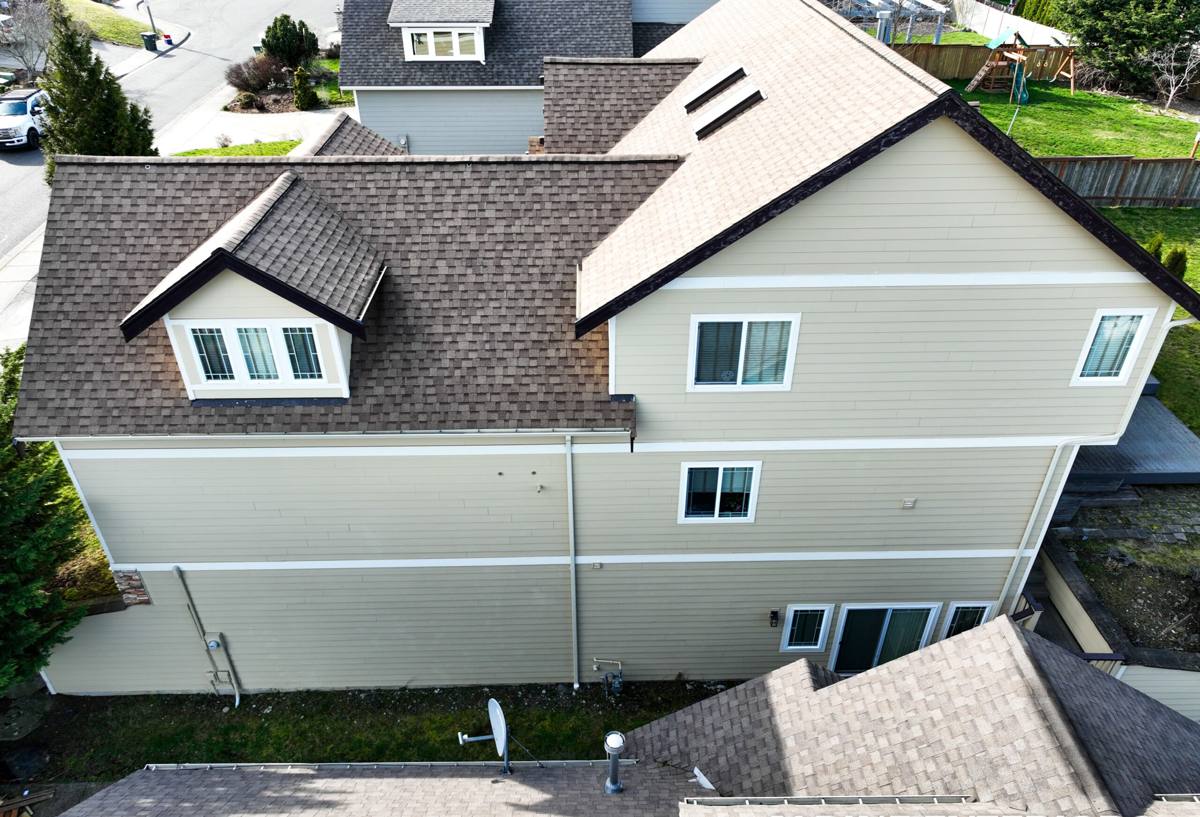
What Local Homes Actually Need From a Shingle Roof
A shingle roof built for Happy Valley needs to do three things well: shed wind-driven rain without letting it work backward under the shingles, resist moss and algae growth on shaded slopes, and keep the attic dry and properly vented so moisture doesn't condense from the inside out. A roof that only handles straight-down rain isn't built for this part of Bellingham.
Wind-Driven Rain
Standard shingle installation assumes water runs downhill in a predictable way. In a storm with sideways wind, water can get pushed uphill under shingle tabs and around penetrations like vent pipes and chimneys. The fix isn't a special shingle — it's proper underlayment coverage, correctly lapped flashing, and sealed nail penetrations at every valley, wall intersection, and roof-to-roof transition.
Moss and Algae
Shaded, north-facing slopes in Happy Valley — especially under mature conifers — stay damp for days after a rain. That's exactly the environment moss needs to establish. Moss holds moisture against the shingle surface, lifts tabs as it grows, and can shorten the life of an otherwise sound roof by years if it's never addressed.
Attic Moisture
Warm, moist indoor air rising into a poorly ventilated attic condenses on the underside of the roof deck during our cool, wet winters. Over time that trapped moisture can rot sheathing from the inside, which no amount of shingle quality on the outside will prevent.
What a Correct Installation Involves
A roof replacement isn't just laying new shingles over the old surface. Doing it right in this climate means:
- Full tear-off to inspect the deck for rot, soft spots, or prior water damage hidden under the old roofing
- Deck repair or replacement of any sheathing that's compromised, before anything new goes down
- Ice-and-water shield at eaves, valleys, and around all penetrations — the highest-risk spots for wind-driven rain
- Synthetic underlayment across the full roof, rated for extended wet exposure rather than a basic felt product
- Balanced intake and exhaust ventilation so the attic can actually dry out between storms
- Properly lapped step and counter-flashing at every wall, chimney, and dormer intersection
- Shingle installation to manufacturer wind-rating specs, including correct nail placement and count — not just "close enough"
Skipping any one of these doesn't usually cause an immediate problem. It shows up two, five, or ten years later as a leak, premature granule loss, or a moss colony nobody can explain.
Choosing the Right Shingle for This Climate
Not every asphalt shingle product is built the same way, and the differences matter more here than in drier climates. The table below compares the shingle classes we typically discuss with Happy Valley homeowners.
| Shingle Type | Typical Lifespan | Algae Resistance | Best Fit For |
|---|---|---|---|
| 3-tab (economy) | 15-20 years | Standard granules only | Budget-driven projects, low-slope exposure areas |
| Architectural / dimensional | 25-30 years | Available with algae-resistant (AR) granules | Most Happy Valley homes — better wind rating and moss resistance |
| Premium / designer | 30+ years | Enhanced AR granules, heavier profile | Homes prioritizing curb appeal and maximum shaded-slope durability |
For most Happy Valley properties, we steer homeowners toward architectural shingles with algae-resistant copper- or zinc-infused granules. They cost more upfront than 3-tab shingles but hold up noticeably better on the shaded, tree-covered slopes common in this neighborhood, and most manufacturers back the AR granules with a longer warranty against algae streaking specifically because they know coastal, wooded climates like ours are where that streaking shows up first.
Ventilation: The Detail Most Often Overlooked
We spend more time talking about attic ventilation on Happy Valley jobs than almost any other single detail, because it's the one most commonly under-built on older homes in this area. Proper ventilation means intake at the soffits and exhaust at or near the ridge, balanced so air actually moves through the attic space rather than just existing at both ends. Ridge vents paired with continuous soffit vents are usually the most effective and least visually intrusive option on a re-roof. Where soffit venting isn't practical, we look at alternatives, but the goal is always the same: keep the underside of the deck dry and the attic temperature closer to outdoor conditions, which also helps the shingles themselves last longer by reducing heat buildup in summer.
Our Process on a Happy Valley Roofing Job
Every job starts with a walk of the roof and attic, not just a look from the ground. We check the deck condition, existing ventilation, flashing details, and any trouble spots the homeowner has already noticed — a stain on a ceiling, a drafty room, visible moss buildup. From there:
- We give a clear, written scope: what's being torn off, what's being replaced, what stays
- We confirm shingle and underlayment selection based on the specific slopes and sun/shade exposure of the house
- We schedule around weather — asphalt shingle installation has real limits in sustained rain, and we won't install underlayment or shingles under conditions that compromise the seal
- We protect landscaping and gutters during tear-off and haul debris off site as part of the job
- We do a final walkthrough with the homeowner before calling the job complete
Because we already work regularly in this part of Bellingham, we have a working sense of which streets sit in heavier shade, which lots catch more wind off the water, and which older homes in the area are more likely to have undersized original ventilation. That's not a substitute for inspecting your specific roof, but it does mean fewer surprises once tear-off starts.
Maintenance That Actually Extends Roof Life Here
A well-installed shingle roof in Happy Valley should need very little, but "very little" isn't "nothing." A short annual routine goes a long way:
- Keep gutters clear so water isn't backing up under the eave edge, especially during fall leaf drop
- Have moss growth treated or gently removed before it spreads across a full slope — don't pressure wash shingles, which strips granules
- Trim back overhanging branches to reduce shade and debris buildup on north-facing slopes
- Check attic ventilation isn't blocked by insulation or storage that's crept up against soffit vents
- After any major windstorm, look for lifted or missing shingle tabs before the next rain
Cost Factors to Expect
Every roof is different, but the biggest cost drivers on a Happy Valley re-roof tend to be consistent:
| Factor | Why It Matters |
|---|---|
| Roof size and pitch | Steeper roofs take longer to work safely and use more material per square |
| Deck condition | Rot or soft sheathing found at tear-off adds repair cost before shingles go on |
| Number of penetrations | Chimneys, skylights, and vent stacks each need individual flashing work |
| Shingle class chosen | 3-tab vs. architectural vs. premium shifts material cost significantly |
| Ventilation upgrades | Adding or correcting intake/exhaust venting is often worth the added cost long-term |
We give itemized estimates so you can see exactly where the money is going, rather than a single lump-sum number.
Repair or Replace: How to Tell
Not every roofing issue in Happy Valley means a full replacement. A few missing shingles, a single failed flashing detail, or minor moss on an otherwise sound roof can often be repaired. Signs that point toward replacement instead include widespread granule loss (visible as bald patches or heavy grit in gutters), shingles that are curling or cupping across multiple slopes, soft spots in the deck found during inspection, or a roof already past its expected service life with recurring leak calls. We'll always tell you honestly which situation you're in rather than defaulting to the more expensive option.
Why a Crew That Already Works in Happy Valley Matters
Roofing crews who mostly work drier, inland regions sometimes under-spec ventilation or underlayment because it's never caused them a problem where they normally work. In a neighborhood dealing with salt air, sustained coastal rain, and long moss seasons, those same shortcuts show up faster. Working regularly in and around Bellingham and Whatcom County means we're already accounting for this area's conditions in how we spec every job, not treating it as an unusual exception.
If you're weighing a repair, a full replacement, or just want an honest read on where your current roof stands, we're happy to take a look. Use the form below to request a free, no-pressure estimate.