 Bellingham Exterior
 Windows Built for Sehome's Coastal Climate
Sehome sits close enough to Bellingham Bay that homes here take on a specific kind of weather load: salt-tinged air drifting up from the water, long stretches of driving rain off the Sound, and the low, wet, mossy conditions that settle in from fall through spring. None of that is dramatic on any given day, but it's relentless, and windows are one of the first parts of a house to show the wear. Seals soften, frames swell and shrink, and moss finds a foothold in anything that stays damp too long. A window that's a good fit for a dry inland climate isn't automatically a good fit for Sehome, and that distinction matters when you're choosing materials and planning an installation.
We work on homes throughout this part of Bellingham regularly enough to know what actually holds up here versus what looks fine on a spec sheet. This page walks through what that means in practice — for the windows themselves, for how we install them, and for what you should expect from a contractor working on your home.
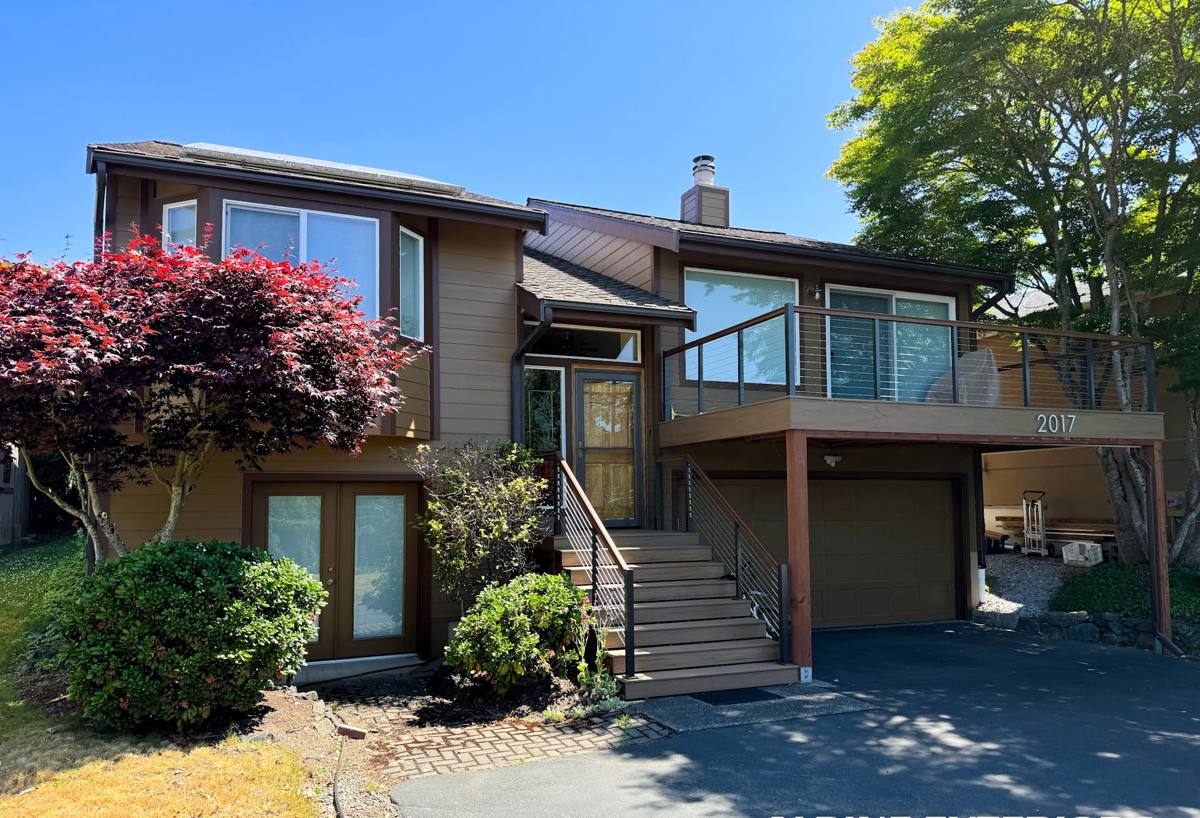
What Whatcom County Weather Does to Windows Over Time
It helps to understand the mechanism, not just the symptom. A few things happen to windows in this climate that don't happen the same way in drier parts of the country:
- Salt air accelerates corrosion. Metal hardware, fasteners, and some frame components corrode faster near the water. Cheaper hinges, cranks, and locks show pitting and stiffness years before they should.
- Sustained rain finds weak seals. A short shower rarely causes damage. Bellingham's pattern of extended, low-intensity rain is different — it gives water time to work into any gap in flashing, caulking, or a compromised seal, which is how you end up with slow leaks that show up as stained drywall or soft trim months later.
- Moss and mildew thrive on window surfaces that stay damp. North-facing windows and anything shaded by trees or eaves can stay wet for days at a time in winter. That moisture supports moss and mold growth on sills, frames, and even between panes if a seal has failed.
- Temperature swings stress seals and glazing. Our winters aren't extreme, but the daily damp-cold-to-dry-heated cycle inside a home still puts real stress on window seals and insulated glass units over the years.
None of this means windows fail quickly here — it means the margin for cutting corners is smaller than it is elsewhere, and it's why material and installation choices matter more in Sehome than they would in a milder, drier location.
What "Custom" Windows Means for a Sehome Home
Custom doesn't mean expensive or elaborate — it means the windows are made to fit your actual openings and your actual house, rather than forcing your house to fit a stock size. Most homes in this part of Bellingham are older than a lot of newer developments elsewhere in the county, which means openings are frequently out of square, sills have settled slightly, or trim details don't match modern standard dimensions. Custom-sized windows solve that at the source instead of relying on shims, gap-filling, and extra caulk to make an off-the-shelf unit work.
Where Custom Sizing Matters Most
- Older double-hung or casement openings with non-standard rough dimensions
- Bay, bow, or angled window arrangements
- Additions or remodeled spaces where the opening doesn't match a catalog size
- Replacing a single unusual window without disturbing the surrounding siding or trim
Getting the fit right up front is also a moisture-management issue, not just an aesthetic one. A window that's forced into an opening it doesn't quite match is more likely to have inconsistent gaps around the frame — and inconsistent gaps are exactly where water finds its way in during a wet Whatcom County winter.
Frame Materials: What We Recommend and Why
There's no single "best" window material for every situation, but in this climate some tradeoffs matter more than others. Here's how the common options stack up for a coastal Bellingham home:
| Material | Moisture Performance | Maintenance | Best Fit |
|---|---|---|---|
| Vinyl | Good — won't rot, resists salt corrosion | Low — occasional cleaning | Most Sehome homes seeking value and low upkeep |
| Fiberglass | Excellent — very stable, minimal expansion/contraction | Low | Homes wanting long-term stability and paintable finish |
| Wood (clad or unclad) | Requires diligence — vulnerable if finish fails | High — regular inspection and refinishing | Historic-style homes where the owner is committed to upkeep |
| Aluminum | Poor thermal performance, prone to condensation | Moderate | Generally not our first recommendation for this climate |
Wood windows can look excellent and suit certain older Sehome homes, but we're upfront with clients about what that choice requires: consistent exterior maintenance, prompt attention to any finish failure, and a willingness to repaint or reseal on a schedule. If that maintenance lapses in a climate with this much sustained moisture, wood is the material most likely to show damage. That's not a knock on wood — it's a maintenance-burden tradeoff we want you to walk in with your eyes open about, since it's your home and your decision.
Glass and Glazing Choices That Actually Matter Here
The glass package is where a lot of the real performance difference lives, and it's easy to overlook next to frame material decisions.
What to Prioritize
- Dual or triple-pane insulated glass: Reduces condensation risk on interior glass surfaces, which is a common complaint in cold, damp Bellingham winters.
- Low-E coatings: Help manage heat loss without sacrificing natural light — useful given how limited winter daylight is here.
- Warm-edge spacers: The spacer between panes affects how much condensation forms at the glass edge, which is often the first place moisture problems show up.
- Argon or krypton gas fill: A modest but real improvement in insulating performance for minimal added cost.
We don't push the most expensive glazing package on every job. For a shaded, north-facing wall in a damp part of a Sehome lot, a stronger condensation-resistant package is worth the upgrade. For a sunnier, more sheltered elevation, a standard package may perform just as well. Part of doing this correctly is matching the glass to the specific exposure of each window, not applying one spec sheet to the whole house.
What a Correct Installation Actually Involves
The window unit itself is only part of the equation — installation quality is what determines whether that window performs for twenty years or starts leaking in three. In this climate, a few steps are not optional:
- Removing and inspecting the old opening. We check the sill, framing, and sheathing for hidden rot or moisture damage before anything new goes in. This is especially important on older Sehome homes where a prior window may have been leaking slowly for years without visible interior signs.
- Correcting any framing or moisture issues found. Installing a new window over compromised framing just hides the problem temporarily — it doesn't fix it.
- Proper flashing integration. Flashing needs to tie into the building's water management layer correctly, directing water out and away rather than trapping it behind the new window.
- Sealing with materials rated for exterior, high-moisture exposure. Not all caulks and sealants are equal, and using the wrong one is a common source of early failure in wet climates.
- Insulating the gap around the frame correctly. Too little insulation leaves a cold spot and condensation risk; overpacking certain materials can bow the frame and affect operation.
- Final interior and exterior trim work. Done to shed water properly on the exterior side, not just for appearance.
Skipping or rushing any one of these steps is how a window installation that looks fine on install day turns into a moisture problem two winters later.
Our Process for a Sehome Window Project
We keep the process straightforward and try to minimize disruption to your home and schedule:
- On-site assessment: We look at each window opening individually — exposure, condition, framing, and how it fits the rest of the home.
- Honest material recommendation: Based on that specific window's exposure and your priorities (budget, maintenance tolerance, appearance), not a one-size-fits-all pitch.
- Clear written scope and estimate: What's included, what materials are being used, and a realistic timeline.
- Careful removal and opening inspection: Catching hidden moisture or framing issues before they become bigger problems.
- Installation to manufacturer and building-science standards: Not shortcuts that happen to look fine from the curb.
- Final walkthrough: Confirming proper operation, sealing, and finish before we consider the job done.
Signs Your Sehome Home May Need Window Attention
Homeowners often wait longer than they should because early signs are subtle. Watch for:
| Sign | What It Often Means |
|---|---|
| Fogging or moisture between panes | Seal failure in the insulated glass unit — not repairable, requires replacement |
| Difficulty opening, closing, or locking | Frame movement, swelling, or hardware wear |
| Visible moss or dark staining on sills | Sustained moisture exposure and inadequate drainage or drying |
| Soft or discolored interior trim near a window | Possible slow water intrusion behind the frame |
| Noticeable draft even when closed | Failed weatherstripping or a compromised seal around the frame |
| Visible gaps or cracked caulking at the frame edge | Deteriorated sealant that's letting water reach the framing |
Catching these early is almost always cheaper than waiting until they cause structural or interior damage. A slow leak behind a window frame in a climate this wet can do real damage to sheathing and framing long before it's obvious from inside the house.
Why Local Experience with Sehome Homes Matters
A crew that regularly works in this neighborhood already understands the general age and construction patterns common to Sehome homes, how different elevations on a typical lot are exposed to weather, and which materials have held up well versus which have been a recurring source of callbacks in this specific climate. That's different from general exteriors experience — Whatcom County's combination of salt air, sustained rain, and a genuine moss season is a specific set of conditions, and installation decisions that work fine in a drier climate can underperform here. Working with a contractor who installs windows across Bellingham and Whatcom County regularly means fewer surprises and fewer decisions made by guesswork.
Get a Straightforward Estimate
If you're dealing with drafty, fogged, or aging windows in Sehome, or you're planning a custom window project for a remodel or addition, we're happy to take a look and give you a clear, no-pressure estimate. Use the form below to get started — we'll assess your specific windows and exposure and walk you through honest options for your home and your budget.