 Bellingham Exterior
 Building Decks for Birch Bay's Coastal Conditions
Birch Bay sits right on the water, and that changes what a deck has to survive. A deck built the same way you'd build one ten miles inland in Bellingham will wear differently here. Salt-laden air corrodes fasteners and hardware faster, driving rain off the bay finds every gap in flashing and framing, and the long moss season coats anything that stays damp for more than a day or two. None of this means a deck in Birch Bay is a losing battle — it means the build has to account for these conditions from the framing up, not just at the finish coat.
We've worked on homes throughout Whatcom County long enough to know that a deck spec that holds up in a dry, sheltered yard doesn't automatically hold up on a bluff or a flat lot a few blocks from the water. Wind-driven moisture, salt exposure, and shade from mature trees all show up in how a deck ages, and we build with that in mind rather than treating every deck the same.
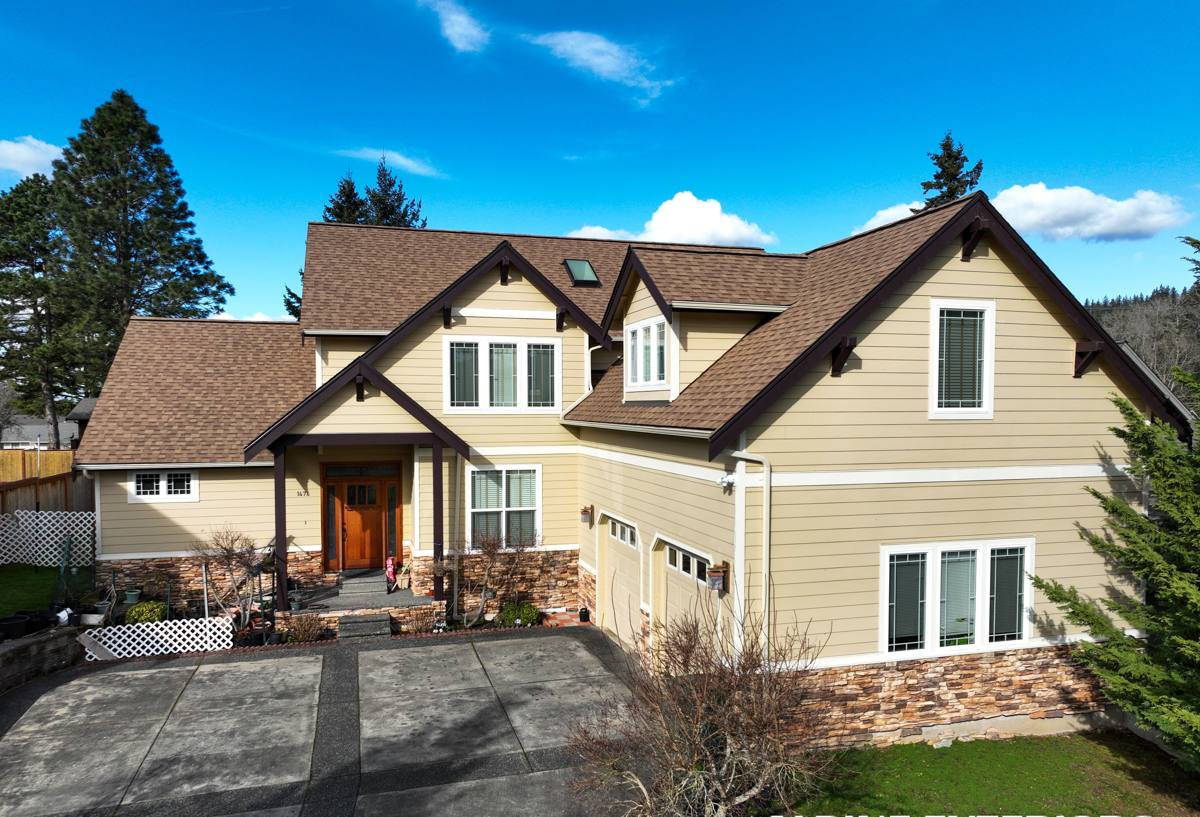
What Birch Bay's Climate Does to a Deck Over Time
Salt Air and Metal Hardware
Standard electro-galvanized screws, joist hangers, and nails corrode noticeably faster within a mile or two of Birch Bay's shoreline. Once a fastener starts rusting, it weakens the connection it's holding and can stain the wood or decking around it. This is one of the most common issues we find when we're asked to look at an older deck near the water — the decking looks fine, but the hardware underneath has been quietly failing for years.
Driving Rain and Wind
Storms off the bay don't always come straight down. Wind-driven rain gets pushed sideways into ledger connections, under poorly lapped flashing, and into any seam that wasn't sealed with that in mind. Over time, this is what rots ledger boards and framing from the inside, long before the surface boards show obvious damage.
Moss, Shade, and Standing Moisture
Whatcom County's wet season runs long, and Birch Bay's tree cover and marine humidity extend it further. Moss and algae take hold on any decking surface that doesn't drain or dry out quickly, and a mossy deck surface isn't just unsightly — it holds moisture against the wood and becomes slick and genuinely dangerous underfoot.
What a Deck Built for This Environment Actually Requires
- Stainless steel or premium coated fasteners and structural hardware rated for coastal/marine exposure — not standard galvanized
- Properly lapped, sealed ledger flashing where the deck attaches to the house, since this is the single most common rot-entry point
- Joist tape or a comparable barrier over framing to keep moisture out of end grain and fastener penetrations
- Decking material and gap spacing chosen to shed water and dry quickly rather than trap it
- Footings and post bases set to drain, not sit in standing water through the wet months
- Railing hardware and connections that won't seize or streak with rust within a few seasons
Skipping any one of these doesn't cause an immediate problem — it causes a slow one, which is exactly why so many decks in this area look fine for a few years and then need real repair work all at once.
Choosing Decking Material for a Birch Bay Property
There's no single "right" decking material for every home — it depends on budget, how much maintenance you want to do, and how exposed the site is to sun, salt, and shade. Here's how the common options actually perform in this specific environment:
| Material | Coastal/Moss Performance | Maintenance | Honest Trade-off |
|---|---|---|---|
| Pressure-treated wood | Fair — needs sealing to resist moisture pickup | Annual cleaning and periodic re-sealing | Lowest upfront cost, shortest lifespan if maintenance lapses |
| Cedar | Good natural rot resistance, but softens over time near salt air | Regular cleaning, occasional oil/stain | Attractive and traditional, but needs consistent upkeep to last |
| Composite decking | Very good — resists moisture absorption and won't rot | Periodic washing to clear moss/algae film | Higher upfront cost, but far less maintenance burden long-term |
| PVC decking | Excellent moisture resistance, least prone to trapping algae | Occasional washing | Highest material cost; installation quality matters more, not less |
Whatever material you choose, we're honest about the trade-offs upfront rather than steering you toward whatever's easiest for us to install. A lower-maintenance material is often the smarter long-term choice for a Birch Bay property specifically because of how much of the year the deck stays damp.
Our Deck Building Process
1. Site Assessment
We look at sun exposure, wind direction relative to the bay, drainage on the lot, and how close the build site is to the shoreline. This tells us how aggressive the moisture and salt protection needs to be for that specific spot.
2. Design and Material Selection
We talk through decking material, railing style, and layout based on how you'll actually use the space, then walk through the real cost and maintenance differences between options — no upselling toward the priciest material by default.
3. Framing and Flashing
This is where most of a deck's long-term durability is decided, and it's also the part that's invisible once the deck is finished. Ledger flashing, joist protection, and fastener selection all happen here, done to hold up against this area's rain and salt exposure rather than to a generic minimum.
4. Decking, Railing, and Finish
Boards are laid with attention to drainage and gap spacing so water sheds instead of pooling, and railing hardware is chosen to match the coastal environment, not just the look of the house.
5. Walkthrough
We go over the finished deck with you, including what maintenance (if any) it needs and roughly how often, so there are no surprises in year two or three.
New Deck Builds vs. Rebuilds and Repairs
Not every deck near Birch Bay needs to be torn out and replaced. Sometimes a deck's structural framing is sound but the surface decking and railing have failed from years of moss and moisture exposure — in that case, a resurfacing with proper flashing corrections can extend the deck's life significantly for less than a full rebuild. Other times, especially on older decks that were never flashed correctly at the ledger, the framing itself has soft spots or rot that make patch repairs a short-term fix at best. We'll tell you honestly which category a deck falls into rather than defaulting to "replace everything" as the answer.
Signs a Deck Needs More Than Surface Repair
- Soft, spongy decking or framing when pressed underfoot
- Rust staining streaking down from fastener heads or hardware
- Persistent moss or algae that returns within weeks of cleaning
- Visible gaps or separation at the ledger board where the deck meets the house
- Railing posts that wobble or have any give when pushed
Permits and Local Building Requirements
Deck construction in Whatcom County, including in the Birch Bay area, generally requires a building permit depending on the deck's height, size, and attachment to the home — requirements can also vary depending on whether a property falls under specific shoreline or environmental review depending on its proximity to the water. We handle the permitting process as part of the build so you're not left navigating county requirements on your own, and we build to code rather than treating permits as optional paperwork.
Why Local Experience in Birch Bay Matters
A contractor who mostly builds decks in drier, more sheltered parts of Bellingham can still do competent framing work, but they may not default to marine-grade hardware or the extra flashing attention a bay-facing deck needs unless they're specifically thinking about it. We work throughout Whatcom County and have seen firsthand how differently a deck ages a few blocks from the water compared to further inland — that experience shapes the materials and details we default to, not just what we offer if asked.
It also means we're familiar with the practical realities of building in this area: site access on smaller coastal lots, seasonal weather windows for framing and finishing work, and how much of the year moisture is a factor in scheduling and curing times for sealants and finishes.
Get an Honest Estimate for Your Birch Bay Deck
Whether you're planning a new deck, replacing an aging one, or just want an honest read on whether your current deck has real problems or just cosmetic wear, we're happy to take a look. Reach out for a free, no-pressure estimate — we'll assess your property's specific exposure and give you straight answers about what it actually needs.