 Bellingham Exterior
 Siding Installation for Ferndale Homes
Ferndale sits close enough to the water and the lowland river valleys around it that homes here take a specific kind of weather beating: salt-laden air drifting in off Bellingham Bay and the Strait, driving rain that comes in sideways during fall and winter storms, and a moss season that can stretch from October well into spring. None of that is unusual for Whatcom County, but it adds up differently depending on what's actually nailed to your house. Siding that would hold up fine in a drier inland climate can fail early here, and siding that's installed correctly for this specific environment can outlast the people who installed it.
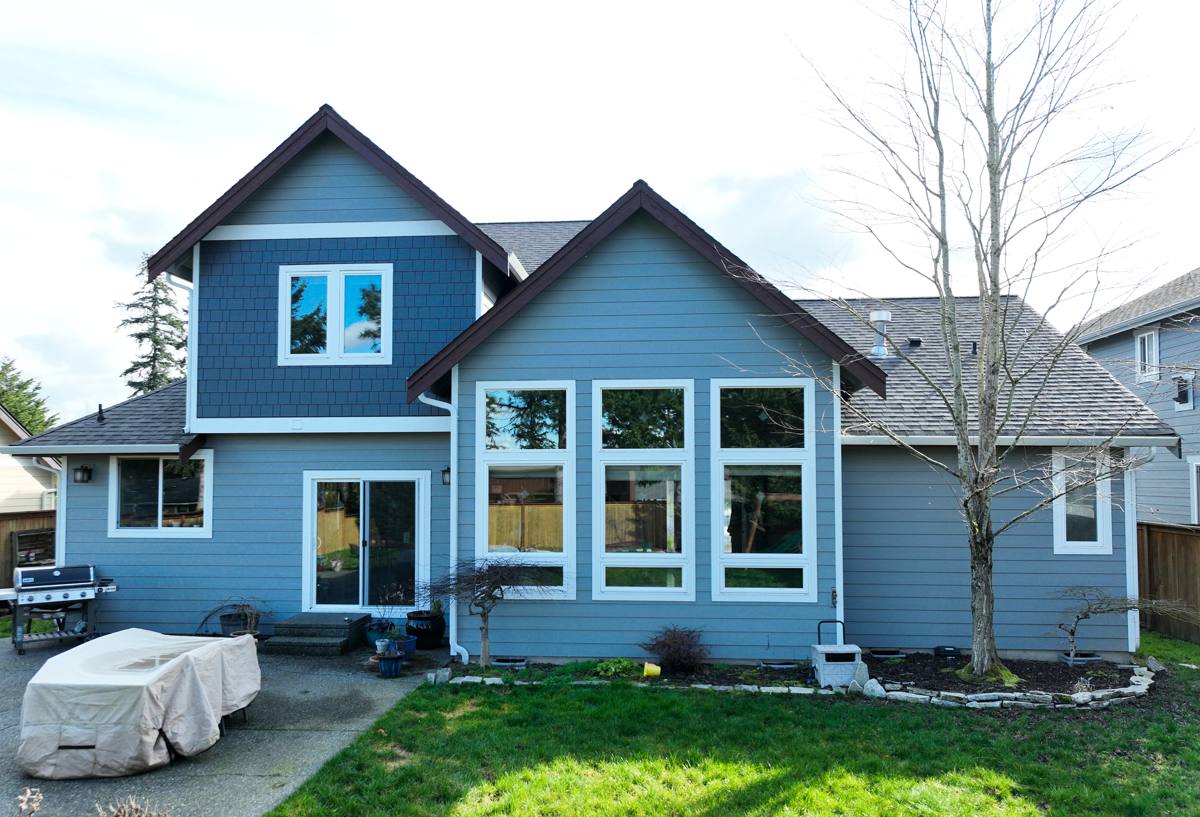
This page is about one job, done right, in one area: new siding installation on Ferndale homes, using James Hardie fiber cement siding, installed the way it's engineered to be installed.
What Ferndale's Climate Actually Does to Siding
Salt Air
Homes closer to the water pick up airborne salt that settles on exterior surfaces. Over years, that salt film accelerates corrosion on exposed metal fasteners and trim, and it can degrade certain paint and coating systems faster than the manufacturer's rated lifespan would suggest. Siding that depends on a surface-applied coating for its weather resistance is more exposed to this than siding with color baked into the product itself.
Driving Rain
Wind-driven rain doesn't just hit a wall — it gets pushed sideways and upward, finding every seam, lap, and penetration that isn't detailed correctly. This is where installation quality matters as much as the product. A correctly lapped, correctly flashed, correctly caulked James Hardie installation sheds that water. A rushed one lets it behind the siding, where it doesn't dry out nearly as fast as it got in.
Moss and Prolonged Dampness
Whatcom County's moss season is long because the conditions that grow moss — shade, moisture, mild temperatures — stick around most of the year. Moss and algae growth on siding isn't just cosmetic. Organic growth holds moisture against the surface longer, which matters a lot more to a wood-based or wood-fiber product than it does to fiber cement.
Why We Install Only James Hardie
We standardized on James Hardie fiber cement siding for every installation we do, including here in Ferndale, for reasons specific to this climate:
- Non-combustible core. Fiber cement doesn't feed a fire the way wood-based sidings can, which matters for insurance conversations and long-term peace of mind.
- Moisture-resistant by composition. Fiber cement doesn't absorb and swell with water intrusion the way engineered wood products can, which matters directly in a driving-rain climate.
- ColorPlus factory finish. Instead of a field-applied paint job that starts weathering the day it's sprayed, ColorPlus color is baked on at the factory in multiple coats, which holds up better against salt air and UV over time than most site-applied finishes.
- Climate-engineered HZ product lines. James Hardie makes region-specific formulations (HZ5 for our climate zone) built around moisture and freeze-thaw behavior for this part of the country, not a one-size-fits-all national spec.
- A real, transferable warranty backed by a manufacturer with decades in the fiber cement category, not a startup material with a short track record.
We don't install vinyl, LP SmartSide, Cemplank, Allura, primed spruce, or cedar. Each of those products has legitimate uses and real fans, but we've made a professional call that for the way homes get weathered in this region, James Hardie is the product we're willing to put our name behind. If you want the fuller reasoning on any one of those alternatives, we've written separate pages walking through the honest trade-offs — this page stays focused on what a correct Hardie installation looks like for a Ferndale home.
What a Correct Installation Actually Involves
The Parts You Don't See
Most siding failures aren't a defect in the siding itself — they're a failure in what's underneath it. A correct installation starts with checking and correcting the weather-resistive barrier (house wrap or building paper), making sure it's continuous, properly lapped, and integrated with window and door flashing before a single piece of siding goes up. Skipping or rushing this step is the single most common reason siding jobs fail early, regardless of the brand on the outside.
Clearances and Gaps
James Hardie specifies minimum clearances from grade, roof lines, decks, and other transitions, along with specific gap and caulking requirements at butt joints and trim. These aren't arbitrary — they're what keeps water moving away from the wall assembly instead of pooling against it. In a climate with as much sustained rain as ours, a quarter-inch of ignored clearance is the difference between a wall that dries out and one that doesn't.
Fastening
Fastener type, spacing, and placement affect both wind performance and how the siding handles the expansion and contraction it goes through across our wet winters and drier summers. Corrosion-resistant fasteners matter more here than in a drier, inland climate because of the salt air.
Field Cutting and Finishing
Any cut edge of fiber cement siding needs to be sealed and painted to match — an exposed raw edge is a moisture entry point. It's a small detail that's easy to skip and easy to notice five years later when it's the one section starting to look rough.
Our Process for a Ferndale Siding Installation
| Step | What Happens |
|---|---|
| 1. On-site assessment | We look at your home's exposure — how much direct weather it takes, existing moisture or rot issues, current siding condition, and any problem areas around windows, decks, or roof intersections. |
| 2. Scope and product selection | We walk through the right James Hardie product line, plank style or panel format, and ColorPlus finish for your home, and put together a clear, itemized scope. |
| 3. Tear-off and substrate check | Old siding comes off and we inspect the sheathing underneath for hidden rot or damage before covering anything back up — this is the stage where problems get caught, not after. |
| 4. Weather barrier and flashing | House wrap, window and door flashing, and penetration details get installed or corrected to manufacturer spec. |
| 5. Siding installation | Installed to James Hardie's fastening, clearance, and lap specifications, by crews who install this product regularly, not occasionally. |
| 6. Trim, caulking, and final finish | Cut edges sealed, joints caulked, trim installed, and a final walkthrough with you before we call it done. |
Why Hiring a Crew That Already Works in Ferndale Matters
Siding installation quality isn't just about following a manufacturer's printed spec sheet — it's about knowing how that spec plays out against the specific weather a house actually faces. A crew that regularly works Ferndale and the surrounding Whatcom County area already knows which sides of a home take the worst of the driving rain, where moss tends to establish first, and how salt air exposure differs for a home near the water versus one further inland. That local pattern recognition shows up in small decisions — extra attention to a particular flashing detail, a slightly more conservative clearance call — that a crew unfamiliar with the area might not think twice about.
It also matters for warranty support. A local, established crew that's still around in five or ten years is worth more than a low bid from a crew that isn't going to be reachable if something needs attention down the road.
Cost Factors for a Ferndale Siding Project
We don't publish blanket per-square-foot pricing because it genuinely varies by project, but these are the factors that move the number most:
| Factor | Why It Matters |
|---|---|
| Home size and wall complexity | More corners, dormers, and roof intersections mean more cutting, flashing, and labor time. |
| Tear-off condition | Rot or damage found under existing siding adds repair scope before new siding goes on. |
| Product line and finish | Different James Hardie plank profiles and ColorPlus finishes carry different material costs. |
| Trim and detail work | Extensive trim, window casing, or architectural detail adds labor beyond flat wall installation. |
| Access and site conditions | Steep lots, tight setbacks, or limited equipment access can affect labor time. |
Signs Your Ferndale Home May Need New Siding Soon
- Visible warping, buckling, or soft spots when you press on the siding
- Paint that's peeling or bubbling repeatedly in the same spots, even after repainting
- Moss or algae that returns quickly after cleaning, especially on shaded or north-facing walls
- Rising utility bills that suggest the wall assembly isn't insulating or sealing the way it should
- Visible gaps, cracks, or separation at seams and trim joints
- Interior signs — musty smell, discoloration, or soft drywall near exterior walls — that can point to moisture getting behind the siding
Get a Free Estimate
If your Ferndale home is due for new siding, or you're not sure whether what you're seeing is a repair issue or a full replacement situation, we're happy to come take a look. The estimate is free, there's no pressure, and you'll get a straight answer about what your home actually needs — you can request one using the form below.