 Bellingham Exterior
 Roofing Built for South Hill's Hillside Conditions
South Hill sits above the rest of Bellingham, and that elevation cuts both ways. Homes up here often catch more wind-driven rain off Bellingham Bay than properties down in the flats, and the mature tree canopy that gives the neighborhood its character also means more shade, more moisture retention on the roof deck, and more debris collecting in valleys and gutters. Add in Whatcom County's salt air and a moss season that can run eight months out of the year, and you've got a roofing environment that punishes shortcuts. A new roof installed here needs to be sized, ventilated, and detailed for those specific conditions — not just installed to a generic manufacturer spec sheet.
We've worked on homes throughout South Hill's older streets and newer infill construction alike, and the pattern is consistent: roofs that fail early almost always fail because of ventilation, flashing, or underlayment choices that were fine for a drier climate but wrong for ours. A correct installation here starts with understanding how water and moisture actually move across a roof in this part of Whatcom County.
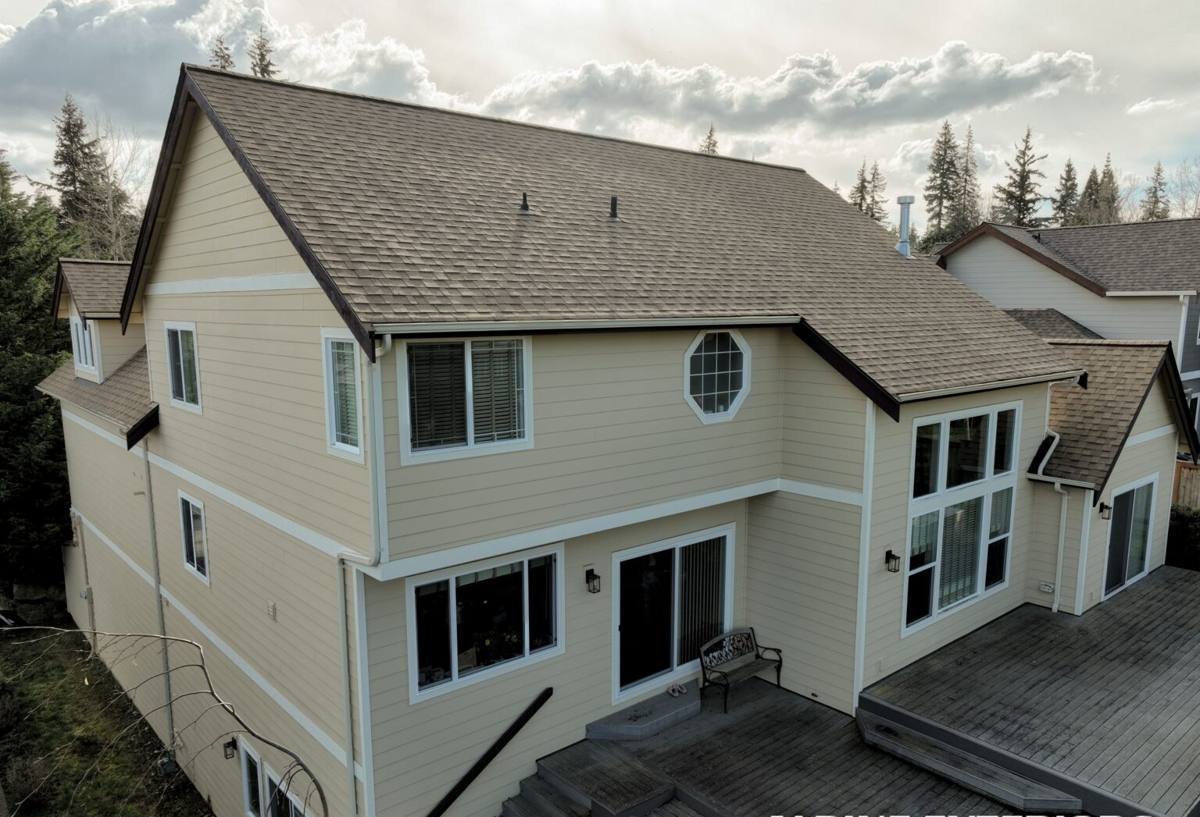
What South Hill Homes Need From a New Roof
Before any decisions get made about shingles or metal, a proper new roof project has to account for a handful of local realities:
- Moss and organic growth control — shaded, north-facing slopes under tree cover need algae-resistant materials and a roof design that doesn't trap moisture against the deck
- Wind-driven rain resistance — proper underlayment and flashing details matter more here than in drier inland climates, where a marginal install might go unnoticed for years
- Ventilation matched to older framing — many South Hill homes were built before modern ventilation standards existed, so intake and exhaust often need to be added or corrected during a re-roof, not just replicated
- Salt air corrosion resistance — fasteners, flashing, and any exposed metal need to hold up to coastal air, not just standard inland-grade hardware
- Slope and drainage — hillside lots often have valleys, dormers, and roof-to-wall intersections that need more attention to detail than a simple gable roof
None of this is exotic. It's standard trade knowledge applied consistently, which is exactly what tends to get skipped when a crew is unfamiliar with how a specific neighborhood's homes and microclimate behave.
The Anatomy of a Correct Roof Installation
Tear-Off and Deck Inspection
A full tear-off is the only way to actually see what's underneath — old underlayment, prior repairs, and the roof deck itself. In Bellingham's damp climate, hidden moisture damage to decking is common enough that we treat every tear-off as an opportunity to catch problems before they're covered up again for another 20-30 years. Any soft, delaminated, or water-stained sheathing gets replaced before anything new goes down.
Ice and Water Protection at Vulnerable Areas
Eaves, valleys, and roof penetrations get self-adhering ice and water barrier, not just standard felt. This matters more on shaded, tree-covered slopes where snow and cold moisture can linger longer than on sun-exposed sides of the same roof.
Underlayment Across the Full Deck
We use synthetic underlayment rated for extended exposure, since Whatcom County's rainy stretches can leave a roof deck covered for longer than the manufacturer's minimum exposure window before the final material goes on.
Flashing at Every Transition
Chimneys, skylights, dormers, sidewalls, and valleys are where the overwhelming majority of roof leaks actually start — not in the open field of shingles. New step flashing, counter-flashing, and valley metal are installed at every transition, not reused from the old roof.
Ventilation Balance
Intake at the eaves and exhaust at the ridge need to be balanced so moist attic air actually gets pulled out rather than condensing against the underside of the new deck. This is one of the most commonly overlooked steps on older South Hill homes, where original construction often didn't include adequate soffit venting.
Final Material Installation
Whether it's architectural asphalt shingles, metal, or another system suited to the home, installation follows manufacturer specs for nail placement, exposure, and sealing — details that directly affect wind and warranty performance.
Comparing Common Roofing Materials for This Climate
| Material | Moss/Algae Resistance | Typical Lifespan Here | Best Suited For |
|---|---|---|---|
| Architectural asphalt shingle | Good with algae-resistant granules | 25-30 years | Most South Hill homes; best value |
| Standing seam metal | Excellent — sheds moss growth naturally | 40-50+ years | Steep slopes, shaded lots, long-term owners |
| Composite/synthetic shake | Good, depends on product | 30-40 years | Historic-style homes wanting a wood look without wood maintenance |
| Cedar shake | Requires ongoing treatment and maintenance | 20-30 years with upkeep | Owners committed to regular maintenance |
We'll walk through these trade-offs honestly during your estimate. There's no single "best" material — it depends on your roof's slope, sun exposure, budget, and how much long-term maintenance you want to take on.
Why a Local Crew Matters More Than It Sounds
A roofing crew that regularly works South Hill and the surrounding Bellingham neighborhoods already knows which streets sit in heavier shade, which lots see more wind funneling off the bay, and which older home styles tend to have ventilation shortfalls. That familiarity shows up in small decisions — where to add an extra course of ice and water barrier, whether a particular roof needs additional intake venting, how to detail a valley on a steep hillside lot — that a crew working from a generic checklist might miss entirely. It also means we're not guessing at permitting requirements or inspection expectations for the City of Bellingham or Whatcom County; we know the process because we go through it regularly.
Our Installation Process
- On-site assessment — we inspect your current roof, attic ventilation, and any problem areas, and take accurate measurements
- Written estimate — a clear breakdown of materials, labor, and scope, with honest options at different price points
- Material selection — we help you weigh material trade-offs against your budget, roof design, and how long you plan to stay in the home
- Scheduling around weather — we plan installation windows with Whatcom County's rain patterns in mind to protect your home during tear-off
- Installation — full tear-off, deck repair as needed, underlayment, flashing, ventilation correction, and final material installation
- Cleanup and walkthrough — magnetic sweep for debris, a final inspection with you, and paperwork for any manufacturer warranty registration
What to Expect During the Project
Most new roof installations on a typical South Hill home take one to three days depending on size, slope, and complexity, weather permitting. We protect landscaping and siding during tear-off, and we don't leave a job mid-project exposed to rain overnight — the deck gets covered or the day's work gets sealed before we leave.
Signs Your South Hill Home May Need a New Roof
- Granules collecting in gutters or at downspouts
- Visible moss or dark streaking, especially on shaded slopes
- Curling, cracked, or missing shingles
- Daylight visible through the attic roof deck
- Soft spots when walking the roof (do not attempt this yourself — this is something we check during inspection)
- A roof approaching or past 20-25 years old, especially if ventilation was never upgraded
- Interior ceiling stains or musty attic odor after heavy rain
Not every one of these means a full replacement is necessary — sometimes targeted repairs or improved ventilation solve the problem. Part of an honest estimate is telling you when repair is the smarter call instead of pushing a full tear-off you don't need yet.
Cost Factors Homeowners Should Understand
Roofing costs vary widely based on roof size, pitch, tear-off complexity, decking condition, and material choice, so we don't publish blanket pricing — it wouldn't be honest for your specific home. What we can tell you is what tends to move the number:
| Factor | Why It Affects Cost |
|---|---|
| Roof pitch and access | Steeper hillside roofs take longer and require more safety equipment |
| Number of layers to remove | Some older homes have multiple roofing layers requiring extra tear-off labor |
| Deck condition | Water-damaged sheathing found during tear-off adds material and labor |
| Roof complexity | Valleys, dormers, chimneys, and skylights each add flashing detail work |
| Material choice | Asphalt, metal, and composite products carry different material and installation costs |
| Ventilation upgrades | Adding intake/exhaust venting to older homes is often necessary but adds scope |
An accurate number only comes from seeing your actual roof — anything else is a guess, and we'd rather give you a real figure than a low estimate that grows once we're on the roof.
If you're planning a new roof for your South Hill home, we're happy to take a look and give you a straightforward, no-pressure estimate. Fill out the form below and we'll schedule a time to assess your roof and walk you through your options.