 Bellingham Exterior
 Why Birch Bay Windows Wear Out Faster Than You'd Expect
Birch Bay sits right on the water, and that location is exactly why windows here take more abuse than windows a few miles inland. Salt-laden air off the bay works on metal hardware, aluminum components, and exposed fasteners year-round, not just during storms. Add Whatcom County's long wet season, where wind-driven rain gets pushed sideways against west- and north-facing walls, and you have conditions that expose weak seals, tired flashing, and aging frames a lot faster than a typical inland home would show wear.
Then there's moss. Shaded, damp yards near the water grow moss and algae readily, and it doesn't stay confined to the roof. It creeps onto window sills, tracks, and exterior trim, holding moisture against wood and vinyl surfaces for months at a time. On older homes, especially the cabins and cottages that were built as seasonal getaways and later converted to year-round living, original windows were often never intended to handle this combination of salt exposure, driving rain, and constant damp shade.
None of this means Birch Bay homes need exotic solutions. It means the details that get glossed over on an easy inland job — flashing laps, sealant choice, frame material, drainage paths — actually matter here, and skipping them shows up as a problem within a few wet seasons instead of a few decades.
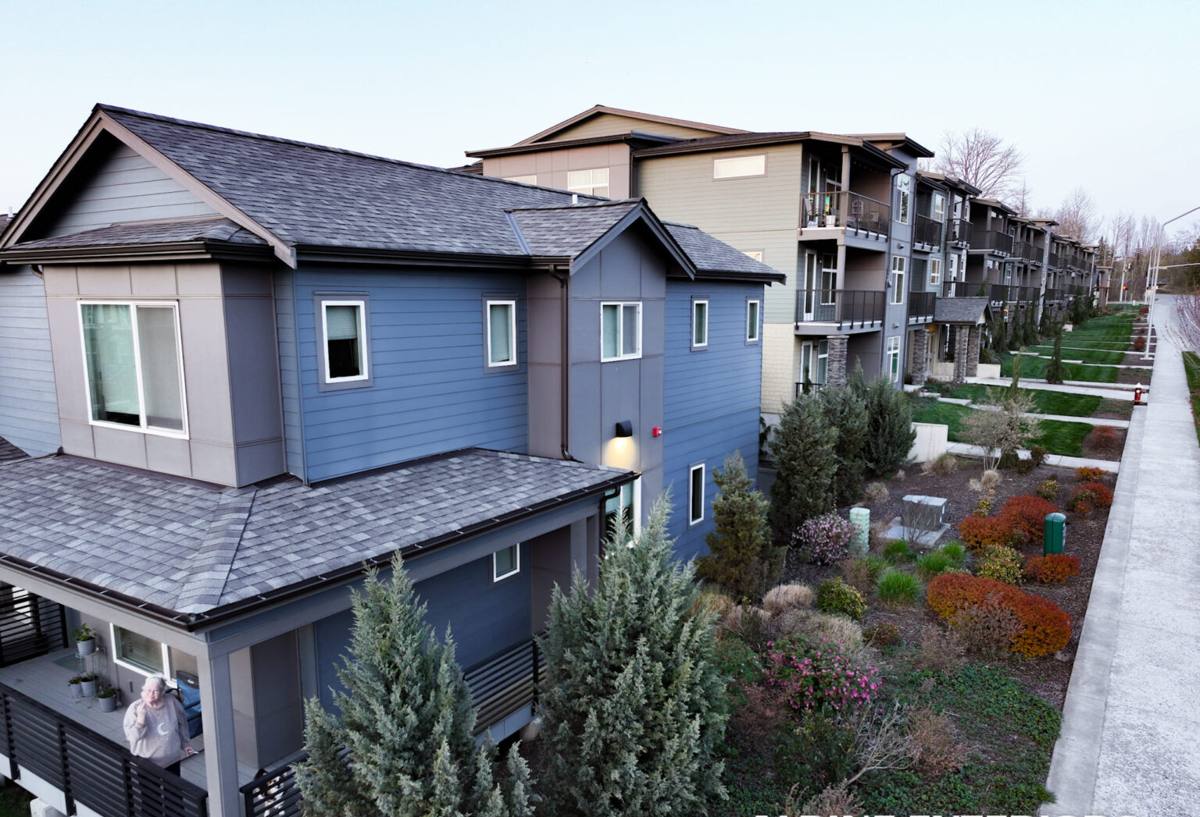
What a Correct Replacement Actually Involves
It's Not Just Swapping Glass
A proper window replacement addresses everything around the window, not just the window itself. That means removing old units down to the rough opening, checking the sheathing and framing underneath for hidden rot or moisture staining, and correcting anything we find before a new window ever goes in. On a coastal property, we treat this inspection step as non-negotiable — it's common to find soft framing or old, brittle flashing tape behind a window that looked fine from inside the house.
Flashing and Sealant Do the Real Work
The window itself is only as good as the flashing and sealant system around it. We integrate flashing with the home's existing water-resistive barrier so that any water that gets behind the siding has a clear path down and out, rather than pooling at the sill. In a location like Birch Bay, where wind pushes rain sideways and upward under normal roof overhangs, sill pan flashing and properly lapped head flashing are the difference between a window that sheds water and one that slowly feeds it into the wall cavity.
Fasteners and Hardware
Salt air accelerates corrosion on standard fasteners and hinge hardware. We use corrosion-resistant fasteners and hardware suited to coastal exposure, which costs a little more up front but avoids the streaking, seizing, and premature failure that plain steel components develop within a few years this close to the water.
Signs a Birch Bay Home Needs Window Replacement Soon
Homeowners near the water often notice problems later than they should, because early symptoms look like normal PNW dampness. Here's what actually signals it's time to replace rather than repair:
- Fogging or a permanent haze between panes — the seal has failed and the insulating gas or air gap is gone
- Soft, discolored, or spongy wood at the sill or lower frame corners
- Persistent moss or dark streaking on the sill that returns within weeks of cleaning
- Visible daylight or a noticeable draft around the frame when it's windy
- Hardware — cranks, locks, hinges — that's corroded, seized, or won't latch tight anymore
- A noticeable difference in room temperature near the window compared to the rest of the house
- Paint or finish that's peeling specifically around the window opening, even when the rest of the wall looks fine
If you're seeing two or more of these on the same window, replacement is almost always more cost-effective than continuing to patch it.
Frame Material Options for a Coastal Property
Material choice matters more here than on a sheltered inland lot. Each option below has real trade-offs — we'll walk through which fits your home's exposure, budget, and maintenance appetite during the estimate.
| Material | Coastal/Salt Air Performance | Maintenance | Notes |
|---|---|---|---|
| Vinyl | Good — won't corrode or rust | Low — occasional rinse | Most cost-effective; wide range of quality tiers |
| Fiberglass | Very good — dimensionally stable, resists salt-driven expansion/contraction | Low | Higher upfront cost, longer expected service life |
| Aluminum-clad wood | Good exterior protection, but any breach in cladding exposes wood beneath | Moderate — cladding seams need periodic inspection | We're careful about installation detailing here; a small gap invites moisture into the wood core |
| Bare wood | Poor without diligent upkeep in salt air and constant damp shade | High — regular refinishing | We'll be honest if a bare wood window isn't the right call for a shaded, damp Birch Bay lot |
We don't push homeowners toward the most expensive option by default. If your home is set back from the water with good sun exposure and airflow, a quality vinyl window may perform just fine. If you're in a low, shaded, or wind-exposed spot, that's when fiberglass or a well-detailed clad option starts to earn its higher price.
Our Process, Start to Finish
- Walkthrough and assessment — we inspect each window from both sides, check framing condition, and note drainage and exposure issues specific to your lot
- Honest recommendation — we tell you which windows genuinely need replacement now versus which can wait, and why
- Written estimate — material options, scope, and a clear price, no vague allowances
- Removal and inspection — old units come out, and we check sheathing and framing before anything new goes in
- Repair as needed — any rot or moisture damage found gets corrected before installation, not covered up
- Installation with proper flashing and sealant — integrated with your home's existing water barrier system
- Final check and cleanup — operation, seal, and finish work confirmed before we consider the job done
What Actually Drives the Cost
We won't quote a number without seeing the home, but these are the factors that move the price up or down on a real Birch Bay job:
| Factor | Why It Matters |
|---|---|
| Frame material selected | Vinyl, fiberglass, and clad options carry different material costs and labor requirements |
| Condition of existing framing | Hidden rot or moisture damage found during removal adds repair scope |
| Window size and configuration | Large picture windows, bays, or custom shapes take more time and material than standard sizes |
| Wall exposure | Windows on the wind- and rain-exposed side of the house often warrant extra flashing detail |
| Number of windows done at once | Batching a full-house replacement typically costs less per window than one-off jobs |
| Access | Second-story or hard-to-reach windows add labor time |
Generally, homeowners in this area should expect a broad range depending on these factors — the only way to get a real number is a walkthrough, which we don't charge for.
Why Local Experience in Birch Bay Matters
A contractor who mostly works inland can still install a window correctly on paper and still get it wrong for this location, because they're not used to designing for sideways rain and constant salt exposure. Crews who regularly work coastal Whatcom County properties know to check drainage paths more carefully, choose corrosion-resistant hardware as a default rather than an upsell, and pay closer attention to flashing details that a drier, more sheltered job might get away without.
There's also a practical side: familiarity with the area means fewer surprises about site access, typical home ages and construction styles in the neighborhood, and what kind of existing damage tends to show up once old windows come out. That translates into more accurate estimates and fewer mid-project surprises.
Living With New Windows Through Moss Season
New windows reduce maintenance, but they don't eliminate it. A little seasonal upkeep keeps them performing well for the long run:
- Rinse sills and tracks a couple times during the wet season to keep moss and algae from taking hold
- Keep nearby vegetation trimmed back so sunlight and airflow can reach shaded windows
- Check exterior sealant annually for cracking or separation, especially after a hard winter
- Operate hardware periodically even on windows you rarely open, to keep mechanisms from seizing
- Clear debris from window wells and drainage weep holes so water has somewhere to go
None of this is heavy work, but skipping it is how a well-installed window ends up with the same problems as the old one, just years sooner.
If your Birch Bay home has windows showing any of the signs above, or you're simply ready to stop fighting drafts and fogged glass, we're happy to take a look. Estimates are free, there's no pressure, and you'll get a straight answer about what your home actually needs — use the form below to get started.