 Bellingham Exterior
 Birchwood's Siding Challenge: Salt Air, Rain, and a Long Moss Season
Birchwood sits inside Bellingham, close enough to Bellingham Bay and the Salish Sea that exterior walls here take on a steady dose of salt-laden air, particularly on the sides of a house that face open wind off the water. Layer on Whatcom County's wet season — long stretches of driving, wind-driven rain from fall through spring — and a home's siding is being tested from two directions at once: airborne salt that speeds up finish breakdown and fastener corrosion, and volumes of rain that have to be shed quickly before they find a way behind the cladding.
Birchwood also has a fair amount of mature tree cover on its older residential streets, which is a mixed blessing. It's part of the neighborhood's character, but it also means shaded, slow-drying north and side walls that stay damp longer after every storm. That combination — salt exposure, sustained rain, and shade — gives moss and algae a longer growing season here than in drier, more open parts of the region. Any siding material installed on a Birchwood home needs to hold up to all three at once, not just one of them.
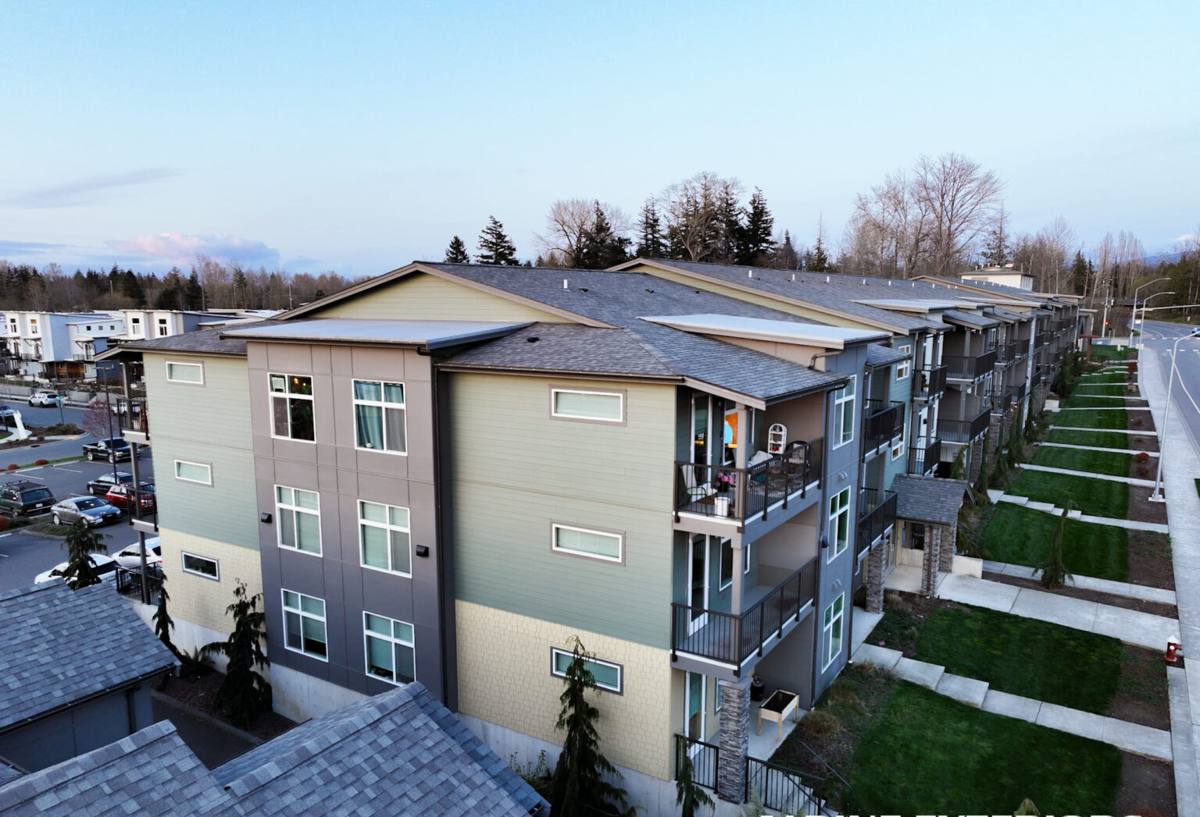
Why Fiber Cement Is the Right Material for This Climate
Fiber cement siding is made from sand, cement, and cellulose fibers, cured into a dense, dimensionally stable board. Unlike wood, it doesn't soak up water into its core and swell or rot. Unlike vinyl, it doesn't expand and contract significantly with temperature swings, and it doesn't become brittle in cold, damp weather. It's also non-combustible, which matters as much for insurance and long-term durability as it does for fire safety. For a climate that alternates between salt spray, saturating rain, and shaded dampness, a material that stays dimensionally stable and doesn't feed mold or rot is the right starting point.
Why We Install Only James Hardie
We install James Hardie fiber cement exclusively. That's not a claim that every other fiber cement product is inadequate — it's a decision to standardize our crews on one system so every flashing detail, fastener spec, and finish process is one we've installed hundreds of times and know cold. Three things specifically kept us on Hardie for this climate: the ColorPlus factory finish, which is baked on under controlled conditions rather than applied on-site; the HZ (HardieZone) product engineering, which accounts for regional moisture and temperature conditions; and a transferable warranty that gives homeowners real coverage if they sell the house before the siding's service life is up. Consistency in the product line means fewer surprises in how the wall performs ten or twenty years out.
What a Correct Fiber Cement Installation Actually Involves
Fiber cement siding is only as good as the wall assembly behind it and the details around it. A board that meets spec but is installed with the wrong clearances or missing flashing will still let water in — and in a climate with this much sustained rain, a small gap becomes a real problem faster than it would somewhere drier.
Water Management Starts Before the First Board Goes Up
Before any siding goes on, the wall needs a continuous weather-resistive barrier, properly lapped so water always drains outward and downward. Flashing goes in at every window and door head, and kickout flashing is installed at every roof-to-wall intersection — a detail that's easy to skip and one of the most common sources of hidden rot when it's missed, especially under Birchwood's driving rain. Depending on the wall assembly, a drainage gap behind the siding gives bulk water and incidental moisture a way out instead of trapping it against the sheathing.
Fastening and Clearances Matter More Than Color
Hardie's installation specifications call for corrosion-resistant fasteners driven at specific spacing and depth — not overdriven, not underdriven — which matters more here than in a low-salt climate because any weak point in a fastener becomes a rust streak and a water path sooner. Boards need roughly six inches of clearance from grade and two inches from roofing, joints get staggered rather than stacked, and every cut end gets sealed or primed before installation, since a factory-finished board with an exposed, unsealed cut edge is the fastest way to let moisture into the substrate.
Our Process for a Birchwood Fiber Cement Siding Project
- On-site assessment — we walk the full exterior, noting which walls face prevailing wind and salt exposure and which are shaded and slower to dry, since those walls often need different attention to flashing and drainage.
- Substrate check — old siding comes off and we inspect the sheathing and framing underneath for rot or moisture damage before anything new goes up. Any repairs happen here, not after the fact.
- Weather barrier and flashing — a new weather-resistive barrier, window and door flashing, and kickout flashing at roof lines are installed to manufacturer spec.
- Hardie installation — boards, panels, or shingles go up with correct fastener type, spacing, and clearances, following the HardieZone specification for this region.
- Trim and sealing — corner boards, trim, and joints are finished and sealed with a paintable sealant compatible with the ColorPlus finish.
- Final walkthrough — we go over the completed exterior with the homeowner and clean the site before we call the job done.
Choosing the Right Hardie Line and Finish for This Area
Not every Hardie product is the right fit for every part of a house. Most Birchwood homes do well with a primary lap siding and one or two accent products for gables, dormers, or trim work.
| Hardie Product | Typical Use on a Birchwood Home | Why It Fits |
|---|---|---|
| HardiePlank Lap Siding | Main field of the house | HZ5 formulation engineered for Pacific Northwest moisture and temperature patterns |
| HardiePanel Vertical Siding | Accent walls, gables, modern styling | Clean lines for contemporary or mixed-material exteriors |
| HardieShingle | Gable accents, cottage-style details | Traditional shingle look without wood's maintenance burden |
| HardieTrim | Corner boards, fascia, window and door trim | Matches expansion and finish characteristics of the field siding |
The ColorPlus factory finish is worth understanding on its own: it's applied and cured in a controlled factory setting, which gives it better fade and chalk resistance than a field-applied paint job — a real advantage where salt air already puts extra stress on exterior finishes. It comes with its own finish warranty separate from the substrate warranty, and because both are transferable, a homeowner who sells the house passes that coverage along, which can be a genuine selling point.
Fiber Cement vs. Other Siding Materials in a Coastal, Shaded Climate
Homeowners comparing options should know the honest trade-offs of the alternatives, not just the pitch for the one we install.
| Material | Salt-Air Durability | Moisture & Rot Resistance | Moss/Algae Resistance | Ongoing Maintenance |
|---|---|---|---|---|
| Fiber Cement (James Hardie) | Strong — non-corrosive core, factory finish | Strong — doesn't absorb water into the core | Good — dense surface resists growth better than wood | Low — periodic rinsing, occasional caulk check |
| Vinyl | Moderate — can chalk and fade faster under salt and UV | Moderate — seams can allow water behind panels | Moderate — smooth surface but seams collect debris | Low, but panels can warp or crack over time |
| Wood / Cedar | Weak without diligent upkeep — finish breaks down faster in salt air | Weak in shaded, damp conditions without consistent maintenance | Weak — organic surface, prone to moss and mildew in shade | High — regular painting, staining, and repair |
| Engineered Wood (LP-type) | Moderate — coated but sensitive at cut edges | Moderate — vulnerable if edges or seams aren't sealed properly | Moderate | Moderate — edge maintenance is critical |
This is why we standardized on fiber cement, and specifically on James Hardie, rather than installing everything a homeowner might ask for. Wood siding can look excellent and plenty of people love it, but it asks for a maintenance commitment that's harder to keep up with under Birchwood's tree cover and rain totals. Vinyl and engineered wood products have their own reasonable uses, but neither matches fiber cement's combination of dimensional stability and finish durability in this specific combination of salt, rain, and shade.
Living With Fiber Cement Siding in Birchwood: Maintenance That Actually Matters
Correctly installed fiber cement siding is low-maintenance, not no-maintenance. A short annual routine keeps it performing the way it's designed to, especially given the local moss season.
- Rinse siding at least once a year, paying extra attention to shaded north- and side-facing walls where moss and algae build up fastest.
- Keep gutters and downspouts clear so water is directed away from the base of the walls rather than running down the siding face.
- Trim back overhanging branches and vegetation where possible to improve airflow and sun exposure on chronically damp walls.
- Check caulking at trim, window, and door edges once a year, ideally after the wet season, since sealant is the first thing to fail if it's going to.
- Look for hairline cracks near ground level after hard freezes and have them addressed early rather than left to widen.
- Don't assume you need to repaint on a wood-siding schedule — the ColorPlus finish is designed to hold its color and integrity for a long service life without routine repainting.
Why Local Experience in Birchwood Specifically Matters
A crew that already works in this neighborhood knows which walls take the worst of the wind off the bay, which lots stay shaded and slow to dry long after a storm passes, and how Bellingham's permitting process and Whatcom County's wet-season scheduling affect a siding project's timeline. That knowledge shows up in small decisions — where to add extra flashing, which walls need closer attention during installation, how to sequence the job around the weather — that a crew unfamiliar with the area is more likely to miss. It's the difference between a siding job that looks right on installation day and one that's still performing correctly ten winters later.
If you're considering fiber cement siding for a home in Birchwood, we're happy to walk the property, talk through what your specific walls are dealing with, and put together a free, no-pressure estimate. There's a form below to get started.