 Bellingham Exterior
 Siding Replacement in Birchwood: Built for What Bellingham Actually Throws at a House
Birchwood homes sit inside the same weather system as the rest of Bellingham and Whatcom County: a marine climate that mixes salt-laden air off the water with driving, wind-pushed rain for months at a time, followed by a long stretch every year where north-facing and shaded surfaces stay damp long enough to grow moss. That combination is hard on siding in ways that don't show up in a drier climate. Salt air accelerates corrosion on fasteners and trim metal. Wind-driven rain doesn't just wet a wall's surface, it finds every seam, nail hole, and butt joint that wasn't sealed or flashed correctly. And moss doesn't just look bad on siding, it holds moisture against the surface for weeks, which is exactly the condition that rots wood-based products and delaminates poorly bonded siding faces.
A siding replacement in this neighborhood isn't just a cosmetic upgrade. Done right, it's a chance to fix the moisture path into the wall, not just cover it up.
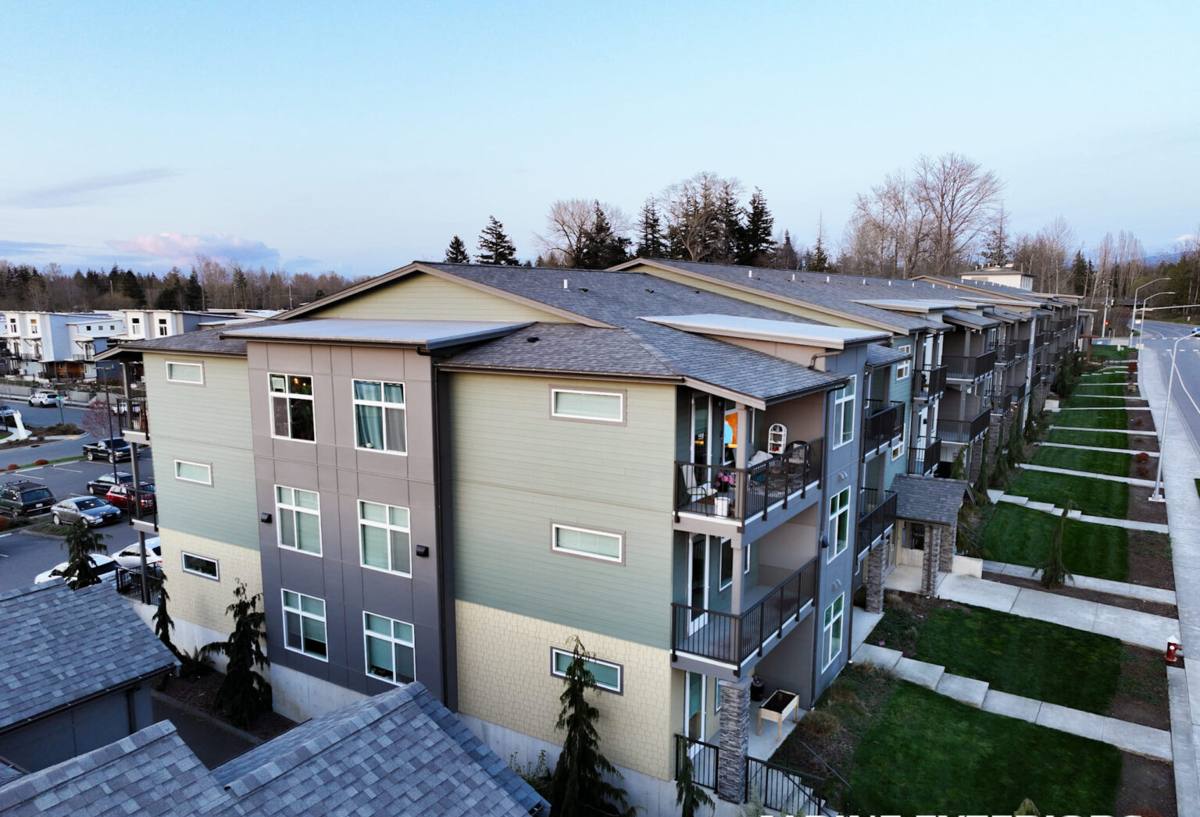
Signs a Birchwood Home Needs Siding Replacement
Moisture and material failure
- Soft, spongy, or crumbling siding when pressed, especially near the bottom courses and around window trim
- Paint that keeps failing within a year or two of repainting, even with quality paint
- Visible swelling, delamination, or bubbling on panel faces
- Persistent moss or algae growth that comes back within weeks of cleaning
- Staining or musty smell on interior walls that back up to exterior siding
Structural and fastener issues
- Rust streaks running down from nail heads or trim fasteners
- Gaps opening up at seams, corners, or where siding meets trim and flashing
- Siding that has visibly cupped, warped, or pulled away from the wall
Any one of these on its own might be a repair. Several at once, especially on a home with siding original to the house or from an earlier remodel, usually means the underlying weather barrier is compromised and a full replacement is the more honest fix.
What a Correct Siding Replacement Actually Involves
The finished product is only as good as what happens underneath it. A siding job that just swaps old panels for new ones over a bad weather barrier will fail the same way, just on a slower timeline.
Tear-off and wall inspection
Once the old siding comes off, the sheathing and framing get a real look. In a climate like ours, it's common to find soft sheathing, rot at window sills, or corroded fasteners hiding behind siding that looked fine from the street. Any of that gets repaired before anything new goes up — new siding over damaged sheathing just hides the problem for a few more years.
Weather-resistive barrier and flashing
This is the layer that actually keeps water out, not the siding itself. Correct installation means a continuous weather-resistive barrier, properly lapped (upper courses over lower, always shedding water downward), with flashing at every window, door, deck ledger, and roof-to-wall intersection. Given how much wind-driven rain this area sees, seams and penetrations get more attention here than they would in a drier region.
Installation to manufacturer spec
Fiber cement siding has specific requirements for fastener type, spacing, clearance from grade and roof lines, and butt joint treatment. Skipping these details doesn't usually cause an immediate problem — it shows up two, five, or ten years later as the kind of failures listed above.
Why We Install Only James Hardie Fiber Cement
We don't install vinyl, LP SmartSide, primed wood, or cedar siding. That's a deliberate standard, not a sales pitch, and it's worth explaining honestly rather than just stating it.
Wood and engineered-wood products can perform well when maintained aggressively, but Whatcom County's damp, moss-prone conditions punish any gap in that maintenance — a missed repaint cycle or a section that stays shaded and wet is exactly where those products are most vulnerable to rot and delamination. Vinyl sheds water fine on its face, but it's a thin material that moves with temperature swings, its seams and corners are a weak point in wind-driven rain, and it's not sold on the idea of stopping fire, which matters to some homeowners in this region. James Hardie fiber cement is cement, sand, and cellulose fiber — it doesn't rot, it doesn't feed moss and mold the way wood fiber does, and it holds up to sustained damp exposure far better than wood-based alternatives.
| Factor | James Hardie Fiber Cement | Vinyl | Wood / LP SmartSide |
|---|---|---|---|
| Moisture and rot resistance | Does not rot; cement-based core | Won't rot, but seams leak under wind-driven rain | Vulnerable to rot if coating fails or moisture sits |
| Moss and organic growth | Doesn't feed growth; factory finish resists staining | Growth sits on surface, can be power-washed | Wood fiber can feed moss and mildew where damp |
| Salt air / corrosion exposure | Non-metallic face; use of corrosion-resistant fasteners | Face resists salt but is thin and can become brittle over time | Coatings degrade faster under salt-laden, damp air |
| Maintenance burden | Repaint cycle stretched by factory ColorPlus finish | Low, but cracks/fades and can't be easily repainted | Regular repainting and caulking required |
| Fire performance | Non-combustible | Combustible, can melt/deform near heat | Combustible |
Choosing the Right Hardie Product for Birchwood's Exposure
James Hardie makes region-specific products, and that matters here. The HZ5 formulation is engineered for climates with more moisture and freeze-thaw cycling than the desert Southwest sees, which fits the Pacific Northwest. For Birchwood homes, we typically work with:
- HardiePlank lap siding — the most common choice, in smooth or cedar-textured finish, for a traditional horizontal look
- HardieShingle — for homes wanting a shingle-style or accent look without the maintenance of real cedar shingles
- HardieTrim — matched trim boards around windows, corners, and fascia so the whole exterior system is consistent, not a mix of old wood trim and new siding
All of it comes with a factory-applied ColorPlus finish, which matters more in a climate like ours than it does somewhere dry — a factory-baked finish holds color and resists moisture intrusion at the surface far better than a field-applied paint job, and it's backed by its own finish warranty separate from the product warranty.
Our Process, Start to Finish
- Estimate and inspection — we walk the exterior, check for existing moisture damage, and give you a straightforward assessment, not just a price
- Scope and product selection — decide on Hardie product line, profile, and color, and confirm what trim and flashing work is included
- Tear-off — old siding removed, sheathing inspected and repaired as needed
- Weather barrier and flashing installation — the layer that actually protects the wall, done to spec at every window, door, and penetration
- Siding and trim installation — installed to manufacturer fastening and clearance requirements
- Final walkthrough — we go over the finished job with you before calling it done
Cost Factors for a Birchwood Siding Replacement
We don't publish blanket prices because siding replacement cost depends heavily on the condition of what's underneath, not just square footage. These are the factors that actually move the number:
| Factor | Why It Affects Cost |
|---|---|
| Sheathing condition | Rot or water damage found at tear-off requires repair before new siding goes on |
| Home size and wall complexity | More corners, dormers, and roof lines mean more cutting, flashing, and labor |
| Product and profile selection | Plank width, texture, and trim details vary in material cost |
| Trim and detail work | Full trim replacement costs more than reusing sound existing trim |
| Access and site conditions | Steep grades, tight lot lines, or limited equipment access add labor time |
The only way to get a real number is a walk-through, which is why we start every project with a free, no-pressure estimate rather than a phone quote.
Why a Crew That Already Works Birchwood Matters
Siding installation isn't identical everywhere. A crew used to working in a dry inland climate will make different assumptions about flashing detail, fastener corrosion resistance, and how aggressively to seal seams than a crew that works Bellingham and Whatcom County year-round. We know what driving rain off the water does to a poorly lapped weather barrier, we know which parts of a wall stay wet longest through moss season, and we know to spec fasteners and hardware that hold up under sustained salt air exposure rather than the cheapest option that passes inspection. We're also familiar with local permitting and inspection expectations, so there are no surprises mid-project.
That local experience is also why we've standardized on one product system instead of offering a menu of options. We'd rather install James Hardie correctly, every time, than offer a cheaper product and hope the maintenance gets kept up in a climate that doesn't forgive skipped maintenance.
Ready for a No-Pressure Look at Your Siding?
If your Birchwood home is showing any of the wear signs above, or you're just planning ahead, we're happy to come take a look and give you an honest assessment — no pressure, no obligation. Use the form below to request a free estimate.