 Bellingham Exterior
 Building New in Blaine Means Building for the Water
Blaine sits right on Semiahmoo Bay and Drayton Harbor, at the northern edge of Whatcom County where the Salish Sea meets the mainland. That location is a big part of what makes the town desirable to build in — and it's also exactly why new-construction windows here need to be planned differently than they would on a lot ten miles inland. Salt-laden air corrodes hardware and finishes faster than it does further from the water. Wind off the bay drives rain sideways into wall assemblies, not just straight down. And the long, damp Pacific Northwest off-season leaves shaded, north-facing elevations wet for weeks at a time, which is exactly the condition moss and algae need to take hold.
None of that means new construction in Blaine is harder than anywhere else in Whatcom County — it just means the window install has to be treated as a system, not a product drop-in. The glass and frame matter, but so does the flashing underneath them, the sequencing with the rest of the shell, and the fastening detail that keeps the unit performing for decades instead of five or six years.
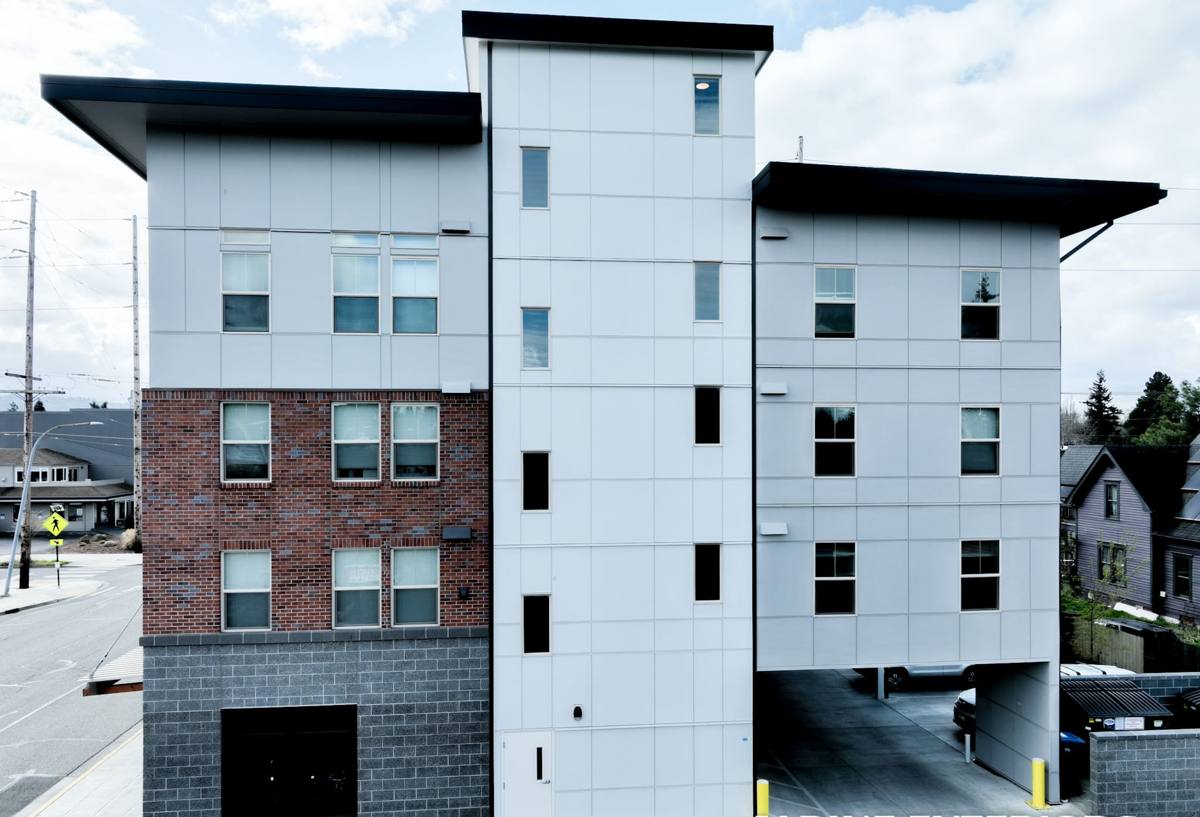
New Construction Is a Different Job Than Replacement
A lot of homeowners assume window work is window work. On a new build, the job is actually more forgiving in some ways and less forgiving in others.
What's easier
There's no old window to remove, no hidden rot to discover once the trim comes off, and no mismatched rough opening to correct. You're setting a window into a clean, framed opening built to spec.
What takes more discipline
Because the opening is clean, there's no excuse for a flashing shortcut — everything is visible and inspectable before the siding goes on. New construction also means coordinating with the weather-resistive barrier (housewrap), the siding crew, and sometimes the roofer, since window flashing has to integrate correctly with all of it in the right order. Get the sequence wrong and the mistake gets buried behind finish materials for the life of the house.
What a Correct Install Actually Involves
On paper, setting a window sounds simple: put it in the hole, fasten it, seal it. In practice, a correct new-construction install on a coastal Whatcom County lot includes several steps that are easy to skip and expensive to fix later.
- Sill pan flashing — a sloped, sealed pan under the window that directs any water that gets past the glazing back outside instead of into the framing.
- Shingle-lapped housewrap integration — flashing tape and housewrap layered so water always sheds downward and outward, never into a seam.
- Backer rod and sealant at the nailing fin — not sealant alone, which can trap moisture, but a proper backed joint that allows some movement without failing.
- Square, plumb, and level verification before the unit ever gets set, so the frame isn't fastened into a twist that stresses the corners.
- Non-distorting fastening — driven per the manufacturer's schedule, not just wherever is convenient, so the frame doesn't bow and compromise the seal or the operation of the sash.
- Low-expansion foam or backer rod at the interior gap — enough to air seal without bowing the jamb inward.
Skip any one of these and the window can look fine for years while water is already working its way into the wall assembly behind it.
Choosing Frame Materials for Bay-Adjacent Exposure
Whatcom County's building supply market carries every major frame material, and all of them can work in Blaine — but they don't all age the same way this close to the water. This is about trade-offs, not a "good product, bad product" story.
| Frame Material | Salt Air / Coastal Behavior | Maintenance | Relative Cost |
|---|---|---|---|
| Vinyl | Doesn't corrode; performs consistently near the water | Low — occasional rinsing of tracks and weep holes | Lower to mid |
| Fiberglass | Very stable in temperature swings and salt exposure; holds paint well if a custom color is wanted | Low | Mid to higher |
| Aluminum-clad wood | Good exterior durability from the cladding, but any breach in the cladding exposes wood to moisture and salt | Moderate — cladding seams and any exposed wood need periodic checks | Higher |
| Bare wood | Most exposed to salt air and driving rain without diligent upkeep | High — regular refinishing, more failure risk near water | Higher |
Our standard on Blaine builds leans toward vinyl or fiberglass for anything with direct bay exposure, simply because they hold up with the least maintenance burden in salt air. We'll still install a clad or wood window when a homeowner wants that look and understands the upkeep — it's a legitimate choice, just one that comes with more ongoing attention this close to the water.
Matching Performance Ratings to the Site
Every window sold in Washington carries performance numbers — U-factor for energy code compliance, air infiltration rating, and a design pressure (DP) rating for wind and water resistance. On an inland Bellingham lot with tree cover and neighboring structures blocking wind, a standard DP-rated window is usually fine. On an open, water-facing Blaine lot with a clear wind fetch across the bay, we look at higher design pressure and water penetration ratings, because that wall is taking direct wind-driven rain in a way a sheltered lot never sees.
We also confirm U-factor requirements against current Washington State Energy Code for the specific glazing package, since code minimums have gotten stricter in recent years and a builder's early spec sheet doesn't always reflect the latest requirement.
Site exposure checklist
- Is the elevation facing open water or exposed to a clear wind fetch?
- Is the site shaded and slow to dry (moss-prone), or open and sun-exposed?
- What's the roof overhang doing to protect that wall — deep eaves or none?
- Is the lot in a more sheltered part of town versus directly on the bay?
Our Process on a Blaine New Build
- Plan and rough opening review — we check the architectural window schedule against the framed openings before ordering, catching size or swing errors early.
- Product selection — a walkthrough of frame material, glazing package, and performance rating options suited to that specific lot's exposure.
- Ordering and lead-time coordination — timed against the builder's siding and drywall schedule so the house isn't waiting on windows or, worse, rushing the install to keep other trades moving.
- Pre-install walkthrough with the general contractor to confirm housewrap is in place and openings are ready.
- Install following the flashing, fastening, and sealing sequence above, unit by unit.
- Final walkthrough — operation check on every unit, visual flashing check before siding closes it in, and a punch list resolved before we sign off.
Mistakes We Catch on New-Construction Sites
Coordinating with framers, siding crews, and sometimes other window installers means we regularly catch things before they get buried behind finish material. The recurring ones worth knowing about:
- Flashing tape lapped in the wrong direction, which channels water inward instead of out
- Missing or flat (non-sloped) sill pans
- Fasteners overdriven into vinyl frames, distorting the jamb and causing operational binding
- Sealant used as a substitute for proper flashing instead of as a secondary seal
- A glazing package specified for a sheltered elevation mistakenly used on the water-facing side
- Interior gaps foamed solid with high-expansion foam, bowing the frame inward
Why a Crew Already Working in Blaine Matters
None of the technical detail above is unique to us — any competent installer should know it. What a Blaine-familiar crew adds is fewer surprises during the build. We already know which local suppliers stock the frame materials and performance ratings that hold up on bay-facing lots, so lead times are predictable. We're used to sequencing around the same general contractors and siding crews active in this part of Whatcom County. And we've seen enough Blaine lots — from sheltered inland streets to open water-facing sites — to size up exposure quickly instead of treating every job as a blank slate. On a new build, where windows have to slot into a tight construction schedule without holding up other trades, that familiarity is worth more than it sounds.
Protecting the Investment After Move-In
A correctly installed window in Blaine still needs some upkeep to get its full service life out of the salt air and wet season.
- Rinse salt spray off frames and hardware a few times a year, especially on water-facing elevations
- Keep weep holes clear so water draining from the frame has somewhere to go
- Check exterior sealant joints annually, particularly after the first full wet season as the house settles
- Address moss or algae buildup on shaded, north-facing walls before it holds moisture against trim and siding
- Walk the exterior before the fall rains start, not after the first storm
If you're planning a new build in Blaine and want a window package sized correctly for your lot's wind and rain exposure, we're happy to walk the plans with you and put together a free, no-pressure estimate — just fill out the form below.