 Bellingham Exterior
 Roofing in a Border Town on the Water
Blaine sits right where Whatcom County meets the coast and the Canadian border, and that location comes with a roofing climate that's tougher than it looks from the ground. Homes here deal with salt-laden air rolling in off the water, wind-driven rain that doesn't just fall but gets pushed sideways under loose flashing, and a moss season that runs longer than almost anywhere else in Western Washington. A roof that would hold up fine forty miles inland can develop real problems in Blaine years ahead of schedule if it wasn't built or repaired with these conditions in mind.
This page is about one job, done right, in one place: roof repair for Blaine homes. Not a full tear-off, not a generic "roofing services" overview — just what actually needs to happen when a Blaine roof is leaking, losing shingles, or showing its age, and why the details of that repair matter more here than in a drier, calmer climate.
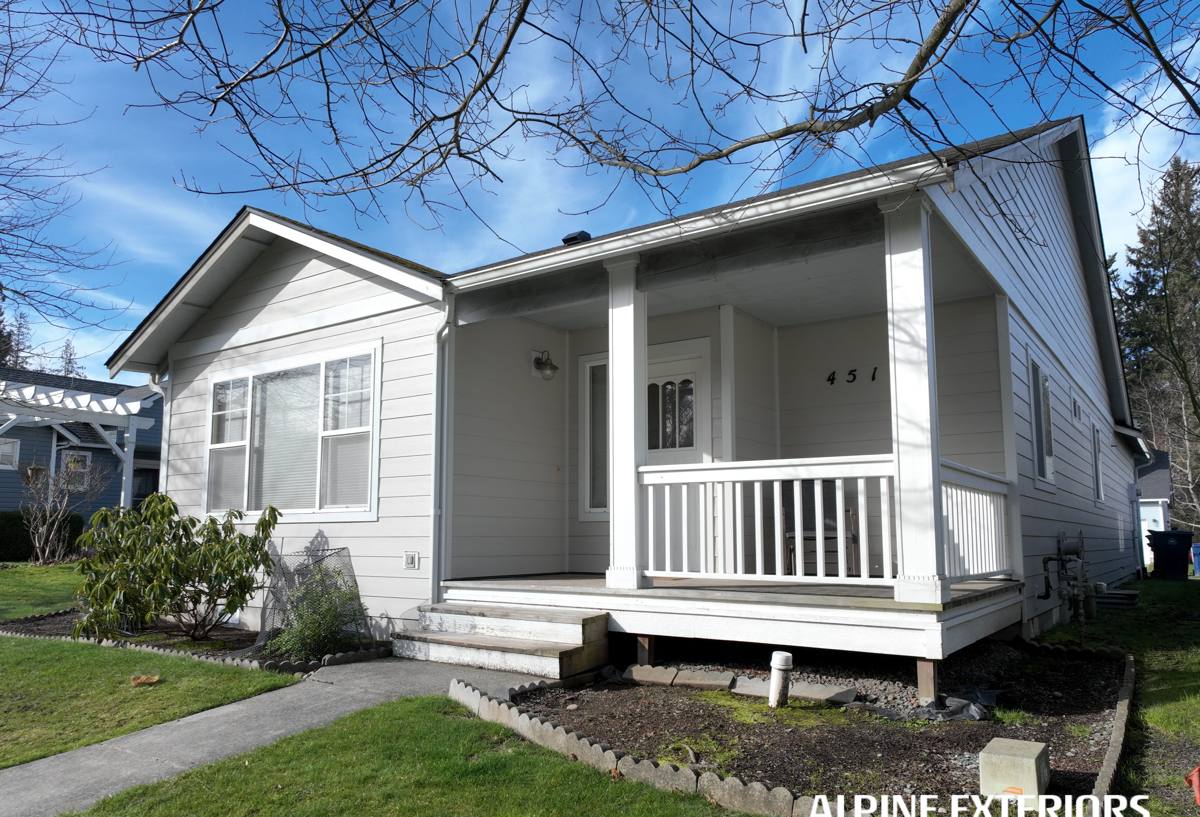
What Coastal Salt Air Does to a Roof Over Time
Salt air is corrosive, and it doesn't need to be a stiff ocean breeze to do damage — a steady, low-grade exposure day after day is enough. On a roof, that shows up in a few predictable places:
- Metal fasteners and flashing corrode faster than the manufacturer's rating assumes, especially where galvanized coatings have been scratched or cut during a prior repair.
- Exposed nail heads on older roofs rust and back out, which is a common source of small leaks that seem to come from "nowhere."
- Gutter systems and drip edge pit and thin out years before a homeowner would expect to replace them.
- Sealants and caulking around vents and penetrations lose flexibility and crack sooner, letting water in at exactly the spots designed to keep it out.
None of this means a Blaine roof is doomed — it means the materials and fastener choices used in a repair need to account for corrosion resistance, not just match whatever's already up there.
Driving Rain and Wind-Driven Water
Coastal storms in this part of Whatcom County don't always come straight down. When rain is pushed sideways by wind off the water, it finds its way under shingle tabs, around chimney flashing, and into valleys that would shed a normal vertical rain without issue. A repair that only patches the visible damage — without checking whether the underlying flashing and underlayment can handle wind-driven water — tends to fail again in the next storm.
Moss: The Damage You Don't See Happening
Western Washington's moss season is long, and Blaine's cooler, damper microclimate near the water keeps roofs wet longer after a rain than homes further inland. Moss doesn't just look bad — it actively works against the roof:
- It holds moisture against the shingle surface long after the rest of the roof has dried, accelerating granule loss and shingle aging.
- Its root-like rhizoids work under shingle edges and tabs, gradually lifting them and creating small gaps where water can enter.
- Thick moss growth adds weight and traps organic debris, which holds even more water against the roof deck.
- Moss on north-facing slopes and shaded valleys (common on tree-lined Blaine lots) tends to be worse than on sun-exposed sections, so damage is often uneven across the same roof.
By the time moss is visible from the ground, it's usually been established for a season or more. A repair job that removes the moss but doesn't address the shingle damage underneath — or the tree cover and airflow issue that let it grow back — is only a short-term fix.
Signs a Blaine Roof Needs Repair Now
Most roof repairs get more expensive the longer they wait, because water finds the roof deck and framing before it ever shows up as a stain on the ceiling. Homeowners in Blaine should treat any of the following as a reason to get a roof looked at:
- Granules collecting in gutters or at the base of downspouts
- Curling, cupping, or cracked shingles, especially on south- and west-facing slopes
- Visible moss or dark streaking concentrated in shaded areas
- Rusted or lifted flashing around chimneys, skylights, and roof-to-wall transitions
- Soft spots underfoot when walking the roof, or sagging in the decking line
- Water stains on interior ceilings, especially after a windy storm rather than a calm rain
- Daylight visible through the attic roof deck
What a Correct Roof Repair Actually Involves
A roof repair that holds up in Blaine's climate isn't just about swapping out a few damaged shingles. It has to account for what's happening underneath and around the visible damage. A thorough repair includes:
- Inspecting the full roof, not just the reported leak area — coastal wind damage and moss growth are rarely limited to one spot
- Checking the roof deck for soft or rotted plywood before replacing anything on top of it
- Removing moss carefully rather than power-washing it, which can strip granules and shorten the life of surrounding shingles
- Replacing corroded or compromised flashing, not just resealing it over existing rust
- Matching shingle type, color, and exposure to the surrounding roof as closely as possible
- Using corrosion-resistant fasteners suited to a coastal environment
- Confirming attic ventilation isn't contributing to moisture buildup from underneath
- Verifying the repair against wind-driven rain, not just standing water, before calling it done
Repair vs. Replacement: How We Make the Call
Not every damaged roof needs to come off. But in a climate that accelerates wear, it's worth being honest about when a repair is the right call and when it's a temporary patch on a roof that's already past the point of spot-fixing.
| Factor | Favors Repair | Favors Replacement |
|---|---|---|
| Age of roof | Under roughly 12-15 years, damage is isolated | Nearing or past its material's expected lifespan |
| Extent of damage | Localized to one section, slope, or penetration | Spread across multiple slopes or recurring in the same spots |
| Decking condition | Solid, no soft spots or rot found | Widespread soft decking or repeated water intrusion |
| Moss history | First occurrence, caught early | Long-term, repeated moss damage across the roof |
| Underlayment condition | Still intact and functional | Brittle, torn, or failing in multiple areas |
We'll always tell you honestly which side of that line your roof falls on — including when a repair is genuinely the smarter, more cost-effective choice.
What Affects the Cost of a Roof Repair
We don't publish flat pricing because every repair is different, but the same handful of factors drive cost on almost every job we look at in Blaine and the surrounding coastal area:
| Cost Factor | Why It Matters |
|---|---|
| Size and location of the damaged area | Determines material and labor needed, and how much of the surrounding roof must be disturbed |
| Roof pitch and access | Steeper roofs and limited access (tight lots, tall trees) take longer and require more safety setup |
| Decking condition | Rotted plywood found under damaged shingles adds material and labor beyond the original scope |
| Flashing and penetrations involved | Chimneys, skylights, and vent pipes require more careful, time-intensive work than open field shingle |
| Material match | Matching an older or discontinued shingle color/profile can take more sourcing time |
Our Process, From First Call to Finished Repair
1. Inspection
We walk the roof, not just the section you're worried about, and check the attic from the inside where access allows. We're looking for the cause of the damage, not just the symptom.
2. A Straight Answer
You'll get a clear explanation of what's actually wrong, whether it's a contained repair or something bigger, and a written estimate before any work starts. No pressure to upsize the job.
3. The Repair
We remove and replace only what needs it, check the decking underneath, replace compromised flashing rather than resealing it, and use fasteners and materials suited to a coastal environment.
4. Cleanup and Walkthrough
Job site cleaned up, debris and old materials hauled off, and we walk you through what was done and what to watch for going forward — including moss prevention if that was part of the problem.
Materials We Use and Why
For most Blaine repairs, we work with quality asphalt composition shingles rated for wind and impact resistance, matched to the existing roof wherever possible. On homes where the existing roof is metal, we repair in kind using fasteners and flashing detailing appropriate for coastal corrosion resistance.
We're selective about certain lower-cost materials in this climate — not because any one product is bad everywhere, but because some options carry a higher maintenance burden or are more sensitive to moisture and installation error in a wet, salty, moss-prone environment like this one. Where a material choice involves that kind of trade-off, we'll walk you through it honestly rather than defaulting to whatever's cheapest.
Why a Crew That Already Works Blaine Matters
A roofer who mainly works drier, inland areas can still do a technically fine repair — but they're less likely to automatically account for corrosion-resistant fasteners, extended moss exposure, or wind-driven rain patterns specific to a coastal Whatcom County location. That's not a knock on general roofing skill; it's just the difference between knowing a climate in theory and having repaired roofs in it repeatedly.
As a Bellingham-based crew that regularly works Blaine and the surrounding coastal communities, we've seen how these roofs age in real conditions — where moss tends to establish first, which flashing details fail early near the water, and what a "quick patch" versus a durable repair actually looks like five years later. That local pattern recognition is part of what you're paying for when you hire local instead of the lowest bid from out of the area.
A Simple Checklist Before You Hire
- Do they inspect the whole roof, or just the spot you called about?
- Do they check the decking before covering it back up?
- Are they specific about flashing and fastener choices for a coastal environment?
- Do they give you a written estimate before starting work?
- Can they explain, in plain terms, why they're recommending repair over replacement (or vice versa)?
If your roof in Blaine is showing moss, missing granules, or a leak that shows up after windy storms, we're glad to take a look and give you a straight, no-pressure assessment. Use the form below to request a free estimate, and we'll let you know honestly what your roof actually needs.