 Bellingham Exterior
 Board & Batten Siding Built for Edgemoor's Waterfront Climate
Edgemoor sits close enough to Bellingham Bay that its homes deal with a different mix of weather than houses further inland in Whatcom County. Salt-laden air, wind-driven rain off the water, and a long, damp moss season put real stress on any exterior surface, but vertical board and batten siding is especially sensitive to how well it's built and maintained. Done right, it's one of the best-looking siding profiles available for a Pacific Northwest home. Done wrong, it's a magnet for trapped moisture, streaking, and early failure. This page walks through what board and batten siding needs to hold up in Edgemoor specifically, what a correct installation actually involves, and why we install it only in James Hardie fiber cement.
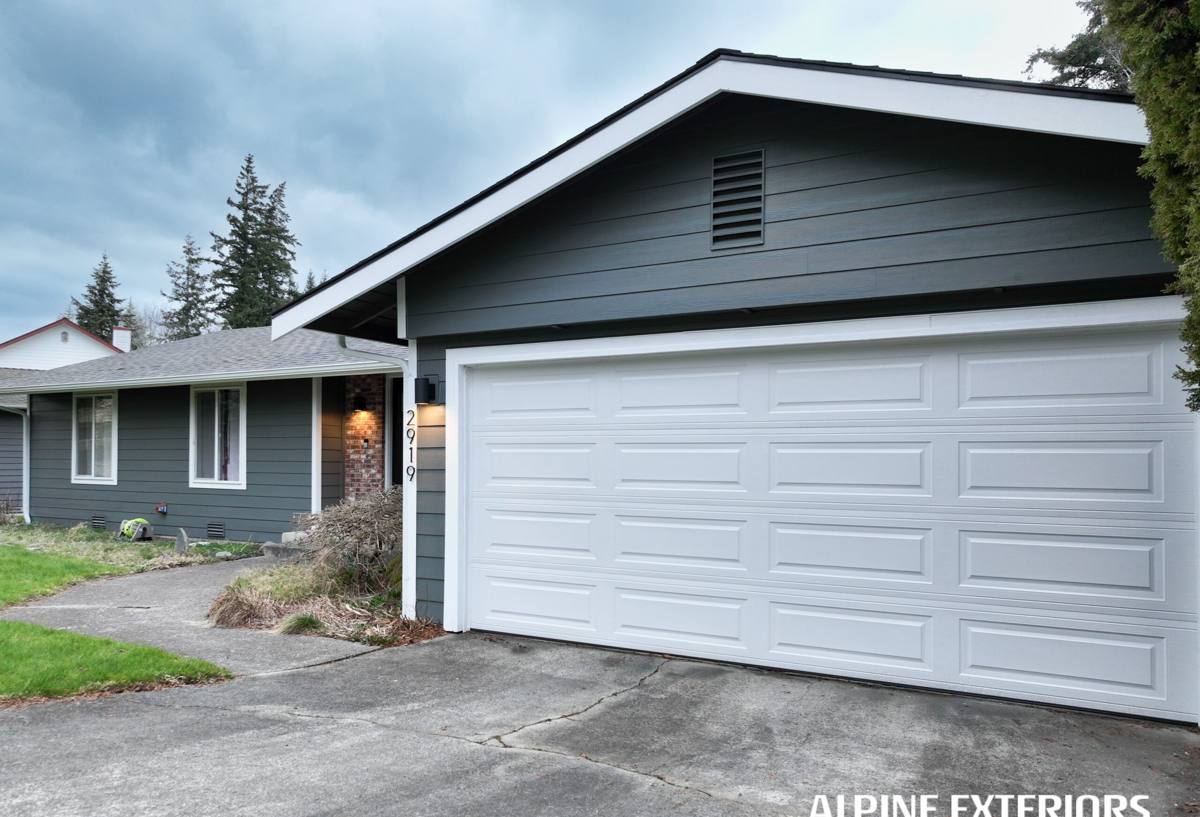
What Edgemoor's Climate Does to Vertical Siding
Salt Air and Marine Exposure
Homes closer to Bellingham Bay pick up airborne salt that settles on exterior surfaces and accelerates corrosion of fasteners, flashing, and any metal trim. It also breaks down cheap paint and factory finishes faster than the same product would wear a few miles inland. Board and batten's vertical seams and exposed batten strips give salt-laden moisture more edges and joints to work into than a flat panel would.
Driving Rain and Wind
Storms coming off the water tend to drive rain sideways instead of straight down, which matters a lot for a vertical siding style. Board and batten relies on the batten strips to shed water away from the seams between boards. If those seams, the underlying water-resistive barrier, or the flashing details aren't built correctly, wind-driven rain finds the gaps and pushes moisture behind the cladding rather than off of it.
Moss, Algae, and Extended Shade
Whatcom County's long wet season keeps exterior surfaces damp for months at a time, and shaded exposures — common on lots with mature trees or north-facing walls — stay damp even longer. Moss and algae growth on siding isn't just cosmetic; sustained moisture at the surface accelerates finish breakdown and, on the wrong substrate, can contribute to rot at the boards and battens themselves.
What a Correct Board & Batten Installation Actually Involves
Board and batten looks simple from the street — wide boards with narrow strips covering the seams — but the parts nobody sees are what determine whether it lasts fifteen years or fifty.
Water Management Behind the Cladding
Every board and batten wall needs a continuous water-resistive barrier and properly lapped flashing at every penetration, window, and door before the first board goes up. Any gaps here get amplified by the vertical seams in a board and batten profile. A rain screen gap behind the siding, allowing incidental moisture that does get past the cladding to drain and dry out, matters even more in a climate like Edgemoor's than in drier parts of the state.
Fastening and Batten Spacing
Boards and battens need to be fastened into structural framing at the correct spacing and with fasteners rated for the coastal environment — the wrong fastener corrodes, stains the siding, and eventually loses its grip. Batten spacing also has to account for the underlying board width and expected material movement, which is a different calculation in fiber cement than it is in wood-based products.
Trim, Corners, and Transitions
Board and batten depends heavily on how corners, window and door trim, and transitions to other materials are detailed. Poorly integrated trim is one of the most common places we find moisture problems on homes we're asked to look at, regardless of what siding product was originally installed.
Why We Install Board & Batten Only in James Hardie Fiber Cement
Board and batten is offered in several materials — vinyl, engineered wood, and various fiber cement brands among them — but we install it exclusively in James Hardie fiber cement, and Edgemoor's climate is a big part of why. Fiber cement doesn't absorb moisture and swell the way wood-based products can, and it doesn't expand and contract with temperature the way vinyl does, which matters for keeping seams tight against driving rain over decades, not just years. James Hardie's factory-applied ColorPlus finish is also engineered to hold color and resist the kind of UV and moisture cycling this region produces, which reduces how often a homeowner needs to repaint compared to field-finished wood siding.
We don't install vinyl, engineered wood products, or unfinished cedar for board and batten work. Each of those has legitimate strengths, but each also comes with a maintenance burden or moisture vulnerability that we're not willing to put our name behind on a marine-exposed property. James Hardie's non-combustible composition, climate-engineered HZ product lines, and transferable warranty are why it's the only board and batten product we put on Edgemoor homes.
Board & Batten Compared to Other Siding Profiles
Board and batten isn't the right choice for every home, and we'll tell you that honestly during an estimate. Here's how it stacks up against the other common profiles for a home in this climate.
| Profile | Look | Water Management Complexity | Best Fit |
|---|---|---|---|
| Board & Batten | Vertical, farmhouse/modern | Higher — more seams, relies on batten detailing | Accent walls, gables, homes wanting a distinct vertical look |
| Lap Siding | Traditional horizontal | Lower — shingle-lap design sheds water naturally | Whole-home siding, most Edgemoor exteriors |
| Panel Siding | Clean, contemporary | Moderate — depends heavily on seam and joint treatment | Modern builds, accent sections |
Many of the Edgemoor homes we work on use board and batten as an accent — a gable end, an entry feature, or a full elevation on a home with a more modern or farmhouse-style design — paired with Hardie lap siding on the rest of the exterior. That combination gets the visual impact of vertical siding without asking every wall on the house to manage the more complex water path.
Our Process for a Board & Batten Project in Edgemoor
Assessment and Moisture Check
We start by looking at the existing wall assembly, checking for any signs of past moisture intrusion, and assessing sun and wind exposure for the specific elevation where board and batten is going. A wall facing the water gets a different level of scrutiny than a sheltered, south-facing wall.
Water Barrier and Flashing Installation
Before any siding goes up, we install a continuous water-resistive barrier and properly integrate flashing at every window, door, and penetration. This is the step that determines whether the finished siding actually performs in a driving rain, and it's not visible once the project is done — which is exactly why it has to be done right the first time.
Board & Batten Installation
Boards and battens go up plumb, fastened to structural framing at manufacturer-specified spacing, with attention to consistent reveal and tight, weather-resistant seams at every joint and corner.
Final Inspection and Cleanup
We walk the finished job checking caulking, trim lines, and fastener placement before we consider it done, and we clean up the site so the only thing left behind is the new siding.
Maintaining Board & Batten Siding in a Marine Climate
James Hardie fiber cement is low-maintenance compared to wood-based board and batten, but "low-maintenance" isn't "no-maintenance" in a climate like Edgemoor's. A short seasonal routine goes a long way toward protecting the investment.
- Rinse siding periodically to clear salt residue and airborne grime, especially on walls facing the water
- Inspect for moss or algae growth on shaded or north-facing walls and address it before it spreads
- Check caulking at trim, corners, and penetrations annually and reseal any cracked or missing sections
- Keep gutters and downspouts clear so water isn't overflowing onto the siding below
- Trim back vegetation and tree cover that keeps a wall shaded and damp for extended periods
- Have any staining, especially near fasteners or seams, checked promptly rather than waiting for it to spread
Why Hiring a Crew That Already Works in Edgemoor Matters
Board and batten siding done by a crew unfamiliar with marine-exposed installations tends to fail in predictable ways: fasteners that weren't rated for the environment, water-resistive barriers that weren't detailed for wind-driven rain, or batten spacing that didn't account for the material and the exposure. A crew that regularly works in Bellingham and the surrounding Whatcom County waterfront communities has already worked through those details on homes facing the same weather yours does. That experience shows up in fewer callbacks, tighter seams, and a finished product that's still performing well a decade or two down the road.
If you're considering board and batten siding for your Edgemoor home, we're happy to take a look and talk through what it would involve for your specific exposure and layout. Reach out for a free, no-pressure estimate using the form below.