 Bellingham Exterior
 Siding Replacement in Cordata: When a Repair Isn't Enough
Cordata sits in north Bellingham, a neighborhood that's grown up in stages — pockets of newer construction from the past few decades sitting alongside older homes, with the mature tree cover common to this part of Whatcom County shading a good share of the lots. That mix means we see a wide range of siding conditions here: homes where a section of trim or a few damaged boards can be repaired and matched in, and homes where the siding as a whole has quietly reached the end of its service life. Full replacement is a bigger decision than a repair, both in cost and in disruption, so it's worth understanding what actually pushes a home from "patch it" to "replace it," and what a correct replacement involves once you get there.
This page focuses specifically on full siding replacement for Cordata homes — not general siding repair, and not a citywide overview. The climate pressures on a north Bellingham wall, the way local homes are built, and what a properly sequenced tear-off and reinstall looks like are all specific enough to deserve their own explanation.
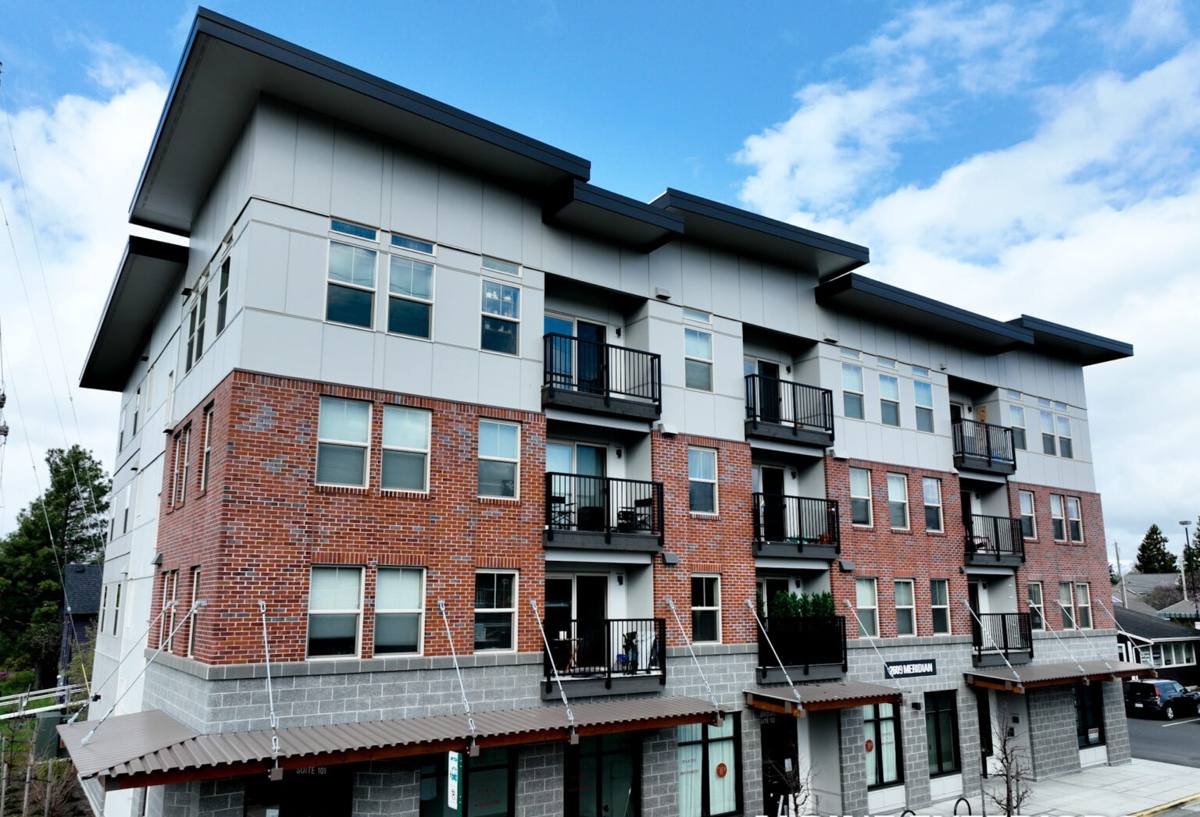
What Cordata's Climate Does to Siding Over Time
Wind-Driven Rain
Bellingham's rain doesn't fall straight down most of the year — it comes in sideways, pushed by wind moving across Whatcom County from the water. Cordata isn't waterfront, but it isn't sheltered from that wind either, and siding that's held up fine for two or three decades can reach a point where wind-driven rain starts finding its way past aging caulk, warped boards, or joints that were never detailed correctly in the first place. Once water gets behind the siding instead of running off it, the clock on the wall assembly starts running a lot faster.
Marine Air, Even This Far Inland
The salt-tinged marine air that moves off the bay reaches well past the waterfront neighborhoods, and north Bellingham gets its share of it, particularly on exposed elevations and during the wetter months when wind carries further inland. It's a slower, quieter form of wear than a direct waterfront exposure, but it still works on fasteners, caulk, and any finish that isn't holding up the way it should — and over the life of an older siding installation, it adds up.
A Long Moss Season on Shaded Lots
Cordata's tree cover is part of what makes the neighborhood attractive, but shaded, slow-to-dry walls are also exactly where moss and mildew take hold and stay established for most of the year. On older or already-compromised siding, moss isn't just cosmetic — it holds moisture against the surface and accelerates whatever damage is already underway underneath.
Signs Your Cordata Home Needs Full Replacement, Not a Patch
A lot of homeowners call us assuming they need a full replacement when a targeted repair would actually solve the problem, and the reverse happens too — a homeowner patches the same trouble spot two or three times before realizing the underlying issue is widespread. Here's what generally tips the decision toward full replacement:
- Soft, spongy, or crumbling siding in multiple areas, not just one isolated spot
- Visible warping, cupping, or gaps that have appeared across several sections of the wall
- Paint or finish failure that keeps recurring within a year or two of repainting
- Moisture stains, bubbling, or peeling on interior walls that back up to exterior siding
- Siding that's original to a home more than 25-30 years old, especially wood-based or engineered wood products
- Persistent moss or mildew that returns quickly after cleaning, suggesting the surface can no longer shed moisture properly
- Multiple past repairs to the same wall that haven't resolved the underlying issue
One or two of these on their own might point to a repair. Several at once, especially spread across different walls, usually means the wall assembly as a whole is failing rather than one specific spot.
Why We Only Install James Hardie for Replacement Projects
A full replacement is the one time in a siding's life when you get to choose the material from scratch, without the constraints of matching what's already there. We use that opportunity to install James Hardie fiber cement, exclusively — we don't offer LP SmartSide, vinyl, Cemplank, Allura, primed spruce, or cedar as replacement options. Those are legitimate products, and other contractors install them competently. We made a professional call that in a climate this consistently wet, standing behind one system we trust completely serves a homeowner better over the next thirty years than offering a lower-cost alternative that quietly shifts maintenance and moisture risk onto them down the road.
| Material | How It Handles This Climate | Ongoing Maintenance | Realistic Lifespan |
|---|---|---|---|
| James Hardie fiber cement | Dimensionally stable; doesn't swell, cup, or warp with moisture cycling | Low; factory ColorPlus finish resists moss and fading | 30+ years with correct install |
| LP SmartSide (engineered wood) | More sensitive to moisture at cut edges and fastener penetrations | Moderate; edge sealing and touch-up over time | 15-25 years, climate-dependent |
| Vinyl | Can warp in sun, crack in cold snaps, trap moisture if flashing is imperfect | Low visible upkeep, but hidden moisture issues are hard to catch | 20-30 years, variable |
| Cedar | Attractive but absorbs moisture readily without regular sealing | High; recurring painting or resealing schedule | 15-25 years with consistent upkeep |
The two properties that matter most on a replacement project are dimensional stability and finish durability. Hardie's fiber cement core doesn't expand and contract with humidity the way wood-based products do, and the factory-applied ColorPlus finish means the cut edges we prime on site are the exception rather than the whole wall depending on field-applied paint. Combined with Hardie's climate-engineered HZ5 formulation, built for regions with sustained moisture and freeze-thaw cycling, it's a closer match to what a north Bellingham wall actually experiences than a general-purpose national product.
What a Correct Full Replacement Involves
Full replacement is your chance to fix problems a repair can never reach, because everything down to the sheathing gets exposed. A correct job follows a specific sequence, not just "old siding off, new siding on":
- Careful removal of the existing siding and trim, with the crew checking what's underneath as it comes off rather than assuming it's fine
- Inspection of the sheathing and framing for rot, soft spots, or past water damage, with repairs made before anything new goes up
- Installation of a new house wrap or weather-resistive barrier, lapped correctly at every seam so water sheds down and out instead of tracking behind the wall
- A drainage gap or rainscreen where appropriate, so any moisture that does get past the surface has a path to dry out
- New flashing at windows, doors, corners, and the base of the wall — the transitions where water intrusion actually starts on most failed walls
- James Hardie siding installed to the fastening pattern, clearance, and joint spec the manufacturer publishes for this climate zone
- Final trim, caulking at appropriate joints only, and touch-up priming on any field-cut edges
Skipping the sheathing inspection is the most common shortcut on a rushed replacement, and it's the most expensive one to skip. New siding over damaged sheathing looks fine on install day and fails again within a few years, for the same underlying reason the first siding failed.
Our Process for a Cordata Replacement Project
Walkthrough and Assessment
We start by walking the home with you, looking at which walls are showing the most wear, how the existing siding was installed, and whether there are signs of moisture already working behind it. This is also where we talk honestly about whether the home needs a full replacement or whether a more limited repair actually solves the problem.
Uncovering What's Behind the Existing Siding
Once old siding starts coming off, we document what we find — sound sheathing, or areas that need repair before new material goes up. We won't cover damage with new siding and call it done; if something needs to be addressed, we'll walk you through it and the cost before proceeding.
Materials and Plan
We work out board profile, color, and detailing at windows, corners, and rooflines before installation starts, so the crew is executing a plan rather than making decisions in the field as they go.
Installation to Manufacturer Spec
Every fastener, gap, and flashing lap follows James Hardie's published requirements for this climate zone. That's what keeps the manufacturer's warranty intact, and it's what determines whether the wall performs for decades rather than years.
Final Walkthrough
We walk the finished project with you, cover what little ongoing maintenance the material actually needs, and make sure you know what a healthy wall looks like if you ever want to check it yourself down the road.
Cost Factors for Siding Replacement in Cordata
Full replacement costs more upfront than a repair, but it resets the clock on the entire wall assembly rather than extending the life of a system that's already failing. A few things move the price on a given Cordata home:
| Factor | Why It Matters |
|---|---|
| Home size and wall complexity | More square footage, corners, and dormers mean more material and labor |
| Condition of the sheathing underneath | Rot or water damage found during tear-off needs repair before new siding goes up |
| Siding profile chosen | Board and batten or shingle-style profiles generally cost more than standard lap |
| Window and trim detailing | More openings mean more flashing and finish work around each one |
| Access and site conditions | Tree cover, tight lots, or limited access can add labor time |
We'll walk your specific home and give you real numbers rather than a rough estimate based on square footage alone — two Cordata homes of similar size can have very different replacement costs depending on how many of these factors are actually in play.
Why Hire a Crew That Already Works Cordata
A crew that's replaced siding across north Bellingham through multiple wet seasons already knows which orientations in this neighborhood take the worst of the wind-driven rain, how much tree cover on a given lot changes the moss and drying picture, and where past builders in this area tended to cut corners on flashing and drainage details. That local pattern recognition doesn't show up on a spec sheet, but it's a big part of why a replacement project goes smoothly instead of turning into a series of surprises once the old siding comes off.
If you're weighing a full siding replacement for a home in Cordata, we're happy to walk the property, give you a straight answer on repair versus replacement, and put together a free, no-pressure estimate. There's a form below — reach out and we'll set up a time to take a look.