 Bellingham Exterior
 Custom Windows for the York Area of Bellingham
Homes in York sit close enough to the water and the weather patterns off Bellingham Bay that windows take a beating most inland properties never see. Between wind-driven rain off the Salish Sea, salt-laden air, and the long gray stretch from October through April when moss and mildew get a foothold on anything that stays damp, window frames, sashes, and seals in this part of Whatcom County wear out faster than the manufacturer's brochure suggests. We've replaced and repaired windows on enough York-area homes to know which failure points show up first and which ones get ignored until they've caused real damage underneath the siding.
This page is specifically about custom window work in York — not a generic rundown of window brands. If you're trying to figure out whether your windows need replacing, what "custom" actually means for an older or oddly-shaped opening, or why a local install crew matters more here than it might in a drier climate, this is written for you.
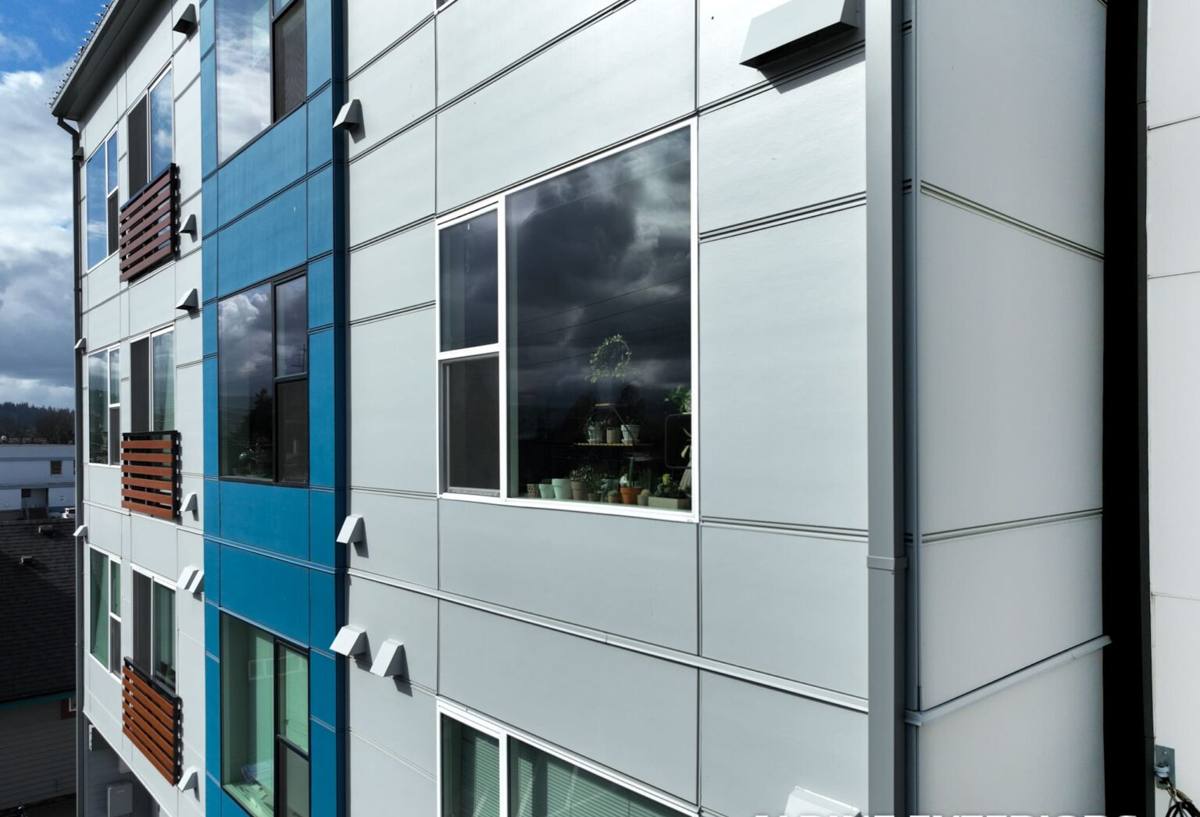
Why Bellingham's Climate Is Hard on Windows
Whatcom County doesn't get extreme weather in the dramatic sense — no hurricanes, no hailstorms most years — but it gets persistent, grinding weather, and that's a different kind of hard on a building envelope.
Driving Rain
Rain here rarely falls straight down. Wind off the water pushes it sideways into west- and southwest-facing walls, which means window flashing, sill pans, and caulking joints get tested far more often than in a climate with occasional heavy downpours. A window that's watertight when it's raining straight down can still leak when the same rain is hitting it at a 20-degree angle for six hours straight.
Salt Air
York's proximity to the bay means airborne salt settles on exterior surfaces, including window hardware, aluminum cladding, and metal fasteners. Salt accelerates corrosion on anything not rated for a marine-adjacent environment — hinges, cranks, and lock mechanisms are usually the first things to seize up or pit.
Moss and Prolonged Dampness
Our moss season isn't a week or two — it's a good chunk of the year. Wood trim, sills, and any horizontal surface near a window that doesn't dry out quickly becomes a place for moss and mildew to take hold. Left alone, that moisture holds against wood fibers and finishes long enough to start rot, usually starting at the sill and lower corners of the frame.
Signs a York Home Needs Window Attention
- Fogging or a permanent haze between the panes (failed seal on a double- or triple-pane unit)
- Soft or spongy wood at the sill or lower frame corners
- Windows that are hard to open, close, or lock — often a sign of frame swelling or corroded hardware
- Visible moss or dark streaking on sills, trim, or the wall just below the window
- Drafts or a noticeable temperature difference near the window on windy days
- Peeling or bubbling paint on interior or exterior trim near the frame
- Water staining on interior drywall or trim below or beside a window
Any one of these on its own might not mean a full replacement is needed. Several together, especially combined with visible rot, usually does.
What "Custom" Actually Means
A lot of homes in the York area, especially older ones, don't have openings that match today's standard window sizes. Additions, settling, and previous remodels all shift rough openings out of true. "Custom" windows means the unit is built or modified to fit the actual opening rather than forcing the opening to fit a stock size — which matters for a few reasons:
- Fit tolerance: A custom-sized unit needs less shimming and filler material at the perimeter, which means fewer gaps for water and air to find.
- Non-standard shapes: Arched tops, angled bays, and odd trim details common on older homes usually require a custom or semi-custom order rather than an off-the-shelf unit.
- Matching sightlines: When you're replacing some but not all windows on a home, custom sizing keeps sash proportions and sightlines consistent across the facade instead of leaving mismatched frame widths.
Custom doesn't automatically mean "premium" or "expensive" — it means built to the actual dimensions and conditions of your specific opening, which for a lot of York homes is simply what's required to get a correct, watertight result.
What a Correct Installation Involves
Given how much this climate depends on water management, the installation details matter more than the window brand. A well-built window installed carelessly will leak; a modest window installed correctly usually won't.
Sill Pan and Flashing
Every opening should get a sloped sill pan and properly lapped flashing integrated with the home's weather-resistive barrier — flashing tape or building paper layered so water sheds outward and down, never trapped behind the siding. This is the single most common point of failure we find on older or poorly-done installs in this area.
Sealant, Not Just Caulk
Perimeter sealant needs to be applied to clean, dry surfaces and allowed to cure properly. In our climate, rushing this step or applying it over damp wood is a near-guarantee of an early failure.
Insulation Around the Frame
The gap between the window frame and rough opening should be filled with a low-expansion foam or backer rod and sealant — not stuffed with fiberglass batting, which does little to stop air movement and nothing to stop bulk water.
Interior and Exterior Trim
Trim gets reinstalled or replaced in a way that sheds water away from the frame rather than channeling it toward the joint. On older homes we're often rebuilding sill trim from scratch because the original has already rotted.
Material and Frame Options
We don't push one frame material as the answer for every home — the right choice depends on your home's age, exposure, and how much upkeep you want to take on. Below is an honest comparison for a home in a York-type coastal-influenced setting.
| Frame Material | Moisture/Salt Resistance | Maintenance | Notes for This Climate |
|---|---|---|---|
| Vinyl | Good — won't rot or corrode | Low | Reliable, budget-friendly; frame color and clarity can fade slightly over many years of UV/salt exposure |
| Fiberglass | Very good | Low | Dimensionally stable in temperature swings; handles our damp-to-dry cycles well |
| Aluminum-clad wood | Good exterior protection, wood interior needs care | Moderate | Attractive option but relies entirely on the cladding and seals staying intact — any breach exposes wood to our rain and moss conditions |
| Solid wood | Requires diligent upkeep | High | Best appearance for historic-style homes, but needs regular repainting and sealing to survive our wet season without rot |
For most York-area homes, we lean toward vinyl or fiberglass on standard installs because they hold up with the least ongoing maintenance in a climate that doesn't give wood or exposed metal much of a break. That said, homes with a specific architectural character sometimes call for wood or clad-wood, and we'll say so honestly if that's the better fit — it just comes with a maintenance conversation up front.
Glass and Energy Performance
Double-pane, low-E glass is the standard baseline for our climate and handles the temperature range here without issue. Triple-pane is worth discussing for homes with a lot of west-facing exposure to wind, or for owners specifically prioritizing sound dampening and heating cost reduction, but it's not a requirement for every home — we'll walk through the actual trade-off in cost versus benefit for your specific windows rather than upselling it by default.
Our Process for a York Window Project
- On-site assessment: We look at every window being discussed — not just the ones you've flagged — since a hidden problem on one window often points to the same risk on others nearby.
- Honest scope: We tell you plainly which windows need full replacement, which just need resealing or hardware repair, and which are fine.
- Measurement and ordering: Openings are measured precisely; custom units are ordered to the actual dimensions rather than the nearest stock size.
- Removal and inspection: When we pull the old unit, we inspect the framing and sheathing underneath for rot or prior water damage before anything new goes in.
- Correct installation: Sill pan, flashing, insulation, and sealant done in the sequence that actually sheds water in our conditions.
- Trim and finish: Interior and exterior trim restored or replaced to match, with attention to how it manages water at the sill.
- Walkthrough: We check operation, seals, and finish with you before calling the job done.
Why a Local Crew Matters
A crew that works regularly in Bellingham and the York area already knows which details get skipped on a rushed job and which ones actually matter here. We're not guessing about how much rain exposure a west-facing wall gets, or whether a given trim detail will hold up through a full moss season — we've seen the results of both correct and incorrect installs on homes near yours. That local knowledge shows up in small decisions: how much slope to build into a sill pan, which caulk formulations hold up to our humidity swings, and where extra flashing is worth the time even when it's not strictly required.
It also means we're accountable and reachable if something needs a follow-up look after a hard winter storm — not a crew that did one job in the area and moved on.
Maintenance That Extends the Life of Your Investment
- Rinse salt residue off frames and hardware a few times a year, especially after storms
- Clear moss and debris from sills and tracks before it holds moisture against the frame
- Check and refresh exterior caulking every couple of years — sealant is a wear item, not a one-time fix
- Operate hardware (locks, cranks, hinges) periodically so corrosion doesn't set in unnoticed
- Watch for early signs of trim paint failure and address it before it exposes bare wood
Get a Straightforward Estimate
If your windows in the York area are showing their age — fogged glass, sticking sashes, soft sills, or drafts you can feel on a windy day — we're happy to take a look and give you a clear, no-pressure assessment of what's actually needed. Use the form below to request a free estimate, and we'll walk the property with you and explain what we find in plain terms.