 Bellingham Exterior
 South Hill Decks Take More Punishment Than Most
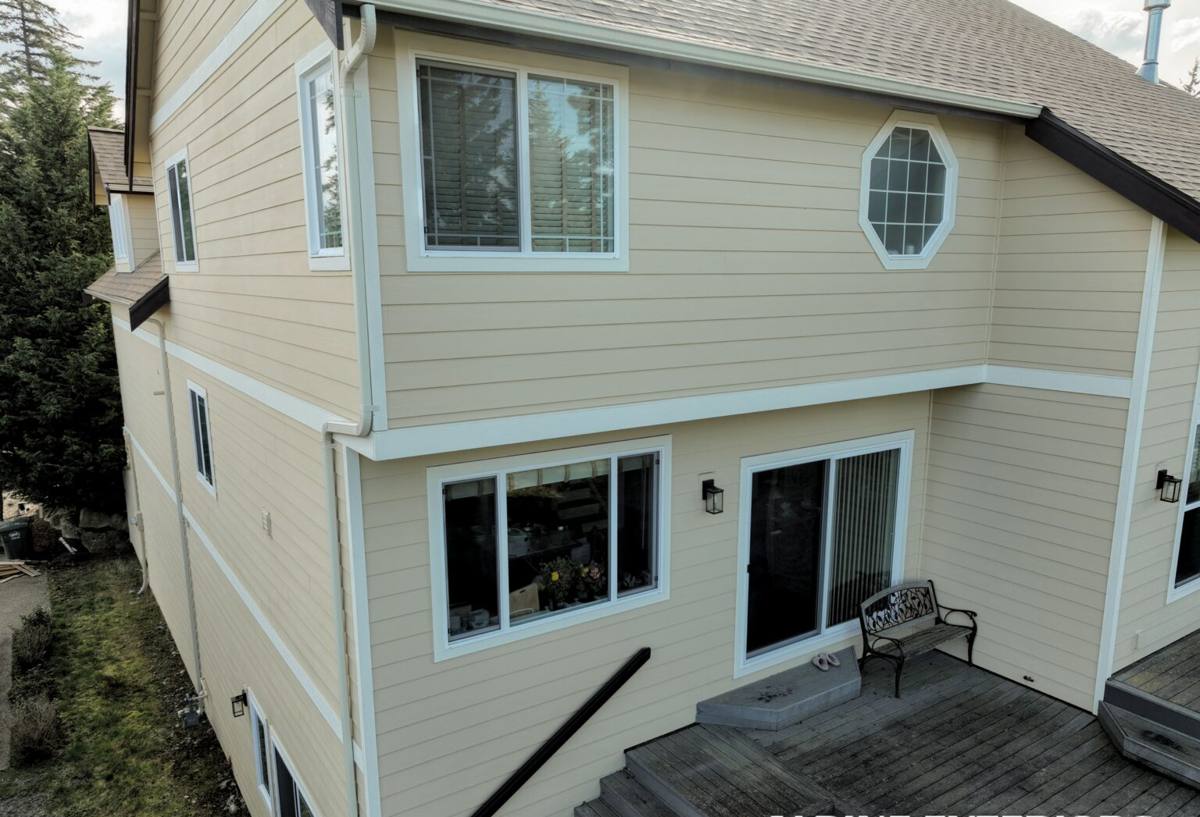
South Hill sits above Bellingham with mature tree canopy, elevated lots, and views that stretch toward Bellingham Bay. It's a beautiful place to have a deck — and a tough place to keep one alive. Between the shade from big leaf maples and Douglas firs, the moisture that blows in off the water, and a rain season that can stretch from October well into spring, decks up here age differently than decks in drier, more open parts of Whatcom County.
We've replaced enough decking in this neighborhood to know the pattern: framing that looks fine from the yard but is soft underneath, ledger boards that were never flashed correctly, and surface boards that hide rot under a coat of algae. None of that is unique to any one house — it's what this climate does to decks over ten, fifteen, twenty years, especially on shaded lots where boards rarely get a chance to fully dry out between storms.
Why the Climate Here Wears Decks Down Faster
Salt Air and Driving Rain
Proximity to Bellingham Bay means a steady dose of salt-laden moisture in the air, which accelerates corrosion on fasteners, joist hangers, and any exposed metal hardware. Combine that with wind-driven rain that gets pushed sideways under railings and around ledger connections, and you get moisture intrusion in places a dry-climate deck would never see it.
Moss and Shade
South Hill's tree cover is part of what makes the neighborhood attractive, but it also means many decks sit in partial shade most of the day. Shaded, damp wood grows moss almost year-round here, not just in winter. Moss holds water against the board surface, which speeds up rot in wood decking and can stain or degrade the surface of composite products if it's left to build up.
Freeze-Thaw Cycling
Whatcom County doesn't get brutal winters, but it does get repeated freeze-thaw swings — cold snaps followed by rain and thaw. That cycling works water deeper into any crack or checked board over time, which is why a deck that "looks okay" on the surface can still have compromised framing underneath.
Signs a Deck Needs Replacement, Not Just Repair
Not every tired deck needs a full teardown. But there's a point where patching boards is just delaying an inevitable rebuild, and spending money on repairs past that point is money that doesn't come back. Here's how we tell the difference on a South Hill site visit:
- Soft or spongy spots in the decking surface, especially near the house or in shaded corners
- Visible rot, splitting, or delamination at the ledger board where the deck meets the house
- Rusted, bent, or missing joist hangers and fasteners
- Railings that flex or feel loose when you lean on them
- Persistent moss or algae staining that won't clean off, especially on the underside of boards
- Gaps opening up between boards from years of shrink-swell cycling
- A structure that predates current code for ledger attachment or guard height
If it's mostly cosmetic wear on an otherwise sound structure, we'll say so and talk repair options. If the framing or ledger connection is compromised, repair is usually a short-term fix on a long-term problem.
Choosing Decking Material for a Shaded, Damp Lot
Material choice matters more on South Hill than in a sunny, open backyard elsewhere in Bellingham. A product that handles shade, moisture, and moss well will hold up here; one that doesn't will show problems within a few seasons.
| Material | How It Handles Shade & Moisture | Maintenance | Typical Lifespan |
|---|---|---|---|
| Pressure-treated wood | Prone to moss growth and surface graying in shaded spots; needs airflow and sealing to stay ahead of moisture | Annual cleaning, periodic staining/sealing | 10–15 years with upkeep |
| Cedar | Naturally more rot-resistant than treated pine, but still needs protection from prolonged dampness | Regular cleaning, re-sealing every few years | 15–20 years with upkeep |
| Capped composite | Sheds moss and moisture well; the cap resists staining better than uncapped boards | Occasional washing, no sealing required | 25+ years |
| Uncapped composite | More absorbent than capped versions; can hold moisture and stain in shaded, damp spots | More frequent cleaning than capped composite | 15–20 years |
We don't push one material on every homeowner. Some people want the look and feel of real wood and are willing to keep up with sealing. Others want to install it once and stop thinking about it. What we will steer people away from on heavily shaded South Hill lots is uncapped composite, purely because it doesn't shed moss and moisture as well as the capped versions — that's a maintenance and appearance trade-off, not a claim that the product is defective.
What a Correct Deck Replacement Actually Involves
A deck replacement is more than pulling old boards and screwing down new ones. Done right, it addresses everything underneath the surface that you can't see once the decking goes back on:
Footings and Posts
We check existing footings for frost depth and settling before reusing them. On older South Hill homes, footings poured decades ago often don't meet current depth or bearing requirements, especially on sloped lots.
Ledger Board Flashing
This is the single most common failure point we find. The ledger board — where the deck attaches to the house — has to be properly flashed to keep water from getting behind the siding and into the rim joist. A poorly flashed ledger is a slow leak that can rot both the deck framing and the house structure behind it.
Joists and Hardware
We use corrosion-resistant, code-rated joist hangers and fasteners rated for the coastal environment, not standard hardware that will rust out in a few years of salt air exposure.
Drainage and Airflow
Board spacing and under-deck ventilation matter a lot in a shaded, damp environment. A deck that can't dry out between rains will grow moss and hold moisture no matter what material you choose.
Our Process, Start to Finish
- On-site assessment — we inspect the existing deck, ledger connection, footings, and framing to determine what's salvageable and what isn't.
- Honest scope and estimate — you get a clear breakdown of what needs to happen and why, in plain language, not a vague lump sum.
- Permit handling — we pull the required permits and schedule inspections so the work is documented and code-compliant.
- Demolition and framing — old decking, and any compromised framing or footings, come out and get rebuilt to current code.
- Decking, railings, and finish work — your chosen material goes down, railings are installed to current guard-height code, and details get finished cleanly.
- Final walkthrough — we go over the finished deck with you before calling the job done.
Permits and Code in Bellingham and Whatcom County
Most deck replacements that involve new framing, footings, or structural changes require a permit, and inspections happen at key stages of the build. This isn't paperwork for its own sake — it's what confirms the ledger attachment, footing depth, and railing height actually meet current code, which matters both for safety and for resale down the road. We handle the permit process as part of the job so you're not the one tracking down inspections.
Maintaining Your New Deck in a Moss-Prone Climate
Whatever material you choose, a little seasonal attention goes a long way on a shaded South Hill lot:
- Sweep leaves and debris off the deck regularly, especially in fall — trapped leaves hold moisture against the surface
- Rinse or wash the deck a couple of times a year to keep moss and algae from establishing
- Check for standing water after heavy rain and confirm boards are draining properly
- Inspect railings and fasteners annually for looseness or corrosion
- Re-seal wood decking on the schedule recommended for the product — don't wait until it's visibly graying
- Trim back overhanging branches where possible to improve sun and airflow
Why Hire a Crew That Already Works This Neighborhood
South Hill's mix of hillside lots, mature trees, and older homes means every deck replacement has to account for slope, access, shade, and moisture in ways that a flat, open-lot job doesn't. A crew that's worked this neighborhood knows what to expect from the framing on an older home versus a newer build, how to handle a tight or sloped access point, and where moisture tends to collect on a shaded lot before it becomes a rot problem. That familiarity means fewer surprises mid-project and a deck built to actually hold up here — not just built to a generic spec.
If your deck is showing its age, or you're just not sure whether it needs repair or full replacement, we're happy to take a look. Reach out through the form below for a free, no-pressure estimate.