 Bellingham Exterior
 Why Edgemoor Roofs Wear Out Differently
Edgemoor sits close to the water, under a heavy canopy of mature fir and cedar, which means the roofs here take a different kind of beating than roofs a few miles inland in Bellingham. Salt-laden air off the bay accelerates corrosion on fasteners, flashing, and metal components. The tree cover keeps large sections of many roofs in near-permanent shade, which slows drying time after every rain and gives moss and moisture a head start. Add in Whatcom County's long wet season and driving, wind-blown rain events, and you get a combination that shortens the useful life of a roofing system faster than a standard warranty chart would suggest.
None of that means Edgemoor homes need exotic materials or gimmicks. It means the replacement has to be specified and installed with those specific stressors in mind — corrosion-resistant hardware, ventilation that accounts for shade, and underlayment and flashing details that assume the roof will stay damp longer than average.
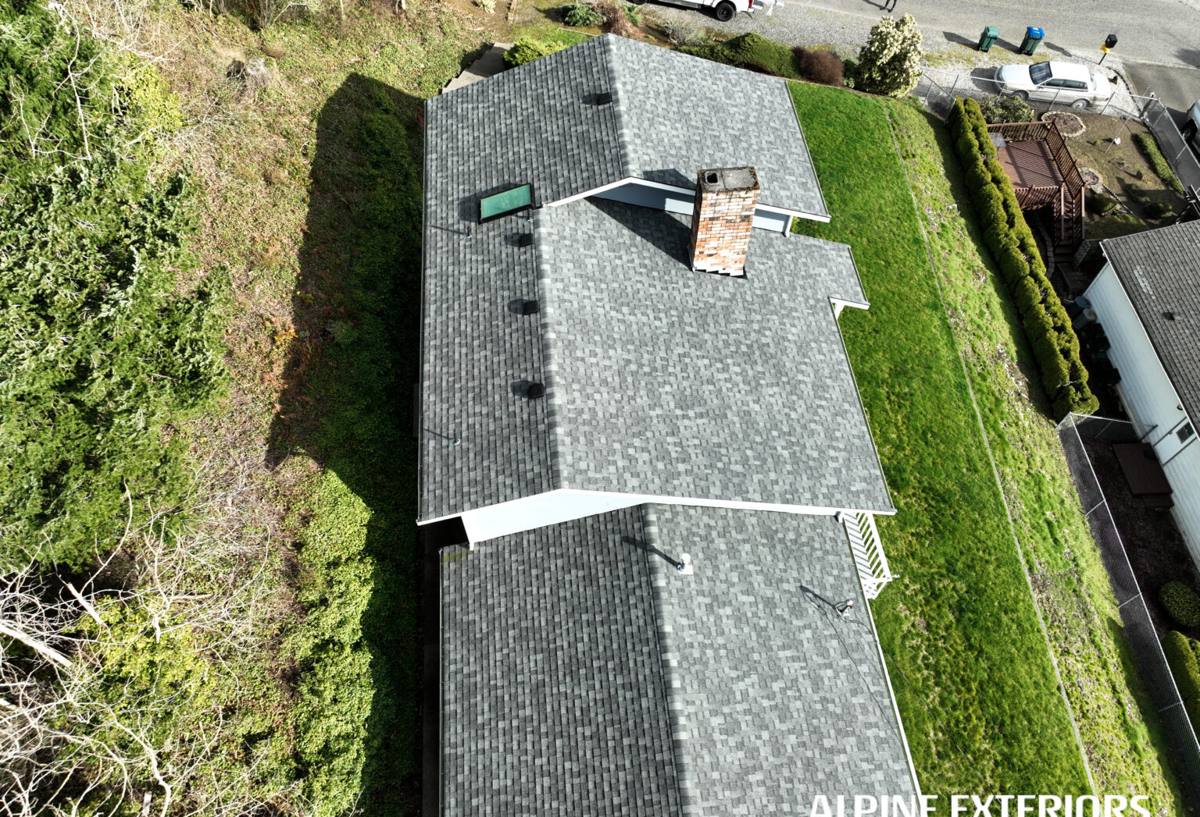
Signs an Edgemoor Roof Needs Replacing, Not Just Patching
A lot of roofs in this neighborhood get repaired past the point where repair still makes sense, simply because the damage is hidden under moss or tree debris. Here's what tends to signal a full replacement is the smarter call:
- Granule loss heavy enough that you're finding grit in gutters every season, not just after a storm
- Moss that keeps returning within months of cleaning, especially on north-facing or shaded slopes
- Soft spots, sagging, or visible deflection when walking the roof deck
- Flashing around chimneys, skylights, or valleys that's rusted, lifted, or was never properly step-flashed to begin with
- Interior staining on ceilings or in the attic, particularly near exterior walls where wind-driven rain gets pushed under shingles
- A roof that's already had two or more repair visits for leaks in different spots within a couple of years
Any one of these on its own might still be a repair. Two or three together, especially on a roof already past 20 years, usually means the underlying materials are failing broadly and repair is just delaying the inevitable at a higher total cost.
Why Shade and Moss Change the Math
On a roof that gets full sun most of the day, moss is mostly cosmetic if it's kept in check. Under Edgemoor's tree canopy, moss holds moisture against the shingle surface for extended periods, which breaks down the asphalt mat and lifts shingle edges — the exact mechanism that lets wind-driven rain get underneath during a storm. A roof under heavy shade can look fine from the ground and still have several years less life left in it than an identical roof in full sun.
Choosing the Right Roofing System for This Location
There's no single "best" material for every Edgemoor home — it depends on the roof's slope, tree exposure, and how long you plan to own the house. Here's an honest comparison of the systems we install most often in this part of Bellingham:
| Material | Moss & Moisture Resistance | Typical Lifespan Here | Best Fit |
|---|---|---|---|
| Architectural asphalt shingle | Good, especially with algae-resistant granules | 20-30 years | Most homes; best value and widest style range |
| Standing seam metal | Excellent; sheds moisture and moss gets little grip | 40-50+ years | Steeper roofs, waterfront exposure, long-term owners |
| Cedar shake | Poor without diligent upkeep in shaded, damp conditions | Highly variable | Homes prioritizing a specific historic look, with realistic maintenance plans |
| Synthetic/composite shingle | Very good; consistent, low-maintenance surface | 30-50 years | Owners wanting a shake or slate look with less upkeep |
We're straightforward with clients about cedar shake: it can look great, but in a heavily shaded, marine-air neighborhood like Edgemoor it demands a maintenance schedule most owners don't keep up with, and moisture retention shortens its service life considerably. That's a maintenance and moisture-behavior trade-off, not a knock on the material itself — plenty of homeowners choose it anyway and we'll install it correctly if that's the right fit for your home.
What a Correct Tear-Off and Replacement Involves
A roof replacement done right in this climate isn't just swapping old shingles for new ones. The details that get skipped on a rushed job are exactly the ones that matter most here:
- Full tear-off to the deck — layering new shingles over old traps moisture and hides deck damage.
- Deck inspection and repair — any soft, delaminated, or water-stained sheathing gets replaced before anything new goes down.
- Ice-and-water shield at vulnerable points — eaves, valleys, and around penetrations, sized for the driving-rain exposure this area sees rather than the bare minimum code allows.
- Synthetic underlayment across the full deck — a second line of defense under the shingles that resists the extended damp periods shaded sections deal with.
- Corrosion-resistant flashing and fasteners — salt air corrodes standard hardware faster, so we specify materials rated for coastal exposure.
- Balanced intake and exhaust ventilation — critical on shaded roofs where trapped attic moisture combines with slow surface drying to accelerate rot.
- Proper valley and step flashing — hand-formed and integrated with the underlayment, not just caulked over.
Our Process, Start to Finish
Assessment and Estimate
We walk the roof, check the attic for moisture and ventilation issues, and look at how much shade and moss exposure each slope actually gets — north and east-facing sections often need different detailing than sections that get afternoon sun. You get a written estimate that spells out materials, scope, and timeline, not just a bottom-line number.
Preparation
We protect landscaping, walkways, and gutters before tear-off begins, and coordinate delivery timing around Whatcom County's weather so materials aren't sitting exposed during a stretch of rain.
Tear-Off and Deck Repair
Old roofing comes off down to the deck, damaged sheathing is identified and replaced, and we don't cover up problems we find along the way — you'll hear about them before we proceed, not after.
Installation
Underlayment, flashing, and the roofing material go on in that order, with extra attention to valleys, penetrations, and eaves — the spots where this area's driving rain finds its way in.
Cleanup and Final Walkthrough
Magnetic sweeps for nails, full debris removal, and a walkthrough so you understand what was done and what maintenance, if any, it needs going forward.
Cost Factors for an Edgemoor Roof Replacement
Every roof is priced on its own specifics, but these are the variables that move the number most in this neighborhood:
| Factor | Why It Matters Here |
|---|---|
| Roof size and number of slopes/valleys | More valleys mean more flashing labor and material |
| Tree cover and access | Limbing back branches or working around mature trees adds time |
| Deck condition | Hidden rot from long-term moisture exposure isn't known until tear-off |
| Material choice | Architectural shingle, metal, and composite systems carry different material and labor costs |
| Ventilation upgrades | Shaded roofs often need added intake/exhaust vents, which is additional but worthwhile work |
| Chimney, skylight, and penetration count | Each one needs custom flashing, adding labor |
We'd rather walk your roof and give you real numbers than quote a range that doesn't reflect your home. Tree cover and deck condition are the two factors that most often shift an Edgemoor estimate from what a homeowner expects going in.
Living With a New Roof: Moss and Moisture Care
A correctly installed roof still benefits from a bit of ongoing attention in a neighborhood like this one. A short, honest maintenance checklist:
- Keep gutters and valleys clear of needles and debris, especially through fall and into moss season
- Have moss growth addressed early with gentle removal methods — aggressive pressure washing damages granules and shortens shingle life
- Trim back overhanging branches where practical to improve sun exposure and airflow
- Check attic ventilation isn't blocked by insulation, which undermines even a well-installed system
- Schedule a periodic roof check after major windstorms, since driving rain finds small openings that are easy to miss from the ground
Why Hiring a Crew That Already Works in Edgemoor Matters
A roofing crew that mostly works dry, sunny, inland roofs will often under-spec ventilation and underlayment for a property like yours simply because it's not what they see every day. Working regularly in Bellingham's waterfront and heavily-treed neighborhoods means knowing, before the estimate walk is even finished, which slopes will need extra ice-and-water coverage, where moss has likely already done quiet damage, and which fasteners and flashing metals actually hold up against the salt air coming off the bay. That local pattern recognition is the difference between a roof that looks right on installation day and one that's still performing well fifteen years in.
If your roof is showing wear, or you just want an honest read on how much life it has left, we're happy to come out, walk it with you, and give you a straight answer along with a free, no-pressure estimate using the form below.