 Bellingham Exterior
 Edgemoor's Setting Is Rough on Siding — Even Good Siding
Edgemoor sits along the bluffs and wooded slopes overlooking Bellingham Bay, and that setting is exactly what makes it a hard place to keep siding in good shape. The mature tree canopy that gives the neighborhood its privacy also means many homes sit in shade for a large part of the day. Add the bay's salt-laden air and the long, wet Pacific Northwest winters, and you get siding that stays damp longer than it does almost anywhere else in Whatcom County.
None of that is a knock on the neighborhood — it's simply the trade-off of waterfront and wooded lots. But it means siding repair here has to account for three things working against it at once: moisture that doesn't evaporate quickly under tree cover, salt air that accelerates corrosion on fasteners and trim, and a moss and algae season that runs longer than it does on more open, sun-exposed lots. A repair that would hold up fine in a drier, sunnier part of Bellingham can fail early in Edgemoor if it doesn't account for all three. Homes here also tend to be older and larger than the Whatcom County average, which means more original trim detail and more square footage of wall exposed to the same conditions.
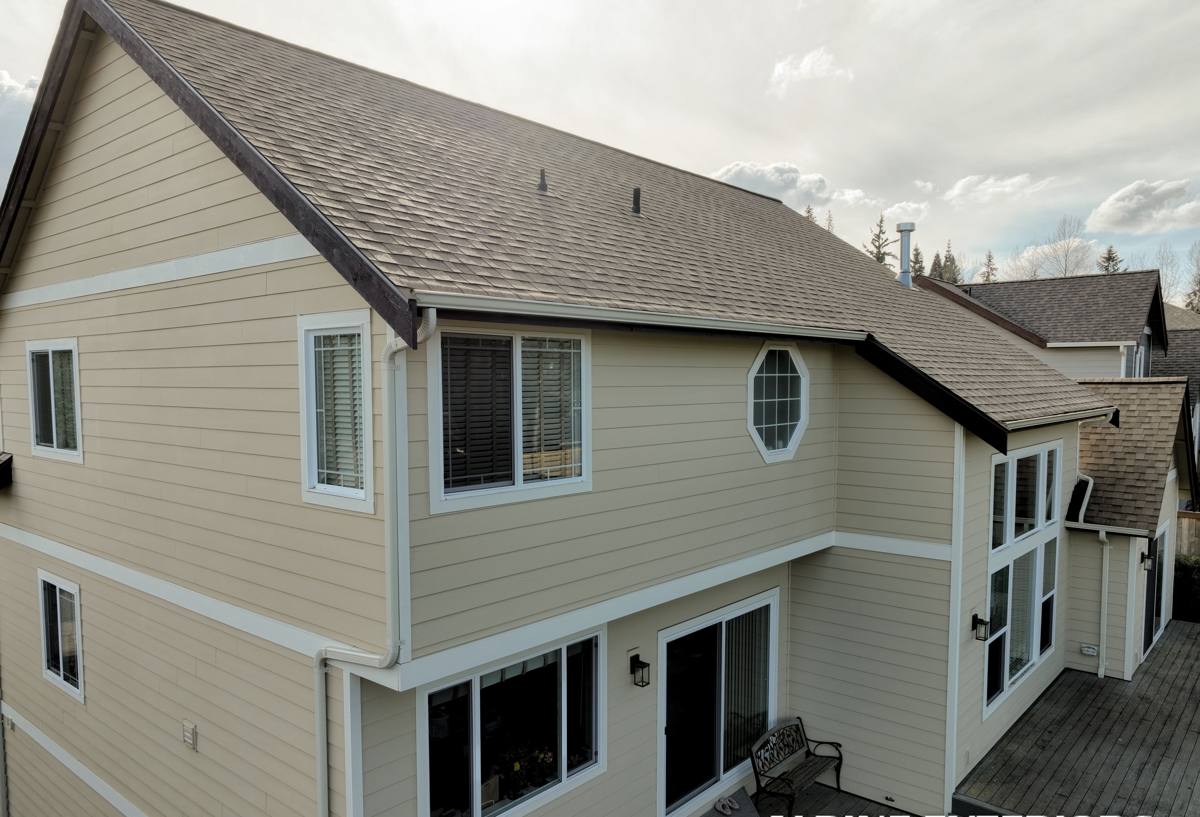
What "Correct" Siding Repair Actually Means Here
It's Rarely Just the Spot You Can See
Homeowners usually call about one visible problem: a soft spot near a downspout, a stained panel, a piece that's pulling away at a seam. On an Edgemoor home, that visible spot is often the last stage of a moisture problem that's been developing behind the siding for a while, not the whole story. Correct repair work starts by figuring out how water is getting in and how long it's been sitting there — not just patching what's visible and moving on.
Moisture Testing Before Any Board Comes Off
We check moisture content in the siding and, where accessible, the sheathing behind it before deciding on a repair scope. In shaded, salt-air conditions, it's common to find damage extending further than the surface suggests, especially around butt joints, inside corners, and anywhere caulking has failed. Skipping this step is how a "quick patch" turns into a callback six months later. It's a slower first visit than a quick eyeball estimate, but it's the difference between a repair that lasts and one that reopens the same conversation next winter.
Common Failure Points on Edgemoor Homes
The specific material on a given house matters, but the failure patterns we see repeating in this neighborhood are consistent:
- Butt joints and seams — the first place caulking fails and water works its way behind the cladding, especially on north- and west-facing walls that stay damp longest.
- Fastener corrosion — salt air speeds up corrosion on nails and staples that aren't rated for coastal exposure, leading to streaking and eventually loose boards.
- Moss and algae buildup — shaded walls under tree canopy hold moisture at the surface, and moss roots work into seams and coatings over time, well beyond what pressure washing can undo.
- Trim and window returns — end grain and mitered trim joints are where wood-based and hardboard products absorb water fastest and swell or delaminate first.
- Bottom courses near grade and downspouts — splash-back and poor drainage keep the lowest courses wetter than the rest of the wall, accelerating rot in wood and hardboard siding.
What a Correct Repair Involves
Diagnose Before You Decide Repair vs. Replace
Not every damaged section needs full replacement, but pretending a compromised section is fine because it isn't visibly rotted yet is how small repairs turn into large ones. We open up the affected area, check the sheathing and house wrap or building paper behind it, and give a straight recommendation: patch, section replacement, or a broader look at the wall if the damage points to a systemic issue like missing flashing.
Flashing and Water Management Come First
Siding repair that doesn't fix the underlying water management just delays the next repair. That means correcting or adding kick-out flashing at roof-to-wall intersections, making sure window and door flashing is actually shedding water outward, and confirming weep paths aren't blocked — all before a single new piece of siding goes up.
Matching Materials the Right Way
When the existing siding is still sound overall and only a section needs replacing, matching matters. On James Hardie ColorPlus products, we can often match into existing coursing cleanly because factory finishes are more consistent than field-painted materials. On older wood, hardboard, or vinyl siding, exact matches are harder to guarantee — sun fading and material discontinuation are real limits, and we'll tell you honestly when a perfect match isn't realistic before you spend money assuming it is.
Repair Approach by Situation
| Situation | What We Check | Typical Approach |
|---|---|---|
| Isolated soft spot or crack, no hidden rot | Moisture reading, fastener condition, sealant failure | Section repair, reseal, refasten with corrosion-rated fasteners |
| Rot at butt joints or trim returns | Sheathing moisture, extent of spread, flashing condition | Cut back to sound material, correct flashing, replace affected boards |
| Heavy moss and algae on shaded walls | Coating condition under growth, seam integrity | Careful cleaning, seam resealing, or panel replacement if roots have compromised the surface |
| Widespread failure across one elevation | Pattern of moisture intrusion, original installation quality | Recommend broader elevation replacement rather than repeated patching |
Why We Rebuild Repaired Sections in James Hardie
When a repair calls for replacing more than a small patch, we do that work in James Hardie fiber cement rather than sourcing a matching piece of the original vinyl, hardboard, or cedar. There's a practical reason: Hardie is non-combustible, doesn't absorb water the way wood-based products do, and its HZ5 formulation is engineered for the kind of wet, freeze-thaw, coastal-influenced climate Whatcom County sees. On a shaded, salt-air lot like the ones common in Edgemoor, that matters more than it would in a drier inland location.
We're not going to tell you a full re-side is the answer to every repair call — plenty of jobs genuinely are targeted fixes. But when a homeowner is already paying for section replacement, doing it in a material that resists the specific conditions causing the failure in the first place is the more honest recommendation than replacing rot with more of what rotted.
Timing Repairs Around Bellingham's Rain Patterns
When you schedule a repair matters almost as much as how it's done. Fall and early winter bring the heaviest, most sustained rain to Whatcom County, and starting exploratory repair work right before a multi-day storm is a good way to expose open wall sections to more moisture than they were taking on before. We aim to schedule diagnostic openings and repairs during drier stretches, and we sequence the work so any open section is weathered in or closed up the same day whenever possible.
Late summer and early fall are usually the best windows for Edgemoor repairs — the wood and wall assembly have had a chance to dry out from the previous winter, and there's still a reasonable stretch of drier weather to complete the work before the rain returns in earnest. Waiting until you spot a problem in the middle of winter is workable, it just means more careful weather planning around the repair itself.
Why a Crew That Already Works Edgemoor Matters
Edgemoor's lots come with real access and site constraints — steep slopes, mature trees close to the house, limited staging space, and in some cases shared driveways or easements. A crew that hasn't worked the neighborhood before is learning those constraints on your job. We've worked wooded, sloped, and waterfront-adjacent properties throughout Bellingham and Whatcom County, so equipment staging, tree protection, and access planning aren't guesswork.
Local experience also means recognizing patterns faster. A contractor who has diagnosed moss-driven seam failure or salt-accelerated fastener corrosion on other Bellingham Bay-adjacent homes knows what to check first instead of starting from scratch on your walls. It also means understanding how to protect landscaping and mature trees during the work, which matters more on a wooded lot than it does on an open one.
Signs Your Siding Needs a Professional Look
- Soft or spongy spots when you press on the siding, especially near the bottom courses or under windows
- Paint or finish that's bubbling, peeling, or separating from the substrate rather than just fading
- Visible gaps opening at butt joints or where trim meets siding
- Persistent moss or algae that returns quickly after cleaning
- Streaking near fasteners, which often signals corrosion starting underneath
- Any interior sign of moisture — stains, musty smell, or soft drywall on an exterior wall
What Affects Repair Cost
| Factor | Why It Matters |
|---|---|
| Extent of hidden damage | Rot found behind the visible area increases scope once sheathing is exposed |
| Material being repaired | Matching and sourcing vary widely between vinyl, hardboard, cedar, and fiber cement |
| Access and site conditions | Slope, tree cover, and staging limits affect labor time on many Edgemoor lots |
| Flashing and water management corrections | Fixing the cause, not just the symptom, adds work but prevents repeat failures |
| Color and finish matching | Factory-finished materials match more predictably than field-painted ones |
We won't quote a number over the phone without seeing the damage — anyone who does is guessing, and a guess isn't useful to you. What we can promise is a clear explanation of what we find and why we're recommending the scope we land on.
Get a Straight Answer on Your Edgemoor Siding
If you're seeing soft spots, persistent moss, or failing seams on your Edgemoor home, it's worth having someone look before the damage spreads further into a wet Bellingham winter. We'll give you a clear, honest read on what's happening, what it takes to fix it correctly, and whether a repair or a broader replacement is the smarter move for your home. Request a free, no-pressure estimate below and we'll take it from there.