 Bellingham Exterior
 Building Decks for Ferndale's Actual Weather, Not a Catalog Photo
Ferndale sits close enough to the water and low enough in the Nooksack valley that decks here take a different kind of beating than decks built forty miles inland. Salt-tinged air off Bellingham Bay and the Strait works into fasteners and connectors year-round. Driving rain off the water hits decks sideways, not just from above, which matters more than most homeowners expect when it comes to flashing and board spacing. And the long gray stretch from October through April gives moss and algae months to get established on any surface that stays damp and shaded. A deck built without those three things in mind will look fine for a season or two and then start showing problems — soft spots, black staining, rusting hardware, a railing that's suddenly wobbly. We build for the fourth and fifth winter, not just the first summer barbecue.
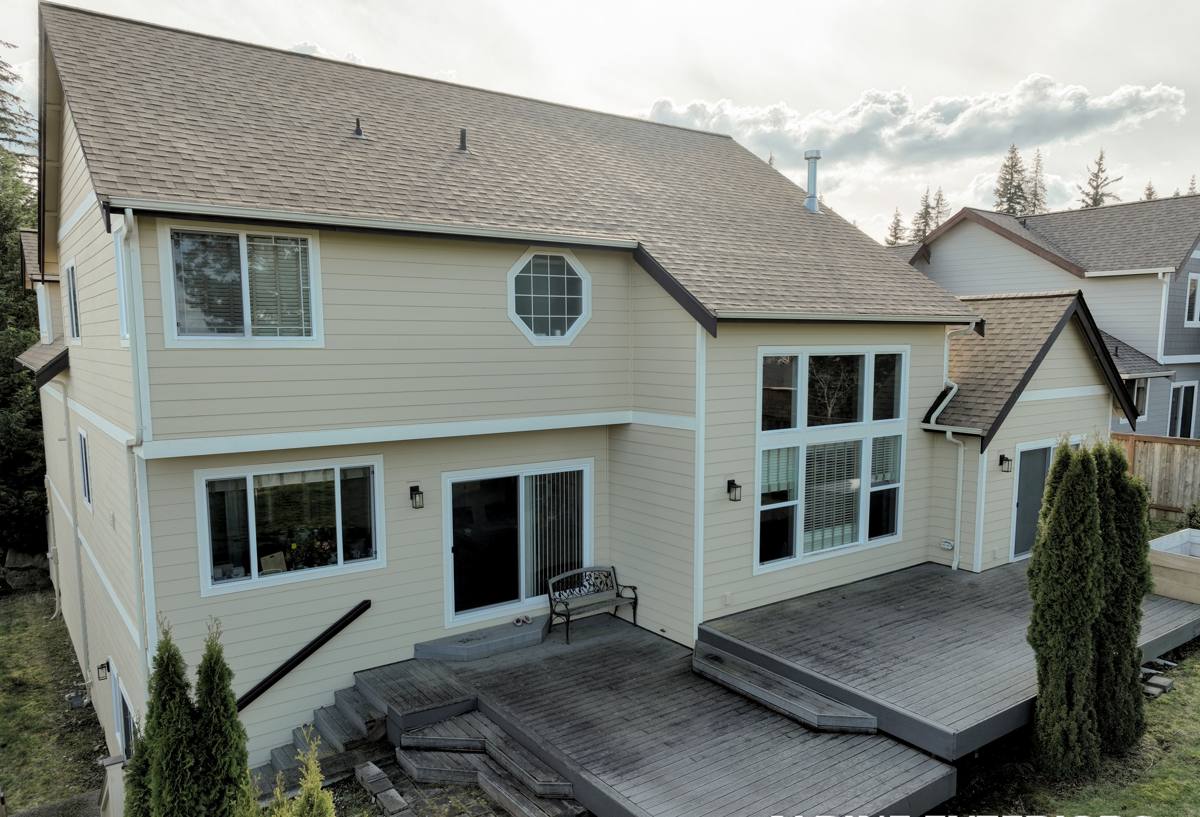
What Ferndale Homes Need From a Deck
Most of the homes we work on around Ferndale fall into a few categories: older farmhouses and ranch homes on larger lots, newer developments closer to town, and waterfront or near-waterfront properties toward the west side of the county. Each has slightly different deck needs, but the underlying climate problems are the same.
Moisture Management Comes First
Whatcom County gets a lot of its annual rainfall as slow, steady soakers rather than short downpours, which means wood and framing stay wet for longer stretches than in drier climates. Every deck we build starts with getting water off the structure and away from the house — proper ledger board flashing where the deck meets the wall, sloped decking for drainage, and gapping between boards sized for our humidity rather than a generic national spec.
Salt Air and Hardware
Even a few miles inland from Bellingham Bay, airborne salt accelerates corrosion on anything less than fully rated hardware. Standard interior-grade screws and joist hangers will rust and stain the wood around them within a couple of years. We spec stainless steel or heavy hot-dip galvanized fasteners and connectors as standard, not as an upgrade, on every Ferndale project.
Moss and Algae Growth
Shaded, north-facing, or tree-covered decks in this area develop moss and slick green film faster than most homeowners expect, and it's not just cosmetic — it makes the deck genuinely slippery and, on wood, holds moisture against the board surface. Deck orientation, gap spacing, and material choice all affect how much moss pressure a deck will face, and we talk through that with every homeowner before we finalize a design.
Wood vs. Composite: An Honest Comparison for This Climate
There's no universally "right" decking material — it depends on your budget, how much upkeep you want to do, and how much shade and moisture the deck will sit in. Here's how the common options actually perform in Whatcom County conditions:
| Material | Upfront Cost | Maintenance in Our Climate | Moss/Algae Resistance | Typical Lifespan |
|---|---|---|---|---|
| Pressure-treated fir/hem-fir | Lowest | Annual cleaning, re-stain or re-seal every 1-2 years | Low — needs regular cleaning | 10-15 years with upkeep |
| Cedar | Moderate | Re-oil or re-stain every 1-2 years to hold color and resist moisture | Moderate — naturally rot-resistant but still grows moss if shaded | 15-20 years with upkeep |
| Composite decking | Higher | Periodic washing, no staining or sealing | Good on most modern capped boards, though shaded areas still need washing | 25+ years, per manufacturer warranty |
| PVC decking | Highest | Lowest — occasional washing only | Best resistance of the common options | 25+ years, per manufacturer warranty |
We install all four categories and won't push you toward the most expensive option if a well-built wood deck fits your budget and you're comfortable with the maintenance. What we won't do is install composite or PVC boards over framing that skips proper ventilation and drainage details — trapped moisture under the deck causes far more long-term damage than the surface material choice does, regardless of what's on top.
How We Build a Deck: Our Process
1. On-Site Design Consultation
We walk the property with you, look at drainage, sun and shade exposure, and how the deck will connect to the house. This is where we flag anything specific to your lot — a low spot that collects water, a north-facing wall that stays damp, a slope that affects footing depth.
2. Engineering and Permitting
Whatcom County and the City of Ferndale both require permits for most new deck construction, and elevated decks typically need engineered footings and railing details reviewed against current code. We handle the permit application and inspection scheduling as part of the job — this isn't an add-on service, it's part of building it correctly.
3. Footings and Framing
Footing depth and size are set based on your soil and the deck's load, not a one-size guess. We use corrosion-rated hardware throughout the frame and install flashing at every point where the deck contacts the house, since that ledger connection is the single most common source of hidden rot on decks we're asked to repair or rebuild.
4. Decking, Railing, and Finish Details
Board spacing, fastener pattern, and railing hardware are all chosen with drainage and corrosion in mind. If you're going with wood, we'll talk through a realistic sealing and staining schedule before we finish the job, so there are no surprises about upkeep six months in.
5. Final Walkthrough
We walk the finished deck with you, cover basic care and cleaning, and make sure you know what to watch for going into your first Whatcom County winter with it.
Repairs and Rebuilds: What We Commonly Find
A fair number of our Ferndale deck calls aren't new builds — they're repairs on decks that were built without this climate in mind, often by out-of-area builders or as older DIY projects. The recurring problems are consistent enough that we can usually spot them from the ground:
- Rusted or rust-staining fasteners and joist hangers that were never rated for coastal exposure
- Soft, spongy decking near the house where ledger flashing was missing or installed incorrectly
- Black or green staining and slick surfaces on shaded sections that were never designed to shed water or dry out
- Railings that have loosened because post connections weren't through-bolted or were undersized for code
- Gaps between boards that were cut too tight, trapping debris and moisture instead of letting it drain
Some of these are cheap fixes. Others — especially ledger rot — mean pulling decking to assess how far the damage has spread before we can give you an honest repair-versus-rebuild number.
Sizing and Layout Considerations Specific to This Area
Lot sizes and house styles around Ferndale vary more than in a dense suburban development, which affects deck design in practical ways. Larger rural lots often mean longer spans and more footings, which affects both engineering and cost. Homes closer to town on smaller lots more often need decks that work around setback requirements and existing grade changes. If your property has any exposure to open water or higher wind-load areas near the coast, that can affect railing and post engineering as well — something we account for at the design stage rather than after permitting flags it.
Why a Local Crew Matters for This Job
Deck-building know-how doesn't fully transfer from a dry climate. A crew that mostly builds in places with less rain and no salt exposure will often use standard fasteners, skip extra flashing details, or space boards the way it's done elsewhere — and those decisions look fine at handoff and fail years later. We work Ferndale and the rest of Whatcom County regularly enough to know which details actually matter here: where ledger flashing gets tested hardest, which orientations grow moss fastest, and which hardware holds up against salt air over a decade instead of a few years. We're also positioned to come back for warranty work, seasonal questions, or a repair down the line without you needing to track down an out-of-town crew.
Before You Commit: A Quick Checklist
If you're comparing quotes for a Ferndale deck project, these are worth asking about directly:
- What grade of fasteners and hardware are specified — standard, or coastal/marine-rated?
- Is ledger flashing included as standard, and can the contractor explain how it's installed?
- Who is pulling the permit, and is engineering included for elevated or larger spans?
- What's the realistic maintenance schedule for the decking material you're considering?
- Does the quote include footing depth and sizing based on your specific soil, or a generic estimate?
A contractor who can answer these clearly, without hedging, is usually one who's built enough decks in this climate to know why they matter.
Get a Straightforward Estimate
If you're planning a new deck or dealing with an aging one in Ferndale, we're happy to come take a look, walk the site with you, and give you an honest read on what it needs. There's no pressure and no cost to get a quote — just fill out the form below and we'll go from there.