 Bellingham Exterior
 Why Energy-Efficient Windows Matter More in Ferndale
Ferndale sits close enough to the water that homes here take on real salt air, and Whatcom County's marine climate means long stretches of driving rain and short, damp winters where moss and mildew find every shaded, moist surface they can. Windows are one of the largest single sources of heat loss in any house, and in a climate like this, a window that's aging, poorly sealed, or the wrong product for its exposure isn't just a comfort issue. It's a moisture pathway, a mold risk, and a heating bill that quietly climbs every winter it goes unaddressed.
"Energy-efficient" gets used loosely in this industry. For a Ferndale home, it has to mean something specific: a window and an installation that together keep conditioned air in, keep wind-driven rain out, and hold up to salt-laden air without corroding hardware or trapping moisture in the wall.
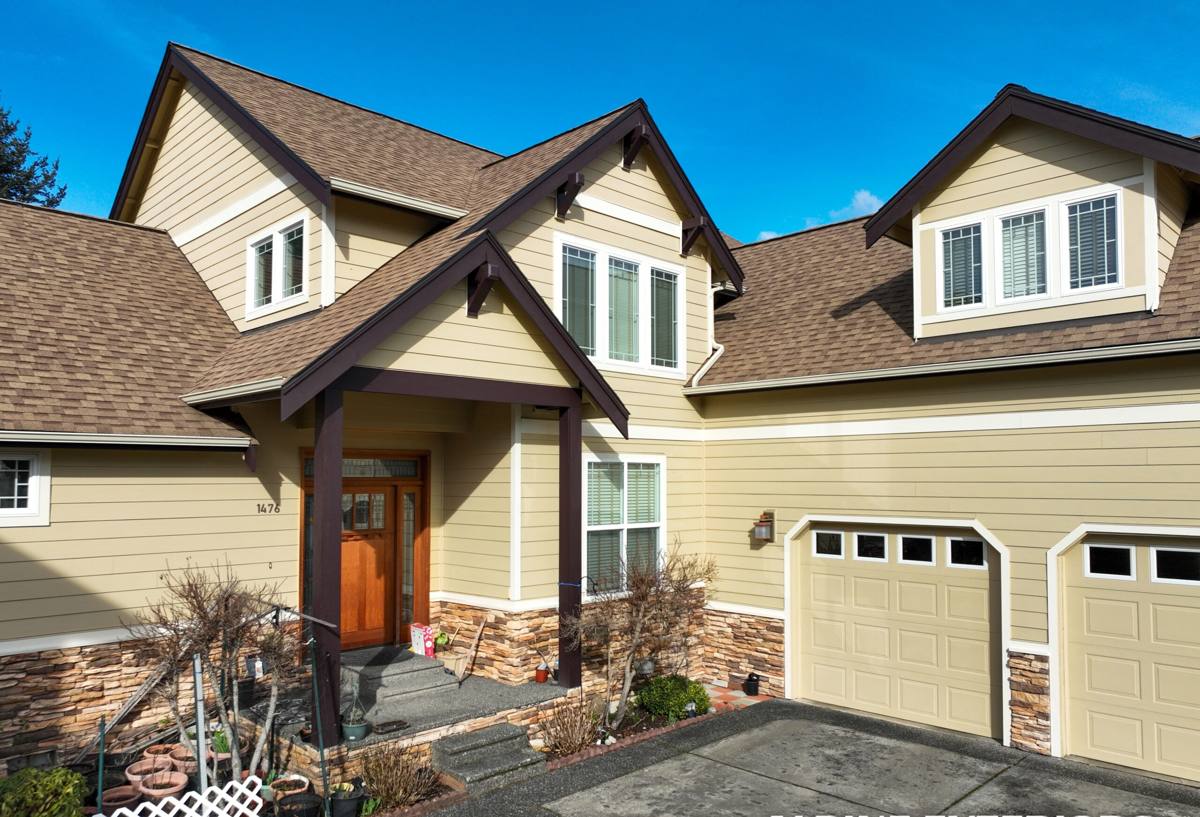
What Ferndale's Climate Does to Windows Over Time
Salt Air and Corrosion
Homes closer to the water pick up airborne salt that settles on exterior surfaces, including window hardware. Cranks, locks, hinges, and screen frames made from lower-grade or unfinished metal can start pitting or seizing years before the glass or frame shows any wear. This is why hardware finish and material matter as much as the window unit itself when we're specifying a product for a Ferndale property.
Driving Rain and Wind-Driven Water
Wind-driven rain doesn't fall straight down — it gets pushed sideways into any gap, joint, or poorly lapped flashing detail, especially on walls facing the prevailing weather. A window can have excellent glass and still leak if the flashing and sealant around it weren't installed to shed water correctly. Most of the water damage we find at old windows didn't come through the glass; it came around the frame.
The Long Moss Season
Shaded, north-facing walls and anything under tree cover stay damp for months at a time here. Sills and trim that don't drain properly hold moisture long enough for moss and mildew to take hold, and that moisture sitting against wood trim or an old wood sill is what eventually causes rot — not the rain event itself, but the weeks of dampness that follow it without a chance to dry out.
What "Energy-Efficient" Actually Means for a Window
Every legitimate replacement window carries an NFRC (National Fenestration Rating Council) label with performance numbers, and two of them matter most in this climate:
- U-factor — measures how much heat escapes through the window. Lower is better, and this is the number that matters most in a heating-dominated climate like ours.
- SHGC (Solar Heat Gain Coefficient) — measures how much solar heat passes through the glass. Useful for hot, sunny climates, but a secondary concern here compared to stopping heat loss.
ENERGY STAR's climate-zone criteria for this part of the country weight U-factor heavily for exactly that reason — the bigger risk in Whatcom County is heat escaping through the glass and frame all winter, not overheating in summer. When we spec windows for a Ferndale home, we're prioritizing a low, well-documented U-factor over marketing claims on the box.
Frame Materials: What Actually Holds Up in a Marine Climate
Frame material affects durability, maintenance, and how the window handles moisture and salt exposure over decades, not just its upfront cost.
| Frame Material | Moisture & Salt Air Behavior | Maintenance | General Cost Position |
|---|---|---|---|
| Vinyl | Won't rot or corrode; performs well near the coast; UV exposure can cause slow chalking over many years | Low — occasional washing | Lower |
| Fiberglass | Dimensionally stable across temperature swings; strong resistance to moisture and corrosion | Low | Higher |
| Wood-clad | Performance depends entirely on the cladding staying intact — a failed seal exposes wood to rot | Moderate to high | Higher |
| Aluminum | Conducts cold, which increases interior condensation risk; needs a corrosion-resistant finish near salt air | Low to moderate | Mid |
There's no single "right" material for every house — a shaded, weather-exposed wall and a sheltered, south-facing one can call for different products even on the same home. Our job is matching the frame to the specific wall it's going on, not selling one material across the board.
Glass Packages Worth Paying For
Double-Pane vs. Triple-Pane
Double-pane with a good low-E coating and gas fill is a solid, proven choice for most Ferndale homes. Triple-pane adds meaningful value on walls with heavier road or wind noise, on exposed elevations that take the brunt of the weather, or for owners prioritizing the lowest possible U-factor — but it isn't automatically the better choice for every opening on the house, and it adds weight and cost that should be weighed against the specific wall it's going on.
Low-E Coatings and Gas Fills
A low-emissivity (low-E) coating reflects heat back into the room in winter without noticeably darkening the glass. Argon gas fill between panes is the standard upgrade over plain air and improves insulating performance at a modest cost; krypton is used in narrower gaps where argon's benefit levels off. Warm-edge spacer systems between the panes also matter more here than in a drier climate — they reduce the cold edge effect that drives condensation on the inside of the glass during our damp winters.
Why Installation Matters As Much As the Window Itself
A high-performance window installed poorly will underperform a mid-grade window installed correctly — and in a driving-rain climate, a bad installation can actively cause damage a bad window alone never would. Correct installation includes:
- A sloped sill pan flashing that directs any water that gets past the window back outside, not into the wall cavity
- Proper integration with the home's weather-resistive barrier, lapped shingle-style so water sheds down and out
- Backer rod and a quality sealant at the right joints — not caulk alone patching over a gap that shouldn't be there
- Insulation around the frame that fills the gap without overpacking it, which can bow the frame and affect operation
- Exterior trim and finish details that shed water away from the opening rather than channeling it toward it
This is where our background as an exteriors contractor — not just a window installer — actually shows up in the work. We're already thinking about how the window ties into the siding, trim, and drainage plane around it, because that's the same envelope we work on every day.
Our Process for a Ferndale Window Project
- On-site assessment — we look at existing flashing, sill condition, and any signs of past water intrusion or rot before we ever talk product, because that determines the real scope of the job.
- Product selection by elevation — we match frame material and glass package to each wall's actual sun, wind, and rain exposure rather than quoting one product for the whole house.
- Careful removal and prep — old units come out without tearing up more of the wall than necessary, and any hidden rot or damaged flashing gets addressed before the new window goes in.
- Installation with full flashing integration — sill pan, WRB lap, backer rod and sealant, proper insulation, done in the sequence that keeps water moving out and down.
- Exterior and interior finish work — trim, caulking, and touch-up so the finished opening looks right and sheds water correctly.
- Walkthrough and cleanup — we check operation on every window with you and haul away the old units and debris.
Signs Your Current Windows Are Costing You Money
- Fogging or condensation trapped between the panes — the seal has failed and the insulating gas is gone
- A draft you can feel near the frame, especially on windy days
- Sills that stay damp for days after rain, or show moss and mildew growth
- Hardware — locks, cranks, hinges — that's corroded, stiff, or won't latch tight anymore
- Cracked or missing exterior caulking, or trim that feels soft or spongy when you press it
- Rooms near certain windows that are noticeably colder in winter than the rest of the house
Why a Crew That Already Works in Ferndale Matters
A contractor who works this area regularly already has a feel for which elevations on a typical Ferndale lot take the worst of the wind-driven rain, how moisture behaves on shaded north walls through the wet months, and what corrosion-resistant hardware and finishes actually hold up near the water long-term. That's the difference between a window install treated as a one-off product swap and one treated as part of the building envelope it has to work with for the next few decades. It also means someone who understands local permitting expectations and can speak plainly about what your specific house needs instead of a generic pitch.
If you're weighing new windows for a Ferndale home, we're happy to take a look and give you a straightforward, no-pressure estimate — just fill out the form below.