 Bellingham Exterior
 Siding That Has to Work in Happy Valley's Conditions
Happy Valley is a residential Bellingham neighborhood, and like the rest of Whatcom County it sits in a climate that is genuinely hard on exterior building materials. Homes here deal with a long wet season, wind-driven rain that pushes moisture sideways into wall assemblies, salt-laden air drifting off Bellingham Bay, and shaded, damp conditions that let moss and algae take hold on north- and west-facing walls for much of the year. None of that is unusual for this part of the Pacific Northwest, but it does mean siding decisions that work fine in a drier climate can fail here — sometimes within a few years.
Fiber cement siding, specifically James Hardie's engineered product line, was developed with exactly this kind of climate in mind. We install it because it holds up to the combination of moisture exposure, temperature swings, and biological growth that Happy Valley homes face every year — not because it's the trendiest option on the market.
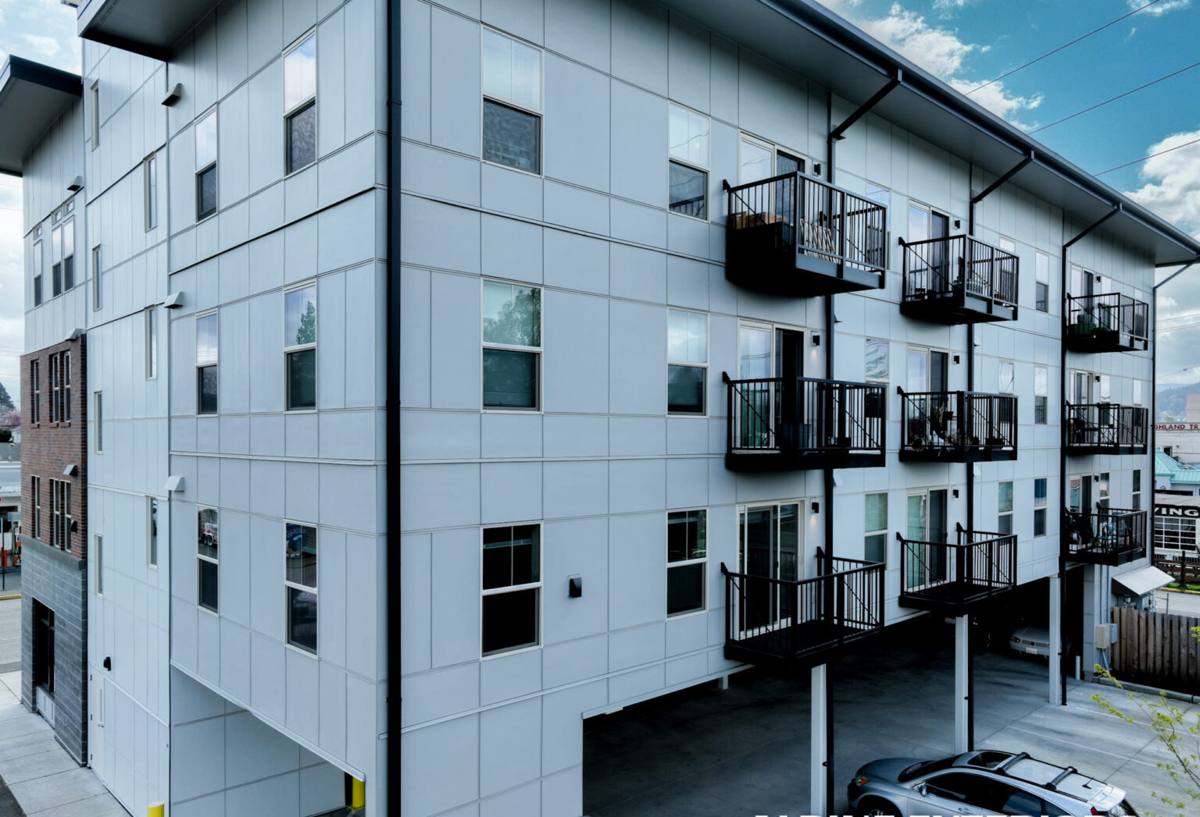
Why We Only Install James Hardie Fiber Cement
There are several fiber cement and composite siding products on the market, and we made a deliberate decision years ago to install only James Hardie. The reasons come down to consistency and long-term performance rather than marketing. Hardie's manufacturing process, its factory-applied ColorPlus finish, and its climate-specific product engineering give us a predictable result on every job — which matters more in a marine climate than in a mild, dry one.
We're not going to tell homeowners that every other product is worthless. Vinyl is inexpensive and low-maintenance in the short term. Wood has a real, warm appearance that some owners genuinely prefer. But in a coastal, high-moisture region like Bellingham, those materials come with trade-offs — vinyl can warp and fade, and it doesn't stop moisture as effectively at seams; wood requires ongoing painting, caulking, and rot vigilance that most homeowners underestimate. Fiber cement splits the difference: it looks like painted wood siding, resists moisture far better, and doesn't melt, warp, or attract insects.
What HZ5 Engineering Means for This Neighborhood
James Hardie makes region-specific formulations under what it calls its HZ (HardieZone) system. Homes in Happy Valley and the rest of western Washington fall under the HZ5 designation, which is engineered for higher-moisture, more humid climates than the HZ10 product sold in drier parts of the country. The practical difference is in the cement formulation and moisture resistance built into the board itself — it's not just a marketing label, it affects how the product performs over a 20- or 30-year span in a place that sees rain a majority of the year.
What Correct Fiber Cement Installation Actually Involves
Fiber cement is a forgiving material in terms of durability, but it is unforgiving of installation shortcuts. Most siding failures we're called out to inspect in this area — on any brand of siding — trace back to installation error, not product failure. Getting it right matters more here than in a dry climate because water that gets behind the cladding has fewer chances to dry out between rain events.
- Weather-resistive barrier: A correctly lapped and sealed water-resistive barrier (commonly HardieWrap) goes on before any siding, giving the wall a drainage plane if any moisture does get past the cladding.
- Proper clearances: Siding needs to sit at least a couple of inches above roof lines, decks, and grade, and have a gap at horizontal trim intersections — tight-to-grade or tight-to-roof siding is one of the most common causes of moisture damage we see.
- Flashing at every penetration: Windows, doors, hose bibs, vents, and any other wall penetration need proper flashing integrated with the water-resistive barrier, not just caulk.
- Correct fastener pattern and depth: Hardie specifies fastener placement and depth precisely; over-driven or misplaced nails crack boards or void the manufacturer's warranty.
- Panel gapping and caulking: Boards need the manufacturer-specified gap at butt joints and trim, filled with a high-quality, paintable sealant rated for exterior use — not just whatever caulk is on the truck.
Our Process for a Happy Valley Siding Project
We run the same disciplined process on every home, adjusted for the specifics of the property.
1. On-Site Assessment
We walk the exterior, check the current siding and any moisture damage at penetrations, note roofline and grade clearances, and look at how sun and shade fall on each wall — this tells us which sides will need the most attention for moss and algae over time.
2. Removal and Sheathing Check
Old siding comes off and we inspect the sheathing underneath. Any soft, water-damaged sheathing gets replaced before anything new goes on — installing new siding over compromised sheathing just hides a problem instead of solving it.
3. Weather Barrier and Flashing
We install the water-resistive barrier and flash every window, door, and penetration before a single piece of siding goes up. This step gets rushed by crews trying to move fast; we don't rush it.
4. Siding Installation
Hardie boards or panels go up to manufacturer specification — correct fastener spacing, correct clearances, correct gapping at joints and trim.
5. Caulking, Touch-Up, and Walkthrough
Joints and trim get sealed, any factory-finish touch-up is done with matched ColorPlus product, and we walk the finished job with the homeowner before calling it done.
Why Local Experience in This Neighborhood Matters
A siding crew that regularly works in Bellingham and Whatcom County neighborhoods like Happy Valley has already seen how houses in this area age. That means recognizing which walls tend to hold moss longest, understanding how Bellingham's permitting and inspection process works so a project doesn't stall, and knowing what typical wall assemblies look like in homes of different eras in this part of the county. A crew that mostly works somewhere drier and treats this like just another job is more likely to skip a step that doesn't matter in their usual climate but matters a great deal here.
There's also a simple accountability argument: a contractor based in and around Bellingham has a reputation in the community to protect and is easy to reach if a question comes up five or ten years down the road. That's worth something on a product with a multi-decade lifespan.
What Drives the Cost of a Fiber Cement Siding Project
Every home is different, but the same handful of factors drive most of the price variation we see on jobs in this area.
| Factor | Why It Matters |
|---|---|
| Home size and wall area | More square footage means more material and labor hours, the largest single driver of total cost. |
| Tear-off vs. new construction | Removing and disposing of old siding, and repairing any sheathing found underneath, adds labor beyond a straightforward install. |
| Number of stories and access | Second-story and steep-site work requires scaffolding or lift access, which adds time and equipment cost. |
| Trim and architectural detail | Homes with more corners, dormers, or trim transitions take longer to flash and finish correctly. |
| Siding profile and color | Lap width, panel style, and ColorPlus color selection all carry different material pricing. |
| Sheathing condition | Hidden moisture damage found during tear-off can add repair cost that's impossible to quote sight-unseen. |
We give firm numbers after an in-person assessment rather than guessing over the phone — too much of the cost depends on what's actually happening behind the existing siding.
Maintaining Fiber Cement Siding in a Wet, Shaded Climate
Fiber cement is low-maintenance compared to wood, but "low-maintenance" doesn't mean "no maintenance" — especially in a neighborhood that sees extended damp, shaded stretches through the fall and winter.
- Rinse siding with a garden hose once or twice a year to clear pollen, dust, and early moss spores before they take hold, especially on north- and west-facing walls.
- Keep gutters clear and downspouts directed away from siding so water isn't running down or pooling against wall surfaces.
- Trim back shrubs and trees that keep siding shaded and damp longer than necessary — airflow and sun exposure are the best natural defense against moss.
- Check caulking at trim joints and penetrations annually; caulk is the first thing to fail and the easiest thing to catch early.
- Repaint or refresh ColorPlus finish only if it's actually needed — the factory finish is designed to outlast a standard field-applied paint job by years.
- Address any small impact damage or chips promptly rather than letting exposed edges take on moisture over a winter.
A Straightforward Next Step
If you're weighing a siding replacement for a home in Happy Valley, we're glad to come take a look, explain what we're seeing, and put together a straightforward, no-pressure estimate — no scare tactics, no inflated urgency, just an honest read on your home's siding and what it would take to do the job right. Use the form below to get started.