 Bellingham Exterior
 Siding Built for Silver Beach, Not Just Bellingham in General
Silver Beach sits close to Lake Whatcom's shoreline, under a heavier tree canopy than a lot of the flatter parts of Bellingham. That combination matters more than most homeowners realize when it comes to siding. Shade slows drying time after every rain. Overhanging trees drop debris and organic matter into gutters and against wall surfaces. And because the neighborhood still sits within Whatcom County's broader marine climate belt, homes here also take on the salt-tinged air that moves in off Bellingham Bay and Puget Sound on prevailing winds. Add in a long, wet moss season that can stretch from fall through spring, and you have a siding environment that punishes anything that doesn't handle moisture correctly.
This page is specifically about fiber cement siding for homes in Silver Beach — what the local conditions demand, what a correct installation looks like, and why we install James Hardie fiber cement exclusively rather than offering a menu of siding materials.
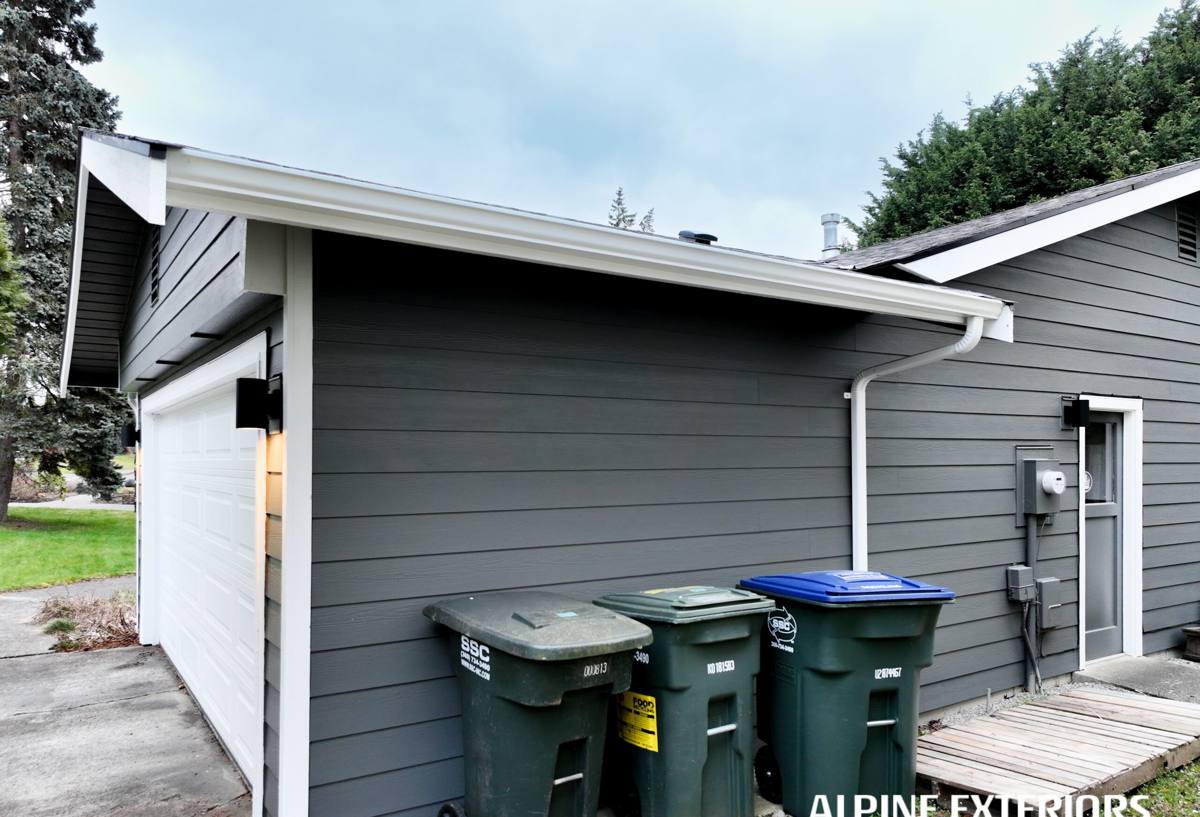
What Silver Beach's Climate Actually Does to a House
Salt-Tinged Marine Air
Whatcom County's proximity to salt water means airborne moisture carries trace salts that accelerate corrosion on fasteners, flashing, and any metal trim components. Siding materials that rely on paint film alone for protection are more exposed to this slow chemical wear than a factory-cured, non-organic substrate.
Driving Rain
Bellingham's weather pattern isn't just steady drizzle — it includes wind-driven rain events that push water sideways into wall assemblies, not just straight down. Siding, flashing, and the water-resistive barrier behind it all have to work together as a system, because rain here doesn't always fall where gravity alone would carry it away.
A Long Moss Season
Shaded, tree-lined streets like those around Silver Beach stay damp longer after storms than open, sun-exposed lots. That extended dampness is exactly what moss, algae, and mildew need to take hold on siding surfaces, especially on north-facing walls and anywhere gutters overflow or splash back onto the wall below.
Why This Combination Matters
None of these three factors is unique to Silver Beach on its own. It's the combination — salt-laden air, wind-driven rain, and prolonged shade-driven dampness — that makes siding choice and installation quality genuinely consequential here, not just a cosmetic decision.
Why We Install James Hardie Fiber Cement Only
We don't offer vinyl, LP SmartSide, cedar, primed spruce, or other fiber cement brands. That's a deliberate standard, not an oversight. Fiber cement is non-combustible and dimensionally stable — it doesn't expand and contract with moisture the way wood-based products can, and it doesn't soften or warp under sustained damp conditions the way engineered wood siding can if a seam or cut edge gets exposed to water. James Hardie's ColorPlus factory-applied finish is baked on and warrantied against fading and peeling in a way field-applied paint systems aren't, which matters directly in a climate where surfaces stay wet longer between dry-outs.
James Hardie also engineers specific product lines (their HZ5 line, relevant to our Pacific Northwest climate zone) for regions with sustained moisture exposure. That's a meaningful difference from a generic siding product built to a national average spec rather than for wet coastal conditions specifically.
What We're Not Claiming
We're not going to tell you every other siding material fails on every home. Vinyl is inexpensive and low-maintenance in mild climates. Cedar has genuine visual warmth that some homeowners prefer. What we are saying is that, given what we see repeatedly on Silver Beach homes — moss growth, caulk failure at trim joints, fastener corrosion, and paint film breakdown on sun-and-shade-cycled walls — fiber cement done correctly holds up better over the long run, and James Hardie is the fiber cement system with the engineering and warranty backing we're willing to put our name behind.
What a Correct Fiber Cement Installation Actually Involves
Fiber cement siding is only as good as the assembly behind it. A rushed or corner-cut install can fail even with premium materials. Here's what we consider non-negotiable on every Silver Beach project:
- A continuous, correctly lapped water-resistive barrier behind the siding — not just tar paper stapled up quickly
- Proper flashing at every window, door, and penetration, integrated with the drainage plane so water sheds outward, not behind the siding
- A drainage gap or rainscreen approach where the wall assembly calls for one, so any moisture that does get behind the siding has somewhere to go
- Fasteners placed and driven to James Hardie's specification — correct depth, correct spacing, correct type for coastal exposure
- Factory-cut and factory-primed edges used wherever possible, with any field cuts sealed per manufacturer instructions
- Correct caulking at trim and joints — using it where it's specified, and not as a substitute for proper flashing where it isn't
Skipping any one of these doesn't usually cause an immediate, visible problem. It shows up two, five, or ten years later as a soft spot, a stain, or a warranty claim that gets denied because the installation didn't follow spec. That gap between "looks fine at handoff" and "performs correctly for decades" is where most siding disappointment actually comes from.
Our Process for a Silver Beach Siding Project
1. On-Site Assessment
We walk the property, check the current siding and trim condition, look at gutter and drainage performance around the home, and identify any areas where tree cover or shade patterns are driving extra moisture exposure. This is also when we flag any sheathing or framing concerns that need attention before new siding goes on.
2. Scope and Product Selection
We walk through the relevant James Hardie product line and finish options for your home, and give you a clear, written scope — what's being removed, what's being replaced or repaired underneath, and what's going on in its place.
3. Prep and Moisture Barrier Work
Old siding comes off, the sheathing gets inspected and repaired where needed, and the water-resistive barrier and flashing details go in correctly before a single piece of new siding is hung. This step is the one most likely to get shortcut by crews trying to move fast, and it's the one that determines whether the wall assembly actually works for the next several decades.
4. Installation
Siding, trim, and any accessory pieces go on to manufacturer spec, with attention to fastener placement, joint treatment, and clearances at grade, decks, and roof lines — all areas where moisture tends to find a way in if they're rushed.
5. Final Walkthrough
We walk the finished job with you, point out what was done and why, and go over care and maintenance specific to your home's exposure — including anything to watch for given nearby tree cover.
Why a Local Crew Matters Here Specifically
Silver Beach isn't a generic subdivision — the mix of mature trees, lake-adjacent moisture, and older housing stock in the surrounding area creates conditions that a crew unfamiliar with Bellingham's specific microclimates can miss. A contractor who already works this neighborhood knows to look closer at north-facing walls, knows what moss buildup on an old wall usually means underneath, and isn't guessing at how local wind-driven rain patterns interact with a given home's orientation. That local pattern-recognition shows up in fewer callbacks and fewer surprises once the old siding comes off.
There's also a practical service-life advantage: a contractor established in Whatcom County is positioned to honor warranty and workmanship follow-up for years after the job, rather than a crew that worked the area once and moved on.
Cost Factors for a Silver Beach Siding Project
| Factor | Why It Affects Cost |
|---|---|
| Home size and wall complexity | More square footage, corners, and trim detail means more material and labor hours |
| Condition of existing sheathing | Moisture-damaged sheathing found during tear-off requires repair before new siding goes on |
| Access and tree cover | Tight lots, mature landscaping, or overhead branches near the home can slow staging and removal |
| Product line and finish selected | James Hardie's various lines and ColorPlus finish options carry different material costs |
| Trim and accessory scope | Fascia, soffit, and trim replacement alongside siding adds to overall project scope |
We don't quote broad numbers on a page like this because every Silver Beach home is different — a lake-adjacent lot with heavy tree cover and an older sheathing layer is a different project than a straightforward single-story home nearby. A site visit is the only honest way to scope your project.
Fiber Cement vs. Common Alternatives in This Climate
| Material | Behavior in Salt Air / Driving Rain / Moss Season |
|---|---|
| James Hardie fiber cement | Non-combustible, dimensionally stable, factory finish resists fade and peel; engineered wet-climate product line available |
| Vinyl | Low maintenance but can warp or fade with sustained UV and temperature cycling; seams can allow moisture intrusion if not detailed correctly |
| Engineered wood (e.g. LP SmartSide) | Wood-based core is more sensitive to sustained moisture exposure at cut edges and seams than cement-based siding |
| Cedar / primed spruce | Attractive natural material but requires ongoing refinishing and is more vulnerable to rot and moss in shaded, damp conditions |
Maintenance Checklist for Silver Beach Homeowners
Whatever siding is currently on your home, these habits matter more here than in drier parts of the state:
- Keep gutters clear of leaf and needle debris so water doesn't overflow and splash back onto siding
- Trim back branches that keep a wall surface in shade and slow drying after rain
- Rinse visible moss or algae growth off siding surfaces before it spreads, rather than waiting for a full season
- Check caulking at trim joints and window edges annually for cracking or separation
- Watch for soft spots, staining, or bubbling paint, especially on north-facing and tree-shaded walls
A Straightforward Next Step
If your Silver Beach home's siding is showing moss buildup, paint failure, soft spots, or you're simply planning ahead for a replacement, we're glad to come take a look. We'll give you a clear, honest assessment of what's going on and what a correct James Hardie installation would involve for your specific home — no pressure, no obligation. Use the form below to request a free estimate.