 Bellingham Exterior
 Deck Building in Happy Valley
Happy Valley is one of Bellingham's older, established residential neighborhoods, with a mix of homes ranging from mid-century originals to newer infill construction, many sitting on sloped lots with mature tree cover. That combination — shade, moisture, and homes of varying ages — makes deck building here a little different than a subdivision on flat, open ground. A deck in this part of Bellingham has to deal with shaded, slow-drying wood, tree debris that clogs gaps and drains, and framing that's often tucked close to grade on a hillside lot. Building it right the first time means accounting for all of that before a single board goes down.
Whether you're replacing a deck that's reached the end of its life or adding one to a home that's never had one, the goal is the same: something that handles Whatcom County weather without turning into a maintenance headache or a hidden rot problem five years down the road.
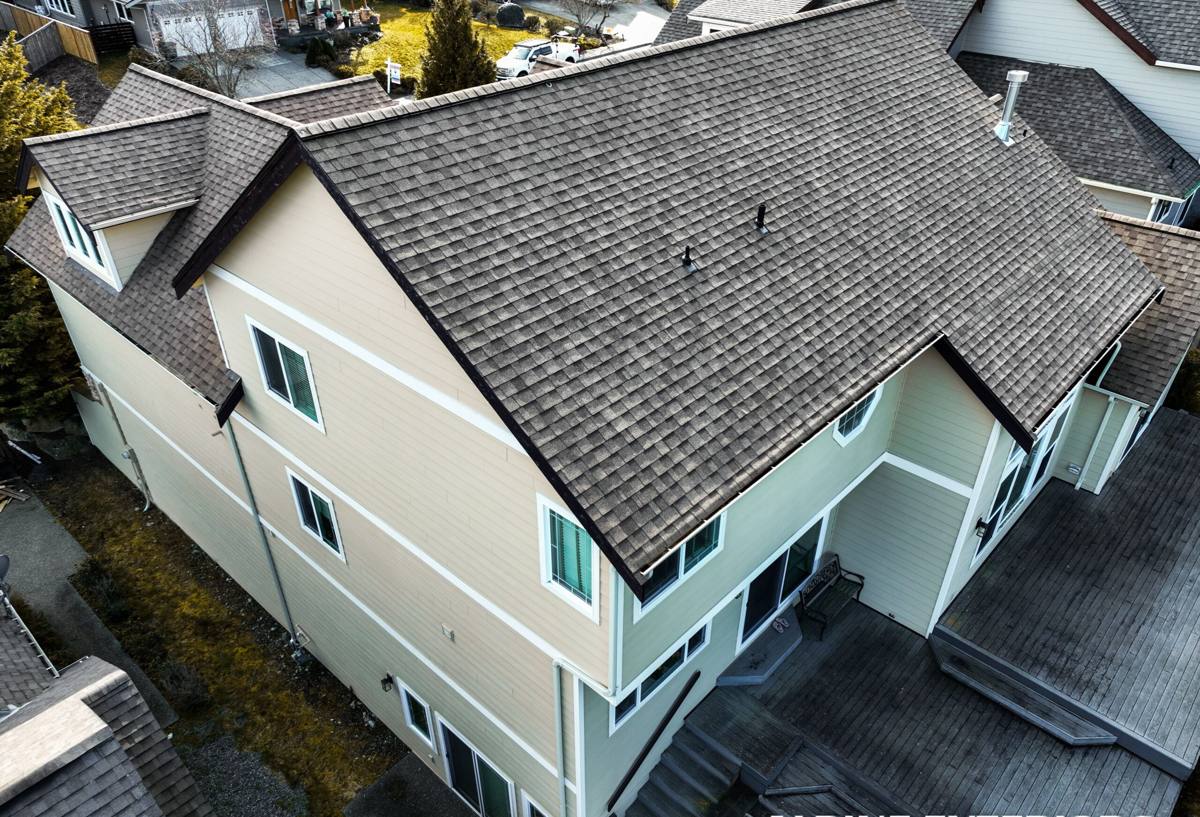
What Bellingham's Climate Does to a Deck
Bellingham sits close enough to the water that salt-laden air is a real factor in fastener and hardware corrosion, even on properties that aren't waterfront. Add in a long, wet season and the driving rain that comes with Pacific storms, and you've got conditions that push moisture into every joint, seam, and fastener hole a deck has. On shaded lots like many in Happy Valley, that moisture doesn't evaporate quickly — it sits.
Then there's moss. Whatcom County's moss season runs long, and it doesn't just grow on roofs. It takes hold on deck boards, especially in shaded corners and anywhere water is slow to drain, and it turns a walking surface slick and, over time, holds moisture against wood long enough to start rot underneath. A deck built without drainage and airflow in mind will grow moss faster and rot sooner, no matter what species of wood or composite it's made from.
None of this means a deck can't hold up here for decades. It means the build has to plan for these conditions from the framing up, not just pick a nice-looking board and call it done.
The Three Things That Matter Most Locally
- Fastener and hardware corrosion resistance — stainless or coated fasteners rated for coastal exposure, not generic hardware store screws
- Drainage and airflow underneath and between boards so moisture doesn't sit against wood or framing
- Surface texture and gap spacing that resist moss buildup and stay safe underfoot when wet
Choosing a Decking Material for Happy Valley Conditions
There's no single "right" decking material — it depends on budget, how much upkeep you want to do, and how shaded your specific lot is. We'll walk through the honest trade-offs rather than push whatever's easiest to install.
| Material | Moisture & Moss Behavior | Maintenance | Typical Lifespan Here |
|---|---|---|---|
| Pressure-treated lumber | Absorbs water, needs sealing to shed moisture and resist moss | Annual cleaning and re-sealing recommended | 10-15 years with upkeep |
| Cedar | Naturally rot-resistant but still needs finish to slow graying and moisture uptake | Periodic staining/sealing | 15-20 years with upkeep |
| Capped composite | Sheds water well, but grooved boards and shaded areas can still collect moss film | Regular rinsing/cleaning, no sealing needed | 25-30 years |
| PVC decking | Doesn't absorb moisture at all; least prone to rot or moss taking hold in the material itself | Occasional cleaning | 25-30+ years |
On shaded, tree-covered lots common in Happy Valley, we lean toward capped composite or PVC for clients who want to minimize moss and upkeep, and toward cedar for those who want a natural look and are willing to stay on top of finishing. Pressure-treated lumber is still a sound, budget-friendly choice — it just needs more attentive maintenance in a shaded, wet environment than it would in a drier, sunnier spot.
What a Correctly Built Deck Includes Below the Decking
The decking surface gets all the attention, but the parts that determine whether a deck lasts are underneath it. This is where corners get cut, and where problems show up years later as soft spots, sagging, or a ledger board pulling away from the house.
The Structural Details We Don't Skip
- Proper ledger board flashing where the deck attaches to the house, so water is directed away from the wall framing instead of into it
- Joist tape or flashing on top of every joist to keep fastener penetrations from becoming entry points for water
- Concrete footings sized and set to frost depth and soil conditions, not just poured shallow and called good
- Adequate slope and spacing for drainage, so water moves off the deck instead of pooling under it
- Stainless steel or coated structural screws and connectors rated for exterior, coastal-adjacent exposure
- Joist spacing matched to the decking material's actual span rating — composite and PVC often need tighter spacing than lumber
Skipping any one of these doesn't usually cause an immediate problem. It causes a slow one — a ledger board that's rotting behind the flashing you can't see, or joists softening from years of trapped moisture under boards that look fine on top. We build to the details that don't show, because those are the ones that determine whether you're dealing with a simple resurfacing in fifteen years or a full structural rebuild.
Permits and Whatcom County Requirements
Most new decks and many significant deck replacements in Bellingham require a building permit, and setback rules can come into play depending on lot size and how close the deck sits to a property line — something worth checking carefully on the smaller, older lots found in parts of Happy Valley. Height above grade, guardrail requirements, and stair specifications are also governed by code, and inspectors will check ledger attachment and footing depth specifically, since those are the most common places decks fail structurally.
We handle the permit application and coordinate inspections as part of the project, so you're not left figuring out city requirements on your own. It's a step that's easy to skip on a handshake deal, but it protects you if you ever sell the house or have an insurance question down the line.
Our Process, Start to Finish
- Site visit — we look at your lot's grade, tree cover, sun exposure, and how the deck will tie into the house, and talk through what you actually want to use the space for
- Design and material selection — we lay out size, layout, and railing options, and go over honest material trade-offs for your specific spot rather than a one-size-fits-all recommendation
- Written estimate — a clear scope and price before anything is scheduled, no surprise change orders for things we should have caught up front
- Permitting — we submit and manage the permit application and inspection scheduling
- Build — footings, framing, flashing, and decking, in that order, with the structural details above handled as standard practice, not an upgrade
- Final walkthrough — we go over the finished deck with you, including basic care specific to the material you chose
What We Commonly Find on Older Happy Valley Decks
When we're called out to look at an existing deck in this area — whether for repair or full replacement — a handful of issues show up repeatedly. Ledger boards without proper flashing, installed at a time when that wasn't standard practice, are a frequent culprit behind soft framing near the house. Fastener corrosion is another common one; older decks built with standard exterior screws rather than coastal-rated hardware often show rust staining and weakened connections well before the wood itself is in bad shape. And moss buildup on shaded sections, left unaddressed, tends to be the first visible sign that moisture is being held against the deck longer than it should be.
None of these are unusual or a sign of a bad original builder — they're common outcomes of decks built to older standards, or built without accounting for how much shade and moisture a specific lot actually gets. The fix is usually straightforward once the underlying cause is identified.
Keeping a New Deck in Good Shape
A well-built deck in this climate still needs some basic seasonal attention. The good news is it's simple, low-cost maintenance rather than anything major.
- Sweep debris and leaves off the surface regularly, especially in fall under tree cover
- Rinse or gently scrub moss and algae off the surface a couple times a year, particularly in shaded corners
- Check that gaps between boards stay clear so water keeps draining rather than pooling
- Inspect the ledger board area and any visible fasteners once a year for rust staining or gaps
- Reseal or re-stain wood decking on the schedule appropriate to that finish — don't wait until it's visibly gray and worn
- Keep gutters and downspouts near the deck clear so roof runoff isn't dumping extra water onto or under it
Why Local Experience in Happy Valley Matters
A deck built for a dry, sunny lot in a different climate doesn't automatically hold up under Bellingham's rain and moss season, and a crew that mostly works inland doesn't always account for the added corrosion risk of salt-carried air this close to the water. Working regularly in and around Happy Valley means we've already seen how the shade patterns, soil, and moisture on lots like these affect a deck over time — not in theory, but in the repairs and replacements we get called out for.
That experience shapes decisions that aren't obvious from a design drawing: how much slope to build into the decking on a shaded section, which fastener grade is worth the extra cost here, and where drainage needs extra attention because of how a particular lot sheds water. It's the difference between a deck that looks right on day one and one that's still solid in fifteen years.
If you're planning a new deck or need to replace one that's showing its age, we're happy to take a look and walk you through your options. Reach out for a free, no-pressure estimate using the form below.