 Bellingham Exterior
 Happy Valley's Roofs Work Harder Than Most
Happy Valley sits close enough to Bellingham Bay that salt-laden air is a real factor on every roof in the neighborhood, not just the ones with a water view. Add Whatcom County's long wet season, driving rain that comes in sideways off the water during winter storms, and the shaded, tree-lined lots that keep roofs damp for days after a storm passes, and you've got a climate that punishes a poorly installed or poorly matched roofing system fast. We've worked on enough roofs in this part of Bellingham to know which failures show up here first: corroded fasteners, moss buildup in north-facing valleys, and flashing that was never detailed for the amount of wind-driven water this area actually sees.
Metal roofing, done correctly, handles all three of those problems better than most other roofing materials available today. Done incorrectly, it can fail in ways that are more expensive to fix than a comparable asphalt mistake. This page is about what "correctly" means for a Happy Valley home specifically.
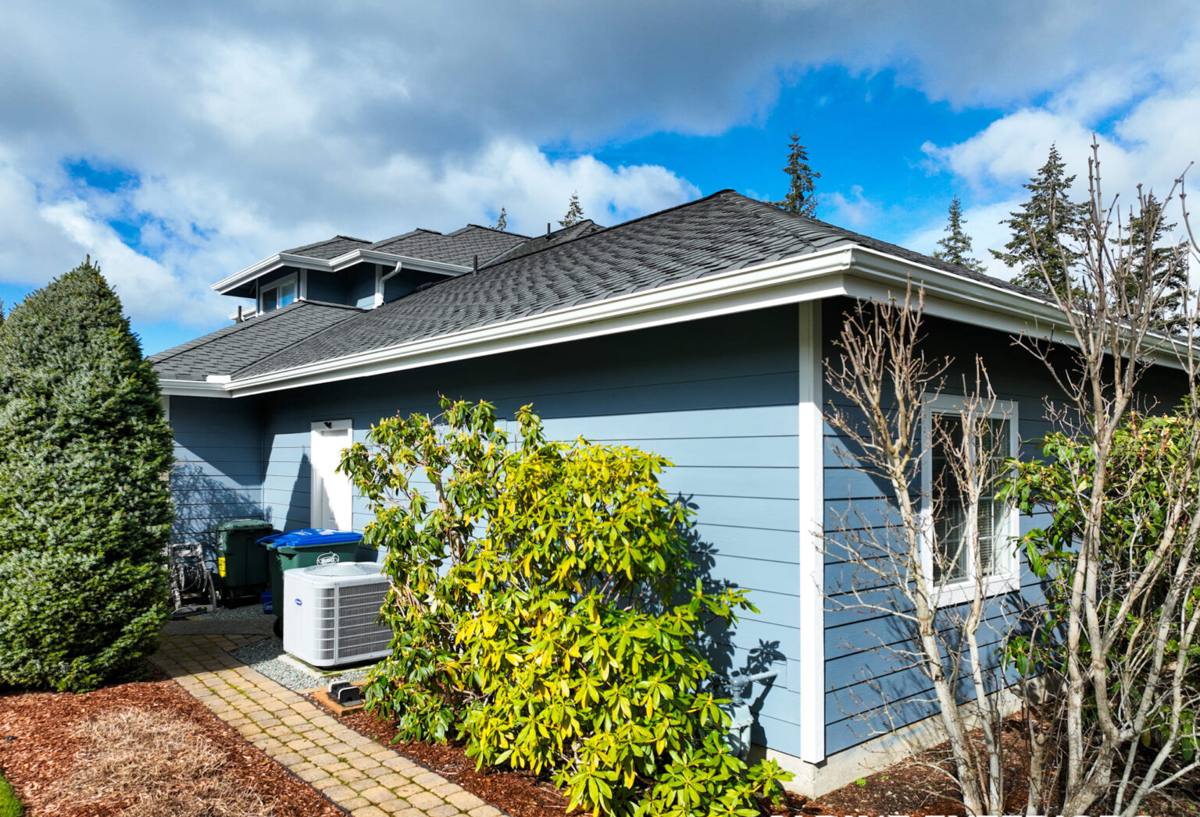
Why Metal Makes Sense for This Neighborhood
Metal roofing isn't automatically the right choice for every home, but it earns its cost premium in a climate like this for a few concrete reasons:
- Moss resistance: Metal's smooth, hard surface gives moss and algae far less to grip than the granulated surface of asphalt shingles, which matters on the shaded, north-facing roof planes common on wooded Happy Valley lots.
- Water shedding: A properly installed metal roof with the right panel profile sheds driving rain faster than shingles, reducing the window of time water sits against the roof deck during a Pacific storm system.
- Longevity against salt exposure: With the right finish and fastener specification, metal roofing tolerates coastal air better than raw steel or lower-grade coated products, which corrode visibly within a few years this close to the water.
- Lower long-term maintenance: Fewer granule losses, fewer lifted shingle tabs after windstorms, and less frequent moss treatment compared to asphalt.
None of that means metal is maintenance-free. It means the maintenance burden shifts to different things — fastener condition, sealant life at penetrations, and coating integrity — and those need to be checked, not ignored.
What a Correct Metal Roof Installation Actually Involves
Metal roofing is unforgiving of shortcuts in a way that shingles sometimes aren't. A shingle roof with a slightly imperfect detail might just look a little rough. A metal roof with the same shortcut often leaks, and often leaks somewhere hard to trace. Here's what we consider non-negotiable on every metal roof we install in this area:
Underlayment built for this climate
A synthetic, high-temperature underlayment goes down as the water-resistant layer beneath the panels, with self-adhered ice-and-water membrane at eaves, valleys, and any low-slope transitions — the spots where wind-driven rain is most likely to work its way backward under a panel edge during a strong Whatcom County storm.
Fastener selection matched to salt exposure
Standard galvanized fasteners degrade faster this close to Bellingham Bay than most homeowners expect. We spec fasteners and flashing hardware rated for coastal exposure, matched to the panel material, so the roof doesn't develop rust streaks at every screw head within a few winters.
Flashing detail at every penetration and transition
Chimneys, skylights, vent stacks, and roof-to-wall transitions are where nearly every metal roof leak actually starts — almost never through the panel field itself. Each of these gets custom-formed flashing and proper sealant, not a generic boot stretched to fit.
Ventilation that matches the assembly
Metal roofs need a ventilation path that lets moisture escape from the attic side, especially under Bellingham's damp, low-sun winters. Get this wrong and you trap condensation under the panels regardless of how good the roof itself is.
Choosing the Right Metal System for a Happy Valley Home
Not all metal roofing is the same product wearing different colors. The three systems we install most often here differ in cost, appearance, and how they hold up to this specific climate:
| System | Best for | Climate notes |
|---|---|---|
| Standing seam (concealed fastener) | Homes wanting the longest service life and cleanest look | No exposed screw heads to corrode or work loose; handles driving rain and wind-driven water the best of the three |
| Exposed-fastener screw-down panels | Budget-conscious projects, outbuildings, some roof pitches | Lower upfront cost, but fastener washers age and need inspection over time, especially in salt air |
| Stone-coated steel | Homeowners wanting a shingle or shake look with metal's durability | Good moss resistance and impact resistance; more seams and fasteners than standing seam, so detailing matters more |
For most full re-roofs in Happy Valley, we recommend standing seam when budget allows, specifically because it minimizes the number of exposed fasteners exposed to salt air over the roof's lifespan. That said, an honest assessment of your roof's pitch, budget, and how long you plan to stay in the home should drive the decision — not just what performs best on paper.
Moss, Algae, and Driving Rain — The Details That Matter Locally
Moss season in this part of Washington runs long, and Happy Valley's tree cover means many roofs stay shaded and damp well after a storm clears. Metal sheds moss better than shingles, but it isn't immune, especially in valleys and at low-slope sections where debris and organic material can still collect and hold moisture against the panel surface.
Driving rain is the other half of the equation. Storms coming off the water can push rain sideways with enough force to challenge lap joints and fastener penetrations that would never be tested in a calmer climate. This is why panel overlap, sealant tape at seams, and fastener torque all get checked as part of our install — not because the manufacturer's spec sheet requires it in every climate, but because this one demands it.
Signs your current roof is already losing the fight
- Moss buildup that returns within a season of cleaning
- Rust streaks running down from fastener heads or flashing
- Water stains on interior ceilings after wind-driven storms specifically
- Panels or shingles that look fine from the ground but feel soft or lifted underfoot
- Gutters that fill with granules, moss debris, or metal fasteners after storms
How Our Process Works on a Happy Valley Roof
We treat every roof in this neighborhood as its own case, because tree cover, roof pitch, and proximity to the water vary block to block even within Happy Valley.
- On-site evaluation: We walk the roof and attic, checking deck condition, existing ventilation, moss and moisture patterns, and any prior repair work before recommending a system.
- Honest system recommendation: We'll tell you plainly if standing seam is worth the added cost for your situation, or if a lower-cost system genuinely fits your roof and budget just as well.
- Tear-off and deck inspection: Old roofing comes off and the deck gets inspected for rot or soft spots before anything new goes down — a step that's easy to skip and expensive to regret.
- Underlayment and flashing installation: Full climate-appropriate underlayment, ice-and-water membrane at vulnerable points, and custom flashing at every penetration.
- Panel installation: Panels go down to manufacturer spec with fasteners and sealants rated for coastal exposure.
- Final walkthrough: We review the finished roof with you, including what maintenance it will and won't need going forward.
Maintaining a Metal Roof in This Climate
A well-installed metal roof in Happy Valley needs far less attention than shingles, but "far less" isn't "none." A simple annual routine keeps small issues from becoming leaks:
- Clear debris and moss buildup from valleys and low-slope sections at least once a year
- Check fastener heads and washers for early rust or looseness, especially on exposed-fastener systems
- Inspect sealant at penetrations (vents, chimneys, skylights) every couple of years — sealant ages faster than the metal around it
- Keep gutters clear so water doesn't back up under the eave edge during heavy rain
- Trim back overhanging branches to reduce shade, debris, and physical contact with the roof surface
Why It Matters That We Already Work in This Neighborhood
A crew that mostly works inland or in drier parts of Whatcom County can still install a technically correct metal roof — but they're less likely to instinctively catch the details that matter specifically here: which roof planes in Happy Valley stay shaded and mossy longest, how much wind-driven rain a given roof orientation actually takes in a winter storm, and what fastener and flashing grade actually holds up this close to the bay. That local pattern recognition doesn't replace good installation practices, but it does mean fewer surprises and fewer callbacks after the first real storm season.
If you're weighing a metal roof for a Happy Valley home, or trying to figure out whether your current roof is holding up the way it should against this climate, we're happy to take a look and give you a straight answer — not a sales pitch. Reach out for a free, no-pressure estimate using the form below.