 Bellingham Exterior
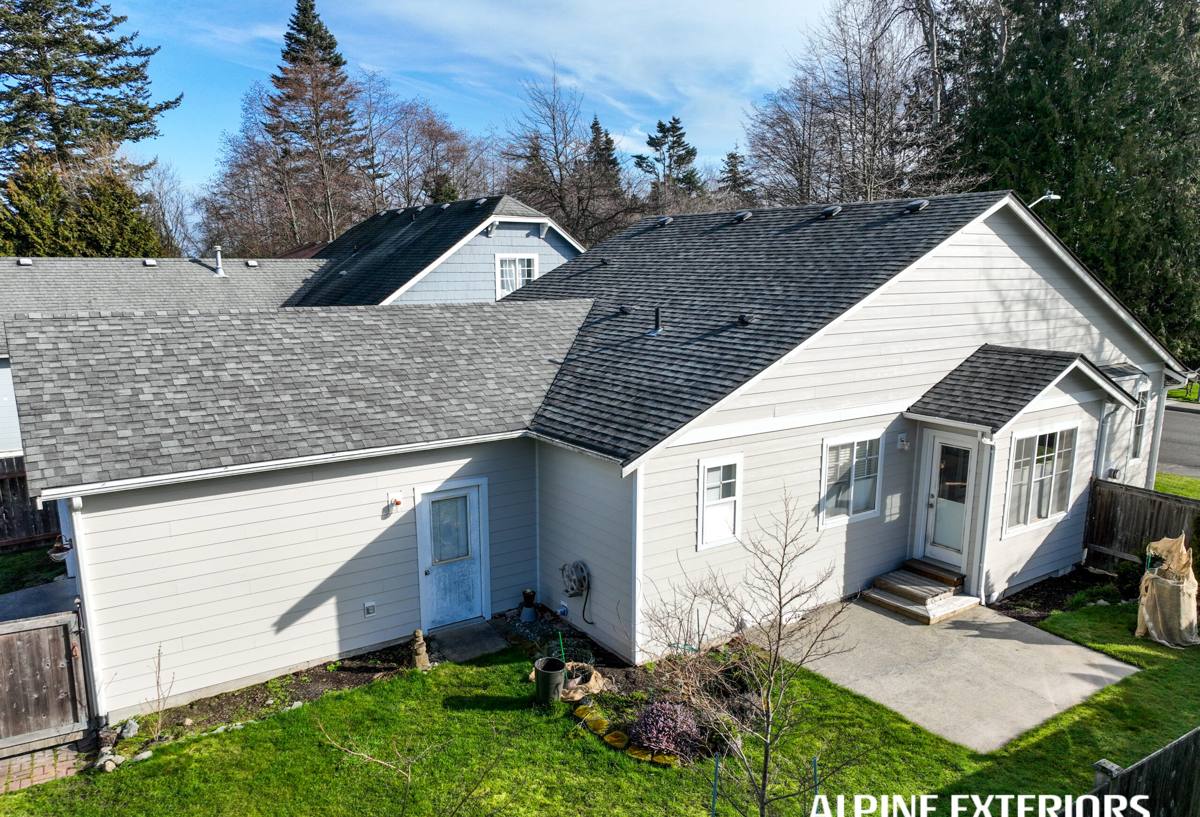
 New Roof Installation in Happy Valley
Happy Valley sits close enough to the water and the tree canopy that its roofs take a different kind of beating than roofs on the open, sunnier side of town. Between the salt air drifting in off Bellingham Bay, driving rain off the Sound, and a moss season that can run eight or nine months out of the year, a roof here has to work harder than the manufacturer's spec sheet usually assumes. When it's time to replace a roof in this neighborhood, the install itself matters less than getting the details right for what this specific location throws at a house year after year.
This page covers what a correct new roof installation looks like for a Happy Valley home, what our process involves from first visit to final walkthrough, and why hiring a crew that already works this part of Whatcom County — rather than one commuting in from out of the area — makes a real difference in how the roof performs over the next few decades.
What Happy Valley's Climate Does to a Roof
Whatcom County weather is mild compared to a lot of the country, but "mild" doesn't mean easy on a roof. It means constant, low-grade moisture exposure that never really lets up.
Moss and Organic Growth
The tree cover in and around Happy Valley keeps roofs shaded for long stretches of the day, and shade plus regular rain is exactly what moss needs to take hold. Moss isn't just cosmetic — it holds moisture against the roofing material, works its way under shingle tabs and shake edges, and accelerates granule loss on asphalt roofs. A roof installed without moss-resistant strategy in mind will usually need moss treatment or removal within a few years, sometimes sooner on the north-facing slopes.
Salt Air and Metal Fasteners
Being close enough to the bay means airborne salt is a slow, steady factor in material breakdown. Unprotected or lower-grade fasteners, flashing, and metal roofing components corrode faster near the coast than they would inland. This is one of the most overlooked details on cut-rate installs — the fasteners and flashing metal matter as much as the shingles or panels themselves.
Driving Rain and Wind-Driven Water
Storms coming off the Sound don't always fall straight down. Wind-driven rain gets pushed sideways and upward under roofing edges, ridge caps, and around penetrations like vents and chimneys. A roof system that only handles vertical rainfall well will eventually show leaks at these transition points, usually during the wettest, windiest weeks of the year — not on a calm day when it's easy to inspect.
What a Correct Roof Installation Involves
A new roof is more than laying new material over the old deck. Every layer underneath the visible surface does specific work, and skipping or shortcutting any of them is where most premature roof failures start.
- Tear-off and deck inspection: Removing old roofing down to the deck so rot, soft spots, and prior water damage can actually be seen and fixed — not covered over.
- Deck repair or replacement: Any damaged sheathing gets replaced before anything new goes down. Installing over compromised decking voids the point of a new roof.
- Ice and water shield at vulnerable areas: Valleys, eaves, and roof-to-wall transitions get a self-adhering waterproof membrane, since these are the spots wind-driven rain and ice dams target first.
- Synthetic underlayment across the full deck: A continuous moisture barrier under the roofing material, which matters more in a climate with this much sustained rainfall than in drier regions.
- Corrosion-resistant flashing and fasteners: Especially important this close to the bay — proper metal choice here is a durability decision, not a cosmetic one.
- Balanced attic ventilation: Intake and exhaust venting sized correctly so moisture doesn't get trapped in the attic, which causes deck rot and mold from the inside even when the roofing surface looks fine.
- Correct fastening pattern and exposure: Manufacturer nailing patterns and exposure lines followed exactly — this is what wind and warranty ratings are actually based on.
Choosing a Roofing Material for This Neighborhood
There's no single "best" roofing material for every house — it depends on the home's age, roof pitch, tree coverage, and budget. Here's how the common options stack up for a property with Happy Valley's specific exposure.
| Material | Moss Resistance | Salt Air / Coastal Durability | Typical Lifespan Here |
|---|---|---|---|
| Standard asphalt shingle | Moderate — benefits from zinc or copper strips | Good with quality fasteners and flashing | 20-25 years |
| Algae-resistant asphalt shingle | Better — granules formulated to resist growth | Good with quality fasteners and flashing | 25-30 years |
| Standing seam metal | Excellent — smooth surface sheds moss | Very good with marine-grade coatings and fasteners | 40-50+ years |
| Cedar shake | Poor without diligent upkeep — traps moisture | Fair — needs regular treatment near salt air | 15-25 years, maintenance-dependent |
We don't push cedar shake for shaded, coastal-adjacent lots like this one as a default recommendation. It can look great and last a long time with committed upkeep, but the maintenance burden in a wet, shaded climate is real, and we'd rather tell a homeowner that up front than sell a product that needs more attention than most people want to give it. If a homeowner wants shake for the look and understands the upkeep, we'll install it correctly — we just won't pretend it's low-maintenance here.
Our Process for a Happy Valley Roof Replacement
1. On-Site Inspection and Honest Assessment
We look at the current roof from the deck up — not just the shingles. Attic ventilation, signs of past leaks, moss buildup patterns, and flashing condition all factor into the recommendation. If a repair genuinely makes more sense than full replacement, we'll say so.
2. Written Estimate with Material Options
You get a clear, itemized estimate covering material choice, tear-off, deck repair contingencies, and underlayment/ventilation upgrades — no vague lump-sum number with the details buried.
3. Scheduling Around Whatcom County Weather
Roofing in this climate means watching the forecast closely and staging the job so the deck isn't left exposed to rain overnight. We plan tear-off and dry-in in sections rather than opening more roof than can be weatherproofed in a single work window.
4. Installation
Tear-off, deck repair, underlayment, flashing, roofing material, and ventilation work, done in the sequence and to the fastening specs the material manufacturer requires.
5. Final Walkthrough
We walk the property with you, cover care and maintenance specific to your material and site (including moss-prevention steps for shaded roofs), and make sure you know what your warranty actually covers.
Why a Local Crew Matters for This Job
A roofer who works Bellingham and Whatcom County regularly has already seen how moss builds up differently on a north-facing slope under mature trees versus an open southern exposure, and already knows which flashing and fastener grades hold up near the bay instead of failing early. That's not something you get from a general contractor passing through, and it's not something a spec sheet tells you — it's pattern recognition built from doing this work in this specific climate, repeatedly.
Being local also means being reachable after the job is done. If a question comes up during the first big storm of the season, or you want a moss-prevention checkup a couple years down the line, you're calling a crew that already knows your roof and is close enough to actually come look at it.
Signs Your Happy Valley Roof May Need Replacement
- Granules collecting in gutters or at downspout outlets
- Shingles that are curling, cupping, or losing their flat profile
- Moss or dark streaking covering a significant portion of the roof, especially on shaded slopes
- Daylight visible through the attic roof deck
- Soft or spongy spots when the roof is walked
- Rising energy bills tied to poor attic ventilation or insulation gaps at the roofline
- Roof age approaching or past the material's expected lifespan for this climate
What Affects the Cost of a New Roof Here
Every roof is priced on its own specifics, but a few factors consistently move the number up or down on jobs in this area:
| Factor | Why It Matters |
|---|---|
| Roof size and pitch | Steeper roofs take longer to work safely and use more material per square foot of coverage |
| Deck condition | Rot or soft sheathing found during tear-off adds repair cost that can't be known until the old roofing is off |
| Material choice | Standard asphalt, algae-resistant asphalt, and metal all carry different material and labor costs |
| Ventilation upgrades | Adding or correcting intake/exhaust venting is worth the upfront cost to prevent moisture problems later |
| Tree coverage and access | Heavy tree cover can slow drying time between work phases and affect staging and cleanup |
We'll walk through which of these apply to your specific property before any number goes on paper, so there aren't surprises once tear-off starts.
Ready for an Honest Look at Your Roof?
If your roof in Happy Valley is showing moss, granule loss, or age, we're happy to come take a look and give you a straight answer about repair versus replacement — no pressure, no pushy sales pitch. Fill out the form below for a free estimate from a crew that already knows this part of Bellingham.