 Bellingham Exterior
 Siding Repair Built for Happy Valley's Climate
Happy Valley is one of Bellingham's established residential neighborhoods, and like most of Whatcom County, it sits inside a climate pattern that's tough on exterior siding: salt-laden air moving in off the water, long stretches of driving rain through the fall and winter, and a moss season that can run most of the year in shaded, damp spots. None of that is unusual for this part of Washington. But it does mean siding here fails differently than siding in a dry inland climate, and a repair that doesn't account for that pattern tends to fail again within a year or two.
This page is about one thing: doing siding repair correctly on Happy Valley homes, using materials and methods that actually hold up to what this neighborhood's weather does to a house.
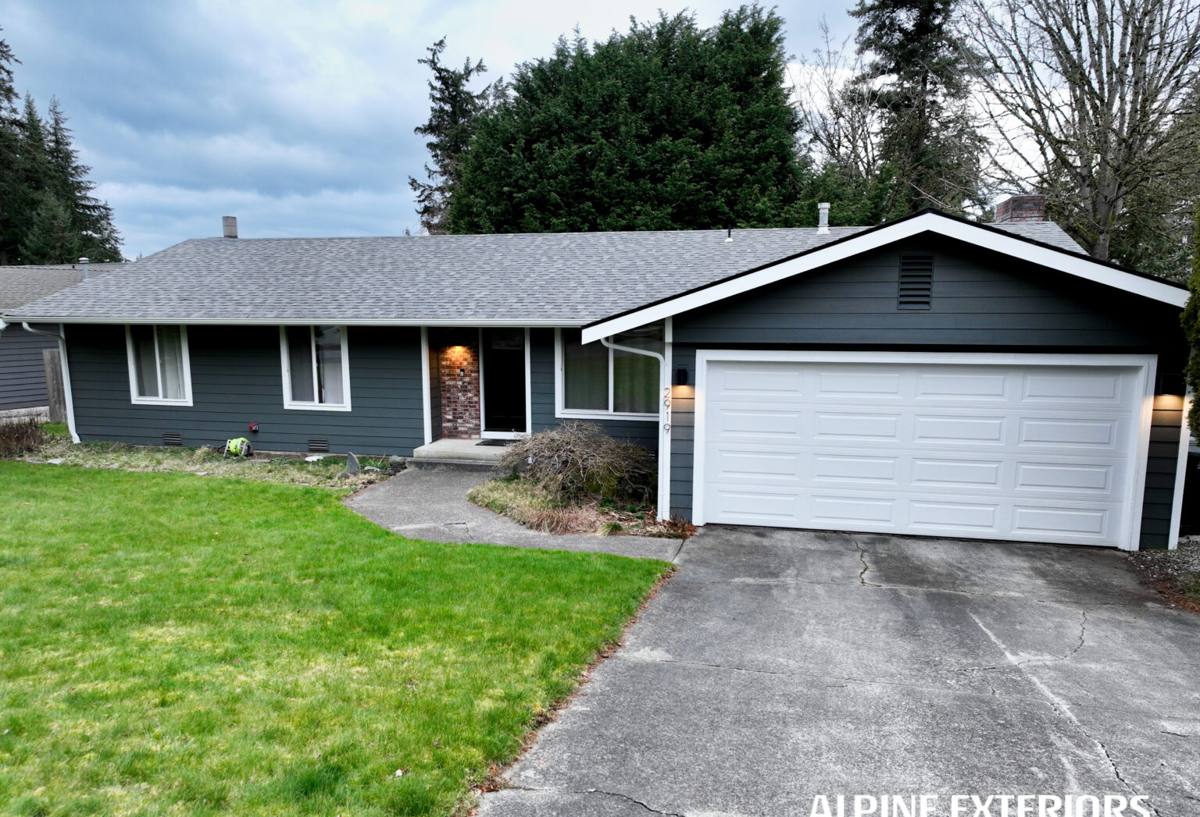
How Salt Air, Rain, and Moss Actually Damage Siding
Each of these three factors attacks siding in a different way, and understanding the difference matters for diagnosing a repair correctly.
Salt air
Airborne salt accelerates corrosion on fasteners, flashing, and any exposed metal trim. On wood-based and composite siding products, it also speeds up the breakdown of factory coatings and caulking, leaving seams and cut edges more vulnerable to water intrusion than they'd be a few miles inland.
Driving rain
Bellingham's winter storms don't just fall straight down — wind-driven rain gets pushed sideways into laps, seams, and any gap around windows, trim, or penetrations. Siding that was installed with tight-but-not-sealed joints, or without proper flashing and water-resistive barrier detailing, will let water behind the panels long before any damage is visible from the street.
Moss and prolonged moisture
Shaded north- and west-facing walls, tree cover, and our extended damp season give moss and algae a long runway to establish themselves on siding surfaces. Beyond the cosmetic issue, moss holds moisture directly against the siding face, which is a problem for wood-based products, primed spruce, and any siding whose factory finish has started to break down.
What Siding Damage Looks Like on a Happy Valley Home
Because the damage often starts behind the siding, homeowners usually notice symptoms before they can see a clear cause. Common patterns we run into on repair calls in this neighborhood:
- Soft, spongy, or delaminating panels — especially on LP SmartSide or OSB-based products where moisture has gotten into the substrate
- Persistent moss or black streaking on north-facing or shaded walls that keeps returning after cleaning
- Cracked or checked caulking at butt joints, trim, and window returns
- Paint or factory coating that's chalking, peeling, or bubbling, particularly near the ground and roofline
- Warped, cupped, or buckled boards on cedar or primed wood siding
- Rust streaking from fasteners or flashing, more common in salt-exposed areas
- Soft trim or corner boards where water has been tracking down behind the siding for a while
Any one of these can be a small, contained repair. But several of them together — especially soft panels combined with staining — usually mean there's been water intrusion for a while, and the repair needs to start with finding out how far it's spread, not just patching what's visible.
What a Correct Repair Actually Involves
A siding repair that just replaces the damaged board and moves on is a temporary fix if the underlying cause isn't addressed. On Happy Valley homes, we treat every repair call as a two-part job: diagnose, then fix.
Diagnosing the root cause
Before any siding comes off, we look at what's actually driving the damage — a failed flashing detail, a gap in the water-resistive barrier, a caulk joint that's opened up, poor grading pushing splashback onto the wall, or simply a material that's reached the end of what it can handle in this climate. Replacing a board without fixing the entry point just means the same repair call again in a year or two.
Checking for hidden moisture damage
Once we're behind the siding, we check the sheathing, framing, and water-resistive barrier in the affected area. If moisture has traveled beyond the section that looks damaged from outside — which happens often with wind-driven rain — that gets addressed as part of the same repair, not left for a future problem.
Matching existing siding versus recommending a better fix
For homes with vinyl, LP SmartSide, cedar, or primed wood siding, we'll do a straightforward, honest repair using compatible material when that's genuinely the right call for the situation and the budget. But if a section of siding is failing because the material itself struggles with this climate — not because of a one-time installation flaw — we'll tell you that plainly, and explain why we'd recommend transitioning that section, or eventually the whole elevation, to James Hardie fiber cement instead of continuing to patch a product that's fighting a losing battle against salt air and moisture.
Correct flashing and water management
Every repair we do re-establishes proper flashing, lap sequencing, and drainage behind the siding — not just a bead of caulk over the gap. This is the part of a repair that's invisible once it's done, and it's also the part that determines whether the fix lasts five years or fifteen.
Repair or Replace? What Actually Determines the Right Call
Not every damaged section needs full replacement, and not every "repair" is worth doing. Here's how we generally think through it:
| Factor | Repair Usually Makes Sense | Replacement Usually Makes Sense |
|---|---|---|
| Extent of damage | Isolated to one or two sections/elevations | Spread across multiple walls or recurring in the same spots |
| Cause | One-time flashing or caulk failure, now correctable | Material itself is failing (delamination, rot, chronic moss/moisture issues) |
| Underlying material condition | Sheathing and framing behind it are still sound | Rot or water damage found in the sheathing/framing |
| Age of existing siding | Relatively young, coating and material still intact | Near or past expected service life for the product |
| Product type | Any well-maintained material with a fixable, localized issue | Products known to struggle long-term with salt air and sustained moisture |
We'll always give you the honest version of this assessment rather than defaulting to the answer that's bigger or smaller than what your house actually needs.
Our Repair Process for Happy Valley Homes
- On-site inspection of the damaged area and a walk of the full exterior, since related issues often show up on more than one wall
- Removal of affected siding to inspect the water-resistive barrier, flashing, and sheathing underneath
- A plain-language explanation of what caused the damage and what it will take to fix it correctly — not just what it takes to make it look fixed
- Repair or replacement of damaged sheathing/framing if moisture has reached that far
- Correct flashing, lap sequencing, and sealant detailing before any new siding goes back on
- Installation of matching or upgraded siding material, finished to blend with the surrounding wall
- Final walkthrough so you know exactly what was done and why
Why We Install and Repair Exclusively With James Hardie
We don't install or repair with LP SmartSide, vinyl, Cemplank, Allura, primed spruce, or cedar. That's a deliberate standard, not a limitation on what we're capable of — and it matters most in a climate like this one. James Hardie's fiber cement is non-combustible, holds its factory ColorPlus finish far longer than field-applied paint on wood-based products, and its HZ product lines are climate-engineered specifically for regions dealing with the kind of moisture exposure Whatcom County sees most of the year. It doesn't delaminate the way OSB-based siding can when water gets behind it, and it doesn't cup, warp, or feed moss growth the way untreated or primed wood does. It also carries a strong transferable warranty when installed to Hardie's specification — which is exactly why correct installation and correct repair technique matter as much as the material itself.
When a repair call on a Happy Valley home involves a material that's fundamentally fighting this climate, we'll say so directly and explain why Hardie is what we'd put on the wall instead — not because the existing product is worthless, but because we've seen what holds up here and what doesn't.
Why It Matters to Hire a Crew That Already Works in Happy Valley
Siding repair in a coastal, damp climate isn't something you get right by following a generic checklist. A crew that already works in Bellingham and across Whatcom County knows which walls in a given neighborhood take the worst wind-driven rain, how far moss and algae staining typically indicates moisture has traveled, and which flashing details consistently fail on homes exposed to salt air. That local pattern recognition is the difference between a repair that addresses the actual cause and one that just covers the symptom until the next storm season.
It also means faster, more accurate estimates — we're not guessing at how this climate behaves, we're working from what we've already seen on homes nearby.
Signs You Should Get a Siding Inspection Now
- Soft spots when you press on the siding, especially near the bottom of walls or below windows
- Moss or dark staining that keeps coming back after cleaning
- Visible gaps or cracking in caulk joints and trim seams
- Peeling, bubbling, or chalking paint or factory finish
- Warped, cupped, or separating boards
- Rust streaks near fasteners, flashing, or trim
- Any interior sign of moisture — musty smell, staining, or soft drywall — on an exterior wall
If any of these sound familiar, it's worth getting a professional look before the next stretch of driving rain finds its way further behind the wall. If you're in Happy Valley or elsewhere in the Bellingham area and want an honest read on what's going on with your siding, we're glad to take a look. Reach out for a free, no-pressure estimate — we'll tell you straight what we find and what it would take to fix it right.