 Bellingham Exterior
 Edgemoor's Coastal Setting Asks More of Your Siding
Edgemoor sits close to the water on Bellingham Bay, with wooded, view-oriented lots that put homes directly in the path of salt-laden air, wind-driven rain, and heavy tree shade. That combination is tougher on exterior cladding than most inland Whatcom County neighborhoods deal with. Salt air accelerates corrosion on fasteners and trim, driving rain pushes moisture into seams and laps that a calmer climate would never test, and dense tree cover keeps shaded wall sections damp for days after a storm passes. Siding that performs fine in a dry, sunny climate can start failing here within a handful of years if it isn't rated and installed for these conditions.
We install exclusively James Hardie fiber cement siding, and on Edgemoor properties specifically, the reasons come down to how the product handles sustained moisture exposure and how well it holds a factory finish through decades of marine air. This page walks through what that actually means for a home in this neighborhood, not just marketing language about "weather resistance."
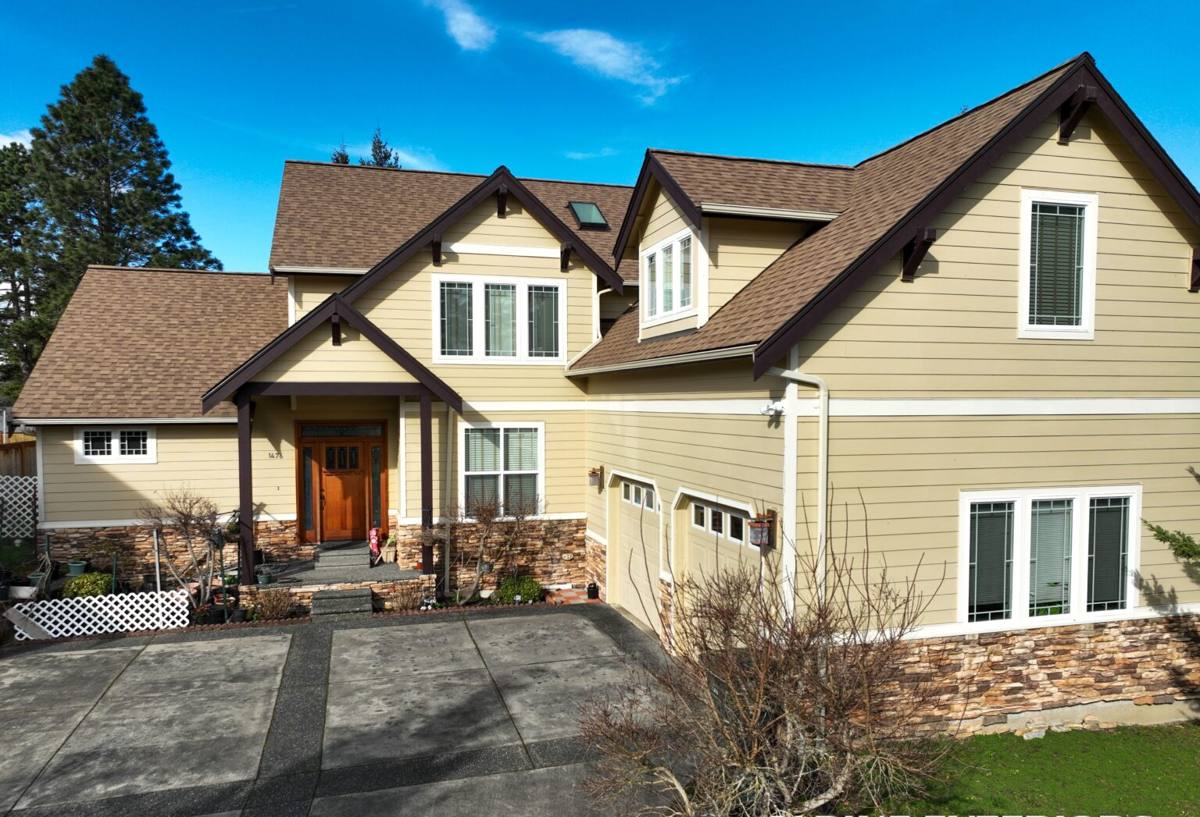
Why Salt Air and Driving Rain Are the Real Threats
Two separate stresses hit an Edgemoor exterior at once, and they compound each other:
- Salt air corrosion — airborne salt from Bellingham Bay settles on every exterior surface, including fasteners, flashing, and trim. Uncoated or under-rated hardware corrodes faster near the water than it would a few miles inland, and corroding fasteners eventually loosen siding and let water behind it.
- Wind-driven rain — storms off the Sound don't just fall straight down, they push rain sideways into laps, butt joints, and trim intersections. A siding system with weak lap tolerances or inconsistent installation gaps will take on water in exactly these conditions.
Neither problem shows up immediately. They show up as swelling, staining, or soft spots two, five, or ten years after installation — which is why the quality of the install matters as much as the product choice itself.
Why We Only Install James Hardie
James Hardie fiber cement is engineered specifically for regional climate demands through its HZ5 product line, which is built for the Pacific Northwest's combination of sustained moisture and temperature swings. A few things matter specifically for a property like yours in Edgemoor:
- Non-combustible core — fiber cement doesn't feed a fire the way wood-based products can, which matters on wooded lots with tree cover close to the structure.
- Dimensional stability in moisture — Hardie board resists the swell-and-shrink cycle that causes wood and engineered wood products to crack, cup, or lose paint adhesion under repeated wet-dry cycling.
- ColorPlus factory finish — a baked-on finish applied under controlled conditions holds color and resists fading and chipping far better than field-applied paint, which matters when salt air is already working against a painted surface.
- Transferable warranty — a real, documented warranty backed by the manufacturer, not just a contractor's word.
We won't put vinyl, LP SmartSide, primed spruce, or cedar on a home in this neighborhood. Vinyl can warp and gap under sustained UV and moisture cycling, engineered wood products carry known sensitivity to sustained moisture exposure at cut edges and seams, and untreated wood species require a maintenance commitment most owners don't want to keep up with indefinitely. None of those trade-offs make sense on a coastal, tree-shaded lot where the siding is going to take a beating every winter for the next thirty years.
Comparing the Main Options for a Coastal, Shaded Lot
| Factor | James Hardie Fiber Cement | Vinyl | Wood / Engineered Wood |
|---|---|---|---|
| Moisture behavior in driving rain | Stable when installed to spec, low swell risk | Can gap and warp over time under UV and moisture stress | Prone to swelling, cupping, and rot at exposed edges |
| Salt air / coastal durability | Fiber cement core is inert to salt exposure | Can chalk and become brittle over time | Finish breaks down faster; wood is vulnerable to decay |
| Fire resistance | Non-combustible | Melts/deforms under heat | Combustible |
| Moss/algae resistance in shade | Doesn't feed organic growth; surface can be cleaned | Can trap moisture at seams, promoting growth | Absorbs moisture, feeding moss and mildew |
| Finish longevity | Factory ColorPlus finish, long fade resistance | Color molded in but can fade/chalk | Requires repainting/resealing on a maintenance cycle |
| Ongoing maintenance | Periodic washing, minimal upkeep | Low, but repairs are visible and hard to color-match | Regular painting, caulking, and moisture checks |
What a Correct Install Involves in This Climate
James Hardie siding is only as good as its installation, and on a wind-and-rain-exposed lot the details matter more than usual. A correct install includes:
- A drainage plane and rainscreen gap behind the siding so any moisture that does get past the cladding has somewhere to drain and dry, rather than sitting against the sheathing.
- Proper flashing at every window, door, roofline, and penetration — this is where wind-driven rain finds its way in if it's skipped or done wrong.
- Correct lap and fastener spacing per Hardie's published installation specs, using fasteners rated for coastal/corrosive exposure, not standard interior-grade hardware.
- Appropriate clearance from grade, decks, and roof lines so siding isn't sitting in standing water or trapped moisture from splashback.
- Correctly caulked and sealed joints at trim and butt joints, using sealants rated for exterior, high-moisture use.
Skipping any one of these doesn't fail immediately — it fails in year three or four, usually as staining, soft trim, or a lap that's started to separate. That delayed failure is exactly why hiring based on price alone is risky on a property like this.
Our Process for an Edgemoor Install
1. On-Site Assessment
We walk the property, check current siding condition, sheathing condition where accessible, drainage patterns around the foundation, and shade/moisture exposure on each elevation. North-facing and heavily treed walls get flagged separately since they dry out slower.
2. Tear-Off and Substrate Check
Old siding comes off and we inspect the sheathing underneath for existing moisture damage before anything new goes up. Installing new siding over a compromised substrate just hides a problem that gets worse.
3. Weather Barrier and Rainscreen
A proper drainage plane goes on first, with a rainscreen gap set up behind the new siding so the wall assembly can shed and dry moisture as intended.
4. Flashing and Trim
All windows, doors, and roof intersections get flashed before siding installation begins — this step gets rushed on lower-quality jobs and it's the single biggest source of later leaks.
5. Hardie Panel Installation
Boards are installed to Hardie's published fastening and lap specifications, with corrosion-resistant fasteners appropriate for a coastal environment.
6. Final Detailing
Joints, trim, and penetrations are sealed with exterior-rated sealant, and we walk the finished job with the homeowner before calling it complete.
Moss and the Long Wet Season
Whatcom County's wet season runs long, and Edgemoor's tree cover extends the number of days any given wall stays damp after a rain event. Moss and algae don't damage fiber cement the way they can compromise wood, but they do collect on any siding surface that stays shaded and moist for extended periods. The practical difference with Hardie is that the surface itself isn't a food source or a moisture trap — a periodic gentle wash keeps growth from taking hold, rather than requiring repainting or resealing to protect an absorbent surface underneath.
Simple Maintenance Checklist for Coastal, Shaded Siding
- Rinse siding gently once or twice a year to clear salt residue, pollen, and early moss growth — avoid high-pressure washing that can force water behind laps.
- Keep gutters clear so overflow isn't running down the wall face during heavy rain.
- Trim back vegetation and tree limbs that keep specific wall sections in constant shade and reduce airflow.
- Check caulking at trim and window joints every couple of years and re-seal if it's cracked or pulling away.
- Walk the foundation line after major storms to confirm splashback or standing water isn't sitting against the bottom course of siding.
Why Local Experience on This Neighborhood Matters
A crew that has worked Edgemoor's coastal lots knows which elevations need extra flashing attention, how to sequence a tear-off around a wet forecast, and where shade and drainage patterns tend to cause problems on this kind of site. That's different knowledge than general siding experience — it's specific to how wind comes off the bay, how long a shaded north wall stays wet after a storm, and what corrosion-resistant hardware actually holds up here versus somewhere drier. Getting those details right the first time is what keeps a Hardie install performing for its full service life instead of needing early repairs.
Get a Free, No-Pressure Estimate
If your Edgemoor home's siding is showing wear from salt air, driving rain, or a long moss season, we're happy to take a look and give you an honest read on its condition — no pressure, no obligation. Use the form below to request a free estimate.