 Bellingham Exterior
 Why Sehome Roofs Wear the Way They Do
Sehome sits on the hillside above downtown Bellingham, close enough to Bellingham Bay to pick up salt-laden air and far enough into the tree canopy around Sehome Hill to stay shaded and damp for long stretches of the year. That combination is tougher on a roof than either factor alone. Salt air accelerates corrosion on exposed metal fasteners and flashing. Tree cover keeps roof surfaces wet longer after every storm, which in Whatcom County's climate means most of the year. Add the driving, wind-pushed rain that comes off the Puget Sound lowlands in fall and winter, and you have a roof that's rarely given the chance to fully dry out between weather systems.
None of that means a roof in Sehome is doomed to fail early. It means the installation has to account for moisture and organic growth from the start, not treat them as an afterthought. A roof detailed the same way you'd detail one in a dry inland climate will underperform here, even if every shingle is installed to the letter of the manufacturer's instructions.
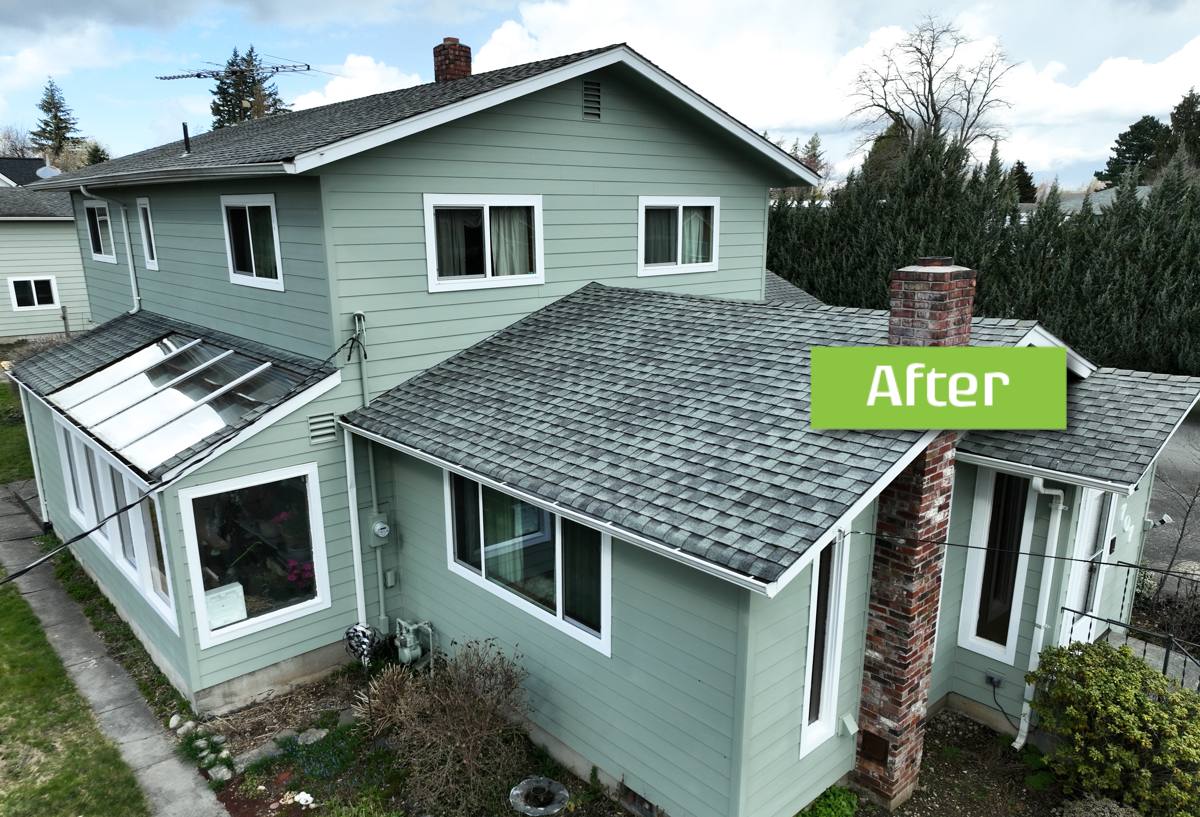
Signs a Sehome Home Needs a New Roof, Not Another Repair
Older homes throughout Sehome's established blocks and the newer construction filling in nearby lots both eventually reach the point where patching stops making financial sense. Some signs point clearly toward replacement:
- Granule loss heavy enough that you can see bare, shiny patches on shingles from the ground
- Moss or dark algae streaking that keeps coming back within a season of cleaning, even after treatment
- Soft or spongy decking felt underfoot during inspection, a sign moisture has reached the sheathing
- Daylight visible through the attic roof deck, or consistent damp insulation near the eaves
- Shingles curling, cracking, or lifting at the edges, especially on north- and west-facing slopes that stay shaded longest
- A roof original to the home and past 20-25 years old, regardless of how it looks from the curb
If you're seeing one or two of these, a repair may still buy you time. If you're seeing several at once, or the roof has multiple prior repairs already layered on, replacement is usually the more honest answer, both for your budget and for what's protecting the rest of the house.
Choosing a Roofing System for This Climate
What actually matters in Sehome's conditions
The right material isn't just about looks or price. In a neighborhood with this much shade and moisture, how a product handles trapped water and biological growth matters as much as its wind rating or warranty length.
| Material | How it handles moss & moisture | Relative cost factor |
|---|---|---|
| Architectural asphalt shingle | Good with proper ventilation and algae-resistant granules; needs periodic moss removal in shaded areas | Lower to mid |
| Standing seam metal | Sheds water and debris fast, resists moss growth well, but fasteners and cut edges need corrosion-rated hardware this close to the bay | Mid to higher |
| Synthetic composite (shake-look) | Very good moisture and rot resistance, holds up well under tree cover | Mid to higher |
| Cedar shake | Attractive but the highest ongoing maintenance burden in a damp, shaded climate; moss and rot risk are real even with treatment | Higher, plus recurring upkeep cost |
We're not going to tell a homeowner cedar is a bad material outright, but we are honest that on shaded, moisture-prone lots it asks for a level of upkeep most people don't want to keep up with. Our default recommendation for most Sehome homes is a quality architectural shingle rated for algae resistance, or standing seam metal on homes where the roofline and budget support it.
Color and heat considerations
Darker roof colors dry out faster after rain because they absorb more heat, which helps in a climate that stays damp so much of the year. It's a small factor compared to ventilation and underlayment, but worth weighing if you're choosing between similar shades on a shaded lot.
What a Correct Installation Actually Involves
A new roof is more than shingles nailed to plywood. The parts you can't see from the street are what determine whether the roof performs for its full expected life in this climate.
Tear-off and deck inspection
We remove the old roofing down to the deck rather than layering over it. That's the only way to actually see the sheathing underneath — soft spots, old water staining, or delaminated plywood get replaced before anything new goes down. Covering over a compromised deck is how a new roof ends up with problems inside of a few years.
Underlayment and ice-and-water shield
Given how much wind-driven rain this area gets, we install synthetic underlayment across the full roof and self-adhering ice-and-water membrane at the vulnerable spots — eaves, valleys, around chimneys and skylights, and any low-slope transitions. These are the areas where wind can push water backward under standard shingle coverage.
Flashing
Flashing around chimneys, vents, skylights, and wall intersections is where the majority of roof leaks actually start, not in the open field of shingles. We use new flashing rather than reusing old pieces, and on homes closer to the bay we pay attention to fastener and flashing material choice so salt air doesn't shorten its life.
Ventilation
Balanced intake and exhaust ventilation keeps the attic temperature and moisture level in check. Poor ventilation traps warm, moist air against the underside of the deck, which speeds up moss and mold growth from the inside as much as weather does from the outside.
Ventilation and Moisture: The Part Homeowners Rarely See
Moss doesn't just grow because shingles get wet from rain. It thrives where a roof surface stays damp for extended periods without drying — exactly the condition created by heavy tree shade combined with poor attic ventilation pushing warm, moist air up against the roof deck from underneath. A roof can look fine from the street and still have a ventilation problem quietly shortening its life from the inside.
When we install a new roof, we check existing intake and exhaust venting and correct it if it's undersized or blocked, rather than just replacing the roofing surface and leaving an underlying moisture problem in place. This is one of the most common gaps we find on older Sehome homes — a roof that was replaced once before without anyone addressing the attic ventilation behind it.
Our Installation Process
- On-site inspection and estimate — we look at the current roof, attic ventilation, and any problem areas specific to your lot's tree cover and sun exposure, then give you a written estimate with no pressure to sign on the spot.
- Material selection — we walk through options suited to your home's exposure, budget, and how much upkeep you want to take on long term.
- Permitting — we handle the City of Bellingham building permit required for a full roof replacement before work begins.
- Tear-off and deck repair — full removal of old roofing, deck inspection, and replacement of any damaged sheathing.
- Underlayment, flashing, and ventilation correction — the moisture-management layer that does the real long-term work.
- Installation of new roofing material — installed to manufacturer specification so warranties stay valid.
- Site cleanup and final walkthrough — including magnetic sweep for nails and a walkthrough so you know exactly what was done.
Permits and Working With Local Codes
A full roof replacement in Bellingham requires a building permit, and inspections confirm the work meets current code, including ventilation and underlayment requirements. We pull the permit and coordinate inspections as part of the job rather than leaving that step to the homeowner. It adds a short amount of time to the schedule but protects you if you ever sell the home and a buyer's inspector asks whether the roof work was permitted.
Why a Crew That Already Works in Sehome Matters
Sehome's mix of hillside lots, mature trees, and a blend of older and newer homes means access and staging aren't always straightforward — narrow streets, sloped driveways, and overhanging branches all factor into how a crew plans material delivery, dumpster placement, and daily setup. A crew that's worked this neighborhood before plans around those realities instead of discovering them mid-job.
Familiarity with the neighborhood also means we've already seen how shade patterns and proximity to the bay play out on real roofs here — which slopes hold moss longest, which flashing details tend to get missed on older homes, and which ventilation shortcuts show up on houses that were reroofed without a permit years ago. That local pattern recognition is worth more than it sounds like on paper.
Protecting Your Investment After Installation
A correctly installed roof still benefits from basic seasonal attention, especially under Whatcom County's long wet season and heavy tree cover:
- Clear gutters and downspouts each fall before the heaviest rain arrives
- Have moss growth removed gently before it takes hold, rather than after it's established
- Trim back overhanging branches that keep sections of the roof shaded and slow to dry
- Schedule a visual roof check every year or two, particularly after any major windstorm
- Watch for granules collecting in gutters, a sign of accelerating wear
- Address small flashing or sealant issues promptly rather than waiting for a visible leak
None of this requires a major time investment, but skipping it is how a well-installed roof loses years off its expected lifespan in a climate like this one.
If your Sehome home's roof is showing its age or you're planning ahead rather than waiting for a leak, we're happy to take a look and give you a straightforward, no-pressure estimate using the form below.