 Bellingham Exterior
 Decks in Puget Take a Different Kind of Beating
The Puget area sits close enough to Bellingham Bay that salt-laden air is a real, daily factor on anything built outdoors — not an occasional nuisance like it might be further inland. Add Whatcom County's long, wet fall-through-spring stretch of driving rain off the water, and a deck here is dealing with moisture intrusion from multiple directions at once: rain from above, splash-back and standing water from below, and salt air working on every metal fastener and connector in between. Then there's moss season, which in this part of Bellingham can run six months or more depending on how shaded the lot is.
None of that is unusual for the Pacific Northwest, but it adds up differently on a deck than it does on siding or roofing. A deck is a horizontal structure with joints, fasteners, and end-grain wood exposed on every surface, and it usually sits low to the ground where drainage and airflow are already working against it. We've repaired enough decks in this neighborhood to know the failure patterns are consistent: it's rarely the decking boards that fail first. It's almost always the structure underneath, or the connections holding it all together.
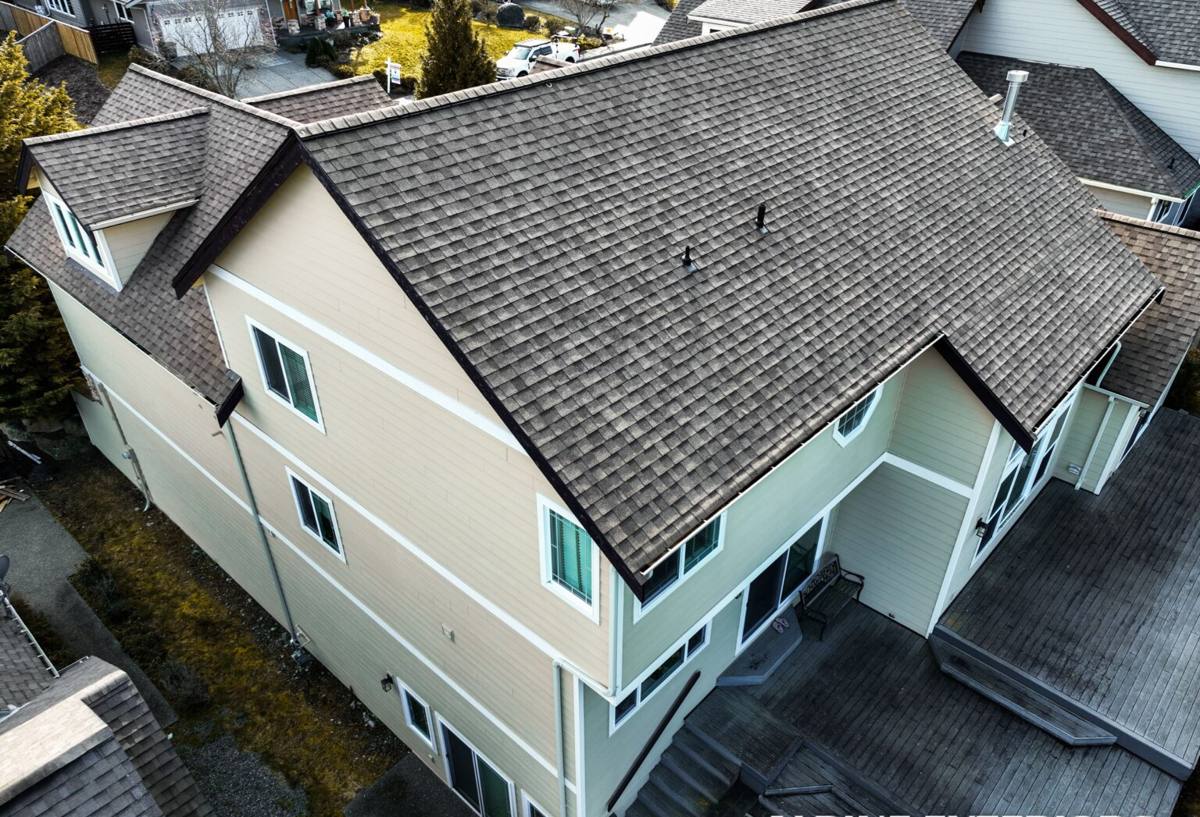
How Salt Air, Rain, and Moss Actually Damage a Deck
Salt Air and Metal Fasteners
Salt-laden coastal air accelerates corrosion on any exposed metal — nails, screws, joist hangers, bolts, and post bases. Corroding fasteners don't just look bad; they lose holding strength, and a joist hanger that's rusted through is a structural problem, not a cosmetic one. This is a bigger issue in Puget than it would be for a deck a few miles inland, and it's one of the first things we check on any repair call.
Driving Rain and Water Intrusion
Wind-driven rain off the water doesn't just fall straight down — it gets pushed sideways and up under railings, into ledger board connections, and behind fascia boards. Over time, that moisture works its way into places a simple surface coating was never designed to protect. The ledger board — where the deck attaches to the house — is one of the most common places we find hidden rot, precisely because it's the hardest spot for water to drain away from and the easiest to overlook during a routine inspection.
Moss and Prolonged Moisture Retention
Moss doesn't just make a deck look neglected — it holds moisture against the wood surface for weeks at a time, which is exactly the environment wood rot and fungal decay need to take hold. On shaded lots or decks under overhangs, moss can establish itself in the gaps between boards and along the north-facing side of railings and posts, areas that get little direct sun to dry out between rain events.
Signs Your Deck Needs Repair — Not Just a Wash
A lot of homeowners in this area reach for a pressure washer when a deck starts looking rough, and sometimes that's genuinely all it needs. But some signs point to a real repair problem underneath the surface. Before you decide which one you're dealing with, walk your deck and check for these:
- Soft or spongy spots when you press on decking boards, especially near the house or along the rim joist
- Railings or posts that wiggle or flex more than they used to
- Rust streaks running down from fasteners or metal hardware
- Gaps opening up where the deck meets the house (ledger board separation)
- Visible moss or dark staining in board gaps that doesn't wash off easily
- Stair stringers that feel bouncy or uneven underfoot
- Nails backing out or popping up above the board surface
- A musty smell coming from underneath the deck
Any one of these on its own might be a small fix. Several together usually means water has been getting into the structure for a while, and it's worth having someone look at the framing, not just the surface.
What a Correct Deck Repair Actually Involves
Structural Components Come First
A repair that only replaces damaged decking boards but leaves compromised joists, ledger connections, or post footings underneath isn't a repair — it's a temporary patch. Before we touch a single surface board, we check the framing: joists for soft spots or splitting, the ledger board attachment for gaps or rot, post bases for rust and ground contact, and beam connections for movement. If the structure underneath isn't sound, everything built on top of it will fail again, usually faster the second time.
Fasteners and Hardware
Given how hard salt air is on standard fasteners in this location, we replace corroded hardware with fasteners and connectors rated for coastal or marine-grade exposure — hot-dip galvanized or stainless steel, depending on the connection. Using standard-grade fasteners in a repair here is a false economy; they'll be the first thing to fail again, and next time they may take a board or a railing post with them.
Flashing and Water Management
Ledger board flashing is one of the most important — and most commonly missing or improperly installed — components on an older deck. Correct flashing directs water away from the house band joist and the deck attachment point instead of letting it pool and soak in. On repair jobs, we check this every time, because a deck can look fine on the surface for years while the ledger connection quietly rots behind an old or absent flashing detail.
Railings and Stairs
Railings and stair stringers take direct wind-driven rain and see constant flexing from foot traffic, so they're often the first components to show wear. We check post-to-frame connections, baluster spacing and security, and stringer condition as part of any repair, not just when a homeowner specifically flags them.
Repair or Replace? A Practical Comparison
Not every deck problem calls for a full rebuild, and not every deck is worth patching indefinitely. Here's how we generally think through it:
| Factor | Leans Toward Repair | Leans Toward Replacement |
|---|---|---|
| Structural framing | Joists and ledger are sound, isolated soft spots | Widespread rot in joists, beams, or ledger connection |
| Age of deck | Under 15-20 years, built to a reasonable standard | Older deck with outdated framing or no ledger flashing at all |
| Extent of damage | A few boards, railings, or stair sections affected | Damage scattered across most of the deck's surface and structure |
| Fastener condition | Isolated rust, hardware still holds | Widespread corrosion, hardware loose or failing |
| Budget goals | Extend usable life for a lower upfront cost | Willing to invest once rather than repair repeatedly |
We'll always tell you honestly which side of that line your deck falls on. Sometimes a repair genuinely buys you another decade of use; sometimes it's spending money to delay a rebuild you'll need anyway. We'd rather tell you that upfront than have you call us back in two years with the same problem.
Our Process for a Puget-Area Deck Repair
- On-site inspection. We check the deck from the surface down to the framing and footings — not just the parts you can see standing on top of it.
- Honest assessment. We walk you through what we found, what's structural versus cosmetic, and whether repair or replacement makes more sense for your situation.
- Written scope and estimate. You'll know exactly what's being repaired, what materials and hardware we're using, and what it costs before any work starts.
- Repair work. Framing and structural fixes first, then flashing and water management, then surface boards, railings, and stairs.
- Final walkthrough. We check the repair with you and go over any maintenance steps that will help it last, given the specific exposure your deck sits in.
Materials: Honest Trade-Offs, Not Sales Pitches
For repairs in a coastal-influenced, high-moisture area like this, material choice matters more than it might elsewhere. Pressure-treated lumber remains a solid, cost-effective choice for framing and is what most existing decks in the area are built on — matching repairs to it usually makes the most sense structurally and financially. For decking surfaces, composite boards (brands like Trex or TimberTech are common examples) resist moss growth and moisture absorption better than wood, but they carry a higher upfront cost and still require correct fastening and gapping to perform well. Cedar and other natural wood decking can look great and is a reasonable choice, but it demands more consistent maintenance — cleaning and resealing on a regular schedule — to hold up against this area's moss season and rain exposure.
We don't push one material as universally "best." We'll tell you honestly what fits your existing structure, your maintenance appetite, and your budget, and we'll explain the real trade-offs rather than oversell any single product.
Why Hire a Crew That Already Works in Puget
Deck problems in this neighborhood tend to follow patterns tied directly to its exposure — the ledger board issues, the fastener corrosion, the moss-related moisture retention on shaded lots. A crew that repairs decks here regularly recognizes those patterns quickly instead of treating every job as a blank slate. That means a more accurate inspection, fewer surprises once repair work is underway, and material and hardware choices that are already matched to what actually holds up in this specific climate rather than a generic recommendation that works fine somewhere drier or further from the water.
It also means straightforward communication about what Bellingham and Whatcom County require for permitting on structural deck repairs, which can vary depending on the scope of work involved.
Keeping Your Deck in Good Shape After the Repair
A repair done right should last, but a few habits make a real difference in this climate:
- Sweep leaves and debris out of board gaps regularly, especially in fall
- Address moss growth early in shaded areas before it spreads and holds moisture
- Check fasteners and hardware for rust or looseness once a year
- Keep gutters and downspouts clear so water isn't dumping directly onto or near the deck
- Reseal or refinish wood decking on the schedule appropriate to the product used
- Watch the ledger board area for gaps, staining, or soft wood as an early warning sign
If you're noticing soft spots, rust streaks, wobbly railings, or moss that won't quit on your deck, we're happy to take a look and give you a straight answer — no pressure, no upsell. Request a free estimate through the form below and we'll set up a time to walk the deck with you.