 Bellingham Exterior
 Siding Repair Needs in the Puget Area of Bellingham
Homes in the Puget area of Bellingham sit in a climate that's genuinely tough on exterior siding. The marine air coming off the water carries salt, the region gets long stretches of driving rain through fall and winter, and shaded, damp yards mean moss season lasts for months rather than weeks. None of that is unusual for Whatcom County, but it does mean siding repair here has to account for conditions that a dry-climate contractor might never think about.
A lot of siding damage in this neighborhood doesn't show up as an obvious hole or crack. It shows up as a soft spot near the bottom of a wall, a stubborn streak of green that keeps coming back no matter how many times it's cleaned, or a seam that's slightly darker than the siding around it. Those are the details that separate a repair that actually holds from one that looks fine for a season and then fails again.
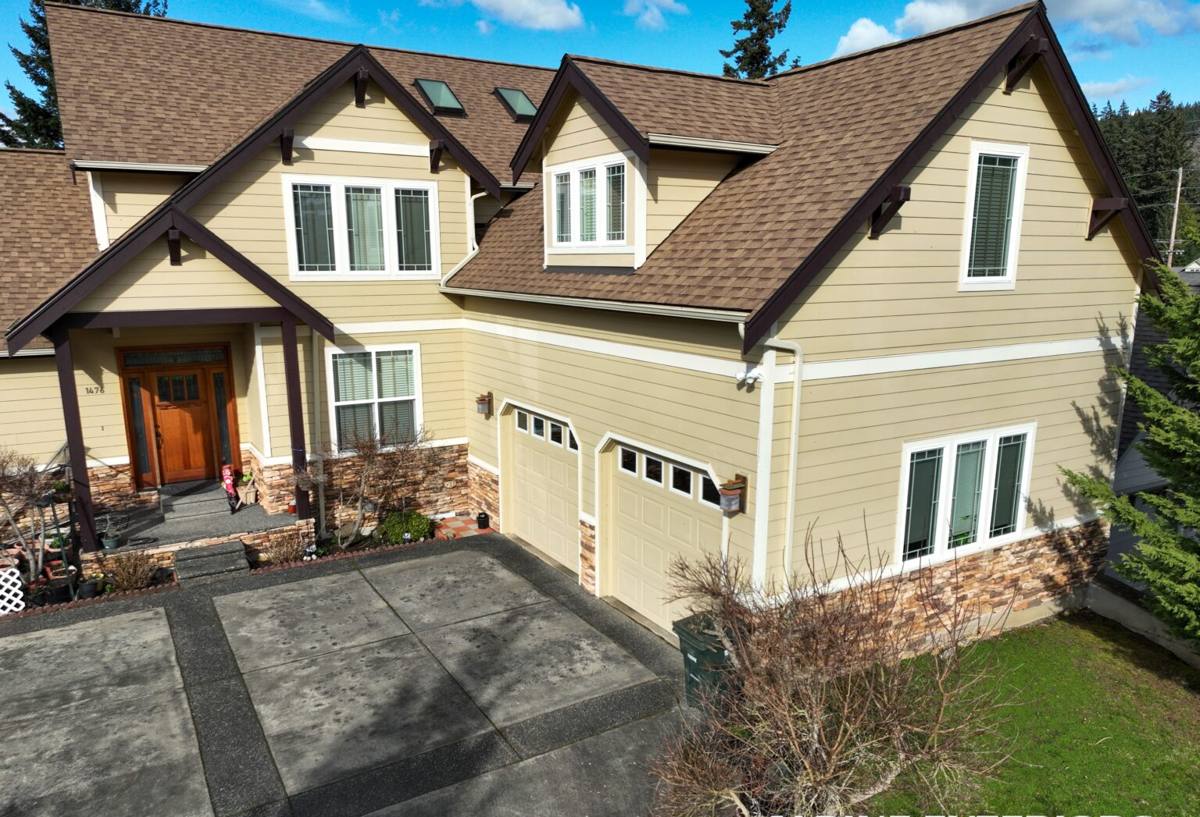
What Salt Air, Rain, and Moss Actually Do to Siding
Salt Air
Airborne salt is corrosive to metal fasteners, flashing, and trim, and it accelerates the breakdown of coatings and caulk. Over years, siding in areas exposed to salt-laden air tends to show finish fade and edge deterioration faster than the same product would inland, especially at joints and fastener heads where the protective coating is thinnest.
Driving Rain
Bellingham's rain doesn't just fall — much of it comes in sideways during storms, which pushes water into places a vertical rain would never reach: under trim, behind loose panels, and into any gap around windows and doors. Siding systems that rely on face-sealing (caulk and paint alone, with no drainage path behind the cladding) are especially vulnerable to this kind of wind-driven moisture.
Extended Moss Season
Shade, moisture, and cooler temperatures create ideal conditions for moss and algae to establish on north-facing walls and anywhere siding stays damp longer than a few hours after rain. Moss holds moisture directly against the siding surface, and over time that constant dampness is what actually causes rot and finish failure — the moss itself is more a symptom of a damp wall than the root cause.
Signs a Puget-Area Home Needs Siding Repair
Most siding problems give warning signs well before they become structural. Here's what we tell homeowners to watch for between routine cleanings:
- Soft, spongy, or slightly bowed sections, especially near the bottom of walls or below windows
- Recurring moss or algae growth in the same spot even after cleaning
- Visible gaps, cracks, or separation at seams and corners
- Paint or finish that's peeling, chalking, or bubbling in patches rather than evenly across the wall
- Staining or discoloration streaking down from trim, window heads, or roof-to-wall intersections
- A musty smell or visible mold on the interior side of an exterior wall
- Fastener heads that are rusting, popping, or showing through the surface
- Siding that feels noticeably colder or damp to the touch compared to the rest of the wall
Any one of these on its own might just need a small fix. Several of them clustered in one area usually points to a moisture problem behind the siding, not just a cosmetic issue on the surface.
What a Correct Siding Repair Actually Involves
A repair that's done right starts with figuring out why the damage happened, not just patching what's visible. On a home in a wet, salt-influenced climate like this one, that means checking the condition of the water-resistive barrier and flashing behind the damaged section, not just the siding panel itself.
Diagnosis Before Patching
We remove enough siding to actually see what's underneath — sheathing, house wrap, flashing at windows and penetrations — before deciding whether the fix is a simple panel swap or something more involved. Patching over a hidden moisture problem just delays the same repair, usually at a higher cost, a year or two down the road.
Matching Materials and Finish
Repairs on an existing James Hardie home should use Hardie product to match the existing reveal, texture, and profile, with ColorPlus factory-finished panels where the original color line allows a close match. Mixing in a different material or a field-painted patch is usually the fastest way to end up with a repair that's visibly obvious and weathers differently than the rest of the wall.
Flashing and Drainage, Not Just Caulk
Given how much wind-driven rain this area sees, any repair around windows, doors, or wall penetrations gets proper flashing detail and a drainage path behind the siding — not a bead of caulk asked to do a flashing's job. Caulk has its place, but it's a backup layer, never the primary defense against water intrusion.
Repair or Replace? What Actually Decides It
Homeowners often ask whether a damaged section can just be patched or whether it's a sign the whole wall — or the whole house — needs new siding. The honest answer depends on scope and cause, not age alone.
| Factor | Usually Points to Repair | Usually Points to Replacement |
|---|---|---|
| Extent of damage | Isolated to one or two sections | Recurring across multiple walls |
| Underlying cause | Impact damage, a single failed seam or flashing detail | Widespread moisture behind siding, systemic flashing failure |
| Age of existing siding | Relatively recent installation in otherwise good condition | Original material near or past its practical service life |
| Material match | Same product still available or a close match exists | Discontinued product with no reasonable match |
| Cost over time | Repair cost is a small fraction of full replacement | Repairs have been needed repeatedly in the same areas |
We'll always tell you honestly which side of that table your home falls on. A well-executed repair on a sound wall can add years of life at a fraction of replacement cost — but we won't recommend patching a wall that's telling us it needs to come off.
Our Siding Repair Process
- On-site assessment: We inspect the damaged area and the surrounding siding, checking for moisture, soft spots, and flashing condition, not just the obvious problem spot.
- Honest scope and estimate: You get a clear explanation of what we found, what caused it, and whether a targeted repair or a larger fix is the right call — with pricing before any work starts.
- Removal and inspection behind the siding: Damaged panels come off so we can check the sheathing, house wrap, and flashing underneath.
- Repair of what's underneath: Any compromised sheathing, wrap, or flashing gets corrected before new siding goes back on — this is the step that determines whether the repair actually lasts.
- Installation to match: New Hardie panels are installed to match existing reveal and finish, with proper fastening, joint treatment, and clearances.
- Final walk-through: We review the completed work with you and point out anything worth keeping an eye on going forward.
Why We Repair With James Hardie, Not a Mixed Fix
Our company installs and repairs exclusively with James Hardie fiber cement. On a home already sided in Hardie, that's simply the right call for a durable, consistent match. But it also matters on repair work generally: fiber cement doesn't rot, isn't a food source for moss and algae the way some other siding materials can be, and holds a factory finish through years of salt air and rain far better than a field-applied patch on a different substrate.
We don't offer to patch a Hardie wall with vinyl, LP SmartSide, or a primed wood product just because it's on hand or cheaper in the moment. A mismatched material creates a weak point — different expansion behavior, different moisture handling, different finish life — right at the seam where it meets your existing siding. That seam is exactly where problems tend to start again first.
Why a Crew That Already Works in Puget Matters
Siding repair isn't just about swapping a damaged panel — it's about understanding why that panel failed in the first place, and that answer is different in a marine, high-rainfall climate than it would be somewhere dry and inland. A crew that regularly works homes in this part of Bellingham already knows to check flashing at wall penetrations before assuming a repair is purely cosmetic, and already accounts for how much longer walls in shaded, damp spots stay wet after a storm.
That local familiarity shows up in small decisions during a repair: where to expect hidden moisture, how tight to set clearances given how much rain this area gets, and which details are worth doing right the first time because a callback in this climate tends to happen sooner than homeowners expect.
Get an Honest Look at Your Siding
If you're seeing soft spots, recurring moss, or staining on your Puget-area home, it's worth having someone take a real look before the damage spreads. We'll give you a straightforward assessment of what's going on, what it will take to fix it correctly, and whether that means a targeted repair or something more — with a free, no-pressure estimate and no obligation to move forward. The form below is the easiest way to get started.