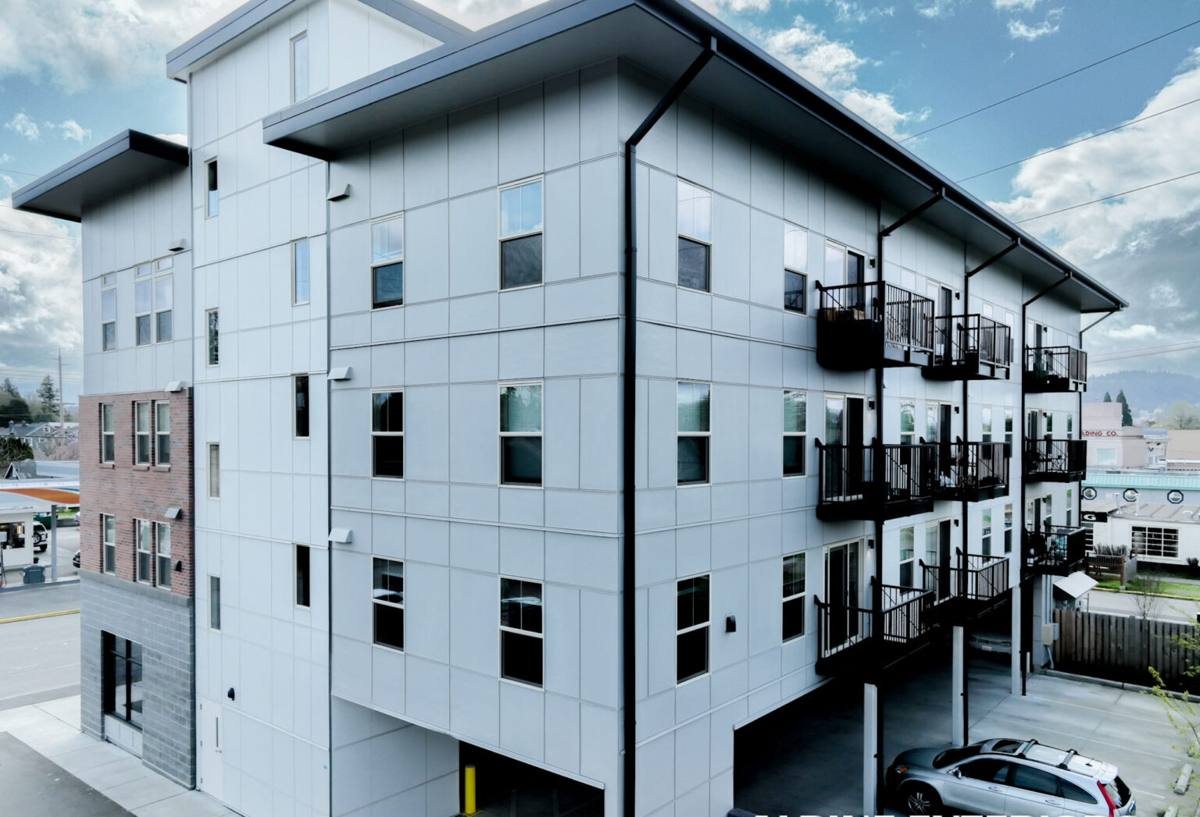
 Bellingham Exterior
 Why Siding Wears Out Faster in the Puget Area
Homes in the Puget area sit close enough to the water that their siding does more work than siding on a house set back in a drier inland valley. Salt-laden air off the Sound speeds up corrosion on fasteners, trim edges, and any flashing metal that isn't rated for a marine-influenced environment. Layer on Whatcom County's driving, wind-pushed rain and a moss season that can run from early fall well into spring, and you've got three separate stresses hitting the same wall assembly at the same time. A siding product that performs fine forty miles inland often shows its age early here — not because it's a bad product, but because the local environment is asking more of it than the manufacturer's baseline spec accounted for.
This isn't a reason to panic about your siding. It's a reason to be deliberate about what goes back on the wall when it's time for a replacement, and about how it gets installed. Both matter as much as the other.
Signs a Puget-Area Home Needs Replacement, Not Just Repair
Repair makes sense when the damage is isolated and the material underneath is still sound. Replacement becomes the honest recommendation when the problems are systemic — spread across multiple elevations, or rooted in the water-resistive barrier and framing rather than just the visible siding face. Common signs we see on homes in this area include:
- Persistent green or black staining that returns within weeks of being cleaned, especially on north-facing or shaded walls
- Soft or spongy spots when you press on siding near the bottom courses, around window sills, or at deck ledgers
- Paint that's failing in patches rather than uniformly fading — a sign moisture is pushing through from behind
- Visible gaps, warping, or cupping in lap boards, particularly on the west and south sides that take the worst of the wind-driven rain
- Rust streaks below nail heads or corner trim, which usually means the original fasteners weren't corrosion-rated for this environment
- An interior wall that feels damp, smells musty, or shows staining on the drywall near an exterior corner
If you're only seeing one or two of these in a single spot, a repair may genuinely be the right call. When several show up together, or when we open up a section and find the sheathing behind it already compromised, replacement is what actually solves the problem instead of buying a year or two before it resurfaces.
What a Correct Siding Replacement Involves
Siding replacement done right is not a cosmetic swap. The visible board is the last piece installed, not the first thing that matters. A correct job on a Puget-area home includes:
Tear-off and inspection
Removing the old siding all the way down to the sheathing so we can actually see what's underneath. This is where we find rot, past water intrusion, or framing damage that would otherwise get sealed behind new siding and left to keep spreading.
Sheathing repair
Any compromised OSB or plywood gets cut out and replaced before anything else happens. Installing new siding over damaged sheathing just delays the failure and makes the eventual fix more expensive.
Water-resistive barrier
A new weather-resistive barrier, correctly lapped shingle-style so water sheds downward and outward rather than getting trapped, is the layer that actually keeps a wall dry — the siding is the first line of defense, the WRB is the backup that matters when the first line gets tested by driving rain.
Flashing at every penetration
Windows, doors, deck ledgers, hose bibs, vents, and any other wall penetration need properly integrated flashing, not just a bead of sealant. Caulk fails; correctly lapped flashing doesn't rely on a maintenance schedule to keep working.
Fastening to spec
Corrosion-resistant fasteners, driven at the manufacturer's specified pattern and depth — not overdriven, not underdriven. This one detail is a common source of premature siding failure, and it's invisible once the job is finished, which is exactly why it matters who's doing the work.
Material Comparison for a Salt-Air, High-Moisture Site
Not every siding material handles this combination of salt exposure, driving rain, and extended moss season the same way. Here's how the common options compare on the factors that actually matter for a home in this environment:
| Material | Moisture behavior | Moss/mildew resistance | Fire rating | Typical maintenance |
|---|---|---|---|---|
| James Hardie fiber cement | Doesn't absorb and swell like wood-based products; engineered HZ5 formulation for Pacific Northwest moisture and freeze-thaw exposure | Factory ColorPlus finish resists moss/mildew growth better than bare or field-painted surfaces | Non-combustible | Periodic rinse; repaint only if field-painted or after finish life |
| LP SmartSide (engineered wood) | Wood-strand core; performs adequately if perfectly sealed, but any breach at a cut edge or fastener invites swelling | Moderate; treated but still an organic wood substrate | Combustible | Regular caulk/paint upkeep at seams and edges |
| Vinyl | Doesn't rot, but isn't rigid — can warp or buckle under sustained wind-driven rain and temperature swings | Low absorption but moss/algae can grow on the surface film in shaded, damp areas | Combustible, can deform under heat | Low, but panels can crack and are hard to color-match years later |
| Cedar / primed spruce | Natural wood; absorbs moisture readily, especially at end grain and fastener holes | Most susceptible to moss, mildew, and rot in this climate without diligent upkeep | Combustible | Highest — refinishing on a recurring cycle to keep water out |
Every product in that table has homes it's better suited for. A hot, dry climate is far more forgiving of most of these trade-offs than a moss-season, salt-air site is.
Why We Install Only James Hardie Fiber Cement
We don't carry a catalog of siding brands and let the homeowner pick blind. We standardized on James Hardie because, product for product, it holds up to this specific combination of conditions better than the alternatives we used to install. It's non-combustible, which matters given Washington's wildfire seasons even on the wet side of the state. It doesn't have an organic wood substrate for moss and mildew to take hold of the way cedar or engineered wood products do. The ColorPlus factory finish is baked on under controlled conditions rather than applied on-site, which means better adhesion and a longer runway before repainting becomes necessary. And Hardie's HZ5 product line is specifically engineered for regions like ours — moderate freeze-thaw cycling combined with sustained moisture exposure — rather than being a one-size-fits-all product pushed into a climate it wasn't designed around.
None of that means Hardie is maintenance-free or that installation quality stops mattering once you've picked the right material. It means the material itself isn't working against the homeowner from day one.
Our Process for a Puget-Area Siding Replacement
- On-site assessment. We look at every elevation, check for existing moisture damage, and identify problem areas specific to sun, wind, and rain exposure on your particular lot.
- Scope and material plan. We walk you through the Hardie product line, profile, and color options that fit the home, and give you a clear, itemized plan before any work starts.
- Tear-off and sheathing inspection. Old siding comes off, sheathing gets inspected and repaired where needed, and you see photos of what we find before we close it back up.
- WRB and flashing. New water-resistive barrier and flashing go in at every window, door, and penetration, installed to shed water outward, not trap it.
- Hardie installation to manufacturer spec. Correct fastening pattern, gapping, and clearances — including keeping siding off grade and hard surfaces per Hardie's installation instructions, which matters more in a wet climate than almost anywhere else.
- Final walkthrough. We go over the finished job with you, point out anything you should know for long-term upkeep, and make sure you're satisfied before we consider it done.
Cost Factors for Siding Replacement Near the Water
Every home is different, so we don't quote a flat rate over the phone — but these are the variables that most affect the final number on a Puget-area job:
| Factor | Why it moves the price |
|---|---|
| Extent of hidden damage | Rot or compromised sheathing found during tear-off adds repair scope that can't be fully known until the old siding is off |
| Home size and wall complexity | More corners, dormers, and penetrations mean more flashing detail work and labor time, not just more square footage |
| Siding profile and trim package | Lap width, shingle-style panels, and trim details all carry different material and labor costs |
| Access and site conditions | Steep grades, tight side yards, or limited staging space near the water can slow installation |
| Existing paint or finish removal | Homes previously sided in field-painted materials sometimes need extra prep work at tear-off |
Why a Crew That Already Works Puget Matters
A siding job installed to spec in a dry, inland climate can tolerate small deviations that this environment won't forgive. A crew that already works homes in and around the Puget area of Bellingham has already seen where wind-driven rain finds the gaps, which elevations take the worst of the moss growth, and how salt air shortens the life of the wrong fastener. That's not something you can fully compensate for with a generic installation manual — it comes from doing the work here, repeatedly, and paying attention to what actually fails first when it's done wrong.
It also means faster, more realistic scheduling. Whatcom County's weather windows for tear-off and WRB installation are narrower in the wetter months, and a local crew plans around that instead of getting caught mid-project by a system rolling in off the Sound.
Keeping Your New Siding Performing After Installation
Even the right material, correctly installed, benefits from a little routine attention in this climate. A short annual checklist goes a long way:
- Rinse siding down at least once a year, more often on shaded or north-facing walls where moss and mildew take hold fastest
- Walk the exterior after major storms and check caulking at trim, windows, and penetrations for cracking or separation
- Keep gutters clear so overflow isn't running down the wall face during heavy rain
- Trim back vegetation and landscaping that keeps a wall section shaded and damp
- Watch for any soft spots, staining, or paint failure and address them early rather than waiting for them to spread
None of this is heavy maintenance — it's the kind of five-minute check that catches a small issue before it becomes a wall repair.
If your Puget-area home is due for new siding, or you're not sure whether what you're seeing is a repair or a replacement situation, we're happy to take a look. Reach out for a free, no-pressure estimate using the form below.