 Bellingham Exterior
 Why Sehome Roofs Wear Differently Than Roofs Inland
Sehome sits close enough to Bellingham Bay that salt-laden air is a real factor in how roofing materials age here, and it sits under enough tree cover near the hillside that shade, moisture, and organic debris stay in the equation year-round. That combination is harder on a roof than either factor alone. Salt air accelerates the breakdown of metal flashing and fasteners. Shade and moisture keep shingles damp longer after every rain, which is exactly the environment moss and algae need to take hold.
Add in Whatcom County's driving rain — wind-blown, not just falling straight down — and you get a climate that tests every seam, lap, and fastener on a roof, not just the open field of shingles. A roof that would perform fine in a drier part of the state can fail early in Sehome if it wasn't detailed correctly at the edges, valleys, and penetrations. That's the part of the job that separates a roof that lasts from one that doesn't.
We've built our asphalt shingle process around these local conditions specifically, rather than treating Sehome the same as any other neighborhood in the region.
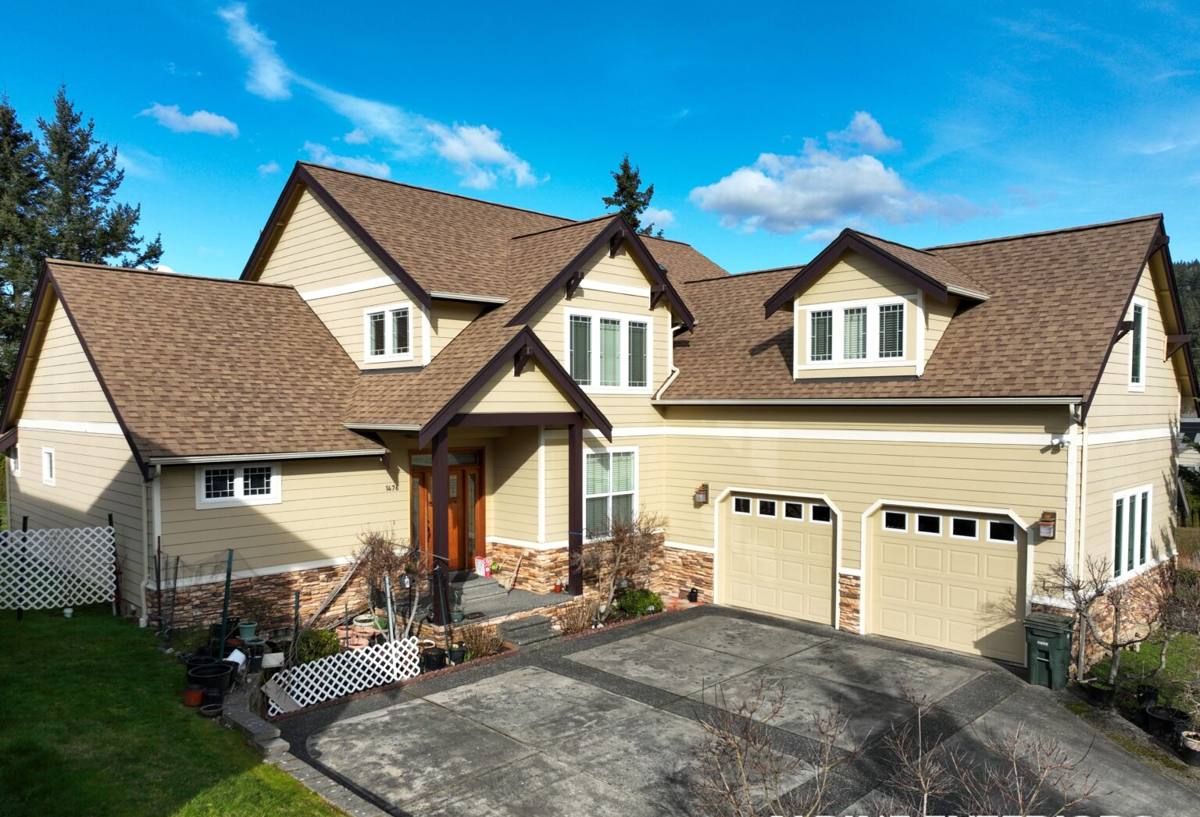
What a Correct Asphalt Shingle Installation Actually Involves
Asphalt shingle roofing looks simple from the ground, and a lot of the work that determines whether it holds up is invisible once the job is done. A correct installation includes several layers working together, not just shingles nailed to plywood.
- Deck inspection and repair: Any soft, delaminated, or water-stained sheathing gets replaced before anything else goes down. Shingles installed over a compromised deck will fail regardless of quality.
- Ice and water shield at vulnerable points: Eaves, valleys, and roof-to-wall transitions get a self-adhering waterproof membrane underneath the shingles, since these are the spots where wind-driven rain gets pushed backward under the surface layer.
- Synthetic underlayment across the field: A second line of defense across the whole roof, in case any water gets past the shingle surface.
- New flashing at every penetration: Chimneys, vents, skylights, and wall transitions get new step flashing and counterflashing rather than reused or caulked-over old metal.
- Proper nailing pattern: Each shingle has a manufacturer-specified nail zone, and both the number of nails and their placement affect wind rating and warranty validity.
- Ridge caps and ridge venting: Purpose-made ridge cap shingles, installed to shed water in the direction it actually flows, not standard shingles bent over the ridge.
Skipping or shortcutting any one of these is usually invisible on installation day and becomes obvious three to seven years later as a leak, a soft spot, or premature granule loss.
Choosing the Right Shingle for This Climate
Not every asphalt shingle product is a good fit for a shaded, damp, salt-air-adjacent neighborhood like Sehome. The main decision points are wind rating, algae resistance, and how the shingle handles repeated wet-dry cycling.
| Shingle Type | Typical Lifespan | Best Fit For | Trade-offs |
|---|---|---|---|
| 3-tab asphalt | 15–20 years | Budget-conscious projects, secondary structures | Lower wind rating, less algae resistance, flatter appearance |
| Architectural (laminated) | 25–30 years | Most Sehome homes | Higher upfront cost, heavier, needs a sound deck |
| Algae-resistant (AR) architectural | 25–30 years | Shaded, tree-covered, or moss-prone lots | Slight cost premium, still needs periodic cleaning |
| Impact-resistant (Class 4) | 25–30+ years | Homes wanting insurance discount eligibility | Highest material cost, availability varies by manufacturer |
For most Sehome properties, we recommend algae-resistant architectural shingles as the baseline, given how much shade and moisture the neighborhood holds onto compared to more open parts of Bellingham. The copper- or zinc-infused granules in AR shingles slow algae and moss growth, but they don't eliminate the need for occasional roof cleaning — they buy time and reduce staining, not immunity.
Color and Appearance Considerations
Darker shingle colors show algae streaking less than very light colors, which matters in a climate where some staining is nearly inevitable over a 20-plus year roof life. This is a cosmetic consideration, not a performance one — but it's worth factoring in when you're choosing a color you'll be looking at for decades.
Ventilation and Moisture Control
A shingle roof is only half the system. Attic ventilation controls how much moisture builds up underneath the deck, and in a damp climate like ours, poor ventilation shows up as premature shingle aging from the underside, mold on the sheathing, and in winter, ice damming at the eaves when warm attic air melts snow that refreezes at the colder overhang.
We check intake ventilation at the soffits and exhaust ventilation at the ridge or through roof vents as part of every asphalt shingle project. Balanced ventilation — enough intake to match the exhaust — keeps the attic closer to outdoor temperature and humidity, which extends the life of the shingles above it and the insulation below it. On a lot of Sehome homes we open up, the soffit vents have been painted over or blocked with insulation at some point, which quietly cuts ventilation capacity without anyone noticing until there's a problem.
Moss, Algae, and Tree Debris: Ongoing Roof Health
Given Sehome's tree cover and the length of the region's wet season, moss and algae management is an ongoing part of roof ownership here, not a one-time fix. A few practices make a real difference between roofs that reach their full lifespan and ones that don't:
- Keep gutters clear of needles and leaf litter so water doesn't back up under the lowest course of shingles.
- Have moss physically removed (not just chemically treated) before it works its way under shingle edges and lifts them.
- Trim back branches that keep sections of the roof in constant shade, since that shade is what keeps moss and algae actively growing rather than drying out between rains.
- Avoid pressure washing shingles directly — it strips protective granules and shortens shingle life faster than the moss it removes.
We treat moss and algae as a maintenance conversation, not just an installation-day upsell — a roof installed correctly with AR shingles still benefits from periodic, gentle cleaning given how much moisture Sehome holds onto through the year.
Our Process, Start to Finish
Inspection and Estimate
We start with a full roof and attic inspection, not just a look from the ground. That includes checking the deck condition where accessible, existing ventilation, flashing condition, and any signs of past leaks. You get a written estimate that spells out shingle type, underlayment, flashing scope, and ventilation work — not just a single lump-sum number.
Tear-Off and Deck Repair
We remove the old roofing down to the deck rather than layering over it, which lets us actually see and fix any damaged sheathing. Any soft or delaminated plywood is replaced before underlayment goes down.
Installation
Ice and water shield at eaves and valleys, synthetic underlayment across the field, new flashing at every penetration, shingles installed to manufacturer nailing specs, and ridge caps and venting to close it out. Job sites are kept clean throughout — magnetic sweeps for nails, tarps to protect landscaping, and daily cleanup rather than a mess left until the end.
Final Walkthrough
We walk the completed roof with you, cover the warranty paperwork, and go over any maintenance recommendations specific to your lot — tree cover, roof pitch, and gutter setup all factor into what we'd suggest for upkeep.
What Roof Work Costs and What Drives the Price
Every roof is different, but the main variables that move the price on a Sehome asphalt shingle job are consistent. We'll always give you specifics for your roof rather than a generic number, but this is the general shape of what affects cost:
| Factor | How It Affects Cost |
|---|---|
| Roof size and pitch | Steeper roofs take longer and require more safety setup |
| Number of layers to remove | Tear-off of multiple existing layers adds labor and disposal cost |
| Deck condition | Rotted or delaminated sheathing adds material and labor to replace |
| Shingle grade chosen | 3-tab, standard architectural, and AR/impact-resistant shingles are priced differently |
| Number of penetrations | Chimneys, skylights, and multiple vents each require new flashing |
| Ventilation upgrades | Adding or correcting soffit and ridge venting is additional scope beyond reshingling |
As a rough range, a straightforward asphalt shingle re-roof on an average Sehome home typically falls in the mid-to-high five figures, with the specifics moving up or down based on the factors above. We'd rather walk your roof and give you real numbers than guess in general terms.
A Simple Maintenance Checklist for Homeowners
- Clear gutters and downspouts at least twice a year, more often if you're under heavy tree cover.
- Look for granules collecting in gutters or at downspout outlets — a sign of shingle wear.
- Check for moss or dark streaking after the wet season and have it addressed before it spreads under shingle edges.
- Have your attic checked periodically for daylight, moisture, or blocked soffit vents.
- After any significant windstorm, do a visual check from the ground for lifted or missing shingles.
- Don't wait on small leaks — water tracks sideways along the deck before it shows up as a ceiling stain, so the visible damage is rarely where the actual entry point is.
Why Local Experience in Sehome Actually Matters
A roofing crew that already works in Sehome and the surrounding Bellingham neighborhoods knows the difference between a roof that just needs new shingles and one that needs ventilation or flashing corrections because of how the local climate has treated it. We know what salt air does to exposed metal over time, how much moss pressure to expect on a shaded lot, and how Whatcom County's wind-driven rain finds weak points that a drier climate would never expose.
That local pattern-recognition is what lets us scope a job accurately at the estimate stage instead of finding expensive surprises mid-project. It also means faster response if something needs attention after a storm, since we're not traveling in from outside the area.
If you'd like a straightforward look at your roof's condition, we offer a free, no-pressure estimate — use the form below and we'll take it from there.