 Bellingham Exterior
 Siding That Actually Holds Up in Sehome
Sehome sits close enough to Bellingham Bay that salt-laden air is a constant, and the neighborhood's mix of older homes and infill construction means siding conditions vary block to block — some houses get more wind exposure, some sit under mature tree canopy that holds moisture and shade for months at a time. Whatcom County's marine climate doesn't hit a home with one big storm; it wears siding down slowly, through repeated soaking, slow drying, and a moss and algae season that can run from fall through spring. We install fiber cement siding for homes in this neighborhood because it's one of the few claddings that shrugs off that combination without constant upkeep.
This page is specifically about fiber cement siding for Sehome — not a general overview. If you're comparing materials or trying to understand what a correct installation looks like for a home in this part of Bellingham, this is written for you.
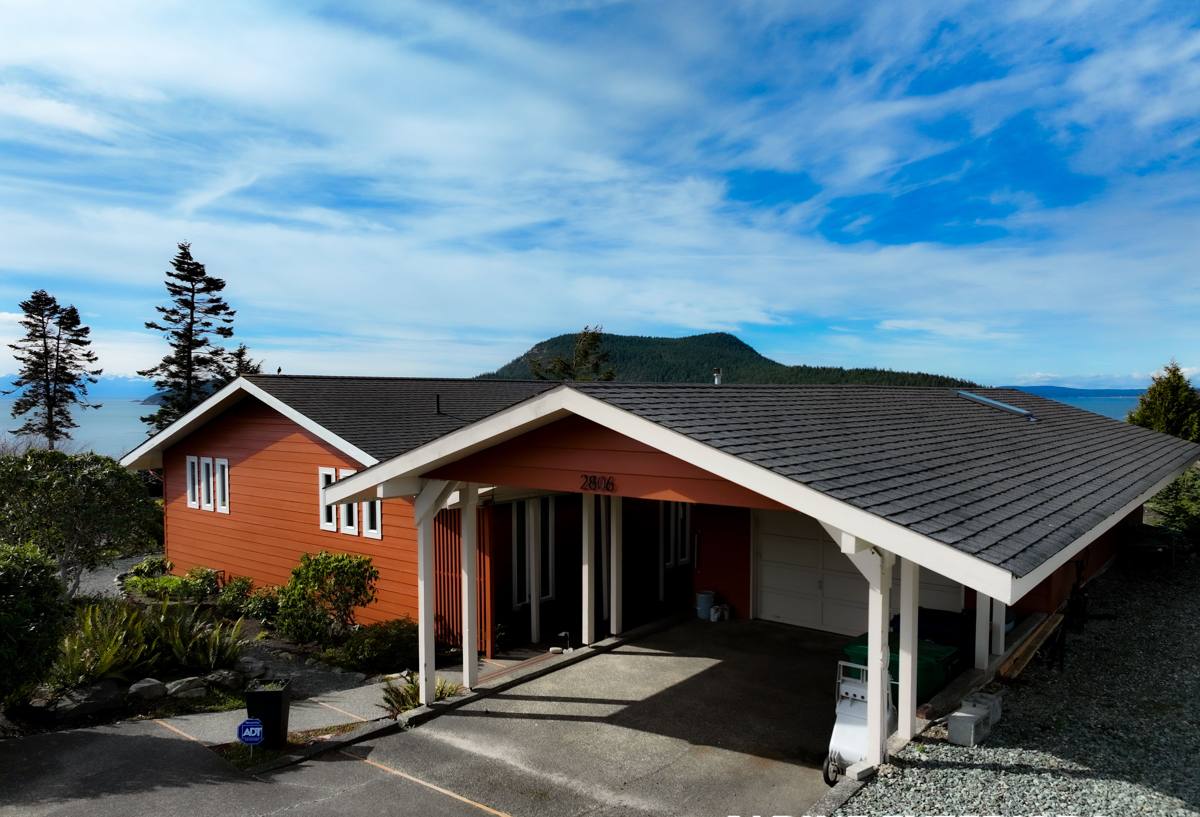
Why Sehome's Climate Is Hard on Siding
Salt Air and Metal Fastener Corrosion
Proximity to the bay means airborne salt settles on exterior surfaces year-round, not just during storms off the water. Over time, salt exposure accelerates corrosion on uncoated or poorly coated fasteners and trim hardware. Siding systems that rely on exposed metal components, or that use fastener types not rated for coastal exposure, tend to show rust streaking and loosening years before an inland home would.
Driving Rain and Wind-Driven Moisture
Bellingham gets rain that doesn't fall straight down — wind off the water pushes it sideways into wall assemblies, working into laps, seams, and butt joints that a calmer climate would never stress-test. Any siding product with weak moisture resistance at the seams, or that depends on paint film alone to keep water out, is going to struggle here.
Moss, Algae, and Extended Damp Season
Whatcom County's long wet season — often stretching from October into May — keeps north-facing and shaded walls damp for extended stretches. That's exactly the environment moss and algae need to take hold. Once organic growth establishes on a wall, it holds even more moisture against the substrate, which becomes a compounding problem on materials that aren't dimensionally stable or that absorb water into their core.
Why We Only Install James Hardie Fiber Cement
We don't install vinyl, LP SmartSide, Cemplank, Allura, or unfinished wood siding like primed spruce or cedar. That's a deliberate standard, not a sales pitch, and it's worth explaining honestly:
- Vinyl expands and contracts significantly with temperature swings and can warp or crack in sustained cold snaps; it also doesn't hold paint, so color changes mean full replacement.
- LP SmartSide and other wood-strand products are engineered wood — they perform well when detailing is perfect, but any moisture intrusion at a cut edge or fastener point can lead to swelling, and they require more vigilant caulking and maintenance in a wet climate like this one.
- Cemplank and Allura are legitimate fiber cement competitors, but we've standardized on one manufacturer's system so our crews install one set of specs, one set of accessories, and one warranty structure — consistency reduces installation error, which matters more than most homeowners realize.
- Primed spruce or cedar is a real wood product that needs re-staining or repainting on a recurring cycle, and in a neighborhood with this much sustained moisture, that maintenance window shrinks fast.
James Hardie fiber cement is non-combustible, dimensionally stable across our temperature range, and finished at the factory under controlled conditions rather than relying on field-applied paint for its primary weather barrier. For a Sehome home dealing with salt air and a long wet season, that factory-cured finish is a meaningful advantage over anything painted on site.
The HZ5 Climate Engineering Question
James Hardie makes region-specific formulations under its HZ (HardieZone) system, engineered for different climate profiles across the country. Western Washington, including Bellingham and Whatcom County, sits in a marine climate zone where moisture resistance and moss/mildew resistance matter more than extreme freeze-thaw cycling. Part of doing this job correctly is specifying the right HZ product line and matching accessories for our region — not just installing whatever fiber cement is on the truck.
What Correct Installation Looks Like
Fiber cement siding fails prematurely almost exclusively because of installation mistakes, not the material itself. In a climate like Sehome's, the margin for error is smaller than in a dry region, because any water that gets behind the cladding has more opportunities to sit and cause damage before it dries out. A correct install includes:
| Step | Why It Matters Here |
|---|---|
| Weather-resistive barrier and proper flashing at every penetration | Stops wind-driven rain from tracking behind the siding at windows, doors, and vents |
| Correct fastener type and spacing (stainless or coated for coastal exposure) | Resists corrosion from salt air over decades, not just years |
| Proper clearance between siding and grade, decks, or roof lines | Prevents constant wicking of ground and splash moisture into the panel edges |
| Caulking only where Hardie specifies — not over-sealing joints designed to breathe | Avoids trapping moisture behind the board, which speeds moss and mildew growth |
| Factory-cut and field-cut edges sealed per manufacturer spec | Unsealed cut edges are the most common entry point for water intrusion |
Any one of these done wrong can undercut the durability of an otherwise excellent product. This is why installer competence matters as much as material choice.
Common Installation Mistakes We See on Older Sehome Homes
- Siding installed tight to grade or a deck surface, with no drainage gap
- Nails driven too high or too low on the board, missing proper fastener zones
- Butt joints without flashing behind them, relying on caulk alone
- Trim and siding mismatched in expansion behavior, causing cracking at transitions
- Missing or undersized kickout flashing where roof lines meet walls
Our Process for a Sehome Siding Project
1. On-Site Assessment
We walk the home and look specifically at moisture history — moss patterns, staining below windows, soft trim, and any areas where prior siding has failed. That tells us where the home's real exposure risk is, not just its square footage.
2. Product and Line Selection
We specify the HardieZone-appropriate panel or lap profile, color from the ColorPlus factory-finish palette, and matching trim and soffit accessories so the whole envelope works as one system.
3. Tear-Off and Substrate Check
Old siding comes off and we inspect sheathing underneath for rot or prior water damage before anything new goes up — covering a compromised substrate just hides the problem.
4. Weather Barrier and Flashing
House wrap or building paper goes on first, with flashing detailed at every window, door, and penetration before a single piece of siding is installed.
5. Installation to Manufacturer Spec
Fastener placement, board spacing, and joint treatment follow Hardie's published installation guide — not shortcuts. This is also what keeps the manufacturer's warranty valid.
6. Final Walkthrough
We review caulking, trim lines, and paint touch-ups with the homeowner before calling the job done.
Cost Factors for Sehome Homes
Every home is different, but a few things reliably move the price on a fiber cement project in this neighborhood:
| Factor | Impact |
|---|---|
| Home size and number of stories | More surface area and stories increase material and labor time, plus access equipment for taller walls |
| Extent of substrate repair needed | Rot or moisture damage found during tear-off adds carpentry work before siding goes up |
| Trim complexity (gables, dormers, multiple roof lines) | More cuts, more flashing detail, more labor hours |
| Panel profile and color selection | Some ColorPlus finishes and profiles cost more than standard options |
| Site access and existing landscaping | Tight lots or mature landscaping near walls can slow tear-off and staging |
We give a specific number after seeing the home, not before — broad ranges without a site visit aren't useful to you.
Why a Crew That Works Sehome Regularly Matters
A contractor who only occasionally works in this neighborhood, or who mostly installs in drier inland areas, doesn't have the same instinct for where water actually gets in on a home exposed to bay air and driving rain. Knowing which corners of a Sehome-area home tend to hold moss, which orientations catch the worst wind-driven rain, and how the county's long wet season affects cure times and scheduling all comes from doing this work locally and repeatedly — not from a general installation manual.
Maintenance After Installation
Correctly installed James Hardie siding is low-maintenance, not zero-maintenance. In Sehome's climate, we recommend:
- Rinsing siding annually to remove salt residue and early moss growth before it establishes
- Checking caulk lines at trim and penetrations every year or two, and re-caulking only where the manufacturer specifies
- Trimming back vegetation and tree limbs that keep any wall shaded and damp longer than necessary
- Watching for paint touch-up needs at cut edges or areas exposed to repeated impact
None of this is heavy upkeep — it's the kind of periodic attention any exterior in a wet coastal climate benefits from.
Get a Local, No-Pressure Estimate
If you're weighing siding options for a home in Sehome or elsewhere in Bellingham, we're happy to take a look and give you an honest read on what your home actually needs. Fill out the form below for a free estimate — no pressure, no obligation.