 Bellingham Exterior
 Storm Damage in Sehome: What Bellingham Weather Does to a Roof
Sehome sits close enough to Bellingham Bay that homes here catch the full mix of what Whatcom County weather throws at a roof: salt-laden air off the water, wind-driven rain that comes in sideways during winter storms, and a moss season that never really ends. None of these on their own is unusual for Western Washington. Together, over years, they wear a roof down in specific ways — and that's why storm damage repair in this neighborhood isn't quite the same job as it would be somewhere drier and further inland.
After a hard blow off the Sound, the damage isn't always obvious from the ground. A few missing shingles are easy to spot. Lifted flashing, a cracked pipe boot, or granule loss from wind abrasion often aren't. Left alone through another few weeks of Bellingham rain, small storm damage turns into a leak, and a leak turns into rot in the decking underneath. Our job is to find the damage while it's still a repair, not a rebuild.
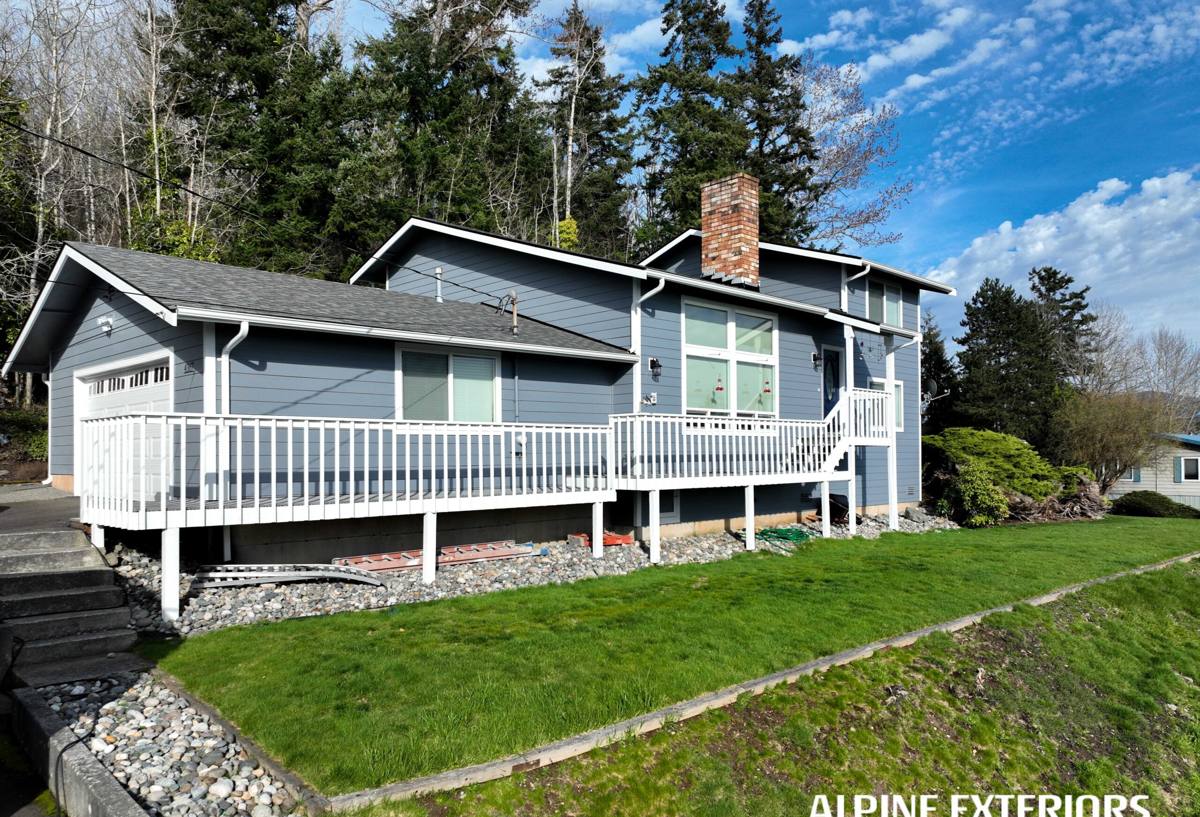
What Counts as Storm Damage (and What Doesn't)
Homeowners sometimes assume "storm damage" only means a tree limb through the roof. In practice, most of what we get called out for after a Whatcom County windstorm is quieter than that:
- Shingles or shakes lifted, cracked, or torn loose by wind gusts
- Flashing around chimneys, vents, or skylights pushed out of place
- Granule loss on asphalt shingles from wind-blown debris and hail
- Fasteners backed out where sheathing flexed in high wind
- Gutter and downspout damage that lets water dump against the fascia instead of away from it
- Soft spots or staining in the attic that only show up once someone climbs up to check
What doesn't count as storm damage — and what we'll tell you plainly if that's what we find — is ordinary wear: a roof that was already past its service life, moss that's been eating at shingles for years, or nail pops from age. We won't frame long-term neglect as storm damage just to make a job sound more urgent. If a storm exposed a problem that was already there, we'll say so, because that distinction matters for how you plan the repair and how it's handled if you're filing an insurance claim.
Why Sehome's Housing Stock Needs a Careful Eye
Sehome has a mix of older homes and newer infill, which means roofs of very different ages and materials sitting close together on the same streets. An older roof that's been through many Bellingham winters is more likely to have brittle shingles, aging flashing, and moss already working into the seams — all of which make it more vulnerable to wind and rain damage than a newer roof would be. A newer roof isn't immune either; if it was installed with shortcuts on flashing or ventilation, a storm will find that weak point fast.
That's part of why we don't run a generic storm-damage checklist and call it done. We look at the roof's age, its material, how it's ventilated, and how the previous work was done before we decide what a storm actually did versus what was already a slow-building issue. That context changes the repair plan.
Our Storm Damage Roof Repair Process
When a Sehome homeowner calls after a storm, we keep the process straightforward and try to move at the pace the situation actually calls for — urgent if there's active water intrusion, unhurried if it's a wait-and-see item.
- Phone assessment. We ask what you're seeing — missing shingles, a stain on a ceiling, debris on the roof — so we know what to bring and whether it's an emergency tarp situation.
- On-site inspection. We walk the roof and the attic if accessible, checking flashing, fasteners, decking, and ventilation, not just the shingles themselves.
- Written scope and honest recommendation. You get a clear description of what's damaged, what's not, and whether this is a spot repair or something bigger.
- Temporary protection if needed. If there's an active leak path, we get it covered before we ever talk about scheduling the permanent repair.
- The repair itself. Matched materials where possible, correct flashing and fastening for our wind and rain exposure, and a check of the surrounding roof so we're not patching next to a second problem we ignored.
- Documentation. Photos and notes you can use for your own records or an insurance claim, whether or not we're the ones filing it with you.
Repair vs. Replace: How We Make the Call
Not every storm-damaged roof needs to come off. But not every roof is worth patching either. Here's how we generally weigh it:
| Factor | Leans Toward Repair | Leans Toward Replacement |
|---|---|---|
| Roof age | Under roughly two-thirds of expected material lifespan | Already near or past expected lifespan |
| Extent of damage | Isolated to one section or a handful of shingles | Spread across multiple slopes or the whole roof |
| Underlying decking | Solid, dry, no rot found | Soft spots, rot, or repeated past leaks in the same area |
| Moss and moisture history | Minor, surface-level growth | Long-term moss intrusion under shingles or shakes |
| Material availability | Matching shingles or shakes still obtainable | Discontinued product, visible patchwork unavoidable |
We'll walk you through where your roof lands on this before we recommend either path — and we're comfortable telling a homeowner their roof just needs a repair, even when a full replacement would be the bigger job for us.
Materials and Methods We Use for Storm Repairs
For asphalt shingle roofs, we match the existing product as closely as possible and pay particular attention to flashing details — chimney step flashing, valley metal, and pipe boots are common failure points in wind events, more often than the shingle field itself. For cedar shake and shingle roofs, common on older Sehome homes, we look closely for moss intrusion under the coursing before doing any patch work, since replacing a shake over damaged decking or hidden rot is a short-term fix at best.
On underlayment, we favor synthetic and self-adhered ice-and-water membrane products at eaves, valleys, and around penetrations rather than older felt paper, because they hold up better to the repeated wetting Whatcom County roofs see over a wet season. We don't treat this as a brand preference — it's a practical standard, because a repair that fails again in the next storm isn't a repair.
Moss, Moisture, and Long-Term Roof Health
Storm damage rarely happens in isolation from Bellingham's longer moss season. A roof that's carrying a heavy moss load is holding moisture against the shingles or shakes year-round, which softens materials and makes them easier for wind to lift or tear. When we repair storm damage on a mossy roof, we'll usually recommend addressing the moss at the same time — gentle removal and a maintenance plan, not aggressive pressure washing that can strip granules and do its own damage.
We also check attic ventilation as part of any storm repair call. Poor ventilation traps moisture inside the roof assembly, which weakens decking and shortens the life of whatever repair we just made. It's a step that's easy to skip and one of the more common reasons a "fixed" roof develops the same problem again within a year or two.
Insurance Claims: What Homeowners Should Know
Many storm repairs in Sehome are covered, at least in part, by homeowners insurance, but coverage depends heavily on your policy's specific language around wind, water, and pre-existing wear. We're happy to provide a written inspection report and photos you can hand to your adjuster, and we can meet an adjuster on-site if that's useful. What we won't do is inflate a scope of work to match a claim amount, or write up wear-and-tear as storm damage to help a claim go through — that kind of thing can come back on the homeowner later, and it's not a service worth offering.
Signs of Storm Damage Worth Checking For
After any significant wind or rain event, a quick check — from the ground, with binoculars if needed, not by climbing up yourself — can catch problems early:
- Shingles or shake pieces in the yard or gutters
- Visibly lifted or curled shingles along roof edges
- New staining on interior ceilings or upper walls
- Sagging or pooling in gutters after rain has stopped
- Daylight visible through the attic roof deck
- A musty smell in upstairs rooms or closets that wasn't there before
If you notice any of these, it's worth a call sooner rather than later. Water damage compounds fast in this climate, and a small repair now is almost always cheaper than the rot repair a delayed one turns into.
Why a Local Sehome Crew Matters
A roofing crew that already works in Sehome and the surrounding Bellingham neighborhoods knows what this area's storms actually do — which flashing details fail first in wind off the bay, which roof styles hold moss longest, and what a normal versus an unusual repair looks like on the housing stock here. That's different from a crew driving in from outside the county after a storm, working off a generic checklist, and moving on. We're here for the follow-up questions, the insurance paperwork, and the next storm too.
If you've had storm damage — or you're just not sure whether what you're seeing on your roof is storm-related — we're glad to take a look. Reach out for a free, no-pressure estimate using the form below.