 Bellingham Exterior
 Siding Repair in South Hill: A Neighborhood That's Hard on Exterior Walls
South Hill sits above much of Bellingham, which means homes here catch weather that lower-lying neighborhoods don't feel as directly. Wind off Bellingham Bay drives rain sideways into south- and west-facing walls, tree cover holds moisture against siding long after a storm passes, and the mild, damp winters that define Whatcom County's climate keep moss and algae active for most of the year. Add in the salt-laden air that moves inland off the water, and you have a combination that steadily works on paint, caulk, fasteners, and the siding material itself.
None of that means every siding problem on a South Hill home is dramatic. Most of what we get called out for is localized — a section of trim that's soaked up water, a seam that's opened, a patch of siding that's staying wet longer than it should. The goal of a good repair is to find out why that spot failed before the rest of the wall did, fix the actual cause, and match the repair to the surrounding material so it doesn't stand out or become the next weak point.
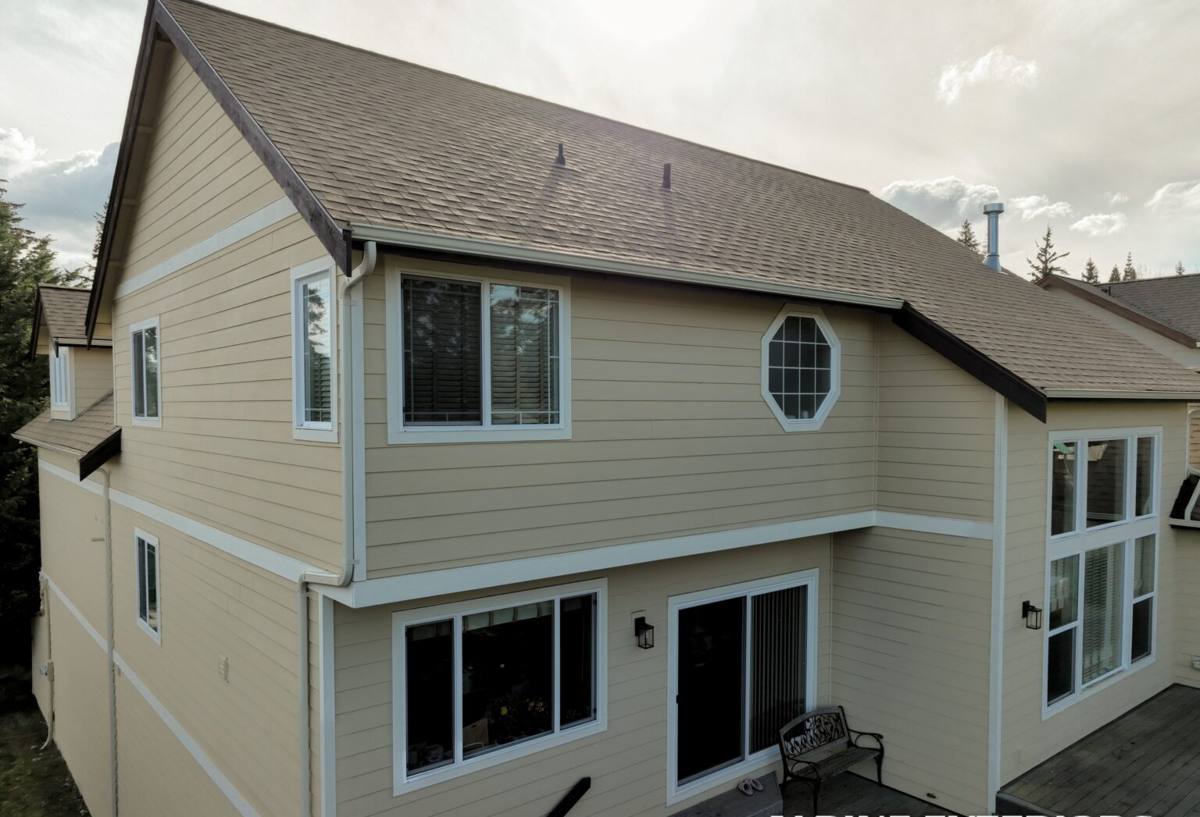
Signs a South Hill Home Needs Siding Repair
Siding damage in this climate is often quiet at first. By the time it's obvious from the street, water has usually been getting behind the siding for a while. Homeowners on South Hill should watch for:
- Soft, spongy, or visibly swollen siding boards, especially near the bottom of walls or under windows
- Persistent moss, algae, or dark streaking that keeps coming back within weeks of cleaning
- Paint that's bubbling, peeling, or failing in patches rather than evenly across the wall
- Gaps, cracks, or separation at seams, corners, and trim joints
- Warping or bowing panels, particularly on walls that take the most wind-driven rain
- Interior clues — a musty smell, a damp spot on drywall, or peeling interior paint on an exterior wall
- Nail pops, loose panels, or fasteners that have backed out or rusted
Any one of these on its own might be minor. Several showing up in the same area of the house usually means water has found a path behind the siding, and that's worth a proper look before it turns into rot or sheathing damage.
What a Correct Siding Repair Actually Involves
Finding the Real Cause, Not Just the Visible Damage
The visible crack or soft spot is rarely the whole story. A repair done right starts with figuring out how water is getting in — a failed flashing detail, a caulk joint that's given up, a gutter that's been overflowing onto the wall below, or siding that was installed without proper clearance from grade or a roofline. Patching over the surface without addressing that entry point just buys a little time before the same spot fails again.
Checking What's Behind the Siding
Once damaged material is pulled, we check the house wrap or building paper and the sheathing underneath. If moisture has reached the sheathing, that gets addressed before anything new goes back on the wall — repairing over damp or rotted sheathing is one of the most common ways a "quick patch" turns into a callback a year later.
Matching Material, Profile, and Finish
A repair should blend in, not announce itself. That means matching board width, exposure, and texture, and — where the original siding is James Hardie fiber cement — matching the ColorPlus finish so the repaired section weathers the same way as the rest of the wall. When the existing siding is a different material entirely, we'll say so plainly and explain the options rather than force a mismatched patch.
Repair or Replace? How We Help You Decide
Not every problem area needs a full re-side, and not every home is a good candidate for spot repair. The right call depends on how much of the wall is affected, what's causing the damage, and how old and how healthy the rest of the siding is.
| Situation | Repair usually makes sense | Replacement usually makes more sense |
|---|---|---|
| Extent of damage | Isolated to one or two areas | Showing up in multiple locations across the house |
| Cause | A specific, fixable detail (flashing, caulk, a gutter issue) | Systemic — poor original installation or siding at the end of its service life |
| Sheathing condition | Dry or only lightly affected in the repair area | Rot or moisture found in multiple wall sections |
| Siding material | Still available or closely matchable | Discontinued, faded unevenly, or a product we don't stand behind long-term |
| Age of siding | Well within its expected lifespan | Already near or past it |
We'll walk you through where your home falls on that spectrum honestly. If a repair is the right answer, that's what we'll recommend — a full replacement isn't the answer to every problem, and we'd rather earn your trust on a smaller job than oversell one.
Why the Siding Material Matters Even for a Repair
We install and repair James Hardie fiber cement siding, and it's a deliberate standard, not a default. Fiber cement doesn't absorb and swell with moisture the way wood-based products can, and it's non-combustible — both are meaningful in a climate where siding stays damp for extended stretches much of the year. When we're repairing existing Hardie siding, we can match the board profile and the factory ColorPlus finish so the repair holds its color and doesn't fade or weather differently than the rest of the wall.
We don't install or patch vinyl siding, LP SmartSide, or comparable engineered-wood and composite products. That's not a comment on every home that has them — it's about the trade-offs we're not willing to build our repair work around: vinyl expands, contracts, and cracks with temperature swings and gets brittle with age; engineered-wood products depend heavily on maintaining an intact factory seal, and once that's breached, moisture damage can spread faster than it does with fiber cement. If your home has one of these products and needs repair, we'll give you a straight assessment of your options, which may include a full re-side in Hardie rather than a patch we don't think will hold up.
Our Siding Repair Process
- On-site inspection — we look at the damaged area, the surrounding siding, trim, flashing, and gutters to find the actual water source
- Diagnosis and options — we explain what we found, whether repair or replacement fits, and what's involved either way, in plain terms
- Removal and sheathing check — damaged siding comes off and we inspect what's behind it before closing anything back up
- Correcting the cause — flashing, house wrap, or trim details get fixed, not just covered
- Matched repair or panel replacement — new material is installed to match the existing siding's profile and finish as closely as possible
- Sealing and finish work — joints, seams, and fastener locations are finished to shed water correctly
- Final walkthrough — we show you what was done and what to watch for going forward
Why a Crew That Already Works South Hill Makes a Difference
South Hill's elevation, tree cover, and exposure to wind off the bay create conditions that play out differently than they do in more sheltered parts of Bellingham. A crew that's already worked on homes in this neighborhood has a feel for where wind-driven rain tends to concentrate, how moss builds up on north- and shade-facing walls, and where older siding installations in the area commonly show flashing or clearance issues. That local pattern recognition means less time spent guessing and more time spent fixing the actual problem, and it also means we're not learning Whatcom County's climate on your dime.
Maintaining Siding After a Repair
A good repair holds up better with a little upkeep, especially in this climate:
- Keep gutters clear so overflow doesn't run down the wall below
- Trim back vegetation that keeps siding shaded and damp
- Rinse off moss and algae buildup before it gets heavy, especially on shaded walls
- Re-caulk seams and trim joints if you notice gaps opening up over time
- Have siding checked after any major windstorm, since that's when hidden damage tends to start
Get a Straight Answer on Your South Hill Siding
If you're seeing soft spots, recurring moss, peeling paint, or just want a second opinion on a repair someone else quoted, we're happy to take a look. We'll tell you honestly whether it's a repair, a bigger issue, or something in between — with no pressure either way. Reach out for a free estimate and we'll get you scheduled.