 Bellingham Exterior
 South Hill's Siding Takes a Different Kind of Beating
South Hill sits up above much of Bellingham, which means more exposure, not less. Homes here catch wind and driving rain off the bay with less tree cover to break it up than you'll find in some of the lower, more sheltered neighborhoods. Add in the salt-tinged air that rolls in off the water and the long stretch of wet, low-light months every year, and you've got a combination that is genuinely hard on exterior siding — especially anything with wood content or a paint film that has to hold up on its own.
We work on South Hill regularly, and the pattern repeats itself: siding that looked fine from the street is often hiding moisture damage at the bottom courses, around window trim, and anywhere water has been allowed to sit against the material instead of running off it. This page is about what siding replacement actually needs to accomplish on a home in this specific location, not a generic rundown of siding in general.
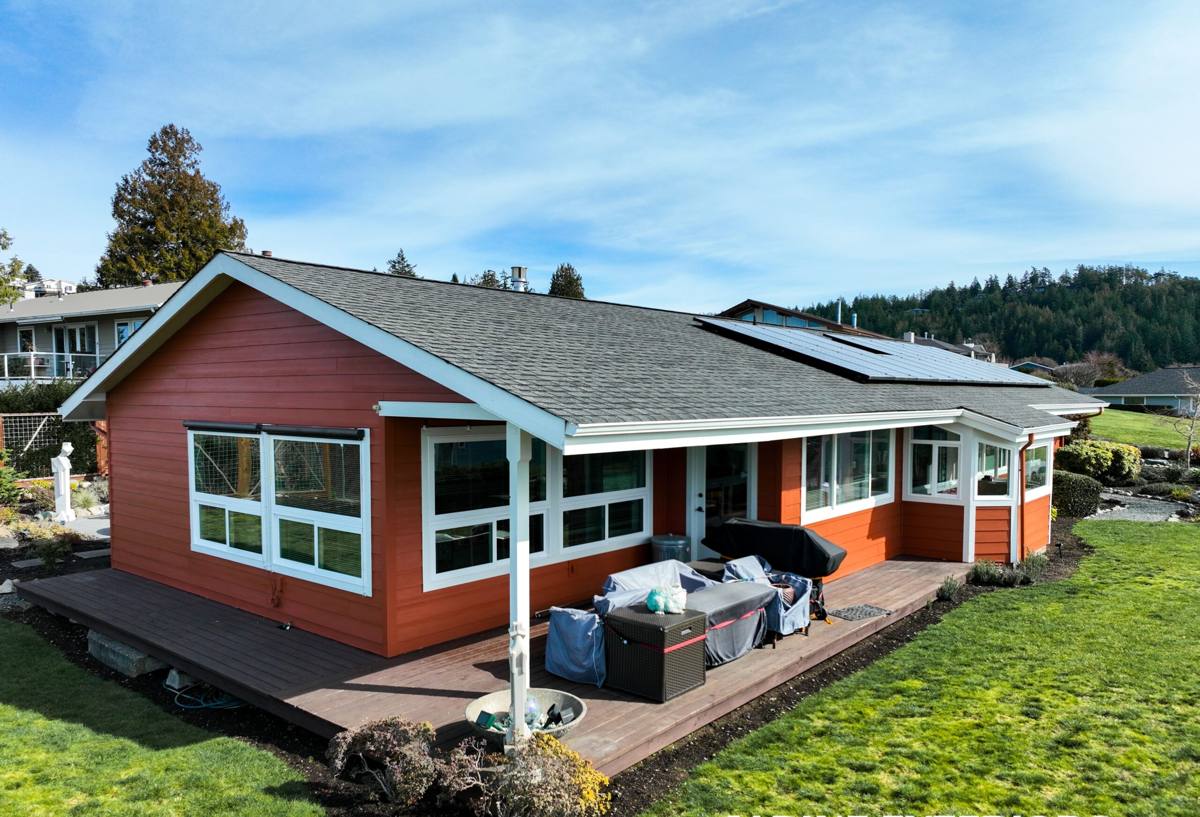
Why Older Siding Struggles Here
Whatcom County's climate isn't extreme in temperature, but it is relentless in duration. Moss doesn't need a heat wave — it needs shade, moisture, and time, and South Hill's elevation and exposure give it plenty of both across fall, winter, and spring. Once moss and algae take hold on a siding surface, they hold moisture against it far longer than open air would, which accelerates whatever the siding is already vulnerable to.
- Wood-based siding (cedar, primed spruce, hardboard) absorbs moisture at cut edges and fastener holes, then swells, cracks, or delaminates from the inside out.
- Vinyl siding can hold up structurally but rarely seals tightly at seams and trim, letting wind-driven rain track behind it during the wetter months.
- Salt-laden air accelerates corrosion on exposed fasteners and metal trim, which shows up as rust streaking and eventually loosens the siding itself.
- Paint films on wood siding break down faster under UV plus damp cycling, which means repainting more often just to keep water out.
None of this means South Hill homes are doomed to constant repair — it means the siding material and the installation details matter more here than they would in a drier, more sheltered part of the state.
Signs It's Time to Replace, Not Patch
A lot of homeowners call us wanting a repair quote and end up learning the damage is more widespread than the visible spot suggests. Moisture problems in siding rarely stay contained to where you can see them.
| What You See | What It Usually Means |
|---|---|
| Soft or spongy spots when pressed | Water has already gotten behind the siding and is affecting the sheathing underneath |
| Persistent moss or dark streaking that returns after cleaning | Moisture is being retained rather than shedding — often a sign of aging or failing material, not just dirt |
| Paint that bubbles, peels, or won't hold more than a couple years | The siding underneath is releasing trapped moisture through the finish |
| Visible warping, cupping, or gaps at seams | The material has moved beyond what caulking or spot repair can fix |
| Rising energy bills with no other explanation | Compromised siding and the water-resistive barrier behind it are letting conditioned air escape |
If you're seeing two or more of these at once, it's usually a sign the siding system as a whole has reached the end of its useful life rather than needing another round of patching.
What a Correct Siding Replacement Actually Involves
Siding replacement is not just swapping old boards for new ones. Done right, it's a full reset of how the house manages water, and that's especially important on an exposed lot in a climate that sees this much sustained rain.
Tear-off and inspection
Removing the old siding is also the one chance to actually see the sheathing and framing underneath. On South Hill homes we regularly find soft sheathing at lower wall sections, corners, and below windows — areas where water has been sneaking in for years without showing much on the surface. This is the point where hidden damage gets caught and repaired before it's covered back up.
Water-resistive barrier and flashing
A new weather-resistive barrier goes on correctly lapped so water runs down and out, never into a seam. Flashing at windows, doors, and any roof-to-wall intersections gets integrated into that barrier — not just caulked at the surface, which is a common shortcut that fails within a few years in a climate this wet.
Installing to the manufacturer's spec
Fastener spacing, clearance at the bottom of the wall, gaps at butt joints, and proper caulking or trim details all affect how the siding performs over time. Skipping or rushing these steps is the single biggest reason siding fails early — the material itself is rarely the whole problem.
Why We Only Install James Hardie Fiber Cement
We don't install LP SmartSide, vinyl, Cemplank, Allura, primed spruce, or cedar, and on a lot like this we don't think that's a close call. Each of those products has genuine strengths, but they also carry trade-offs — ongoing repainting, moisture sensitivity at cut edges, seam performance in wind-driven rain, or a warranty structure that doesn't hold up as well over decades — that matter more on an exposed South Hill elevation than they would somewhere more sheltered.
James Hardie fiber cement is non-combustible, engineered specifically for wet Pacific Northwest conditions in its HZ5 product line, and finished at the factory with ColorPlus technology rather than relying on field-applied paint that has to be redone every few years. It holds its shape and color in sustained damp weather better than wood-based or vinyl alternatives, and it comes backed by a strong, transferable manufacturer warranty when installed to spec. We standardized on it because it's the product we're comfortable standing behind on homes that take this much weather.
Material Comparison for This Climate
| Material | Moisture Resistance Here | Ongoing Maintenance | Typical Lifespan |
|---|---|---|---|
| James Hardie fiber cement | Engineered for wet climates, non-combustible | Occasional wash; no repainting needed for years | 30+ years with proper install |
| Cedar / primed spruce | Absorbs moisture at joints and fastener holes | Repainting or restaining every few years | 15-25 years, shorter if maintenance lapses |
| Vinyl | Seams vulnerable to wind-driven rain | Low, but limited repair options once damaged | 20-30 years, brittleness increases over time |
| Other fiber cement (LP, Cemplank, Allura) | Varies by product line and installation quality | Similar to Hardie but warranty terms differ | Varies by manufacturer spec |
Our Process on a South Hill Project
- On-site walk-through to assess current siding condition, water damage risk areas, and exposure on your specific elevation.
- Written estimate that separates material, labor, and any sheathing or framing repair contingencies found during tear-off.
- Careful removal of existing siding with immediate tarping of any exposed wall sections against weather.
- Sheathing repair where needed, followed by correct water-resistive barrier and flashing installation.
- James Hardie installation to manufacturer spec, including fastener pattern, clearances, and trim detailing.
- Final walk-through with you before we consider the job complete.
Because we work in this neighborhood regularly, we also have a practical sense of which elevations on South Hill homes tend to take the worst weather exposure, which helps us flag likely problem areas before tear-off even starts.
What to Ask Before Hiring Anyone for This Job
- Will you inspect and repair sheathing if it's found soft or damaged during tear-off, and how is that priced?
- What water-resistive barrier and flashing method do you use, and is it installed to the siding manufacturer's spec?
- Is the crew doing the installation the same crew making the estimate, or is it subcontracted out?
- What does the manufacturer warranty actually cover, and does it transfer if you sell the house?
- Can they explain why they recommend the specific siding product they're proposing, not just its price?
A contractor who can answer these clearly, without hedging, is usually one who's done this enough times to know where the real risks are on a home like yours.
Ready to Talk About Your Siding?
If your South Hill home is showing any of the wear signs above, or you just want an honest read on where your siding actually stands, we're happy to take a look. There's no pressure and no obligation — just a straightforward assessment and, if it makes sense, a written estimate for James Hardie siding replacement done right. Use the form below to request your free estimate.