 Bellingham Exterior
 Board & Batten in a Neighborhood That Stays Wet Longer Than Most
Silver Beach sits close to the water, under a heavy tree canopy, and in one of the shadier pockets of Bellingham. That combination matters more for board and batten siding than for almost any other exterior style, because the vertical battens and the wide flat panels between them create dozens of extra seams, edges, and shadow lines compared to standard lap siding. Every one of those details is a place water can either shed cleanly or get held against the wall.
Whatcom County's marine climate sends damp, salt-tinged air drifting inland off Bellingham Bay on a regular basis, and it settles into low, tree-shaded neighborhoods like Silver Beach rather than blowing straight through. Add driving winter rain and a moss season that can run eight months out of the year, and you have a wall assembly that rarely gets a chance to fully dry out between storms. Siding that isn't built and installed for that reality will show it — soft trim, streaking, green growth in the panel shadow lines, and eventually rot at the bottom edges.
Board and batten can still be the right call for a Silver Beach home. It's a strong, clean architectural look that suits both older lake-area cottages and newer builds going for a modern farmhouse or craftsman feel. The difference between a board and batten job that lasts and one that fails early almost always comes down to material choice and installation detail, not the style itself.
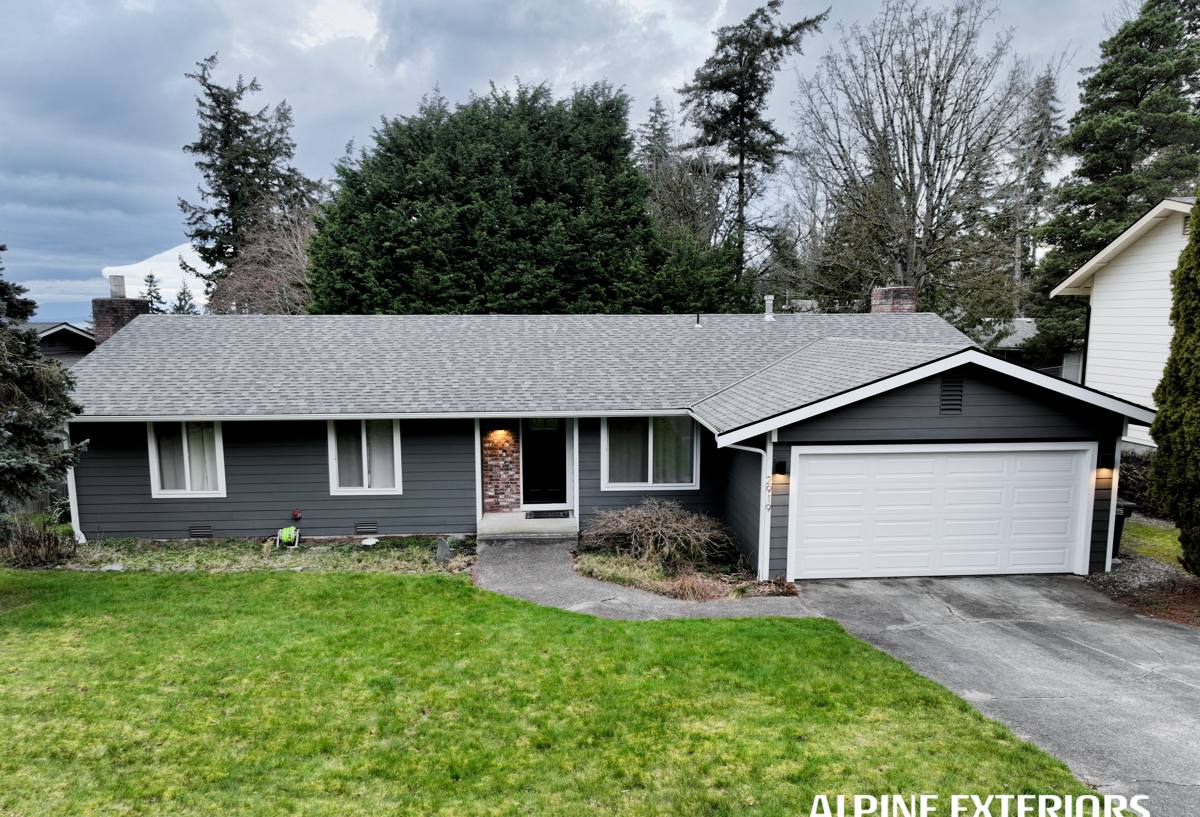
What Correct Board & Batten Installation Actually Involves
Board and batten isn't a single siding product — it's a pattern, built either from wide vertical panels with battens covering the seams, or from individual boards installed with a gap and a batten strip over each joint. Either way, the assembly behind the finish is what determines whether it holds up in a wet, shaded lot.
The details that matter most
- Drainage plane and rainscreen gap: A furring strip or engineered rainscreen product behind the panels lets any moisture that gets past the surface drain and dry instead of sitting against the sheathing.
- Flashing at every horizontal break: Window heads, water tables, roof-to-wall intersections, and any transition between siding materials need proper metal flashing, not just caulk.
- Fastener pattern and battens: Battens need to be fastened into structural framing at the correct spacing, not just nailed through the field panel, or they work loose over time as the wood/cement composite moves with moisture and temperature.
- Bottom clearance: Panels need real clearance off decks, patios, and grade — a common shortcut on older Silver Beach remodels that traps water right where it does the most damage.
- Caulk as backup, not primary defense: Sealant fails eventually. A correctly flashed and gapped assembly still sheds water even after the caulk cracks.
Skip any one of these and the siding can look fine for a year or two before problems start showing up — which is exactly why so many board and batten failures in this area trace back to installation, not the material itself.
Why We Install James Hardie Only — Not Vinyl, LP SmartSide, or Cedar
We get asked regularly why we don't offer board and batten in vinyl, engineered wood, or real cedar boards, since all three are common in this style. Here's the honest answer, product by product.
Vinyl board and batten
Vinyl is inexpensive and low-maintenance in the sense that it never needs painting, but it's a thin, flexible material that expands and contracts significantly with temperature swings — and it's installed with hanging clips rather than face-fastened, which limits how tightly the battens can be detailed against the panel. In a damp, mossy environment it also gives moss and algae an easy foothold in the vertical grooves, and it can't be repainted to refresh the look later.
LP SmartSide and other engineered wood
Engineered wood siding has improved a lot, and it machines and installs easily in board and batten profiles. The trade-off is that it's still a wood-based product with a resin-treated strand core — if the factory coating gets breached at a cut edge, fastener hole, or damaged corner and isn't resealed promptly, moisture can wick into the core. In a climate where walls stay damp for weeks at a stretch, that maintenance discipline needs to be nearly perfect, every year, for the life of the siding.
Real cedar boards
Cedar is a beautiful, authentic material and a legitimate choice when a homeowner wants true solid wood and is committed to the upkeep. It needs to be sealed or refinished on a real schedule, it can cup and check as it moves with moisture, and in a shaded, moss-prone lot like Silver Beach it needs more frequent attention to staining and growth than most owners plan for going in.
Why James Hardie fiber cement
James Hardie's siding is fiber cement — sand, cement, and cellulose fiber — which doesn't absorb and swell the way wood-based products do, doesn't flex and gap the way vinyl does, and is non-combustible. Hardie also engineers its HZ5 and HZ10 product lines specifically for climate zones like the Pacific Northwest's, and finishes them with a factory-applied ColorPlus finish backed by its own warranty rather than relying on job-site paint to hold up through years of wet weather. That's the combination we've standardized on, and it's what we install on every siding job, board and batten included.
Board & Batten Panel Options Compared
| Product Type | Moisture Behavior | Maintenance | Finish Life |
|---|---|---|---|
| Vinyl board and batten | Doesn't absorb water, but traps moisture and moss behind clips and grooves | Low, but can't be refreshed or repainted | Fades unevenly, brittle with age |
| Engineered wood (LP SmartSide, etc.) | Wood-based core can wick moisture if coating is breached | Moderate — cut edges and fasteners need sealing | Depends heavily on maintenance follow-through |
| Real cedar boards | Absorbs and releases moisture naturally; needs to breathe and dry | High — regular sealing/staining, more in shaded lots | Varies widely with upkeep |
| James Hardie fiber cement | Dimensionally stable, engineered for wet climate zones | Low — factory finish, occasional wash | Long-life factory finish with manufacturer warranty |
Our Process, Start to Finish
1. On-site evaluation
We walk the exterior with you, looking at existing siding condition, trim, water tables, and anywhere moisture has clearly been an issue — this is common on north- and west-facing walls in tree-shaded Silver Beach lots.
2. Tear-off and sheathing check
Once old siding comes off, we inspect the sheathing and framing underneath. Any soft or water-damaged wood gets addressed before anything new goes up — covering a problem with new siding just hides it for a few more years.
3. Weather-resistive barrier and rainscreen
We install a proper drainage plane and rainscreen gap behind the new siding, which is the single biggest factor in how well board and batten performs long-term in this climate.
4. Panel and batten installation to manufacturer spec
Panels, battens, and flashing go in following James Hardie's installation requirements — correct fastener spacing, clearances, and flashing at every transition — which is also what keeps the manufacturer's warranty intact.
5. Final walkthrough
We go over the finished job with you directly, not through a subcontractor handoff, so any questions get answered on the spot.
What Board & Batten Actually Needs Long-Term
One appeal of switching to Hardie board and batten is how little ongoing work it asks for compared to wood or repainted surfaces. That said, "low-maintenance" doesn't mean "no maintenance," especially in a shaded, damp neighborhood.
- Rinse the exterior once or twice a year to keep moss and algae from getting a foothold in the batten shadow lines.
- Keep gutters clear so overflow doesn't run down the wall face — a common issue on homes with mature trees overhead.
- Trim back vegetation and branches that keep siding shaded and damp longer than it needs to be.
- Have caulking at trim and penetrations checked every few years and refreshed if it's cracking.
- Address any impact damage (ladders, equipment, storm debris) promptly rather than letting a chipped panel sit exposed.
Signs Your Current Siding Is Already Struggling
- Green or black staining that keeps coming back within a season or two of cleaning
- Soft or spongy spots when you press on siding or trim near the bottom edge
- Visible gapping, warping, or cupping in boards or panels
- Peeling or bubbling paint, especially on wood-based or engineered siding
- Batten strips that have worked loose or show fastener popping
- Musty smell or visible staining on interior walls that back up to exterior siding
If more than one of these sounds familiar, it's worth getting a straightforward evaluation before the damage spreads to the sheathing or framing behind it.
What Drives the Cost of a Board & Batten Project
| Factor | Why It Matters |
|---|---|
| Home size and wall complexity | More corners, gables, and dormers mean more cuts, battens, and flashing detail |
| Condition of existing sheathing | Rot repair found during tear-off adds scope but prevents covering up a real problem |
| Trim and water table detailing | Board and batten reads as a finish carpentry job as much as a siding job |
| Access and site conditions | Sloped lake-area lots and mature landscaping can affect staging and scaffolding |
| Panel size and color | Standard ColorPlus finishes versus custom or specialty colors affect material cost |
We don't quote a job without walking the property, but we'll always give you a straight, itemized estimate with no pressure to decide on the spot.
Why Hiring a Crew That Already Knows Silver Beach Matters
Board and batten installed to a national average spec — say, for a drier inland climate — is a different job than board and batten installed for a shaded, waterfront-adjacent lot in Whatcom County. A crew that already works this neighborhood knows which walls take the worst weather exposure, where moss tends to establish first, and how much clearance and drainage detail actually holds up here versus what merely meets code minimums. That local pattern recognition is hard to replace with a generic install crew working from a manual alone.
It also means someone stands behind the work locally — not a distant office, but a crew you can reach if a question comes up five years down the road.
Get a Straight Answer for Your Home
If you're weighing board and batten for a Silver Beach home, we're glad to come take a look, tell you honestly what your current siding needs, and walk you through what a correct James Hardie installation would involve for your specific walls. There's no cost and no pressure — just a straightforward estimate based on what we actually see on your property. Fill out the form below to schedule a visit.