 Bellingham Exterior
 Roof Repair Built for the Silver Beach Neighborhood
Silver Beach sits among some of the heaviest tree cover in the Bellingham area, and that changes how a roof ages here compared to a wide-open lot closer to downtown. Shade slows drying time after every rain, needles and leaf litter collect in valleys and behind chimneys, and moss gets a head start almost every year. Add in Whatcom County's long wet season and the wind-driven rain that comes off the water, and you've got a roof that needs more attentive, more locally-informed repair work than a generic patch job.
We work on roofs in this neighborhood regularly, which means we already know where Silver Beach homes tend to fail first — usually not in the open field of the roof, but at the edges, valleys, and penetrations where water has the most opportunities to get past the shingles. This page covers what that actually looks like, what a correct repair involves, and how our process works from first call to finished job.
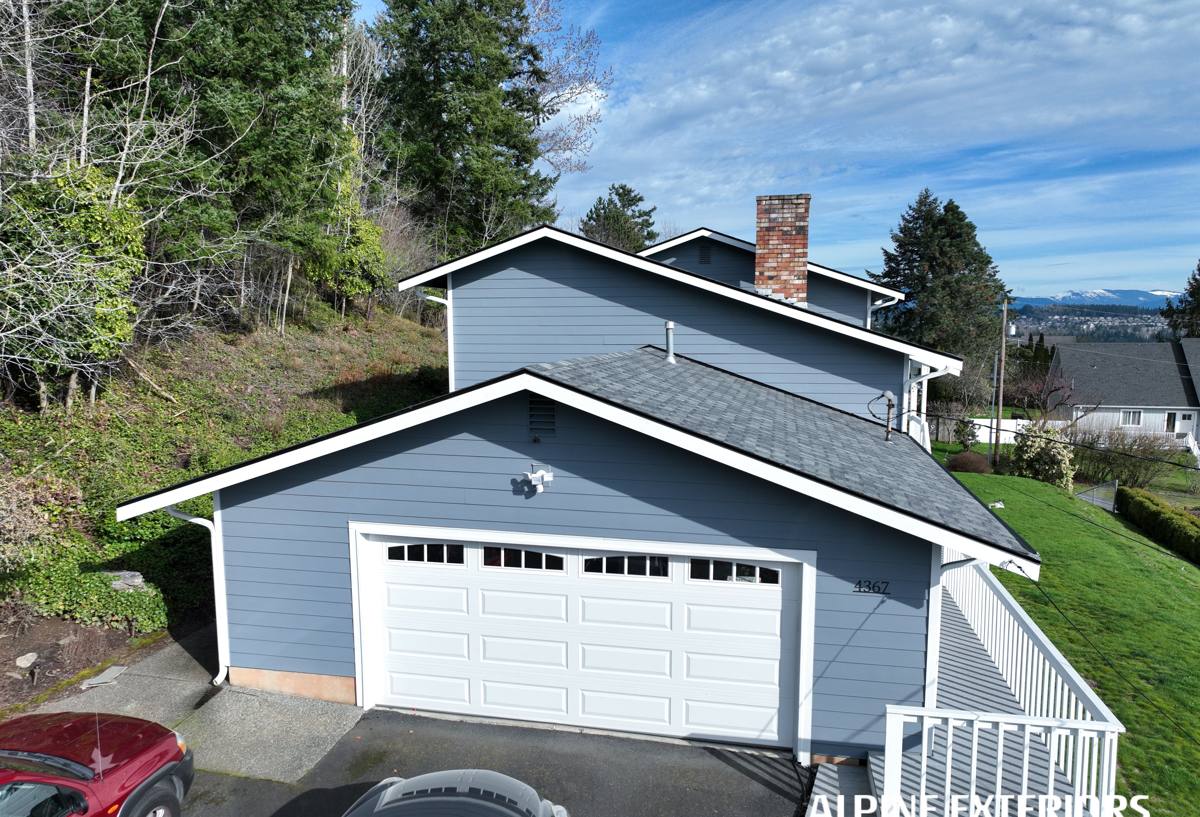
Why Silver Beach Roofs Wear the Way They Do
Tree Canopy and Shade
Homes tucked under mature trees stay damp longer after every rain event, since direct sun and open airflow — the two things that dry a roof out — are both limited. That extended moisture window is exactly what moss, lichen, and algae need to establish themselves, and it's why roofs in wooded pockets of Bellingham often show wear years before a comparable roof on an open lot.
Moss and Organic Debris
Moss doesn't just sit on top of shingles — it roots into the granule surface and lifts shingle edges as it grows, which opens a path for water to work underneath. Needles and leaves that collect in valleys and behind chimneys or skylights hold moisture against the roofing material and can dam water during heavy rain, forcing it sideways under the shingles instead of down and off the roof.
Driving Rain and Wind
Bellingham's storms frequently bring rain at an angle rather than straight down, which stresses flashing, ridge caps, and any spot where two roof planes meet. Wind-driven rain finds gaps that vertical rain never would, which is a big reason why repairs that look fine from the ground can still be letting water in at a seam or lap that isn't visible without getting on the roof.
Salt Air Exposure
Homes closer to Bellingham Bay deal with an added factor: salt-laden air that accelerates corrosion on exposed metal — flashing, fasteners, gutter hardware, and vent caps in particular. Even homes further inland near Silver Beach can see some of this depending on prevailing wind, so we check fastener and flashing condition closely on every inspection rather than assuming it's not a factor.
Common Repair Issues We See in This Neighborhood
Not every roof problem in Silver Beach looks the same, but a few patterns show up often enough that we plan for them on nearly every visit.
| Issue | What Causes It | Why It Matters |
|---|---|---|
| Moss growth on shingles | Shade, damp valleys, organic debris buildup | Lifts shingle edges and traps moisture against the roof deck |
| Valley and flashing leaks | Wind-driven rain, debris damming water flow | One of the most common points of interior water damage |
| Granule loss on older shingles | Age, sun exposure between rain events, foot traffic | Reduces UV and weather protection, speeds up further wear |
| Corroded flashing or fasteners | Salt air, age, original installation quality | Small gaps around fasteners become leak points over time |
| Soft or sagging decking | Long-term undetected moisture intrusion | Signals repair has been needed longer than it looks from outside |
What a Correct Roof Repair Actually Involves
A repair that holds up through a full Whatcom County winter takes more than swapping out a few visibly damaged shingles. We treat every repair as a diagnostic job first and a materials job second.
Finding the Real Source, Not Just the Symptom
Water rarely shows up on the ceiling directly below where it entered the roof — it travels along the deck or rafters first. That means a stain in a bedroom might trace back to a valley or chimney flashing several feet away. We trace the path before we start replacing anything, because patching the visible spot without finding the actual entry point just means the same leak reappears in a different room later.
Matching Materials, Not Just Covering the Spot
Shingles fade and wear unevenly over time, so a patch using brand-new material next to weathered shingles can stand out and, more importantly, may not seal the same way against surrounding courses. We select replacement material as close to the existing roof as reasonably available and integrate it properly into the surrounding courses rather than just laying it on top.
Flashing and Underlayment Come First
Shingles are the visible layer, but flashing and underlayment are what actually keep water out at the vulnerable points — valleys, chimneys, skylights, and roof-to-wall transitions. A repair that replaces shingles but ignores failing flashing underneath is a repair that fails again within a season or two.
Workmanship at the Details
Proper nail placement, correct shingle overlap, sealed edges, and secure ridge work are what separate a repair that lasts from one that doesn't. These are the details that aren't visible once the job is done, which is exactly why they matter — nobody checks them again until there's a problem.
Our Roof Repair Process
- Inspection. We get on the roof (not just a ground-level look) to check the deck, flashing, valleys, and any areas prone to moss or debris buildup specific to your property's tree cover and orientation.
- Honest diagnosis. We explain what we found, what's causing it, and whether repair is the right call or whether the roof is closer to the end of its service life. No pressure toward the bigger job if repair genuinely solves the problem.
- Straightforward estimate. You get a clear scope of work and price before anything starts — no surprise add-ons once we're up there.
- The repair itself. We address the source first — flashing, underlayment, deck condition — then the visible shingle work, matching materials as closely as possible.
- Cleanup and debris removal. Old material, granules, and any moss or debris we clear during the repair get hauled off, not left in gutters or on the ground.
- Follow-up. We stand behind the work and are reachable if anything comes up after the repair settles in through a rain cycle.
Repair vs. Replacement: How We Help You Decide
Not every roof problem calls for a full replacement, and not every roof is a good candidate for another round of patching. We walk through these factors with you honestly rather than defaulting to whichever job is bigger.
| Factor | Leans Toward Repair | Leans Toward Replacement |
|---|---|---|
| Age of roof | Well within expected service life | At or near the end of its material lifespan |
| Extent of damage | Isolated to one area (valley, flashing, a section of shingles) | Widespread across multiple roof planes |
| Decking condition | Solid, no soft spots found | Soft, rotted, or repeatedly wet decking in multiple areas |
| Leak history | First occurrence or newly discovered | Repeated leaks in different spots over recent years |
| Moss and granule condition | Surface-level, recently developed | Heavy, long-established, with visible granule loss |
Materials We Work With — and Why
Most Silver Beach repairs involve asphalt composition shingles, which remain the most common roofing material in the neighborhood and are well suited to Bellingham's rain and moss exposure when installed and repaired correctly. For homes with cedar shake or metal roofing, repair approaches differ enough that we treat them separately.
Cedar shake requires careful attention to ventilation and moisture cycling — shade-heavy lots like much of Silver Beach can shorten cedar's service life if airflow underneath isn't adequate, so we look closely at ventilation during any cedar repair rather than treating it as a simple shingle swap. Metal roofing holds up well against moss but needs its fastener and seam integrity checked regularly, especially given the corrosion factor from salt air discussed earlier. In every case, our standard is matching the repair approach to how that specific material actually behaves in this climate, not applying a one-size-fits-all method across roof types.
Maintenance That Extends the Life of a Repair
A repair is only as good as the maintenance that follows it. For homes with the kind of tree cover common around Silver Beach, a few habits make a real difference in how long a repair — or the roof as a whole — lasts.
- Clear leaves and needles from valleys and gutters at least twice a year, more often under heavy tree cover
- Have moss treated before it spreads across large sections, not after it's already lifted shingle edges
- Trim back branches that overhang the roofline to reduce shade, debris, and physical abrasion
- Check attic ventilation periodically — poor airflow speeds up moisture damage from the inside out
- Walk the perimeter after major windstorms to look for lifted shingles, dented flashing, or debris buildup
- Address small leaks and stains promptly rather than waiting to see if they get worse
Why a Crew That Already Works Silver Beach Matters
A repair crew that only occasionally works in this part of Bellingham has to relearn the same lessons every time — how much shade a particular street sees, how fast moss comes back in this microclimate, which flashing details tend to fail first in wind-driven rain off the water. We work in this neighborhood regularly enough that those aren't guesses; they're patterns we've already accounted for before we're even on the roof.
That familiarity also means a faster, more accurate inspection. We know what to check first, which cuts down on the back-and-forth that can slow down a repair when a crew is diagnosing a neighborhood's roofing quirks for the first time. For homeowners, that translates into a repair that's diagnosed correctly the first time and built to hold up through the next wet season, not just until the next rain.
If you've got a leak, moss buildup, or a spot on your roof that's been bothering you, we're glad to take a look. Fill out the form below for a free, no-pressure estimate on your Silver Beach roof repair.