 Bellingham Exterior
 South Hill's Climate Is Harder on Vertical Siding Than It Looks
South Hill sits up above much of the rest of Bellingham, and that elevation cuts both ways. Homes get better views of Bellingham Bay and the islands, but they also catch more wind-driven rain off the water, more direct salt-laden air, and — thanks to the mature tree canopy that covers much of the hill — long stretches of shade that never quite dry out after a storm. Whatcom County's marine climate already means siding rarely gets a real break between wet spells. On South Hill specifically, that combination of exposure and shade is exactly the environment where board and batten siding either performs for decades or starts failing within a handful of years, depending on what it's made of and how it was installed.
Board and batten is a popular look on this hill — it shows up on older craftsman homes, newer infill builds, and additions where a homeowner wanted a vertical accent against horizontal lap siding. It's a good-looking profile. It's also one of the least forgiving profiles when moisture management is done wrong, because every batten seam is a potential water path straight down the wall.
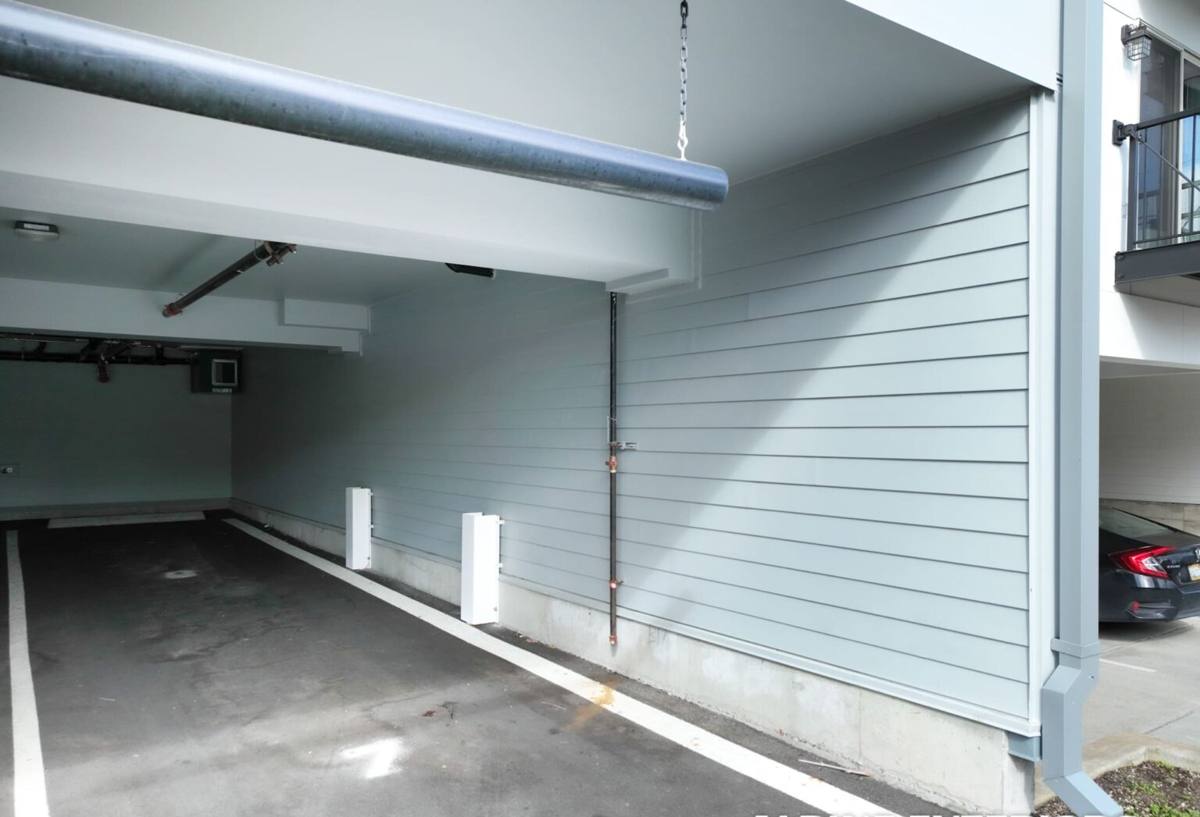
Why Board & Batten Holds Up Differently Than Lap Siding
Lap siding sheds water by gravity, one course over the next, and every joint faces downward. Board and batten runs vertically, so water travels the full height of the wall along the face of the boards and battens before it ever reaches the ground. That means the seams between boards, the caulk lines at each batten, and the transition points at windows, corners, and the foundation all have to be detailed correctly the first time. On a hill that gets more driving rain and more prolonged dampness under tree cover than the flatter parts of the city, a small gap in flashing or a poorly caulked batten doesn't just get "some" water behind the siding — it can get a steady trickle every time it rains.
What Happens When Wood Board & Batten Fails on This Hill
A lot of the older board and batten siding still on South Hill homes is solid wood or a wood composite. When it was installed correctly and repainted on schedule, it did its job for a long time. But wood board and batten has a hard ceiling here: the boards cup and split as they take on moisture and dry out unevenly, the battens pull away from fasteners over years of expansion and contraction, and the shaded, moss-prone sections of a wall hold moisture against the wood far longer than the sunny side ever does. Once paint film starts to fail at a seam, water gets behind the board, and by the time it shows on the interior or as visible rot, the damage has usually been building for a while.
What James Hardie Board & Batten Actually Is
We install James Hardie fiber cement exclusively, and board and batten is one of the profiles their system does well. It's not solid wood battens nailed over plywood — it's an engineered fiber cement panel or plank system with vertical battens over the seams, factory-finished with Hardie's ColorPlus coating so the color is baked on rather than field-painted. For this climate, that matters in two specific ways: fiber cement doesn't absorb and swell with moisture the way wood does, and it's manufactured in Hardie's HZ5 formulation, engineered for the wetter, harsher weather profile of the Pacific Northwest rather than a generic national spec.
Panel-and-Batten vs. Individual Board Systems
Hardie's board and batten look can be built two ways: a single wide fiber cement panel with battens fastened over the vertical seams, or individual fiber cement boards spaced and battened in the traditional pattern. Panel systems mean fewer seams overall, which is often the better call on taller wall sections or areas that take the brunt of the weather. Individual board systems can match a more traditional, tighter spacing that fits certain home styles on the hill. Which one makes sense depends on the wall height, the existing trim details, and what the rest of the home's siding is doing — we walk through that with you rather than defaulting to one option everywhere.
What a Correct Installation Involves
Board and batten fails or succeeds almost entirely based on details most homeowners never see once the job is done. On South Hill, where wind-driven rain and prolonged shade dampness are both in play, we don't treat any of these as optional:
- A drainage gap (rainscreen) behind the siding so any moisture that does get past the surface can drain and dry instead of sitting against the sheathing
- Correct flashing at every window, door, and roofline transition the vertical siding runs past
- Manufacturer-specified fastener type, spacing, and penetration depth — under-driven or misplaced nails are one of the most common causes of early failure
- Proper clearance at the foundation and any horizontal surfaces so the bottom edge of the siding isn't sitting in standing water or splash-back
- Correct caulking (or, where Hardie's detailing allows, no caulk at all) at batten joints, matched to a sealant that will actually hold up to this climate's freeze-thaw and wet-dry cycling
- Field-cut edges sealed per Hardie's specifications so the factory-protected face isn't left exposed at a cut
Skipping any one of these doesn't usually show up right away. It shows up two, five, or eight years later as staining, soft spots, or paint failure at exactly the seams that were rushed.
Fiber Cement vs. Wood Board & Batten on a Hill Like This
| Factor | Wood Board & Batten | James Hardie Fiber Cement |
|---|---|---|
| Moisture response | Absorbs, swells, cups over time | Engineered to resist moisture absorption |
| Moss/algae exposure (shaded walls) | Holds moisture, accelerates rot risk | Doesn't feed rot the way organic wood fiber can |
| Finish | Field-painted, needs repainting on a cycle | Factory ColorPlus finish, far longer color life |
| Fire exposure | Combustible | Non-combustible fiber cement core |
| Typical repaint interval | Every 5–8 years in this climate | Often 15+ years before touch-up is needed |
| Warranty | Workmanship only, no material warranty | Manufacturer material warranty backing the product |
Our Process for South Hill Board & Batten Jobs
Every board and batten job on this hill starts with a walk of the specific walls involved, not a generic quote. We look at sun and shade exposure on each elevation, check for existing moisture damage behind current siding, and confirm what's underneath — sheathing condition matters as much as the siding itself. From there:
- On-site assessment of the wall(s), including any signs of existing moisture intrusion or rot at the sheathing
- Recommendation on panel-and-batten vs. individual board layout based on wall height and home style
- Removal of failing material and repair of any damaged sheathing or framing found underneath — this gets discussed with you before it's covered back up
- Installation of drainage gap, flashing, and James Hardie board and batten to manufacturer spec
- Final inspection of seams, fastening, and trim transitions before we call it done
We don't install over rot, and we don't skip the drainage gap to save an hour on a job — those two shortcuts cause more callbacks in this climate than anything else in the trade.
Why We Only Install James Hardie
We don't offer vinyl, LP SmartSide, or primed wood board and batten, and that's a deliberate standard, not a limitation of what we can source. Vinyl doesn't hold up to the impact and UV cycling this region sees over decades the way fiber cement does. LP SmartSide is a wood-strand product — better than raw wood in some respects, but still an engineered wood core that depends heavily on sealed edges and flawless installation to keep moisture out over the long run. Primed wood siding puts the entire moisture defense on a paint film that has to be maintained on schedule or it starts failing. James Hardie's fiber cement, backed by a real manufacturer warranty and a factory finish, is what we're willing to put our name behind on a hill where the weather doesn't give siding many breaks.
Why a Crew That Already Works South Hill Matters
South Hill isn't uniform. Lot slopes, tree cover, and sun exposure change block to block, and that changes how a wall is actually behaving before you ever get to the siding choice. A crew that's worked this hill before knows to check the shaded, moss-prone elevations differently than the sun-exposed ones, knows what kind of access and staging a steep driveway or narrow lot requires, and isn't guessing at how the local weather pattern affects a board and batten installation's long-term performance. That local familiarity shows up in fewer surprises mid-project and a finished job that's detailed for the actual conditions on your specific wall, not a generic spec sheet.
Maintenance and What to Watch For
James Hardie board and batten is low-maintenance, not no-maintenance. A yearly walk-around is worth doing, especially on shaded or bay-facing walls:
- Check batten seams and caulk lines for cracking or separation, particularly after the first few winters
- Look for moss or algae buildup on shaded elevations and clean it gently rather than letting it sit and hold moisture
- Watch trim and corner boards where two materials meet — these transition points age faster than the field of the siding
- Confirm gutters and downspouts are directing water away from the wall base, since splash-back is one of the more common causes of localized siding damage
If you're seeing soft spots, visible staining streaks, or paint failure concentrated at the seams, that's worth a look before it becomes a bigger repair.
If you're weighing a board and batten replacement or repair on your South Hill home, we're happy to take a look and give you a straight, no-pressure assessment of what your walls actually need — just fill out the form below for a free estimate.