 Bellingham Exterior
 Why South Hill Siding Has to Work Harder Than the Brochure Suggests
South Hill sits up on the hillside above downtown Bellingham, close enough to Bellingham Bay to catch salt-tinged air off the water and exposed enough to take the full force of storms rolling in off Puget Sound. Add in the mature tree canopy that shades a lot of the older streets up there, and you get a combination that's genuinely tough on exterior siding: salt-laden moisture, wind-driven rain that finds every gap, and shaded walls that stay damp long after the rest of the neighborhood has dried out. Whatcom County's climate is already demanding on building materials — South Hill's particular mix of elevation, tree cover, and bay exposure pushes that a step further.
Salt Air and Wind-Driven Rain
Salt air accelerates corrosion on fasteners, trim, and any siding product that isn't built to resist moisture intrusion at the core. Combine that with driving rain hitting a hillside home at an angle, and you get water pushed into seams, laps, and butt joints that would stay dry on a flatter, more sheltered lot. Siding on South Hill has to shed water that's actively being pushed at it, not just water falling straight down.
A Long Moss Season
Bellingham's wet season runs long, and the tree cover common on South Hill's older lots keeps north- and west-facing walls in shade for much of the year. That's exactly the environment moss and algae need to take hold. On the wrong siding material, that growth traps moisture against the surface and accelerates whatever damage is already happening underneath.
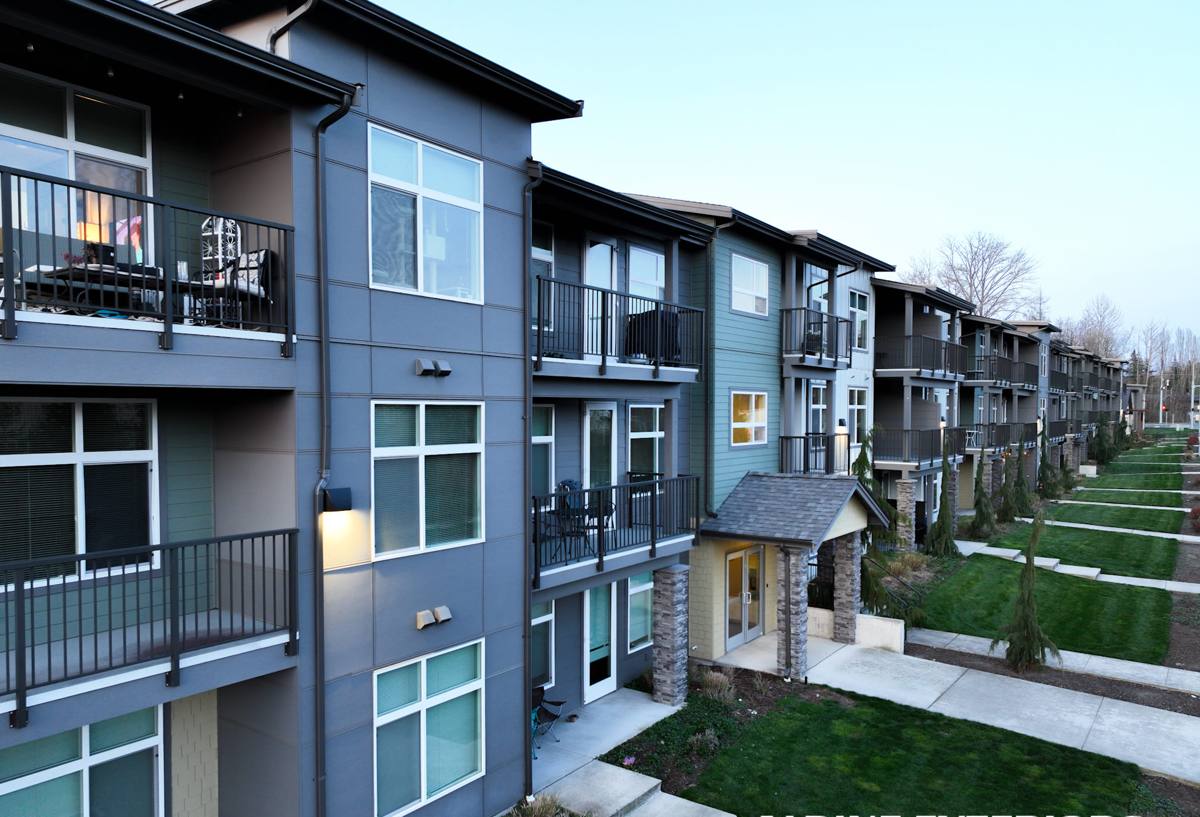
South Hill's Housing Stock Adds Its Own Set of Challenges
A lot of the homes in South Hill are older, with additions, re-sides, and repairs layered on over the decades. That history matters when it's time to replace siding. Walls can be out of square, sheathing underneath older siding may have taken on moisture nobody's dealt with, and trim details from an earlier era don't always match what's sold off the shelf today. A siding job that doesn't account for what's actually behind the old siding — not just what's visible on the surface — is a job that's likely to have problems again within a few years.
This is also a neighborhood with real architectural character — craftsman bungalows, older Victorians, and homes built in a range of styles across different decades. Siding replacement here isn't just a technical exercise; it's also about keeping the house looking like it belongs on its street.
Why We Only Install James Hardie Fiber Cement
We don't install LP SmartSide, vinyl, Cemplank, Allura, primed spruce, or cedar. That's a deliberate standard, not a sales pitch. James Hardie fiber cement is non-combustible, holds a factory-applied ColorPlus finish that's baked on rather than field-painted, and is engineered in climate-specific product lines rather than a one-size-fits-all formula. For a wet, marine-influenced climate like Whatcom County's, that engineering difference matters more than it does in a dry inland market.
The HZ5 Line: Built for This Climate
James Hardie makes region-specific "HZ" (HardieZone) product formulations, and the HZ5 line is engineered for climates with more moisture exposure and freeze-thaw cycling — conditions that describe South Hill's wet, shaded, salt-influenced walls reasonably well. The fiber cement composition resists moisture absorption at the core, which is the property that ultimately determines whether siding holds up on a hillside home that stays damp for months at a stretch.
James Hardie also backs its products with a strong, transferable limited warranty — a real consideration on an older South Hill home, since a warranty that survives a future sale protects the investment for whoever owns the house next, not just the person paying for the job today.
What a Correct James Hardie Installation Actually Involves
Fiber cement siding performs the way it's supposed to only when it's installed to spec. The material itself is excellent; a rushed or corner-cutting installation is where most siding failures actually originate — and that's true of any siding product, Hardie included. On a South Hill home, where wind-driven rain and shade are already working against the wall, installation quality matters even more than usual.
| Install Element | Correct Practice | Why It Matters Here |
|---|---|---|
| Weather barrier | Continuous water-resistive barrier behind the siding, properly lapped | Second line of defense against wind-driven rain that gets past the siding surface |
| Rainscreen gap | Drainage gap maintained between siding and barrier per Hardie spec | Lets moisture that does get in drain and dry instead of sitting against the wall |
| Flashing | Flashing installed over every window, door, and horizontal trim break | Prevents water pooling at exactly the joints salt air and rain target first |
| Fastening | Correct fastener type, spacing, and depth per Hardie's published instructions | Under- or over-driven fasteners crack panels and create entry points for moisture |
| Cut edges | Field-cut edges primed and sealed before installation | Unsealed cut edges are the most common place fiber cement takes on moisture damage |
| Clearance | Proper gap from grade, decks, and roof lines | Keeps splash-back and standing water off the bottom courses long term |
None of this is exotic — it's simply following James Hardie's published installation instructions closely, on every wall, every time. That's the difference between siding that lasts and siding that looks fine for a year or two before problems show up.
Our Process on a South Hill Project
We start with an on-site assessment, not a phone estimate. On a hillside neighborhood with older housing stock, we need to see the actual walls, the actual tree cover, and the actual condition of the existing siding before we can talk numbers honestly. From there:
- Inspect the existing siding and, where accessible, check for moisture or rot in the sheathing underneath — especially important on older South Hill homes with a history of prior repairs.
- Full tear-off of the old siding rather than installing over it, so we can address whatever's actually going on with the wall.
- Repair or replace damaged sheathing before anything new goes up.
- Install a continuous weather-resistive barrier, flashing at every opening, and the rainscreen gap James Hardie specifies.
- Install James Hardie panels or plank siding to manufacturer fastening and clearance specs, with all cut edges primed and sealed.
- Final walkthrough so you can see the work before we consider the job finished.
What to Look for in a Quality Install
- A visible drainage gap behind the siding, not siding nailed flat against the barrier
- Flashing you can see integrated at windows, doors, and trim breaks — not just caulk covering a gap
- Consistent fastener spacing with no visibly cracked or dimpled panels
- Primed, sealed cut ends at every corner and joint
- Clean clearance between the bottom of the siding and the ground, decks, or roofing
- A written scope that references James Hardie's installation instructions, not a vague "siding replacement" line item
Moss, Shade, and Long-Term Maintenance
Shaded walls on South Hill are always going to see more moss and algae growth than a sun-exposed lot elsewhere in Bellingham — that's just the reality of tree cover and a wet climate. ColorPlus finish is baked on at the factory and holds up better against grime and organic growth than field-applied paint, and it doesn't need repainting on the same cycle a wood-based product does. It's still smart to rinse siding down periodically on shaded elevations, but you're not fighting the moisture absorption and rot risk that comes with wood-based or engineered-wood siding in a climate like this.
Why Hiring a Crew That Already Works South Hill Matters
South Hill's narrow, tree-lined streets and steep lots aren't a minor detail — they affect how a job gets staged, where material gets stored, and how careful a crew needs to be around mature landscaping and tight driveways. A crew that's worked the neighborhood before knows what to expect before the truck even shows up. Familiarity with the City of Bellingham's permitting process, and with the mix of architectural styles common on South Hill, also means fewer surprises and a finished job that actually fits the house.
Cost Factors for a South Hill Hardie Project
Every home is different, but a few factors consistently move the price on South Hill projects specifically:
| Factor | Why It Affects Cost Here |
|---|---|
| Age and condition of existing walls | Older South Hill homes more often need sheathing repair once old siding comes off |
| Lot access and tree cover | Steep driveways and mature landscaping can slow material staging and require extra care |
| Trim and architectural detail | Craftsman and older-style homes often have more trim work than a simple flat-wall install |
| Siding profile chosen | Lap, shingle, and panel profiles carry different material and labor costs |
| Number of stories and roof lines | Hillside homes often have more complex rooflines that affect flashing and access |
We won't quote a number without seeing the house — anyone who does is guessing, and on an older South Hill home, a guess isn't worth much.
If you're weighing your options for siding on a South Hill home, we're happy to take a look and give you a straight, no-pressure estimate — use the form below to get started.