 Bellingham Exterior
 Why Sudden Valley Decks Wear Differently Than Decks in Town
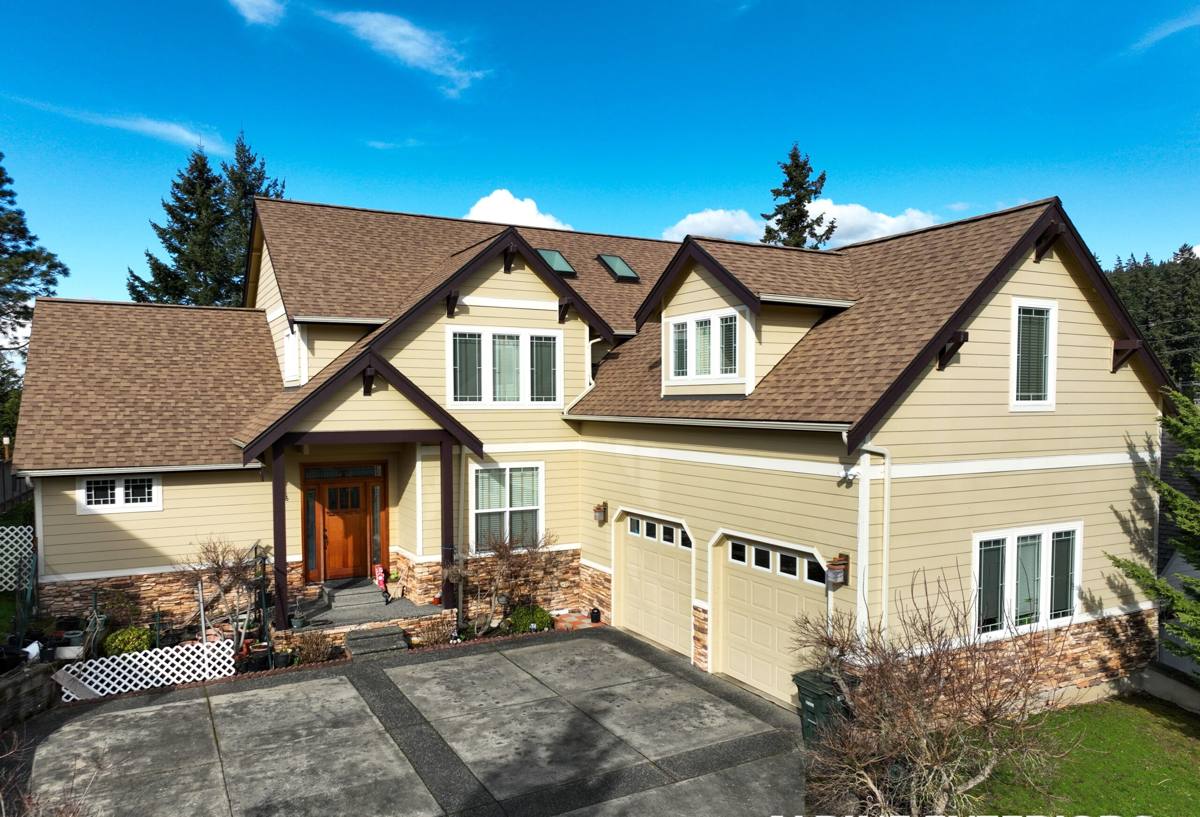
Sudden Valley sits in a different microclimate than a lot of the Bellingham flats. The tree cover is heavier, the lake keeps humidity higher for longer stretches of the year, and a lot of lots have partial shade most of the day. That combination means decks here hold moisture longer after a storm, grow moss and algae faster on horizontal surfaces, and see more debris — needles, leaves, pollen — settle into board gaps and railing joints than a deck out in the open on a south-facing lot closer to Bellingham Bay.
None of that is a reason to avoid a deck. It's a reason to build one correctly for the conditions instead of installing it the same way you would on a dry, exposed lot. Composite decking is a good fit for this kind of environment when it's specified and installed with drainage, airflow, and moss resistance in mind from the start — not just picked off a sample board at the store.
What Whatcom County's Climate Actually Does to a Deck
Whatcom County gets a long wet season, and Sudden Valley's proximity to Lake Whatcom adds its own dose of ambient moisture on top of the region's driving rain. Add in salt-carrying air that moves inland off the Sound on windier days, and you've got three separate stresses working on any exterior structure at once: standing moisture, wind-driven rain intrusion at fasteners and seams, and a long moss season that can run from fall through spring.
Wood decking struggles with all three — it swells, checks, and needs regular sealing to keep ahead of rot. Composite decking handles the moisture side of that equation much better because the boards themselves don't absorb water and swell the way wood fibers do. But composite isn't moss-proof or maintenance-free, and a poorly installed composite deck can trap moisture underneath just as easily as a wood one. The materials matter, but the installation details matter just as much, if not more.
The Specific Failure Points We See
- Joists and ledger boards that were never flashed or wrapped, rotting from underneath while the composite boards on top still look fine
- Boards installed tight to the house or a wall with no gap, trapping moisture and growing algae in the shaded seam
- Insufficient ventilation underneath low decks, especially on sloped Sudden Valley lots where grading pushes water toward the structure
- Fastener systems that weren't rated for the board and started to show pull-through or surface staining within a couple seasons
- Railing posts anchored without proper blocking, which loosens over time as wood framing below moves with seasonal moisture cycles
Choosing the Right Composite Board for This Environment
Not all composite decking is built the same, and for a shaded, moisture-heavy lot near the lake, the differences matter more than they would on a dry, sunny site. The biggest split in the market is between capped and uncapped composite.
| Board Type | How It Handles Moisture & Moss | Maintenance | Best Fit |
|---|---|---|---|
| Uncapped composite | Wood-plastic blend with no protective shell; more prone to surface moisture absorption and staining over time | Occasional cleaning and sometimes a surface treatment | Drier, sunnier lots with good airflow |
| Capped composite | A polymer shell resists moisture absorption and slows moss/algae adhesion to the surface | Periodic washing; no sealing or staining needed | Shaded, damp lots — a strong match for most Sudden Valley properties |
| PVC decking | Fully synthetic, essentially no organic material for moisture or moss to latch onto | Lowest maintenance of the three | Heavy shade, deck areas that rarely dry out |
We don't push one specific brand as the only option — several manufacturers make solid capped composite and PVC lines, and the right pick often comes down to the color and profile you want plus the warranty structure that manufacturer offers. What we won't do is install an uncapped board on a heavily shaded, moisture-trapped section of a Sudden Valley lot and tell you it'll perform the same as it would in full sun — it won't, and we'd rather set that expectation up front than have you disappointed in three years.
What a Correctly Built Composite Deck Involves
Substructure First
The framing underneath a composite deck does more work than people expect, because composite boards don't add structural rigidity the way some solid wood decking can. That means joist spacing, beam sizing, and post footings all need to be right for composite specifically — usually tighter joist spacing than a comparable wood deck, per the manufacturer's span tables.
Moisture Management Underneath
Every ledger connection to the house gets properly flashed so water sheds away from the structure instead of into it. Joist tops get covered with a protective tape barrier so fasteners don't create a wicking point for moisture into the wood framing. On lower decks or shaded areas, we make sure there's enough clearance and grading underneath for air to move and water to drain, rather than pooling and feeding moss growth from below.
Board Installation
Composite boards need a small gap at the house, at posts, and between board ends to allow for seasonal expansion and to keep moisture from getting trapped in tight seams. Fastener choice matters too — hidden clip systems rated for the specific board profile give a cleaner look and a more secure hold than surface screws driven into a board they weren't designed for.
Railings and Edge Details
Railing posts get real structural blocking, not just a lag bolt into a rim joist. Stair stringers and fascia get the same moisture protection as the deck field. These are the details that separate a deck that looks good for one season from one that holds up through a decade of Whatcom County winters.
Our Process From Estimate to Finished Deck
- On-site walkthrough — we look at your existing deck or build site, note sun exposure, drainage, tree cover, and any existing rot or settling before we talk products
- Honest product recommendation — based on that walkthrough, not a one-size-fits-all pitch, we'll tell you where capped composite or PVC makes sense and where a lighter-duty option is fine
- Written estimate — clear scope, materials, and timeline, no vague allowances
- Permitting — many Sudden Valley properties fall under both Whatcom County building requirements and community architectural review; we'll flag early if your project needs sign-off before work starts
- Demo and framing — old decking removed, framing inspected and repaired or upgraded as needed before anything new goes down
- Moisture protection and installation — flashing, joist tape, and correct fastening as described above
- Final walkthrough — we go over the finished deck with you, including what maintenance to expect for your specific board and site conditions
Permits and Community Review
Depending on where your lot sits, deck work in Sudden Valley can touch two separate approval processes: Whatcom County permitting for structural work, and architectural or community review through your property's governing association if one applies to your address. We don't manage association approvals for you, but we'll build your project documentation to match what's typically requested and flag the requirement early so it doesn't stall your timeline. If you're not sure whether your lot requires community review, that's worth confirming before any contractor starts demo work.
Realistic Maintenance for a Moss-Season Climate
Composite decking cuts maintenance significantly compared to wood, but "low maintenance" isn't "no maintenance" in a climate like this one. Here's what actually keeps a composite deck looking right through a Whatcom County moss season:
- Sweep debris — needles, leaves, pollen — off the deck regularly rather than letting it compost in place against the boards
- Rinse or wash the deck surface a couple of times a year, more often in heavy shade, using a soft brush and a composite-safe cleaner rather than a pressure washer on high pressure
- Keep gutters and downspouts near the deck clear so runoff isn't concentrating on one section of boards
- Trim back overhanging branches where possible to get more sun and airflow onto shaded sections
- Check railing posts and stair connections once a year for any looseness as part of a general walk-around
- Address any standing water or slow-draining spots promptly — that's usually a grading or ventilation issue, not a board issue
What Drives the Cost
| Factor | Why It Matters Here |
|---|---|
| Board tier (uncapped vs. capped vs. PVC) | Capped and PVC boards cost more upfront but need less intervention in shaded, damp areas |
| Framing condition | Sudden Valley homes with older wood substructure often need joist or ledger repair before new decking goes down |
| Deck height and grading | Low decks or sloped lots need more attention to drainage and ventilation, which adds labor |
| Railing style | Cable, glass, and composite rail systems all price differently and affect post/blocking requirements |
| Size and layout complexity | Multiple levels, angles, or built-in features add both material and labor time |
We give you real numbers after we've actually looked at your site — not a phone-quote range that changes once we open up the old framing.
Why Hiring a Crew That Already Works Sudden Valley Matters
A contractor who mostly builds decks on dry, open lots elsewhere in Whatcom County can still do fine work — but they may not automatically account for the extra shade, moisture, and moss pressure that comes with a lake-adjacent, tree-covered site. A crew that's worked Sudden Valley regularly already knows to check for the community's review process, has a feel for which lots need extra drainage attention, and has seen firsthand what happens to a deck built without those details in mind. That local pattern recognition is worth more than it sounds like on paper — it's the difference between a deck that needs board replacement in year five and one that just needs a wash twice a year for the next fifteen.
If you're planning a new composite deck or replacing an aging one in Sudden Valley, we're happy to take a look and give you a straight, no-pressure estimate — just fill out the form below to get started.