 Bellingham Exterior
 Why Sudden Valley Windows Wear Differently Than Windows Downtown
Sudden Valley sits back from Bellingham Bay in the trees along Lake Whatcom, and that setting changes what a window has to deal with every day. Out toward the water and along the county's open coastline, salt air and driving rain are the main enemies of exterior materials — they eat at hardware, degrade seals, and push moisture into places it shouldn't be. In Sudden Valley, the bigger daily stress is different: heavy tree canopy that keeps siding and window frames shaded and damp long after a storm has passed, humidity coming off the lake, and a moss season that can stretch from fall through spring. Both patterns point to the same conclusion for homeowners here — windows need to shed water fast, seal completely, and resist the kind of slow, quiet moisture intrusion that doesn't show up until there's already rot or mold behind the trim.
We've worked enough properties in this part of Whatcom County to know that a window that performs fine on a sunny, open lot in town can struggle on a shaded Sudden Valley lot within a few years. The fix isn't a fancier window — it's getting the material, the flashing, and the installation details right for the conditions the window will actually live in.
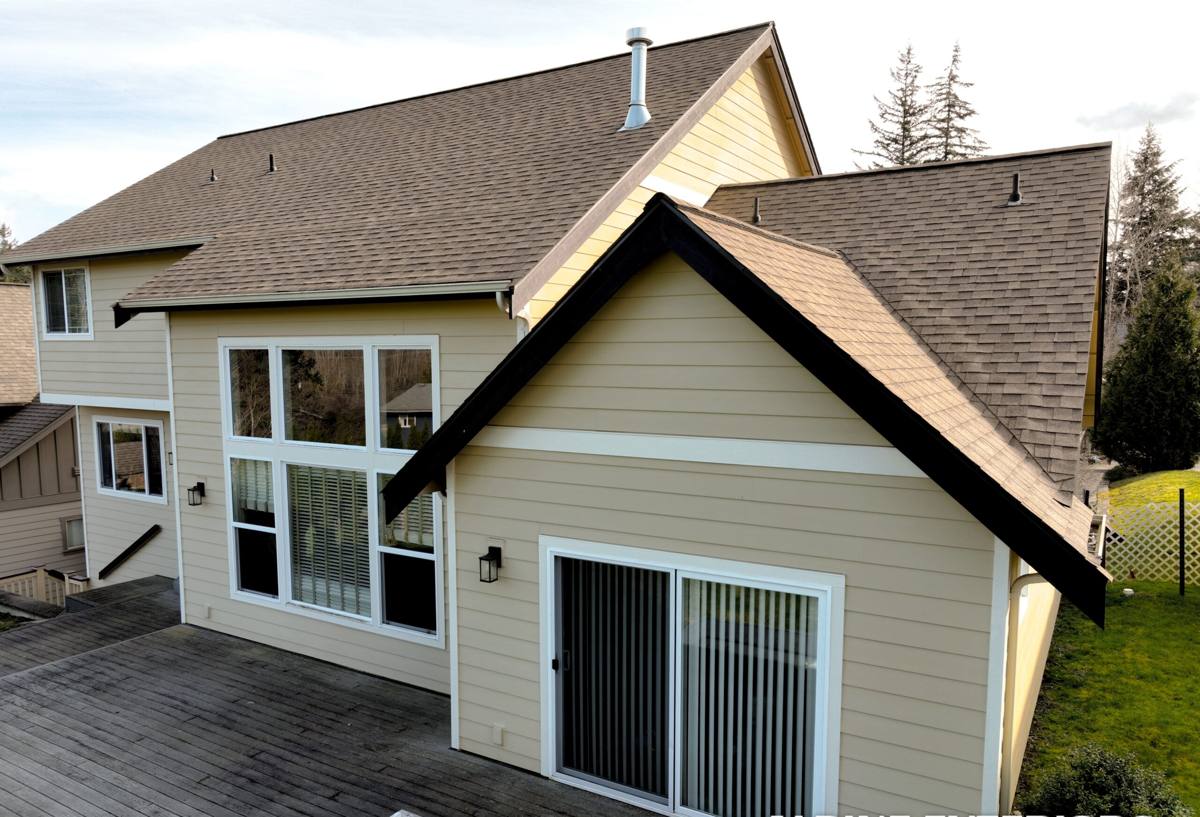
How to Tell a Sudden Valley Home's Windows Are Due for Replacement
Most window failure out here is gradual, and homeowners often notice the symptoms before they connect them to the windows themselves. Common signs we see on service calls in this neighborhood include:
- Fogging or a milky haze between the panes — the seal has failed and the insulating gas has escaped
- Persistent condensation on the inside of the glass, even when the house isn't obviously humid
- Soft or discolored wood at the sill or lower corners of the frame — an early sign of rot
- Moss or dark green streaking building up in the frame corners or on the exterior trim
- Sashes that stick, won't stay open, or have been painted shut over the years
- A noticeable draft or cold spot near the window even with it fully closed and locked
Any one of these can usually be repaired if caught early. Several at once, especially rot at the sill, usually means the window unit and the surrounding framing have been taking on water for a while and full replacement is the more honest recommendation.
What a Correct Window Replacement Job Actually Involves
Swapping in a new window is easy to do poorly and easy to get away with — for a while. A window that's installed without proper flashing or sealant can look perfect for two or three years and then start failing from the inside out, right where you can't see it. A correct job includes:
Flashing and Moisture Management
Every opening gets flashed so that any water that gets behind the siding is directed back out, not into the wall cavity. This matters more in a shaded, humid setting like Sudden Valley than almost anywhere else in the county, because damp wall assemblies here dry out slower once they get wet. Skipping or shortcutting flashing is the single most common cause of hidden rot we find behind older replacement windows.
Air Sealing and Insulation
The gap between the new window frame and the rough opening needs to be filled with the right material — not just caulked shut around the trim. Done correctly, this stops both drafts and the kind of moist air infiltration that feeds mold growth in a wall cavity.
Full-Frame vs. Insert Replacement
An insert replacement fits a new window into the existing frame and trim — faster and less invasive, but only appropriate when the existing frame is still solid and square. A full-frame replacement removes everything down to the rough opening, which costs more and takes longer but is the right call whenever there's already rot, settling, or water damage at the frame. We'll tell you honestly which one your home needs rather than defaulting to whichever is easier to sell.
Choosing a Window Material for a Shaded, Humid Lot
There's no single "best" window material — the right choice depends on how much direct sun and airflow a given wall of the house actually gets, which on a wooded Sudden Valley lot can vary a lot from one side of the house to another.
| Frame Material | Moisture Behavior | Maintenance | Best Fit |
|---|---|---|---|
| Vinyl | Won't rot, but heavy shade can allow prolonged surface moisture and moss/algae growth if not rinsed occasionally | Low — occasional cleaning | Most shaded and semi-shaded elevations |
| Fiberglass | Very stable in wet, humid conditions; resists warping better than vinyl in temperature swings | Low | North-facing or heavily shaded walls, higher-exposure lots |
| Wood-clad | Attractive but the wood core can be sensitive to prolonged dampness if a seal is ever compromised | Higher — periodic inspection and finish maintenance | Homes prioritizing a traditional wood interior look, with realistic upkeep expectations |
We don't push wood-clad windows on deeply shaded lots as a default, not because the product is bad, but because it asks more of the homeowner in a climate that doesn't dry things out quickly. That's a maintenance conversation we'd rather have honestly up front than after a callback.
What Drives Cost on a Sudden Valley Window Job
Every quote should be based on your specific windows and access, not a flat per-window number pulled from a brochure. The main factors we weigh are:
| Factor | Why It Matters |
|---|---|
| Full-frame vs. insert | Full-frame costs more but is necessary wherever there's rot or a damaged rough opening |
| Frame material | Vinyl, fiberglass, and wood-clad carry different material costs and different long-term maintenance |
| Number and size of openings | Larger or custom-sized windows cost more to source and install than standard sizes |
| Site access | Steep, tree-covered, or tight lots common in Sudden Valley can add setup and staging time |
| Existing damage | Rotted sheathing or framing found once the old window is out adds repair scope, which we'll always flag before proceeding |
Most single-family homes fall into a broad mid-range once you factor in a mix of standard and larger windows, but the only honest number is one based on a walk-through of your actual house.
Our Process, Start to Finish
- Walk-through and estimate: we look at every window being considered, note condition at the sill and frame, and measure for accurate ordering
- Written scope and quote: material, full-frame or insert, and a clear price before any work is scheduled
- Ordering and lead time: we'll give you a realistic timeline rather than a best-case guess
- Removal and install: old units removed, openings inspected and flashed, new windows set, sealed, and trimmed
- Cleanup and walkthrough: debris hauled off, every new window operated and checked with you before we consider the job done
If your property is inside the gated community, we coordinate access ahead of time so there's no delay on the day of installation — that's a small logistical detail, but it's one that catches out-of-town crews more often than you'd think.
Why a Crew That Already Works This Neighborhood Matters
Sudden Valley isn't a typical flat, open subdivision. Lots here tend to be wooded, sloped, and set back from the road, which changes how a job gets staged — ladder placement, material access, and where debris and equipment can sit for the day all take more planning than on a standard in-town lot. A crew that's already done work in the community isn't guessing at any of that on your job.
There's also a practical side to local familiarity: we've seen how these homes age under the specific combination of shade, lake humidity, and moss that this area gets, which shapes what we recommend and what we flag as a concern versus what's just cosmetic. That's the kind of judgment that only comes from doing the work here repeatedly, not from a general brochure pitch.
Protecting Your New Windows After Installation
New windows are only as good as the upkeep behind them, and a shaded, humid lot asks a little more of that upkeep than an open one does. A short seasonal checklist goes a long way:
- Rinse pollen, moss spores, and debris off frames and tracks once or twice a year, especially on shaded elevations
- Keep nearby gutters clear so overflow doesn't run down onto window frames and trim
- Check exterior caulking annually for cracking or gaps, particularly at the corners
- Trim back branches or foliage that keep a window in near-constant shade and dampness
- Operate every window a few times a year, even ones you rarely open, to keep hardware and seals in working condition
None of this is difficult, but skipping it is how a well-installed window ends up with an avoidable moisture problem five or six years down the road.
Ready for an Honest Look at Your Windows?
If you're noticing drafts, fogged glass, or moss creeping into the frames on your Sudden Valley home, we're happy to come take a look. The estimate is free, there's no pressure to book anything on the spot, and you'll get a straight answer about whether you're looking at a simple repair or a full replacement — just fill out the form below to get started.