 Bellingham Exterior
 Roofing in Sunnyland: A Neighborhood With Its Own Set of Problems
Sunnyland is one of Bellingham's older, more established neighborhoods, and that shows in its roofs. Mature tree canopy shades a lot of these homes for most of the year, which is great for the yard and miserable for a roof. Add in Bellingham's position near the water, where salt-laden air drifts in off Bellingham Bay, and you've got a combination that ages roofing materials faster than homeowners expect. We're not describing anything unusual to homeowners here — most people in Sunnyland who've owned their home more than a few years already know the moss comes back no matter how many times they blow it off, and that the north-facing slopes stay damp longer than the rest of the roof.
A roof replacement in this part of Whatcom County isn't just about swapping old shingles for new ones. It's about building a roof system that's set up to handle shade, moisture, and salt air from day one — not just look good in a driveway photo.
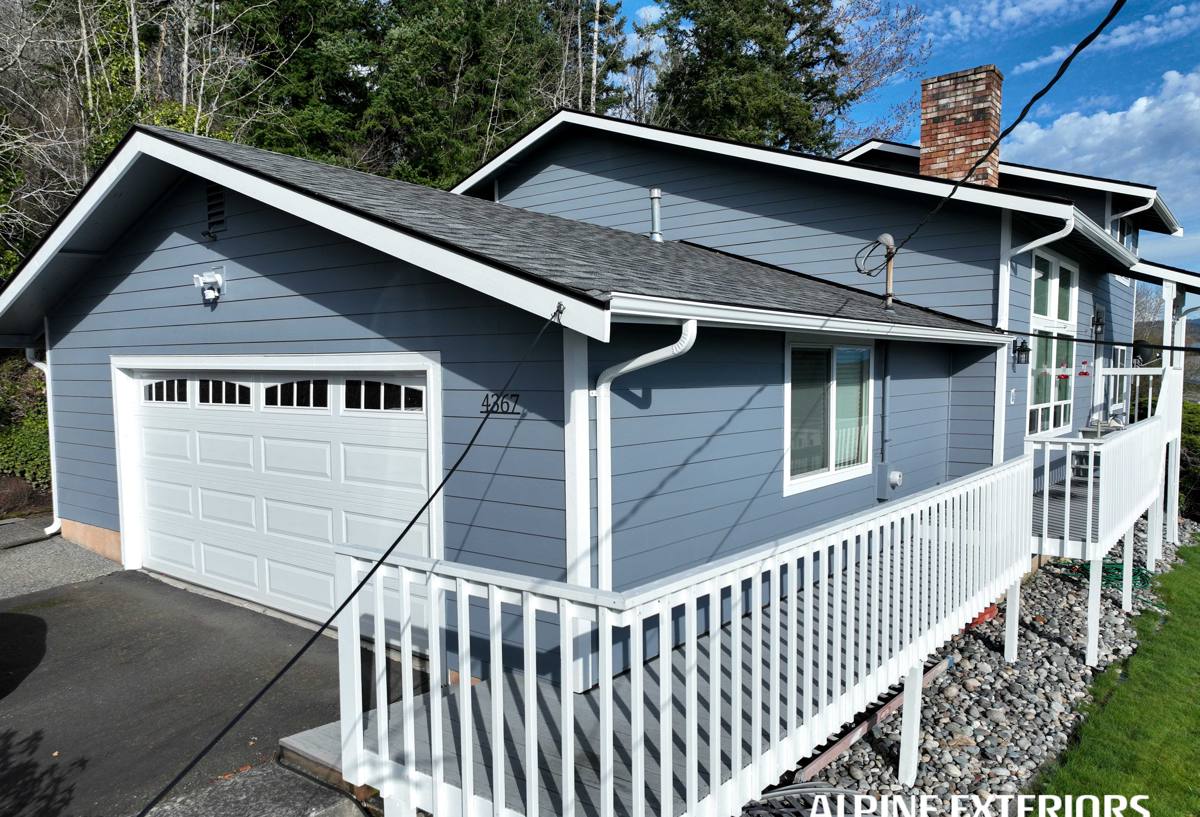
What Sunnyland's Climate Actually Does to a Roof
Salt Air and Metal Fatigue
Homes closer to the water deal with airborne salt that accelerates corrosion on exposed metal — flashing, fasteners, gutters, and vent stacks. Cheaper galvanized fasteners and thin-gauge flashing don't hold up as long here as they might further inland. It's a slow process, but over 15-20 years it adds up to rust streaks, loosened flashing, and leaks that trace back to hardware, not the shingles themselves.
Driving Rain, Not Just Rain
Bellingham doesn't just get rain — it gets wind-driven rain that comes in at an angle, which pushes water up under shingle edges, around chimneys, and into valleys that a calmer climate could get away with under-flashing. Roofs built for drier or calmer regions often skip details that matter a lot more here.
Moss Season That Doesn't Really End
With consistent moisture and shaded areas from mature trees, moss has a long growing window in Sunnyland — realistically much of the year rather than a single "season." Moss holds water against the roof surface, lifts shingle edges as it grows, and works its way into fastener holes over time. A roof that isn't detailed to shed moss and dry out between rain events will show granule loss and soft spots years before a well-ventilated, well-flashed roof on the same street.
Signs a Sunnyland Roof Needs Replacement, Not Another Repair
Repairs make sense for isolated damage. Replacement makes sense once the roof's underlying systems — decking, underlayment, ventilation — are compromised across multiple areas. Here's how we tell the difference on a typical inspection:
- Granule loss heavy enough that you can see bare asphalt in multiple spots, not just one worn patch
- Moss growth that's spread across whole slopes rather than just the shaded north side
- Soft or spongy decking felt underfoot during inspection, especially near valleys and eaves
- Daylight visible through the attic at roof board seams or nail penetrations
- Flashing around chimneys, skylights, or vent stacks that's rusted, lifted, or was never properly stepped in
- Multiple past repairs in different areas — a sign the roof is failing broadly, not locally
- Roof age past 20-25 years for asphalt products, even if it "looks fine" from the ground
If a roof only shows one or two of these, a targeted repair is usually the honest answer, and we'll say so. Replacement gets recommended when the problems are systemic.
Choosing a Roofing System That Fits This Environment
There's no single "best" roofing material for every home, but there are real trade-offs worth understanding before you decide, especially given the moisture and salt exposure common in Sunnyland.
| Material | Moisture & Moss Behavior | Salt Air Considerations | Typical Lifespan |
|---|---|---|---|
| Architectural asphalt shingle | Good drainage when properly detailed; benefits from algae-resistant granules | Fasteners and flashing need corrosion-resistant hardware | 25-30 years |
| Standard 3-tab asphalt shingle | More prone to moss lift and granule loss over time | Same hardware concerns, thinner material margin for error | 15-20 years |
| Metal (standing seam or panel) | Sheds moisture fast; moss struggles to hold on smooth panels | Requires marine-grade or coated fasteners and proper dissimilar-metal separation | 40-50+ years |
| Cedar shake/shingle | Attractive but holds moisture and moss without diligent upkeep | Salt air adds to weathering; needs regular maintenance to avoid rot | 20-30 years with upkeep |
Most Sunnyland homeowners land on a quality architectural asphalt shingle with algae-resistant granules — it balances cost, appearance, and performance well for this climate. Metal is worth a serious look for homeowners planning to stay long-term, especially on steeper roofs where moss and moisture are more persistent. We don't push cedar shake on shaded, moisture-heavy lots as a first recommendation — it's a beautiful product, but it demands a maintenance schedule that most homeowners underestimate, and in a wet, shaded neighborhood that maintenance burden only grows.
What a Correct Roof Replacement Actually Involves
Full Tear-Off, Not a Layover
We remove existing roofing down to the deck rather than layering new shingles over old ones. Layering traps moisture, hides deck damage, and voids most manufacturer warranties. It also means we can't actually assess the one thing that matters most on an older Sunnyland home: what condition the decking is in underneath.
Deck Inspection and Repair
Once the old material is off, we check the sheathing for soft spots, rot, or delamination — common in areas that have had slow leaks around valleys or chimneys for years without anyone noticing from inside. Any damaged sections get replaced before anything new goes down. Skipping this step is one of the most common shortcuts in the industry, and it's the reason a "brand new roof" can leak within a year or two.
Underlayment Built for Wind-Driven Rain
Given how much of Bellingham's rain arrives sideways, we use synthetic underlayment across the field and self-adhered ice-and-water shield membrane at eaves, valleys, and around penetrations — the spots most vulnerable to wind-driven moisture. This is a detail that's easy to shortcut and impossible to check once shingles are down, so we make it part of every replacement, not an upsell.
Flashing and Fasteners Rated for the Coast
Given the salt air concerns already discussed, we use corrosion-resistant flashing and fastener hardware rather than the cheapest standard-grade options. It costs a little more up front and pays off in the decade-plus range when a lot of homes further inland start seeing rust bleed and lifted flashing.
Ventilation That Actually Moves Air
A shaded, moist environment needs a roof that can dry out between rain events. That means balanced intake at the eaves and exhaust at the ridge, sized correctly for the attic volume — not just whatever vents were on the old roof. Poor ventilation is one of the biggest hidden contributors to moss regrowth, premature shingle aging, and attic condensation on homes with heavy tree cover.
Cost Factors Homeowners Should Understand
Every roof is priced individually, but the factors that move the number are consistent. Understanding them helps you evaluate any quote you get, from us or anyone else.
| Factor | Why It Matters |
|---|---|
| Roof pitch and complexity | Steeper roofs and more valleys/dormers mean more labor, safety equipment, and material waste |
| Number of existing layers | Tear-off of multiple layers takes longer and costs more in disposal |
| Decking condition | Rotted sheathing found during tear-off adds material and labor not visible in an initial estimate |
| Material choice | Standard asphalt, architectural asphalt, and metal carry meaningfully different price points |
| Access and site conditions | Tree cover, tight lot lines, and steep driveways affect staging and cleanup time |
| Ventilation and flashing upgrades | Correcting inadequate ventilation or flashing adds scope beyond a straight material swap |
Broadly, a full asphalt shingle replacement on an average Sunnyland home runs from the mid four figures into the low five figures depending on the factors above; metal roofing typically runs higher up front in exchange for a much longer service life. We'll walk through exactly where your project falls on that range during the estimate, with the reasoning shown, not just a number.
How Our Process Works, Start to Finish
- On-site inspection — we get on the roof (weather permitting) and in the attic, not just a ground-level look from the driveway
- Written estimate — material options, scope, and pricing laid out clearly, including what would trigger additional cost (like deck rot)
- Scheduling around weather — we work with Whatcom County's rain patterns rather than against them, and won't tear off a roof into an open forecast
- Tear-off and deck inspection — full removal, deck assessment, and any necessary repairs done before anything new goes on
- Underlayment, flashing, and ventilation install — the parts that don't show but determine how long the roof actually lasts
- Final material installation — shingles, metal panels, or whatever system was chosen, installed to manufacturer spec
- Site cleanup and magnetic sweep — yard and driveway cleared of debris and stray fasteners before we consider the job done
- Final walkthrough — we go over the finished roof with you before wrapping up
Why Local Experience in Sunnyland Specifically Matters
A roofing crew that's worked this neighborhood already knows which slopes hold moisture longest under the tree canopy, how the salt air off the bay behaves a few miles inland, and what building department expectations look like for permitting in Bellingham. That's not something you get from a crew that mostly works dry, inland subdivisions and happens to take a job here. It shows up in small decisions — where extra ice-and-water shield goes, how ventilation gets sized, what fastener grade gets specified — that don't appear on a basic estimate line item but determine whether the roof is still performing well in year 18 instead of year 10.
It also means we're not guessing at how Whatcom County's inspection and permitting process works, or scrambling to figure out access on a shaded, tree-lined lot for the first time. We've done this here before.
Protecting Your Investment After Replacement
A new roof still needs some basic upkeep, especially in a moss-prone, tree-heavy neighborhood like Sunnyland. None of this is intensive, but skipping it shortens the life of even a well-installed roof:
- Keep gutters clear of needles and leaf debris so water isn't backing up under the eaves
- Have moss growth treated or gently removed before it spreads across a slope, rather than waiting until it's heavy
- Trim back tree limbs that overhang the roof to reduce shade, debris, and physical abrasion
- Schedule a roof check every couple of years, especially after major windstorms common to the area
- Address any small flashing or fastener issues right away — they're cheap to fix early and expensive to ignore
If your Sunnyland roof is showing its age, or you just want an honest read on whether it's a repair or a replacement situation, we're glad to take a look. The estimate is free, there's no pressure to move forward, and you'll get a straight answer either way — just fill out the form below to get started.