 Bellingham Exterior
 Siding Repair in Sunnyland: What the Climate Does to a House Here
Sunnyland sits inside the same maritime weather system that shapes every neighborhood in Bellingham — damp air off Bellingham Bay, long stretches of driving rain from fall through spring, and a moss season that can run most of the year on shaded north- and west-facing walls. None of that is dramatic on its own. The problem is what it does slowly, over years, to siding that was never sealed, flashed, or maintained quite right the first time.
Whatcom County homes see fewer of the extreme heat and freeze cycles that crack siding elsewhere in the country, but they get something arguably harder on a wall system: sustained moisture exposure. Wood and hardboard siding swells and softens where water sits. Caulk joints that looked fine when installed lose flexibility and open up gaps. Moss and algae hold moisture against the surface long after a storm has passed, which is exactly the condition that lets rot get started behind the cladding, not just on top of it. A repair job in Sunnyland isn't just cosmetic — it's usually about catching moisture before it becomes a framing problem.
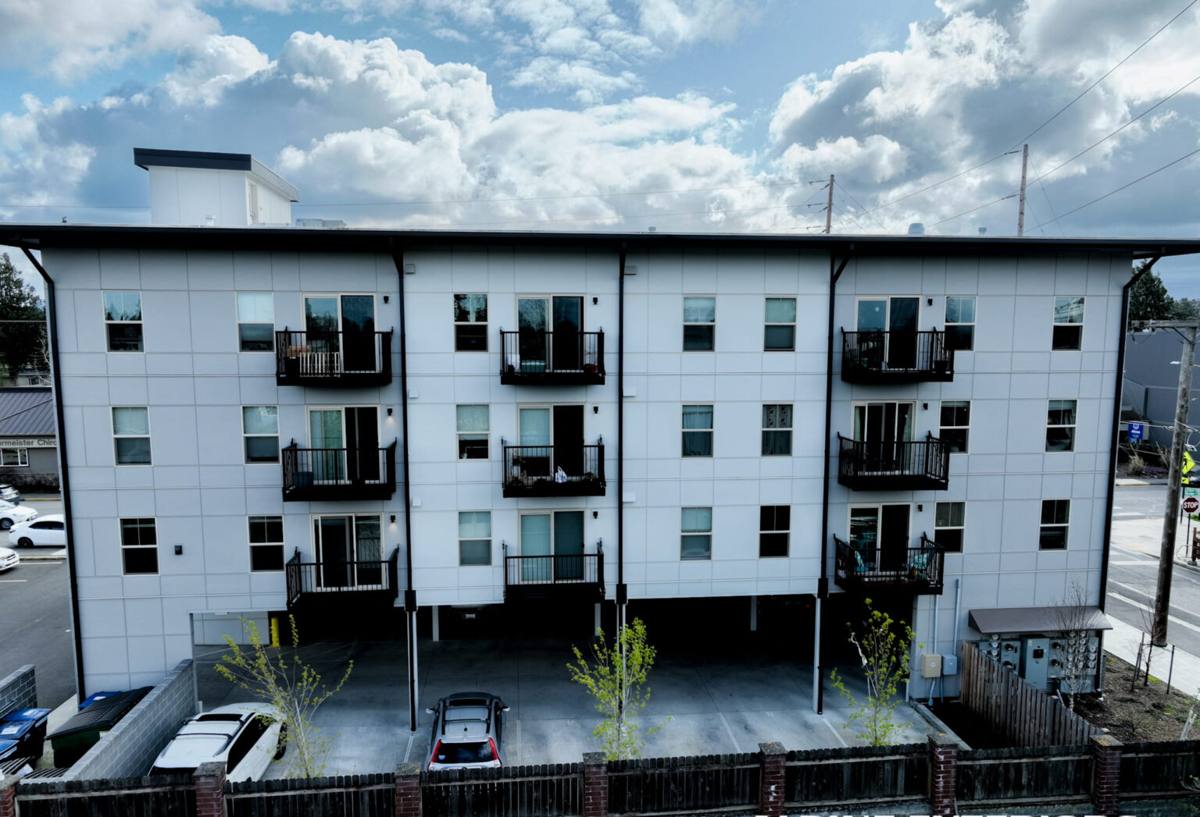
Signs Your Siding Needs Repair, Not Replacement
Most homeowners call us because they've noticed one visible problem, but the visible problem is rarely the whole story. Here's what we look for during a repair evaluation:
- Soft or spongy spots when you press on a siding panel or board, especially near the bottom courses close to grade
- Cracked, split, or buckled boards, often near corners, window trim, or anywhere two materials meet
- Persistent dark streaking or moss growth that keeps coming back within weeks of cleaning
- Gaps, missing caulk, or pulled-away trim around windows, doors, and utility penetrations
- Peeling or bubbling paint, which usually means moisture is trying to escape from underneath
- Visible staining or discoloration on interior walls that lines up with an exterior wall section
Any one of these can be a straightforward, contained repair. Several of them together — or soft siding paired with interior staining — usually means water has been getting behind the cladding for a while, and the repair needs to start with finding out how far it's traveled before we touch a single board.
What a Correct Siding Repair Actually Involves
Diagnosis before demolition
The most common mistake in siding repair isn't bad workmanship — it's stopping the investigation too early. Replacing a cracked board without checking what's behind it just re-covers a problem that will resurface, often in a worse spot, within a season or two. A correct repair starts with removing enough material to see the sheathing, house wrap, and flashing underneath, not just the damaged piece itself.
Matching materials and matching behavior
If the existing siding is still serviceable, a repair should match the existing profile, reveal, and finish as closely as possible — mismatched exposure or a different material texture is an easy way to make a repair look like a patch instead of a fix. Where the surrounding material is a type prone to repeat failure (more on that below), we'll tell you honestly whether patching it is worth doing or whether that section is a candidate for replacement with something more durable.
Flashing and water management, not just caulk
Caulk is a maintenance item, not a waterproofing strategy. A repair that relies only on sealant to keep water out will fail again — that's true anywhere, but it's especially true in a climate that gets as much sustained rain as this one. Correct repair work re-establishes proper flashing and lap sequencing (upper courses overlapping lower ones, housewrap integrated correctly at penetrations) so water sheds the way the wall assembly was designed to shed it, with sealant doing secondary work, not primary work.
Common Repair Scenarios We See Around Sunnyland
Sunnyland's housing stock, like much of central Bellingham, is a mix of ages and siding types — older wood lap siding, hardboard from a mid-century remodel, vinyl added at some point, and newer fiber cement on homes that have already been updated. Each material fails differently:
| Siding Type | Typical Repair Issue in This Climate | Repair Outlook |
|---|---|---|
| Wood lap siding | Rot at butt joints and bottom courses, paint failure, moss holding moisture | Repairable if rot is localized; recurring issue if drainage/flashing was never corrected |
| Hardboard (older composite) | Swelling and delamination at edges and fastener points once moisture gets in | Often not repairable long-term — damaged boards usually need full replacement |
| Vinyl | Cracking from impact, buckling, gaps at corners letting wind-driven rain behind panels | Repairable piece by piece, but color-matching older, sun-faded panels is difficult |
| Fiber cement (Hardie) | Caulk joint maintenance, occasional impact damage, factory-finish touch-up | Straightforward — repairs are usually cosmetic, not structural, when installed correctly |
That last row is worth sitting with for a second: the repair calls that turn into bigger, more expensive projects are almost always on wood and hardboard siding where moisture got behind the material and nobody caught it early. That's not a knock on those materials as a category — it's just the honest pattern we see on repair calls in this part of Whatcom County.
Repair vs. Replace: How We Help You Decide
Not every damaged wall needs a full re-side, and we're not going to tell you it does. But there's a point where patching stops making financial sense. Here's the honest framework we walk homeowners through:
| Factor | Leans Toward Repair | Leans Toward Replacement |
|---|---|---|
| Extent of damage | Isolated to one wall section or a few boards | Multiple walls, or damage that keeps recurring in the same spots |
| Sheathing condition | Dry, solid framing behind the damaged siding | Soft or stained sheathing found once siding is opened up |
| Material type | Fiber cement, or wood in otherwise good condition | Failing hardboard, or wood siding original to a much older home |
| Age of existing siding | Siding still well within its expected service life | Siding already near or past the age where the material typically fails |
| Your plans for the home | Staying long-term, siding is otherwise performing | Planning bigger exterior updates, or tired of recurring repair calls |
We'll never push a full replacement on a repair call unless the underlying condition actually supports it. Sometimes the honest answer is "let's fix this section and keep an eye on the rest."
Our Process for a Sunnyland Repair Call
- On-site inspection. We look at the damage, the surrounding wall assembly, and anywhere else on the house showing similar wear — problems in this climate are rarely isolated to just the spot you noticed.
- Honest scope and estimate. You get a clear explanation of what's actually wrong, what a proper fix requires, and a written estimate before any work starts.
- Open it up, check for hidden moisture. We don't cover a problem back up without confirming what's underneath is dry and sound.
- Repair to spec. Correct flashing and lap sequence, matched materials where possible, sealant used as a secondary defense rather than the whole plan.
- Walkthrough. We show you what was found and what was done, so you're not left guessing about the condition of your walls.
Why Hardie Fiber Cement Comes Up Even on a Repair Call
We install exclusively James Hardie fiber cement siding on full re-side projects — we don't install vinyl, LP SmartSide, or other engineered wood products. On a repair call, that shows up in a specific way: when we find a section of hardboard or wood siding that's failed for the same reason it's likely to fail again — moisture behavior inherent to the material, not a one-time installation mistake — we'll say so plainly, and lay out what it would look like to replace that section with fiber cement instead of patching a material with a known failure pattern.
Hardie siding is non-combustible, factory-finished with its ColorPlus coating so it doesn't need repainting on the same cycle as wood, and engineered in HZ product lines specifically for wetter climates like this one. That doesn't mean every repair turns into a Hardie conversation — plenty of repairs are simple, contained fixes on siding that's otherwise sound, and we'll treat them that way. It just means if you ask us for our honest opinion on a recurring problem area, you'll get it.
Why a Crew That Already Works Sunnyland Matters
Siding repair is diagnostic work as much as it's carpentry. A crew that's worked on homes throughout Bellingham and the wider Whatcom County area has already seen how this specific climate — the bay-adjacent humidity, the moss, the months of steady rain — plays out on different construction eras and siding types. That matters when you're trying to tell the difference between a cosmetic repair and the early sign of something bigger behind the wall. It also means faster, more accurate estimates, because we're not guessing at how local weather patterns interact with your home's particular siding and exposure.
Before You Hire Anyone for Siding Repair
- Ask them to explain what they think is causing the damage, not just how they'll cover it
- Confirm they'll check the sheathing and framing behind damaged siding, not just replace the visible piece
- Get the repair scope and price in writing before work starts
- Ask how they handle flashing and water management, not just caulking
- Ask directly whether they think the section is repairable long-term or a replacement candidate — and why
If you're dealing with damaged, soft, or moss-stained siding on a Sunnyland home, we're happy to take a look and give you a straight answer on what it needs. Reach out for a free, no-pressure estimate using the form below.